Let’s first understand the severity of lead poisoning in children:
Lead is a toxic metal used in a variety of products and materials, including paint, polyethylene blinds, pipes, leaded crystal, tableware, and ceramic glazes. If lead is absorbed into the body, it can damage internal organs such as the brain, kidneys, nerves, and blood cells. Lead poisoning is particularly harmful to children under the age of six.
Lead interferes with the development and function of almost all internal organs, especially the kidneys, red blood cells, and central nervous system.
When children come into contact with lead, the problem of lead poisoning is particularly serious. Because their bodies are not yet fully developed, lead poisoning can cause the following harms:
Damage to the brain, liver, and kidneys; slowed development; problems with learning and behavior; reduced intelligence (or IQ); hearing loss; restlessness.
Since it is so serious, we will raise three questions regarding the collective lead poisoning incident in children at the Heshit Peixin Kindergarten in Maiji District, Tianshui City, Gansu Province.
Question 1: Where exactly does the source of lead poisoning come from?
On July 3, the Health and Health Commission of Maiji District, Tianshui City, issued a notice stating that on July 1, the Market Supervision Bureau and the Public Security Bureau of Maiji District received reports from the public and found a case of a kindergarten violating regulations by using additives, leading to abnormal blood lead levels in some children.
However, this statement is highly questioned.
According to media reports, Li Shuguang, a professor at the Department of Nutrition and Food Hygiene, School of Public Health, Fudan University, analyzed: Nowadays, lead-containing food additives are almost no longer used, and lead exceeding the standard often requires long-term and large-scale intake, making it difficult to determine that it is caused by lead-containing additives. It is recommended to investigate other sources of pollution: for example, whether there are polluting wastewater and waste residue discharges around the kindergarten; whether the kindergarten’s facilities are old, such as some old-fashioned water pipes that are lead-containing iron pipes, which may have lead overflow. From a food perspective, there is not much lead-containing food now, such as popcorn, which may contain lead, and children obviously cannot eat it every day, after all, lead exceeding the standard often involves the problem of long-term and large-scale intake.
Regarding the true source of lead poisoning, some people have found a commentary from April 2006 by CCTV, titled “The Enigma and Accountability Expectations of the ‘Tianshui Lead Poisoning Incident'”, where Wujiahe Village, only 13 kilometers away from Heshit Peixin Kindergarten, tested more than 200 people, with 211 people having severely excessive lead levels, and 68 people were confirmed to have lead poisoning.
From 2006 to 2025, is there any connection between the two? This is the most important question that needs to be answered first.
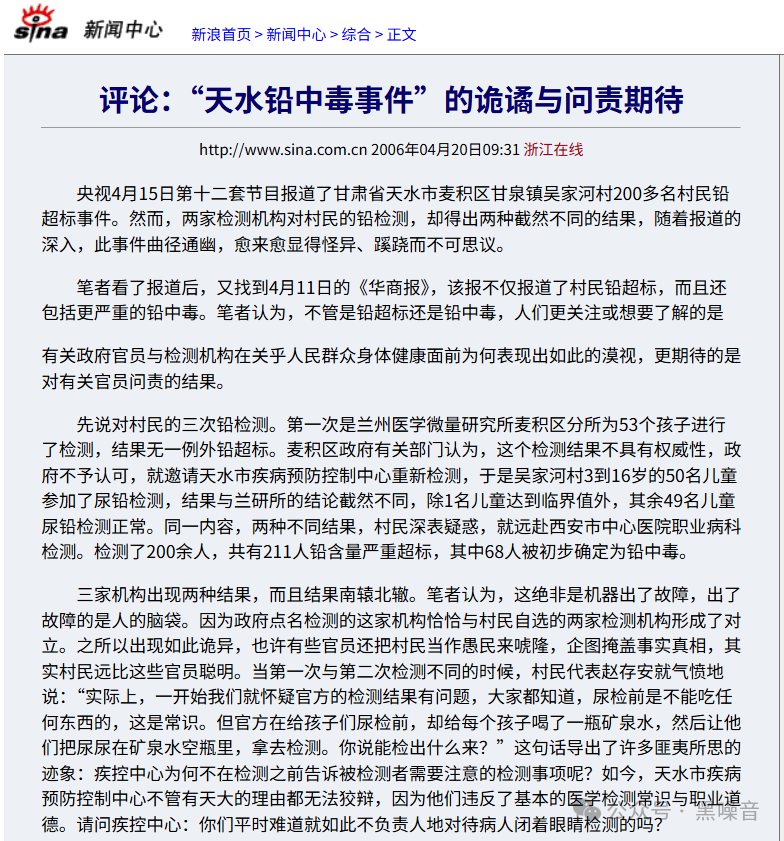
The following is the original link: https://news.sina.com.cn/o/2006-04-20/09318744836s.shtml
Question 2: Why has lead poisoning been apparent for a year, but has not been taken seriously?
According to the report of “Sanlian Life Weekly”:
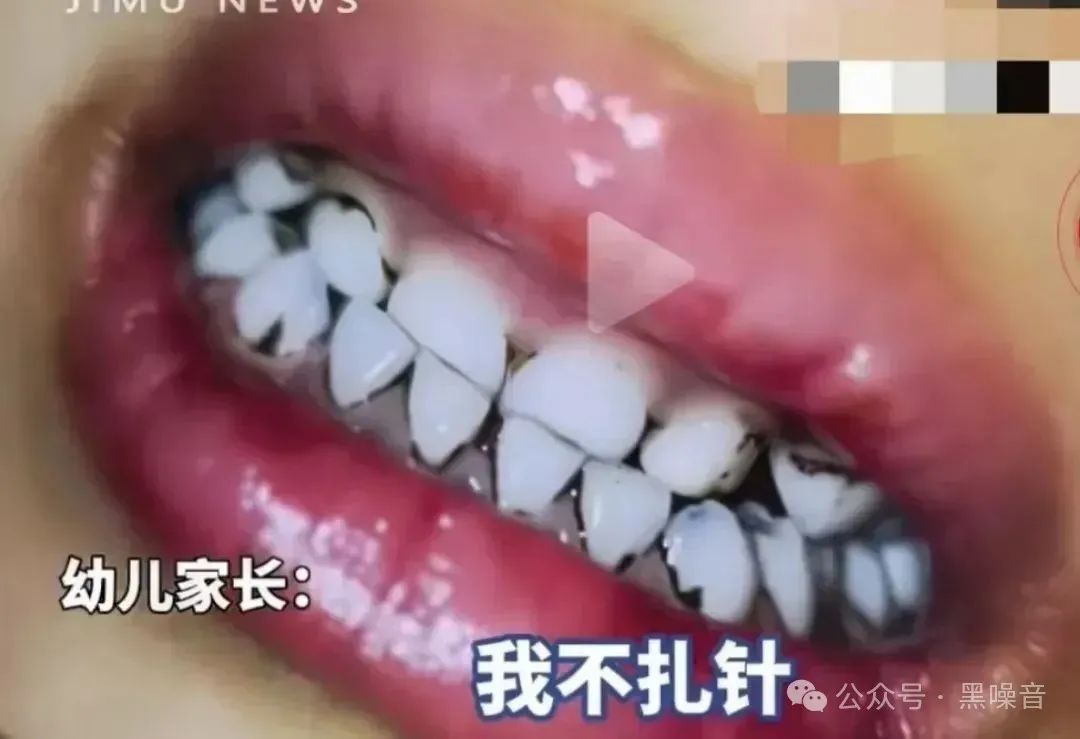
A parent told the media that the child had already been found to have abnormal blood lead levels last May. At that time, the child always complained of “stomach numbness” and did not eat well, so they took the child to Xi’an for examination. On May 27 last year, the test report from Xi’an Children’s Hospital showed that the blood lead level was 156.6μg/L (micrograms per liter). The report of trace elements from the Second People’s Hospital of Tianshui City on June 29 provided by this parent showed that the blood lead level was 274.71μg/L. On July 3, the test report from the Department of Occupational Diseases of the Central Hospital of Xi’an showed that the blood lead test value was 444μg/L. Yan Chonghuai also noticed that the video released by the media showed that children with abnormal blood lead levels had black teeth, “This means that they ate a lot of lead, and the time is estimated to be relatively long. Children with chronic lead poisoning have a blood lead concentration of 400μg/L, and the lead they actually ate may be dozens of times 400μg, and all the lead entering the body is stored in the bones.”
Given the fact that this lead poisoning has lasted for a long time, it is even more suspicious of the real reason behind it.
The parents of the kindergarten’s small class told “China Newsweek” that in the past six months, their children often did not like to eat, and 20 days ago, they vomited again, “They would vomit after eating a couple of bites, and they would also vomit the noodles from the kindergarten”. They had been to the local hospital for examination, and the doctor diagnosed it as “weak spleen and stomach”, and the children had been taking medicine for a long time to regulate it, “They didn’t even think about the direction of poisoning”.
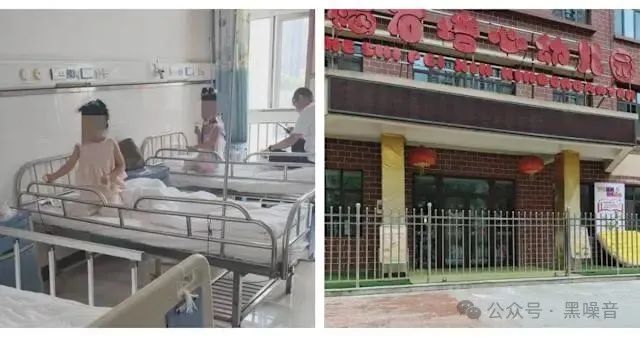
Question 3: Why does the situation of “normal Tianshui test results but exceeding the standard in Xi’an tests” occur?
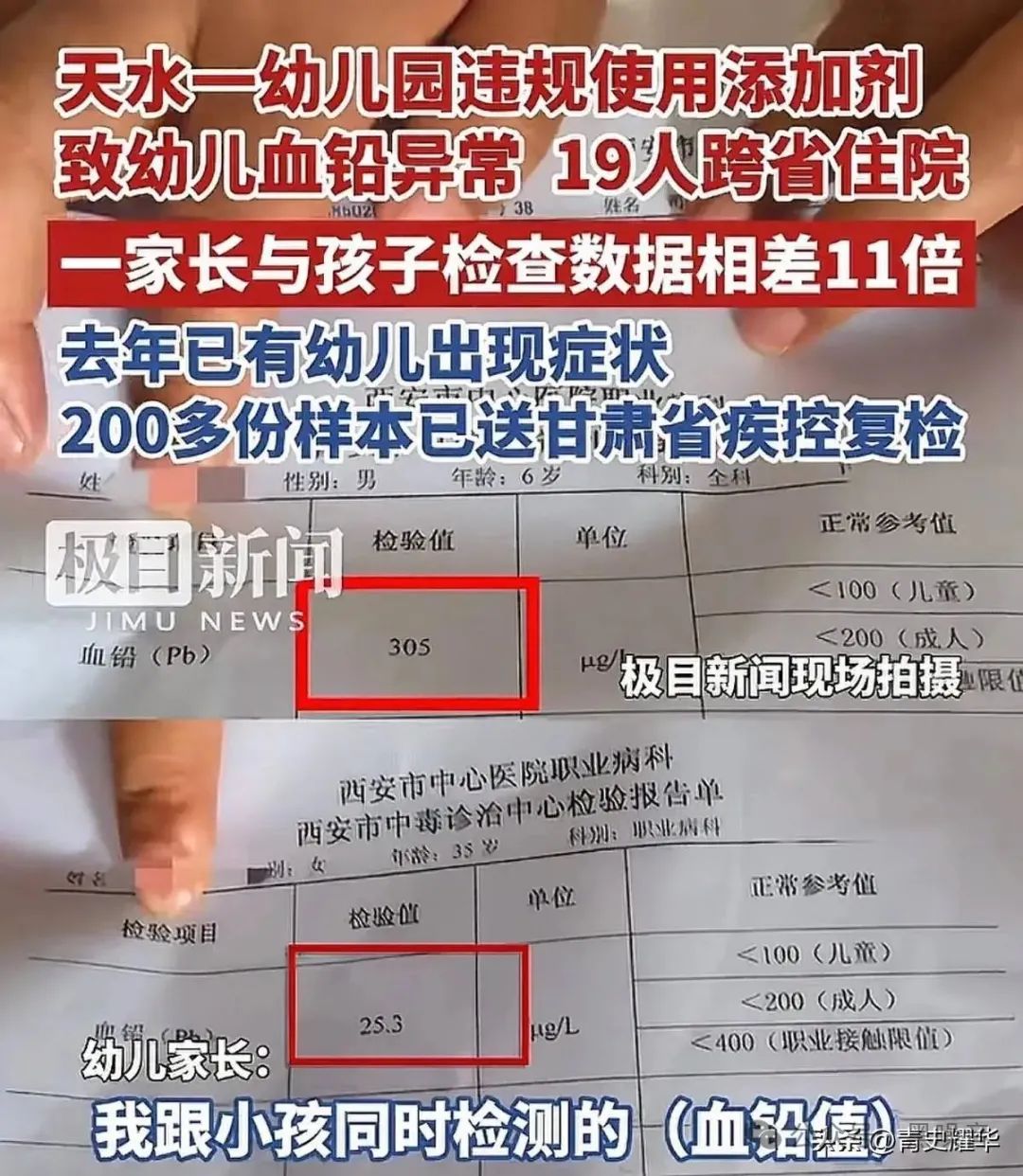
According to Jimu News, the results of the Tianshui blood lead tests have been delayed, and parents have successively taken their children to Xi’an hospitals for blood tests and treatment.
From July 3 to 4, the test reports from the Central Hospital of Xi’an shown by many parents to reporters showed that the children’s blood lead indicators exceeded the normal value, mostly between 200 micrograms/liter and 500 micrograms/liter, and one child was 528 micrograms/liter, exceeding the standard by more than 4 times, while the normal reference value for children’s blood lead should be below 100 micrograms/liter.
It is worth noting that many parents said that during their medical treatment in Xi’an, they received verbal notification from relevant staff in Tianshui City that their children’s blood lead test results were normal, but they did not see the paper or electronic test reports.
Mr. Liu’s outpatient medical record from the Central Hospital of Xi’an shows that his child was diagnosed with lead poisoning. He said that after seeing the diagnosis results, he decided to be hospitalized for treatment at the hospital immediately.
“My child’s blood lead was detected at 441 here! In Tianshui, it was 33, and they told me it was normal!” A mother’s hand holding the report was trembling, and her words made the parents burst out with rough language: “How can the child live? What do you think of the child? Melamine made the child a big-headed baby, how many years have passed, and what has changed?”
Time and again, the cycle repeats, time and again, a familiar script: “Individuals find abnormalities – voices are ignored or suppressed – collective voices are taken seriously – local concealment or downplaying – the final fair handling depends on the intensity of public opinion…”
This is the “procedure” that we have seen countless times and have become accustomed to.
We have paid the price again, and this time the price is at least dozens of children who will suffer for life.
The question is, how much more must we pay to get a fair and transparent procedure, instead of another round of deception and concealment?
We cannot remain silent, we must express our anger, let those involved be thoroughly investigated and pay the most painful price! Let the relevant regulatory departments be severely held accountable!
If these voices disappear again, the next “price” may be related to each and every one of us.
Discover more from 自由档案馆
Subscribe to get the latest posts sent to your email.