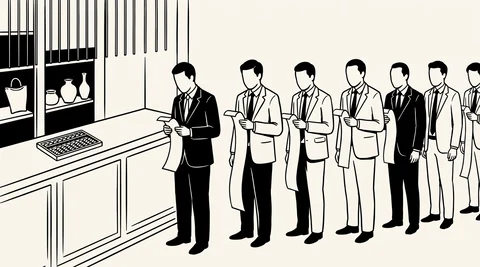



Sima Nan's dropped bowl was picked up by Dong Mingzhu.
On April 22, 2025, Dong Mingzhu, chairman of Gree Electric, ignited online traffic with the statement "Absolutely no use for a returned overseas student, there are spies among them," declaring that she had taken over Sima Nan's mantle.
Some say that Dong Mingzhu's words are particularly ironic in the context of Gree: its proud air conditioner compressor technology originated from American inventions, the Munich R&D center employs foreign engineers, yet Dong Mingzhu tries to use "no use for returned overseas students" to champion "independent innovation."
Some also say that Wang Ziru, Dong Mingzhu's favorite, is also a returned overseas student.
I think, these are not the most important things. The reason why Dong Mingzhu's "spy theory" makes me feel a chill down my spine is not her preference for hiring as an entrepreneur, but the high degree of consistency between her rhetoric and historical scars.
When she says, "There are spies among the returned overseas students, I don't know who is who," what is being reproduced is the sentencing logic of "better to believe it than not" back then: no need for a chain of evidence, just an identity tag; no reliance on professional review, just group stigmatization.
The essence of this kind of thinking is to simplify the complex issue of talent security into a black-and-white identity politics.
As long as this dangerous way of thinking still exists, the scars of history cannot be healed—those scholars who were stigmatized as spies due to their "overseas connections" in special times, their grievances have not yet been fully redressed, and similar thought viruses are trying to revive by taking over a corpse.
In the 1950s, when Qian Xuesen broke through the US blockade and returned to China, his suitcase contained research manuscripts that had been searched eight times by the FBI; Deng Jiaxian concealed his identity for 28 years, calculating atomic bomb data in the Gobi Desert of Lop Nur; Hua Luogeng, in a thatched hut outside Kunming, illuminated the construction of China's mathematical system with a kerosene lamp... These figures recorded in history all have a common identity: returned overseas scientists.
Some of them would not have thought that, more than a decade later, this patriotic enthusiasm would become their own elegy.
In the late 1960s, slogans such as "Those who come are not good, those who are good do not come" were painted outside the welfare buildings in Zhongguancun, and the crimes tailored for overseas returnees began to spread.
Chemist Xiao Guangyan, who had studied under a Nobel laureate and helped China's petroleum industry break through, committed suicide with his wife and daughter after being subjected to 12 consecutive days of harsh interrogation, leaving the last words, "My research results are in the third drawer of the office."
Zhou Huazhang of Tsinghua University, a PhD from the University of Chicago, a "red scientist" who publicly supported the new China during his studies in the United States, jumped from the balcony of his home after being accused of "colluding with foreign countries" in a big-character poster. His textbook "Operations Research" is still a classic.
According to statistics, among the scientists who returned from the United States in the 1950s alone, at least 8 were persecuted to death during those ten years. Their professional fields covered key disciplines such as nuclear physics, computer science, and chemistry, and the research results they protected with their lives later became the cornerstone of technological breakthroughs after the reform and opening up.
Their brains were needed to crack the "chokehold" technologies, but their souls were suspected of being tainted with so-called capitalist toxins—both pathetic and absurd.
In the end, China's scientific and technological circles paid a heavy price—according to the statistics of "History of Chinese Science and Technology", 142 scientists at the rank of associate researcher or above committed suicide during those ten years, directly leading to the interruption of research in multiple cutting-edge fields for more than 10 years.
According to 2024 data from the Ministry of Education, 78% of the heads of key laboratories in China have overseas experience, and the proportion of returned overseas students among the heads of major national science and technology projects exceeds 60%.
While the global scientific community is working to dismantle knowledge barriers, some people are busy building a Great Wall in the ideological field.
If we extrapolate according to Dong's logic, these data are no longer proof of talent advantages, but rather a footnote to "security risks." This cognitive misalignment is so similar to the historical script of first raising Qian Xuesen and others to the altar and then trampling them into the mud.
Moreover, when stigmatizing the group of returned overseas students, Dong Mingzhu may have forgotten that, as a capitalist, the group she represents was also a key target of attack during those ten years.
Rong Yiren's policy of peaceful redemption was criticized as "sugar-coated bullets," Wang Guangying's foreign-related commercial activities were defined as "treasonous acts," and even individual households like Nian Guangjiu, who sold sunflower seeds, were labeled with the hat of "capitalist tail."
The logic of that era was simple and crude: business acumen equals speculation, international vision equals collusion with foreign countries.
Therefore, when Dong Mingzhu packages "no use for returned overseas students" as "security review" and interprets market choices as moral judgment, she is essentially repeating the populist game of "labeling."
This strategy may harvest short-term traffic, but the price paid is the tearing of social trust and, more importantly, the reduction of our country's international competitiveness in the field of science and technology—the innovative ability of multinational teams is higher than that of single-culture teams has long been a global consensus, and our breakthroughs in artificial intelligence, quantum computing, and medical biology largely come from the collaboration of talent at home and abroad.
The lessons of history are never complicated: all eras that stigmatize the flow of knowledge will pay the price of stagnation; all societies that use suspicion to replace rationality will eventually be abandoned by the process of civilization.
When Nixon visited China in 1972, Zhou Enlai specially presented the US side with a photocopy of the New York Times report on Qian Xuesen's return to China, reminding them that "scientists have a motherland, but science has no borders";
Today's China is standing at a critical crossroads: is it to continue to be the "successor" of globalization, or to retreat to the "island" of technological nationalism?