

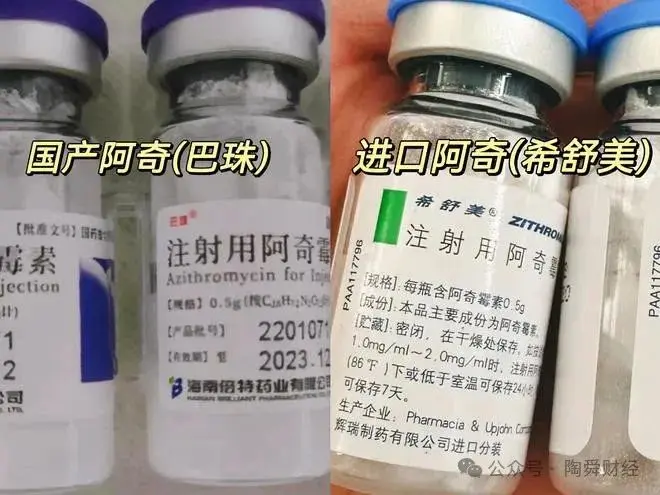
A father in Hangzhou found that when he took his 6-year-old child to the hospital for mycoplasma pneumonia, the imported azithromycin "Sumamed" that his other child had taken for the same condition six months ago was not available in the same top-tier hospital, and only the domestically produced azithromycin "Bazu" could be used.
After two days of intravenous infusion with the domestically produced azithromycin, the child's condition did not improve, and he still had repeated high fevers, which naturally made the parents anxious. After much effort, they finally managed to get the imported azithromycin at another hospital by adding a bed for hospitalization (it was still not prescribed in the outpatient clinic). That night, the child's high fever subsided, and after three more days, he recovered and was discharged.
Source of the case: "A Record of Hospitalization for Mycoplasma Pneumonia in Children: Where Did the Imported Azithromycin Sumamed Go?"
It is entirely imaginable the anger a father would feel when encountering such a frustrating situation:
Just for the price difference of a few dozen yuan, let my precious son be tormented by illness for two more days and bear the risk of worsening condition?! If you don't give my child good medicine, I'll fight you!
The father found that in the 2023 national drug procurement negotiation, the imported drug Sumamed was quoted at 5.58 yuan/bag, while the lowest quoted domestically produced azithromycin was 0.98 yuan/bag. For a 3-day course of treatment, the price difference was 14 yuan, and Sumamed was therefore not selected. Of course, this is the price difference for oral medication; the price difference for injectable azithromycin would be higher, but it's still only a two-digit number.
In recent years, the "soul-crushing price cuts" in the national drug procurement negotiations have led to some imported drugs being excluded from medical insurance and also rejected by hospitals, which is indeed a common phenomenon. Many people find that some imported drugs they used to take have quietly disappeared when they seek medical treatment.
Then the most critical question arises:
If imported drugs are reduced, will it affect our medical treatment?
Are there significant differences between imported and domestically produced drugs with the same ingredients?
Let's start with the conclusion:
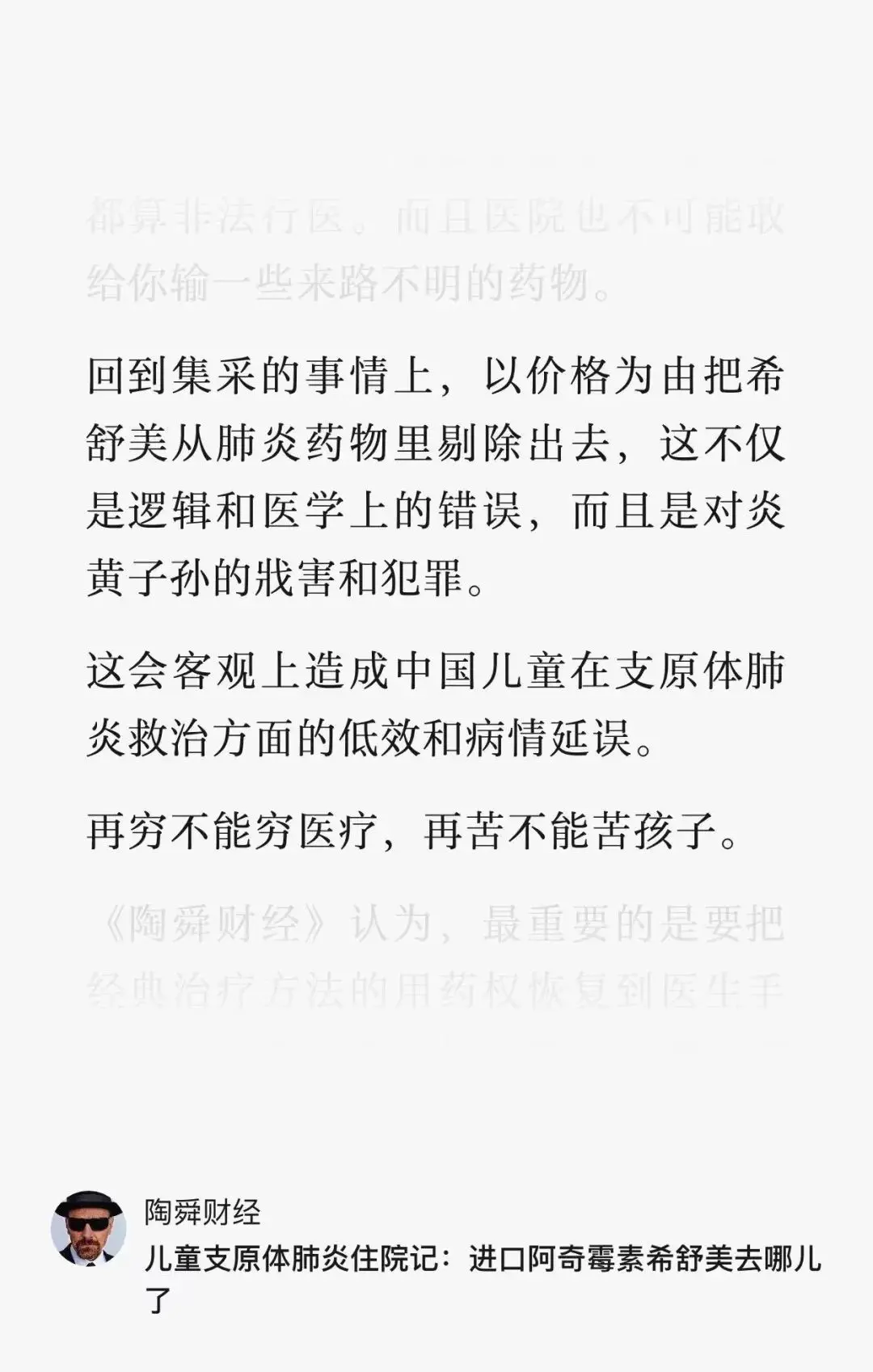
With the same drug ingredients, the efficacy and adverse reactions will indeed differ when produced by different manufacturers, and the specific gap can be large or small. Some are a difference of 95 points and 90 points, and some are a significant difference of 98 points and 61 points.
But it should be noted that the difference here mainly lies between the original research drugs and generic drugs, rather than between imported drugs and domestically produced drugs. It's just that due to the stage of development, imported drugs are mainly original research drugs, and domestically produced drugs are mainly generic drugs. It doesn't mean that imported drugs are necessarily better than domestically produced drugs, nor can it be said that domestically produced drugs are already as good as imported drugs overall. We need to face the gap, but we don't need to belittle ourselves.
Although original research drugs and generic drugs contain the same active ingredients, and many of the content specifications are exactly the same, there are still differences in actual clinical applications.
The first difference is the gap in formulation technology
A capsule, a packet of granules, a tablet, a bottle of powder are different dosage forms of drugs, which contain the active ingredients that play a core role, such as azithromycin, and also contain excipients needed for the formulation process.
Some drug excipients help the active ingredients dissolve for better absorption, some prevent the active ingredients from being destroyed by gastric acid, and some encapsulate the active ingredients to release them slowly and evenly (such as ibuprofen sustained-release capsules). Without the existence of these excipients, many active ingredients of drugs cannot produce efficacy if taken directly.
Here comes the point, after the patent protection of the original research drug expires, what is disclosed is only the structure and production method of the active ingredients, not including a complete set of formulation methods, let alone a whole drug production line and experienced technical personnel.
To give a possibly inappropriate analogy, there is no secret to the cooking process of Peking duck, but even with the same duck, the quality of the duck roasted by different restaurants may vary greatly.
Original research drug manufacturers often have strong research and development capabilities, strict production quality control, and can also support them to continuously accumulate technical experience and improve the production process with the rich exclusive benefits within the patent period. While generic drug manufacturers may be limited by key formulation technology, or because the price is lowered and they cannot use high-standard excipients, which ultimately leads to drugs with different efficacy produced by the same active ingredients.
img
The second difference is the gap in adverse reactions
As a drug, in addition to caring about efficacy, we also need to pay special attention to adverse reactions, which is what everyone often calls side effects.
For two drugs with the same ingredients and the same content, if the clinical efficacy rate is 95%, the incidence of allergic adverse reactions is one in a thousand, and it sells for 50 yuan a box, while the incidence of allergic reactions is 5%, and it sells for 20 yuan a box, which one would you choose? I don't know how others choose, but I would definitely choose the more expensive one with fewer allergic reactions.
The occurrence of adverse reactions is mainly related to the purity of the drug. Whether it is chemically synthesized or naturally extracted drugs, it is inevitable that impurities will be mixed in. In organic chemical reactions, there are sometimes "stereoisomers" that are off by a hair's breadth and lead to a thousand miles of difference. Some impurities are harmless to humans and animals, some impurities may cause allergies, and some impurities may be fatal when they reach a certain concentration.
Those born in the 1980s may all remember that before we had penicillin infusions when we were young, we had to do a very painful skin test every time to make sure you wouldn't be allergic before the infusion, but now doctors usually just ask you orally if you have any drug allergies before prescribing antibiotics.
Of course, there are reasons for the update and replacement of antibiotics, but more because of the progress of drug purification technology. In the 1990s, the production technology of antibiotics in our country had just started, and the quality control level was worrying. The drugs produced were generally mixed with non-negligible impurities, leading to drug allergies and even deaths from time to time.
After several generations of researchers' efforts, the purification technology of antibiotics is now quite mature, so the allergic reactions of antibiotic drugs have been reduced by several orders of magnitude. The predecessor of the biological engineering major at East China University of Science and Technology, where I was an undergraduate, was the first batch of antibiotic manufacturing majors in China, and this is due to the efforts of many of my teachers' teachers.
However, the maturity of antibiotic purification technology does not mean that the purification technology of all drugs is mature and reliable. For some drugs with extremely high purity requirements, especially intravenous injection drugs, even extremely small impurities may lead to major adverse reactions. At this time, the gap in strength between different pharmaceutical factories is reflected.
Returning to the case encountered by the father in Hangzhou at the beginning of this article, Pfizer's Sumamed is azithromycin, and Hainan Bet Pharmaceutical's Bazu is also azithromycin. If you have a choice, which pharmaceutical factory would you trust more?
The third difference is the gap in the drug approval process
The listing of genuine original research drugs (excluding a certain lotus developed in 15 days) requires large-scale randomized double-blind phase III clinical trials to determine that the drug is significantly effective and that adverse reactions are within an acceptable range before obtaining approval to sell. This process usually takes several years and costs hundreds of millions. The efficacy and safety of original research drugs are directly proven by experimental data.
But generic drugs are different; generic drugs only need to go through "consistency evaluation" to be listed.
In short, we already know through Pfizer's Sumamed that azithromycin is safe and effective in treating mycoplasma pneumonia. Now the patent for this ingredient has expired, and other pharmaceutical factories can also produce azithromycin without authorization, as long as they prove that the ingredients, content, dissolution rate, and other values of the azithromycin they produce are consistent with Sumamed, they can directly obtain approval.
According to statistics, after the patent for Sumamed expired, 629 azithromycin drug approvals have been approved in China, involving 312 pharmaceutical companies. Obviously, these pharmaceutical companies that have passed the consistency evaluation cannot all use the same production line as Pfizer's process standards to produce azithromycin drugs.
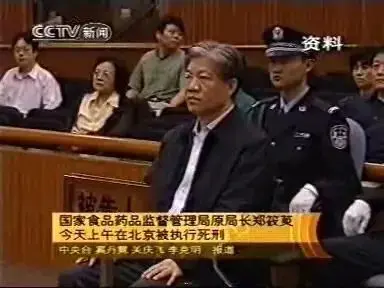
In addition, for reasons known to all, the approval process of Chinese drug approvals inevitably has some flies and tigers at work.
I personally don't have that high a level of trust in generic drugs.
However, on the other hand, not all categories of drugs have significant differences between original research drugs and generic drugs. In fact, most drugs can "work" for both original research drugs and generic drugs. What I mean by "work" here is that the efficacy can meet the basic requirements, and the adverse reactions are not too outrageous. The comprehensive score is roughly a difference of 95 points and 88 points. 95 points is of course better, but 88 points cannot be said to be not good.
What really affects our medical treatment is the situation where the original research drug scores 95 points, and the generic drug scores 61 points or even 58 points... It cannot be said to be common, but it does exist.
Some constructive suggestions:
The national drug procurement negotiation is of course a good thing to save medical insurance funds and reduce the burden of medical treatment for the masses, but if the work can be more meticulous and humane, when there is a large gap between original research drugs and generic drugs, to give high-priced original research drugs a chance, and give patients more choices, even if it is a self-paid choice, it can also make everyone feel more secure.