

Shaoshan Horror: A Misplaced "Petition at the Sedan Chair"
On April 5, 2026, during the Qingming ancestral worship ceremony, as Mao Xinyu and his son Mao Dongdong were walking slowly, a woman suddenly rushed out and knelt down, attempting to submit a petition. Although the accompanying security quickly controlled and dragged her away, the coldness and indifference displayed by Mao Xinyu sparked public attention.
For the petitioner, the reason for seeking out Mao Xinyu was because he is the direct descendant of the "great leader." In the context of the failure of legal remedies, there remains a fantasy of bloodline authority among the people. However, the reality is that although Mao Xinyu is a general, in the current political landscape, he is more of a worshipped symbol and has no actual power to handle administrative or judicial affairs.
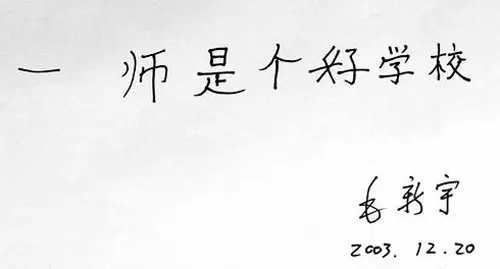
Born Political: The Arranged Continuation of Bloodline
The birth of Mao Xinyu was itself a "political task." According to relevant archives and memoirs, due to the death of Mao Zedong's eldest son Mao Anying and the long-term mental illness of his second son Mao Anqing, the Mao family faced a crisis of extinction.
Under the personal direction of Zhou Enlai, Mao Xinyu was born in the 301 Hospital in 1970 through artificial insemination technology. His childhood and youth were filled with the traces of the system: a college entrance examination score of 107 was enough to enter Renmin University of China, and his doctoral dissertation studied "Grandpa's Military Thought." This "patronage" system, which relied on bloodline privileges, allowed him to become the youngest major general in the People's Liberation Army in 2010, even though his intelligence and academic abilities were questioned by the outside world.
From "Scene Stealer" to "Transparent Person": The Tightening and Fading of Power
Mao Xinyu once served as a member of the National Committee of the Chinese People's Political Consultative Conference for two consecutive terms, and during the two sessions, he became the focus of media attention due to his unique remarks and unsightly but dense inscriptions. But in political logic, this "absurdity" constituted a challenge to the authority of the system.
- Adjustment of the official narrative: After 2017, Mao Xinyu successively lost his position as a representative to the 19th National Congress and a new member of the CPPCC. This means that against the backdrop of tightening high-level politics, even the descendants of the Mao family are no longer allowed to occupy the public eye in an "uncontrolled" manner.
- The consciousness of a puppet: His work has long been limited to the study of party history at the Academy of Military Sciences, but the "four dishes and one soup" that he described for his grandfather is completely out of touch with the real Mao Zedong, who had air-transported supplies and a dedicated chef. He has spent his life trying to live as a symbol needed by the official, but inadvertently revealed the cracks in the system.
The Family's "Landing": Returning to the Common People from Patronage
In the video record, a detail is moving: Mao Dongdong, who has grown up, tidies his father's protruding belly at the ancestral worship site. At this moment, Mao Xinyu is no longer the ridiculed political puppet, but an elder cared for by his children.
As Mao Xinyu gradually fades out of politics, his children (Mao Dongdong, Mao Tianyi) seem to be living in a way that is more in line with ordinary people (such as studying at normal military academies and learning piano). This transition from "descendants of the altar" to "social elites" or "ordinary people" may be the last bit of freedom this family has gained in a special political ecology.
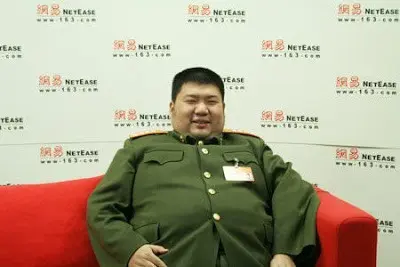
The Remaining Metaphor in the Archives
The story of Mao Xinyu is not a personal tragedy, but a side profile of an era. He represents the "patronage group" formed after the founding of the CCP, and his personal mediocrity and prominent status constitute a strong irony.
The Free Archives record this case to reveal: when bloodline becomes a stepping stone for promotion, when deified worship is transformed into blind appeals for descendants, this society is still in the fog of power. And Mao Xinyu's indifference to the petition on the way to ancestral worship is the most real footnote to the suffering of the common people by this huge system.
Mao Xinyu's life is a living specimen of highly monopolized power and bloodline politics. He obtained a position through the system that he could not achieve with his abilities, and because of this position, he was deprived of the freedom to choose his life as an independent individual. Recording his fading out and being intercepted is to record the absurd and heavy undertones in Chinese politics that have not yet dissipated.