


01
A couple of days ago, I wanted to search for the latest similar cases on the China Judgements Online website. As a result, when I entered keywords, I found that the latest similar cases in 2025 were few and far between. What I retrieved were mostly withdrawal rulings or extremely simple judgments of a few hundred words.
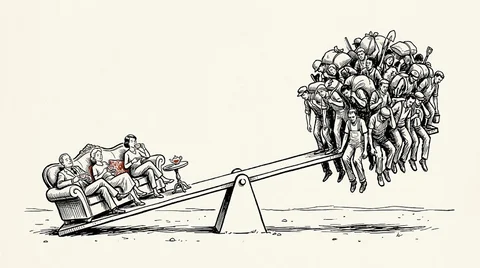
The platform, once hailed as a project of judicial transparency, now resembles an empty archive: the door is open, but the content is quietly evaporating.
This is not just my personal feeling, but a common sentiment among all legal professionals.
The China Judgements Online website was launched in 2013, and the number of published documents has increased year by year.
In 2019, nearly 20 million documents were published, 18 million in 2020, and 16 million in 2021.
However, in 2024 and 2025, the number of published documents was only about 7.5 million.
02
I am always grateful for the birth of the China Judgements Online website, and I believe it is a leap forward revolution in China's rule of law process.
First of all, the China Judgements Online website has become a living textbook for popularizing the law for all.
It allows cold and abstract legal provisions to enter ordinary people's homes through vivid cases, and the public can see the logic of judicial operation.
The publication of the China Judgements Online website provides the public with authoritative and complete factual basis and legal reasoning.
This publication itself is the most effective legal education and can cultivate citizens' awareness of rules.
The China Judgements Online website has also become an intelligent engine for the legal profession and standardizes the criteria for judgment.
For judges, prosecutors, lawyers, and scholars, the China Judgements Online website is an irreplaceable tool library.
Lawyers predict risks by searching for similar cases when representing cases;
Judges refer to prior judgments when hearing difficult cases to ensure the same case is judged the same way;
Scholars can discover the true logic of judicial practice from it and promote the interaction between theory and practice.
It can be said that the China Judgements Online website greatly reduces the information cost of legal work and improves professional efficiency and accuracy.
The China Judgements Online website has also become an invisible supervision that forces judicial fairness.
Publishing documents online means that every fact-finding, legal application, and logical reasoning of a judge will _be subject to the scrutiny of peers and history.
This pressure forces judges to write every document more cautiously and responsibly.
This mechanism of forcing from the open is an indispensable part of improving judicial credibility.
03
However, the ideal is full, but the reality is bony.
The sharp decline in the number of documents is not a simple reversal, but _a necessary adjustment under the intertwining of multiple complex contradictions.
First of all, our country the difficult balance between the massive publication of documents and privacy protection.
This dilemma is very intuitive.
For the parties involved in a lawsuit, especially family disputes, commercial scandals, or personal misfortunes, it is not a glorious thing.
Although anonymization has been adopted, in a highly interconnected information society, combined with specific case details, time, and other factors, the risk still exists.
In recent years, discrimination and fraud cases caused by the disclosure of personal information in judgments have occurred from time to time.
However, if various information is hidden for the sake of protection, it will make the documents lose their research value, and the significance of publication will be greatly reduced.
Therefore, how to draw a reasonable boundary between protection and publication is a technical and ethical problem that needs to be solved urgently.
Secondly, the reality conflict of judges being overwhelmed.
The work of publishing documents online is ultimately the responsibility of the person in charge in most courts.
Under the normal situation of more cases and fewer people, in addition to handling daily work, judges also have to undertake the extra work of format adjustment, sensitive information screening, and removing privacy of online documents.
During the peak period of case closing, they are too busy to handle the core work, and the huge workload makes it difficult for them to take care of it.
Judicial resources are limited, and they can only choose to publish selectively.
Third, the Supreme People's Court promotes the cultivation of high-quality cases and the path differentiation of comprehensive document publication.
Currently, the Supreme People's Court is vigorously promoting the construction of guidance cases and the case library of the People's Court, emphasizing the release of such typical and guiding high-quality cases.
This also marks that the idea of judicial openness has shifted from pursuing quantity to focusing on quality.
The policy orientation makes the quantity and scale requirements of published documents lower, and the value of the China Judgements Online website is also slowly discounted.
Fourth, the current governance challenges of data security and data silos are severe.
The China Judgements Online website contains huge data value, which can be used for social research, legal research, etc., but at the same time, its security risks are also increasing day by day.
How to prevent data from being maliciously crawled and abused is a new challenge in the information age.
04
Finally, let me talk about my point of view.
I believe that judicial openness should move towards a more pragmatic and refined new stage.
First of all, we must continue to increase the efforts to publish judgments online.
Although the quality of the current case library and guiding cases is very high.
But the quantity is small, and most of them focus on major and difficult cases.
And the property disputes, labor disputes, and small-amount lending that ordinary people care about are often excluded.
The progress of the rule of law cannot only rely on the showcase of high-quality products, but also needs the transparency of daily shelves.
Secondly, promote the “layered and classified” refined publication strategy.
According to the standards of case type, social impact, legal value, etc., clarify the boundaries of “mandatory publication”, “publication upon application” and “non-publication”.
For example, for judgments involving public policy and with general legal guidance significance, the full text must be published;
For specific types of cases involving minors, family privacy, etc., the scope of publication should be strictly limited.
Third, a dedicated judicial disclosure post should be established to separate the document disclosure work from the judge's responsibilities.
At the same time, we must promote the development of desensitization systems and use technology to replace manual correction or substitution of privacy.
05
The China Judgements Online website should not “die”, but should return to its original intention: not a display, but sunshine.
When a judgment is locked in the filing cabinet because of “trouble”, what is covered is not only the text, but also the light of the rule of law.
We hope to protect not only the legal provisions, but also the judicial courage that dares to be open and withstand scrutiny.