

The previous article mentioned Japan's assistance to Chinese Go. What I want to say is: we miss Nie Weiping and that era. We shouldn't promote "anti-Japanese heroes" and "chess world Yip Man" to incite emotions. The core is the opposite, which is "learning from Japan" and "Sino-Japanese friendship".
After writing this, I still feel unsatisfied, so this article discusses "What is Japan's greatest help to China?"
This topic is taboo. Earlier, NetEase News did a special feature, which seemed to be about Japan's Official Development Assistance (ODA) to China's infrastructure construction. In the end, it caused a huge uproar and had to be taken offline.
But I think this matter should be discussed, and it should be discussed more, because many Chinese people don't know. If you don't know the basic facts, how can you have the correct understanding? Incorrect understanding will inevitably lead to incorrect attitudes, and the biggest harm is not to Japan, but to China.
Now let's get to the point. First, let's talk about Japan's ODA to China, which is very important: for example, steel. Without Baosteel, China's modernization process would have been delayed by at least ten years; also, fertilizer. Without the Luzhou Chemical Fertilizer Plant, it would have taken several years for Sichuan farmers to have enough to eat; and also energy, communication, ports, airports, etc. The ODA projects accurately flowed to the bottlenecks that restricted China's economic development. Here, I recommend everyone to watch the NHK documentary "Japanese People Who Promoted China's Reform and Opening Up".
ODA's aid projects are important, but not the most important. As someone who worked in a Dongguan factory more than twenty years ago and has lived in Canada for two years now, I believe that Japan's greatest help to China is the contribution of Japanese companies to China's "full industrial chain".
If I hadn't lived in Canada for two years, I wouldn't have such a deep understanding of the "full industrial chain", because Canada's industrial chain is too incomplete. It lacks everything and relies on imports. In Ontario, where I live, even the most complete automotive industry requires several trips to the United States before a whole car can be assembled. I didn't feel it before, but now I know how terrifying the full industrial chains of the Pearl River Delta and the Yangtze River Delta are! No matter what you want to produce, you can find more than 90% of the parts within an hour's drive. There is no third place in the world like this.
Therefore, the "full industrial chain" is the greatest achievement of China's economic development in the past few decades, and it is also its biggest trump card. Nothing can compare to it. For example, the China-US trade war has been going on for so many years, and even someone as strong as Trump had to call it quits. And in the case of a 20% decline in trade with the US, according to a report just released by the General Administration of Customs, China's total foreign trade value in 2025 still hit a new high, exceeding 45 trillion yuan.
All this can be attributed to the world-class "full industrial chain", and in this regard, no country has helped more than Japan (or rather, Japanese companies).
I haven't worked in a Japanese company. More than twenty years ago, I worked in a Hong Kong-funded factory, but in the engineering department where I worked, the good CNC machine tools were made in Japan, and many of the good cutting tools and steel were also made in Japan. How backward was China in digital machine tools at that time? Let me put it this way, we couldn't find a simplified Chinese version of the book on CNC programming, only a pirated traditional Chinese version from Taiwan. And the workshop management was based on Japan's 5S (Five Constants Method), and how backward was the management of state-owned enterprises at that time? I once took two laid-off colleagues to the team I was in (I was the foreman). The young one stayed, but the older one couldn't adapt and went back to Sichuan.
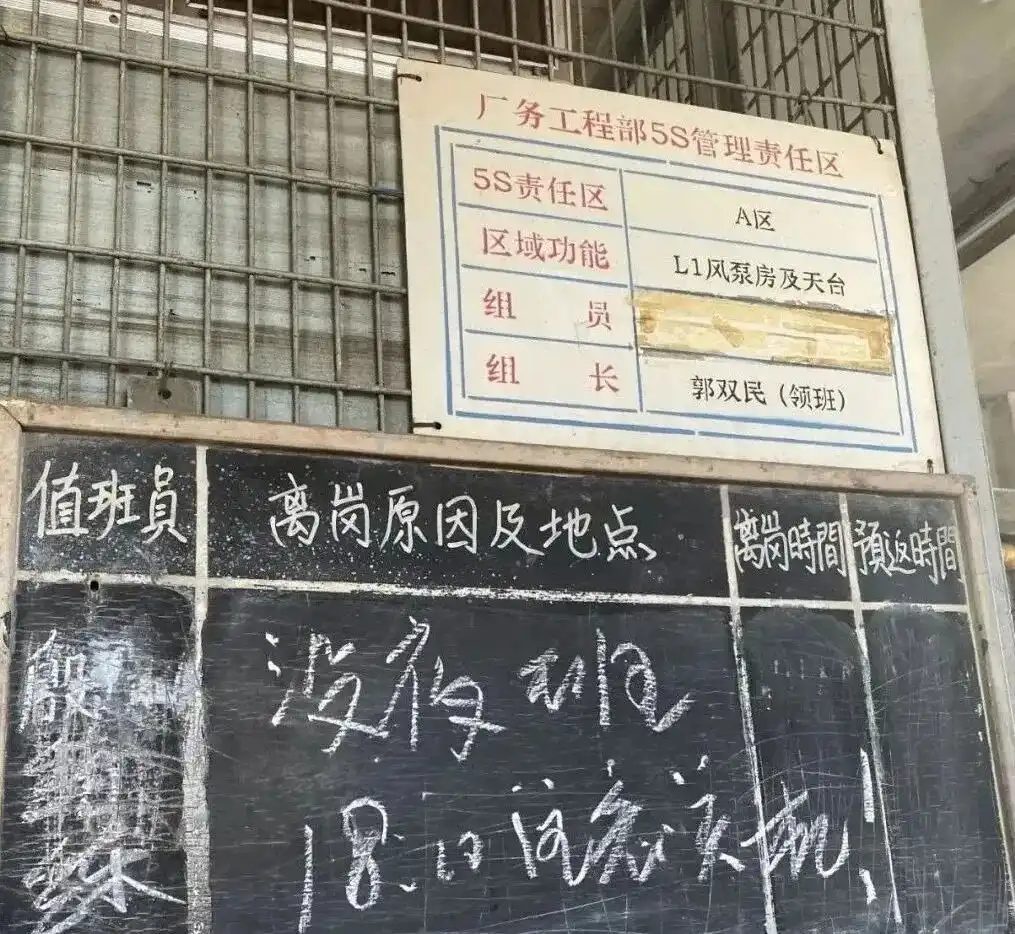
The picture above is the engineering department where I worked at that time. At that time, all the companies in the Pearl River Delta were learning from Japanese companies.
Compared with Japanese-funded factories, Hong Kong-funded and Taiwan-funded factories lack core technology and mainly rely on OEM. For example, the stationery factory I worked in OEMed the small clips inside the file folders; while European and American companies are product-oriented and don't pay much attention to the training of suppliers and workers; Japanese companies are different. They come in large numbers and bring second-tier and third-tier manufacturers to China, forming a complete industrial chain. In this process, these manufacturers will inevitably cooperate with local Chinese companies. The electronics industry in the Pearl River Delta was developed in this way, otherwise, how could there be Huawei and ZTE later? And in the Yangtze River Delta, the "4-hour industrial circle" constructed by Japanese car companies requires 80% of the key components to be solved within a 4-hour drive, and the "full industrial chain" is gradually established.
And it has cultivated a large number of Chinese local talents. NHK has filmed many documentaries, including "Sino-Japanese Showdown: The Battle of Manufacturing Craftsmen" and "This Used to Be Japanese Technology", which talk about how Japanese companies "teach" Chinese technical management personnel, and how these talents compete with Japanese companies after entering Chinese companies. Despite regrets, many Japanese engineers who have experienced it still express their admiration for the diligence and studiousness of their Chinese apprentices in interviews. This reminds me of Hideyuki Fujisawa's earnest teachings to Chinese chess players, and then he lost to Nie Weiping in the team competition.
How big is this impact? One of China's most powerful companies now, CATL, the global leader in power batteries, started its career at Dongguan SAE Magnetoelectric Factory, a subsidiary of the Japanese electronics giant TDK. The core technical team and management backbone of CATL in the early stage almost all came from companies with Japanese backgrounds. It is no exaggeration to say that "without Japanese companies, there would be no CATL". There are countless examples like this. In the Pearl River Delta and the Yangtze River Delta, countless Chinese companies have benefited from the entry of Japanese companies, and it is these companies that have built today's "full industrial chain".
Looking back, the biggest contributors here are the entrepreneurs and bosses (the smartest, most diligent, and most daring people), the workers (initially migrant workers and laid-off workers, and my colleagues were basically these two types), foreign companies (which brought capital, management, and technology, and Japanese companies contributed the most), and the local governments with market awareness.
This is common sense. Saying these common sense is not meaningless. As mentioned at the beginning of the article, if you don't even know the basic facts, how can you have the correct understanding? Therefore, based on the above facts, do not hate entrepreneurs and bosses, do not hate foreign companies/foreign countries (especially Japan and Japanese companies), and do not forget the farmers and migrant workers (Chinese farmers contribute the most to this country's economic benefits not in the countryside, but in those factories and construction sites along the coast).
I know that someone will definitely say: "How can you say that this is Japan's 'help' to China? Aren't these Japanese companies just here to make money?" Isn't this nonsense? Of course, Japanese companies are here to make money, but haven't you heard the saying "business is the greatest charity"? Business not only gives money, but also gives technology, management, solves employment, and builds an industrial ecosystem... In the end, it even allows you to grow up and defeat it. Is there a better "help" than this? This is why I say that Japanese companies' investment is more helpful to China than Japan's Official Development Assistance.
Therefore, those who incite hatred have nothing to do with patriotism. This is not patriotism, but outright national traitors. If you listen to them, go and monitor Japanese schools, say they are spies, insult and hurt Japanese people, and want Japanese companies to get out of China, this behavior "hurts China the most, not Japan." I'm just wondering, don't these people need to go to work to earn money and support their families?
We need peace, we need friendliness, we need mutual respect, so that we can do business together; don't shout and fight. If you really have the ability, defeat Japanese companies in fair market competition, that's also a skill - just like Nie Weiping defeated Hideyuki Fujisawa in the team competition. After Mr. Nie passed away, the Japan Chess Association, from the chairman to Koichi Kobayashi and Hideo Otake, issued condolences, which can be called "gentle and refined", and this is the "gentleman's demeanor".
In the past decade, there have been occasional reports of Japanese companies withdrawing from China. There are many reasons, and generally speaking, it's not a good thing. In 2020, I returned to Dongguan for the first time after 20 years, and the factory where I used to work had already closed down, which is not a good thing.
But in any case, the withdrawal of Japanese companies is at least clean, and even can be called beautiful. In November 2025, Canon closed its printer factory in Zhongshan, and the compensation plan caused a huge response online. This is the "last lesson" that Japanese teachers gave us.