Hello everyone, I’m Xiao Nuo.
The beginning of 2026 is already bustling with activity, with the international situation in turmoil and various factions taking turns on stage.
But I don’t want to write about those things because I’m from Hebei, and I want to write about what I can see and hear.
In the past two days, the issue of heating in rural Hebei has once again trended on social media.
Why “again”?
This issue isn’t new; two years ago, News Bro also discussed it around the same time.

Every time my friends from the south come to visit, they are amazed by the magic of the heating.
Taking off their down jackets at home, they warm their icy hands on the radiators, and only then do they feel alive.
How can you survive without heating in minus ten degrees Celsius?
But you have to survive, and many people are just enduring it.
Many of those enduring are elderly people in rural areas, who don’t use the internet.
When young people return to their villages during the holidays, they find that their families are reluctant to turn on the heating, and it’s so cold.
Whose family doesn’t have elderly people who have lived through hardship? At this time, the children usually advise: Spend what you need to spend, don’t suffer for the sake of saving a few pennies.
But these “few pennies” in rural Hebei, I also find it a bit difficult to advise.
At the 2025 Two Sessions, People’s Congress representative Yang Hui calculated an account.
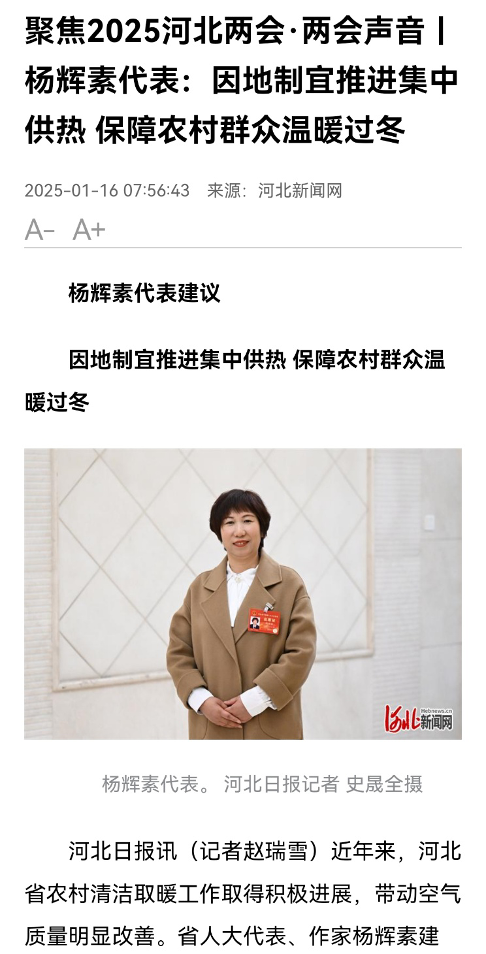
Based on a family’s housing area of 100 square meters, to maintain an indoor temperature of 18 degrees Celsius, you need to burn 20-30 cubic meters of natural gas per day.
Based on the lowest natural gas charging standard of 3.15 yuan/cubic meter in Shijiazhuang, it would cost about 7560-11340 yuan for a winter.
How much, you say how much?
How much income do rural elderly people have in a year, and how much is their pension?
More than ten thousand, who can afford that?
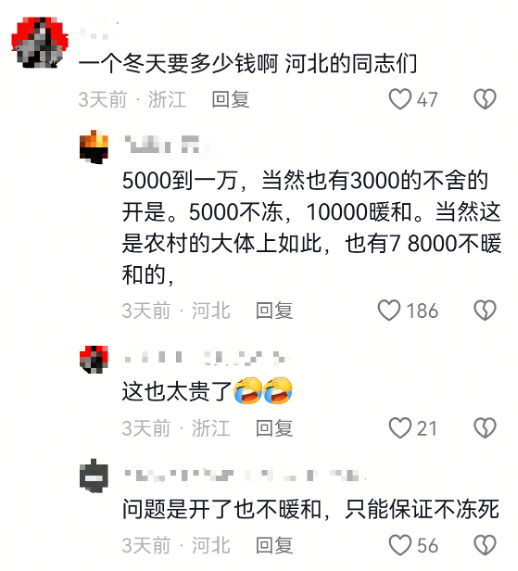
Of course, many families don’t keep it on all the time; they might turn it on at night when they sleep, or only turn it on for a while when they really can’t stand the cold.
Even if it’s not ten thousand, it’s still a few thousand.
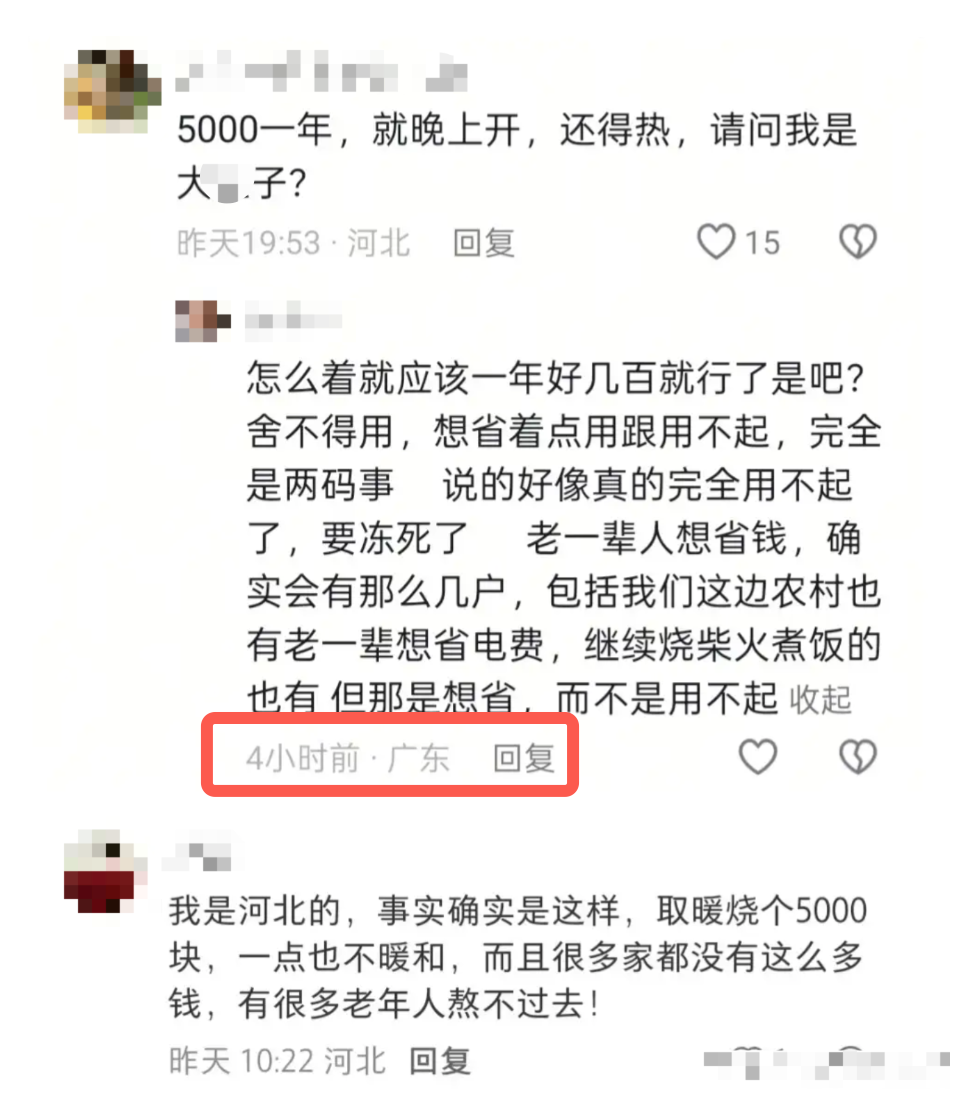
Of course, some people also say that if you calculate carefully, heating is actually very cost-effective, and the reason they don’t turn it on is because of the elderly’s mindset.
It’s just that the IP address isn’t in Hebei.
Although my home is in Hebei, it’s not in the countryside; centralized heating in the city costs only two or three thousand a year.
It’s just that in those years when the smog was severe, it wasn’t always very warm.
Most of the municipal centralized heating uses coal, so why isn’t it allowed in the countryside?
If you burn coal, it would only cost one or two thousand for a winter, which is much cheaper than natural gas.
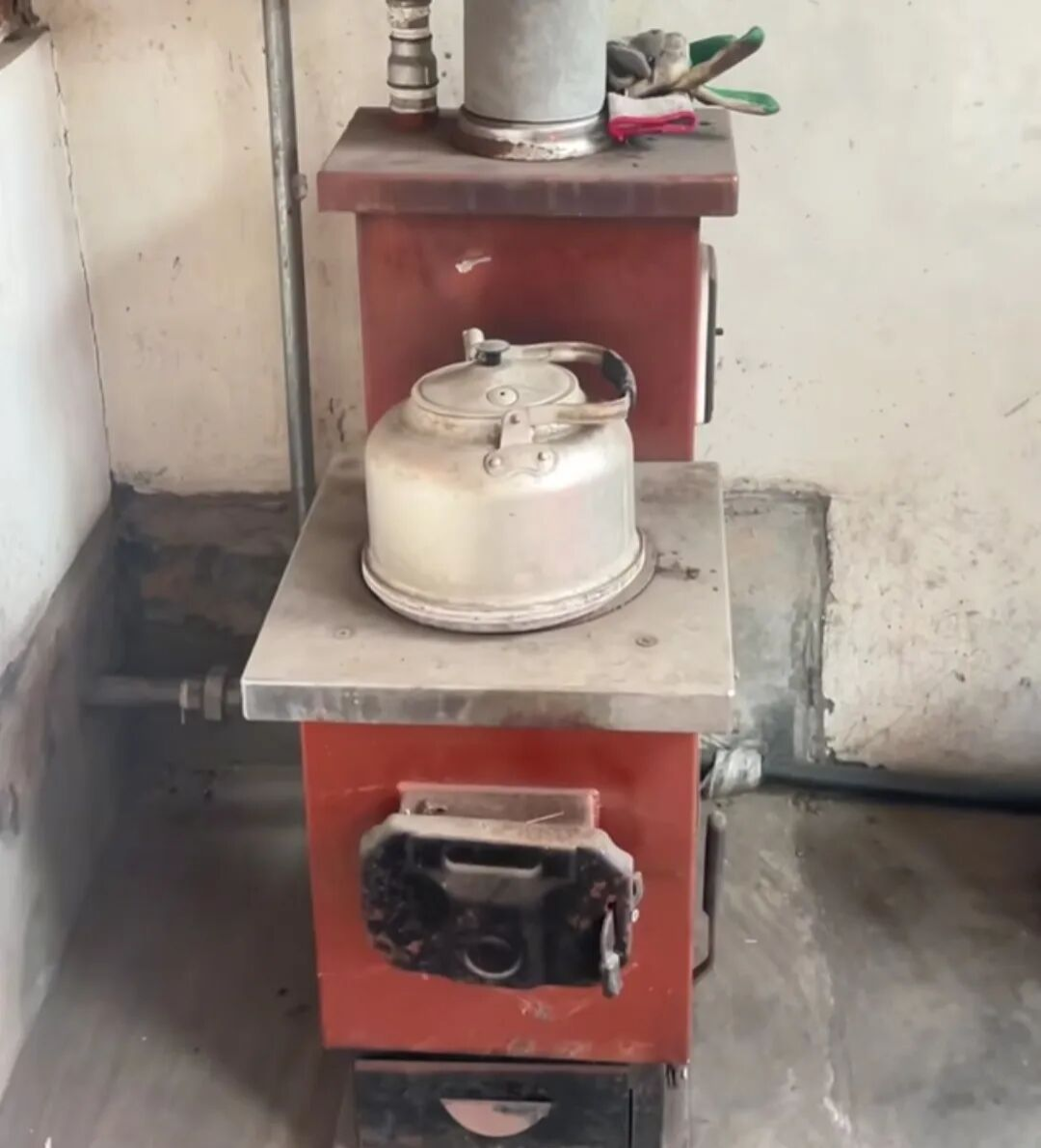
This brings up the “coal-to-gas” conversion that began many years ago.
Burning coal is bad for the environment and can also lead to carbon monoxide poisoning. The coal-to-gas conversion is to ban burning coal and switch to natural gas heating.
The policy has been implemented for nearly 10 years. Initially, there were many subsidies, and everyone was willing to cooperate and installed wall-mounted boilers.
But in recent years, heating subsidies in many places in Hebei have gradually decreased from 1 yuan/cubic meter to 0.8, or even 0.2…
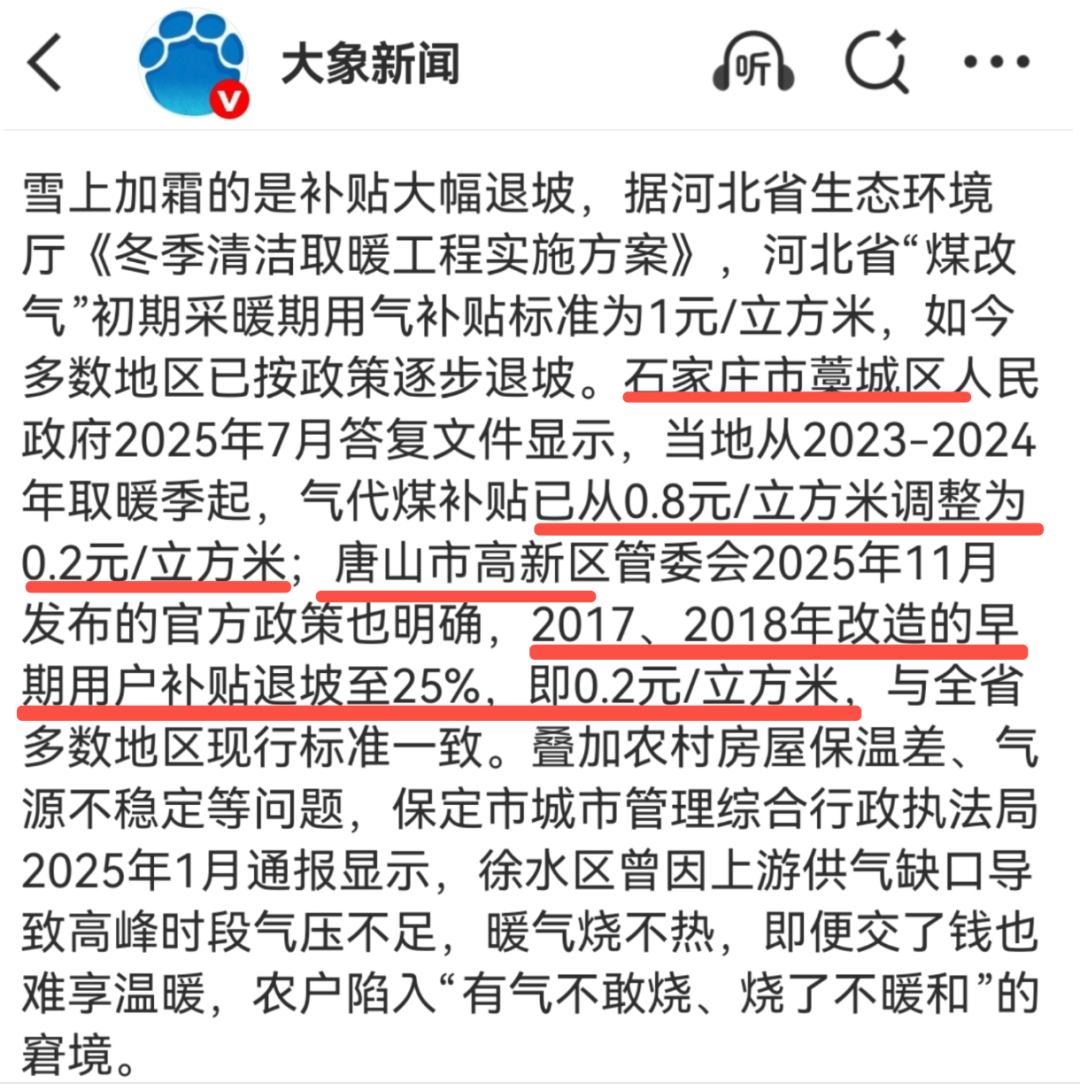
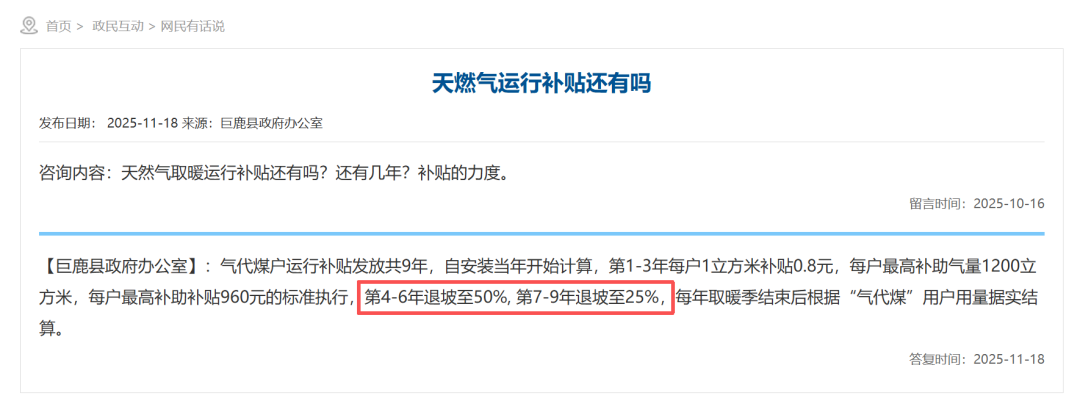
One blogger said that their self-built house is quite large, and it costs nearly 1000 yuan for heating during the 10 days of the Spring Festival. Now the subsidies are negligible, who can afford it?
Not to mention the distant places, take Tianjin next door as an example. The price of natural gas for rural winter heating is 2.76 yuan per cubic meter, and there is a subsidy of 1.2 yuan/cubic meter for coal-to-gas conversion.

In Hebei, it’s 3.15-3.4 yuan, nearly 1 yuan more expensive.
And the per capita disposable income of rural residents in Tianjin is 10,000 yuan more than in Hebei.
According to 2024 data, the per capita annual income of rural residents in Hebei is 22,000 yuan, and their per capita disposable income is even less.

(Source: Netcom Hebei)
For the most basic survival issue like heating, it’s more expensive in places with lower incomes…
Of course, I know that money doesn’t come from nowhere, and you definitely have to consider how much to subsidize.
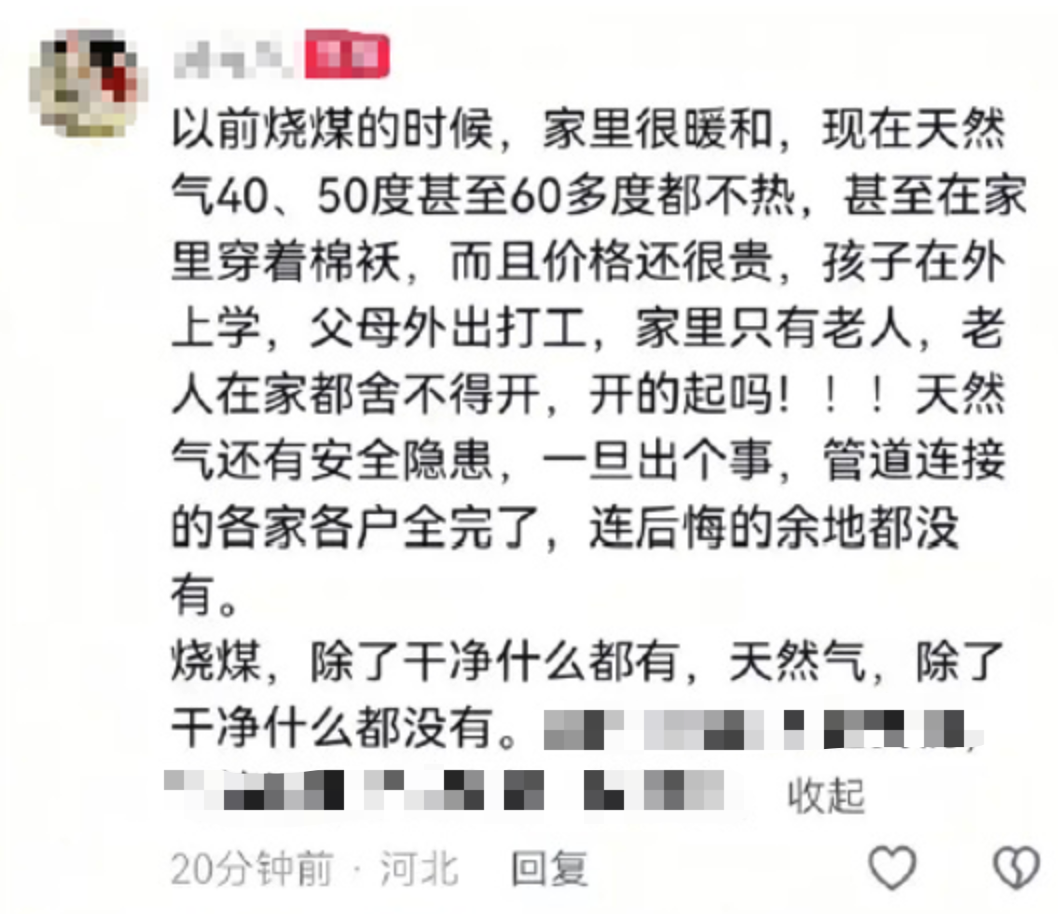
I also saw someone say that besides not being able to afford it and not daring to use it, the unsatisfactory heating effect of natural gas is also a problem.
Self-built houses in rural areas generally lack insulation layers, and there are large gaps in doors and windows, so heat is easily lost. Even if the wall-mounted boiler is turned on all day, you still have to wear a cotton-padded jacket at home.
Residents have tested that the wall-mounted boiler needs to be heated to at least 60°C to barely maintain 18°C in the room, and the energy consumption cost is high.
So, are there no other ways to heat?
Yes, but none of them are very suitable.
Using air conditioners and electric heaters will generate high electricity bills, and the heat is uneven; air source heat pumps cost tens of thousands to install, and they can’t fundamentally solve the problem.
For residents who can’t afford natural gas, burning coal is still cost-effective.
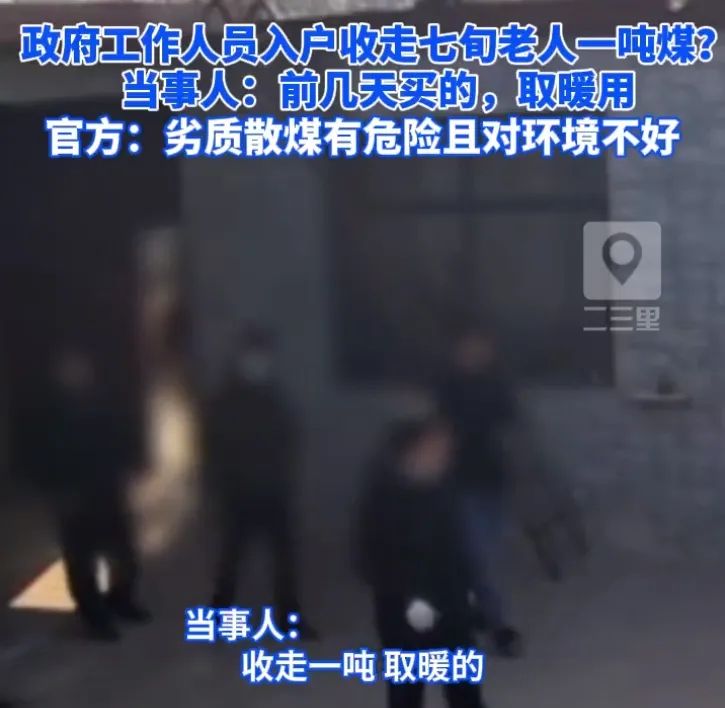
But now the village is strictly controlled, and in some places, coal stoves are forcibly dismantled, and drones patrol and monitor smoke emissions 24 hours a day, with fines for violations.
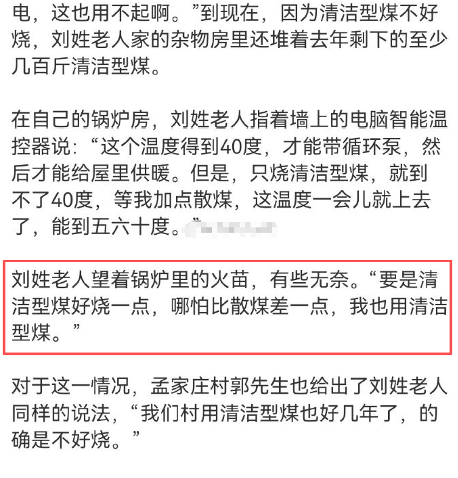
In areas other than the coal ban zone, clean coal can be burned, but many people report that it’s like a mercury-free thermometer, expensive and not easy to use.
(Source: Jimu News)
Seeing the situation of their hometown shared by netizens makes people worry.
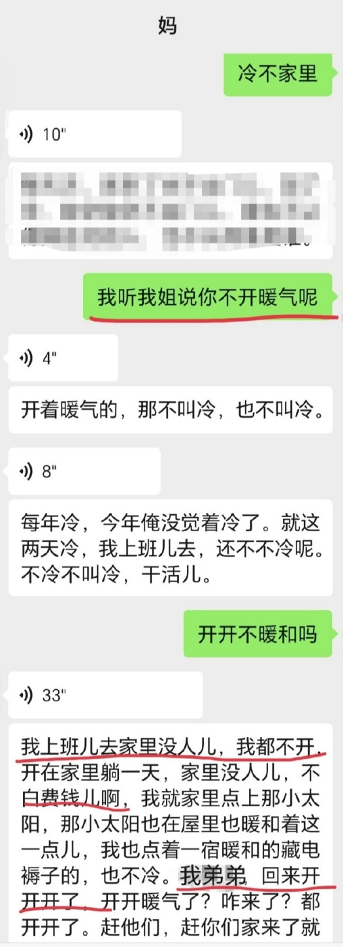
The elderly left behind are reluctant to turn on the gas, wrapping themselves in thick quilts and enduring the cold on the kang; some families turn off the wall-mounted boiler and squeeze into a small room to use a “small sun” heater.
Some people also report that even if they grit their teeth and spend the money, there will sometimes be insufficient gas pressure and gas outages in the middle of the night during the heating peak.
Outside of Hebei, this kind of predicament actually exists in other places.

In a village in Guan County, Shandong, coal-to-gas conversion was implemented around 2021. They initially thought it was free installation, but later they said that it would cost 3,000 to open an account, and those who didn’t register for heating panels initially had to pay 16,000.
By 2024, of the approximately 800 households in the entire village, no more than 10 actually used natural gas.
The person in charge said that there were discounts for coal-to-gas conversion in the early years, but it was later suspended due to other reasons.
Subsidies can stop, but the cold wind won’t stop.
For rural residents, the “expensive” and “cold” problems have not been resolved for a long time, and this winter is too difficult to endure.