1. Two complaints through official channels and a vanished article sparked a series of reactions.
It all began with two faint alarms.
On October 14, on the People’s Daily message board, ID “23919543” left a message for Zuo Yongxiang, Secretary of the Mianyang Municipal Party Committee: “The Xiushui Filling Factory in Anzhou District, Mianyang City, is polluting, the crops in Shihong Village, Xiushui Town, Anzhou District, Mianyang City, are polluted, and the people are having difficulty breathing. I hope the higher-level leaders will pay attention.”
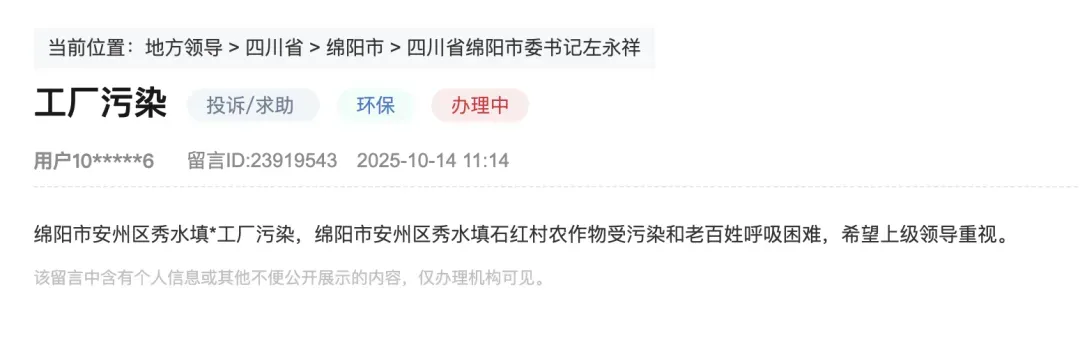
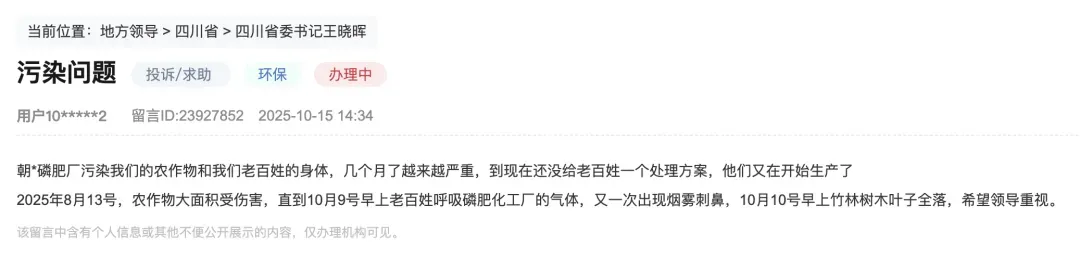
On October 15, ID “23927852” left a message for Wang Xiaohui, Secretary of the Sichuan Provincial Party Committee: “The Chao* Phosphate Fertilizer Plant is polluting our crops and the bodies of our people. It has been getting worse for several months, and there is still no solution for the people. They are starting production again August 13, 2025, crops were damaged on a large scale, and until the morning of October 9, the people were breathing the gas from the phosphate fertilizer chemical plant, and smoke was pungent again. On the morning of October 10, the leaves of the bamboo forest and trees all fell. I hope the leaders will pay attention.”
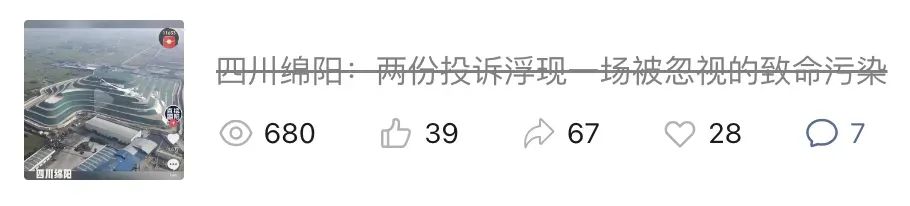
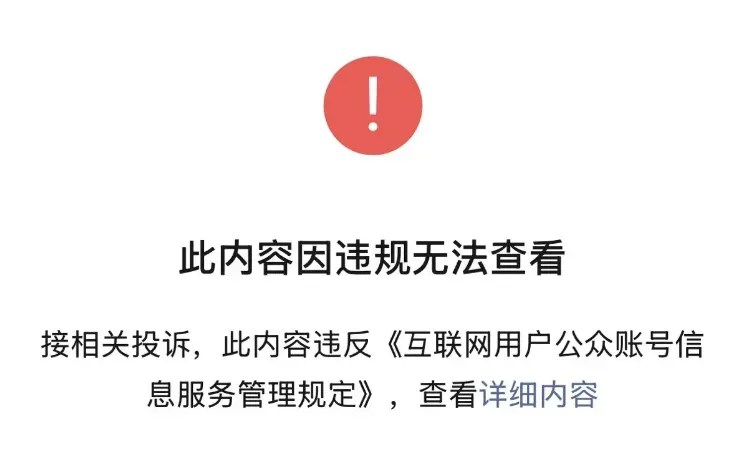
On the afternoon of October 20, an article titled “Sichuan Mianyang: Two Complaints Reveal a Fatal Pollution Ignored” appeared on the Internet. It was like a stone thrown into a deep pool, which should have caused ripples, but it left an almost imperceptible trace on the surface of the water, and then quickly sank and disappeared. The life of the article was extremely short. After only 680 views, the page turned into a cold red and white prompt: “This content cannot be viewed due to violations. According to relevant complaints, this content violates the ‘Regulations on the Management of Information Services for Public Accounts of Internet Users'” .
These 680 clicks were like a ghost screening. Most people didn’t even have time to see the content clearly, and the words on the screen had already vanished. Unexpectedly, the QR code of the WeChat group “Concern about the pollution of the Chaoyang Phosphate Fertilizer Plant in Mianyang, Sichuan” attached to this short article, thus opened the curtain of a big drama…
The speed at which the article was deleted was astonishing. A post with less than a thousand views would not usually trigger such a rapid and precise response from the censorship system. This efficiency suggests a highly vigilant monitoring mechanism, which does not passively wait for public opinion to ferment, but starts as soon as the spark appears. This is not clumsy bureaucratic delay, but a rehearsed, proactive protocol, the goal of which is to nip the problem in the cradle before it becomes a public topic.
Just before the article disappeared, 10 new users quietly entered this WeChat group through that group QR code. Including the author of the article, “Brother Nuts”, and his two friends, the total number of group members was exactly 13. This number itself reminds people of “The Last Supper”. Among the 10 newly added members, in addition to the two writers, six came from Mianyang, Sichuan or related to Mianyang.

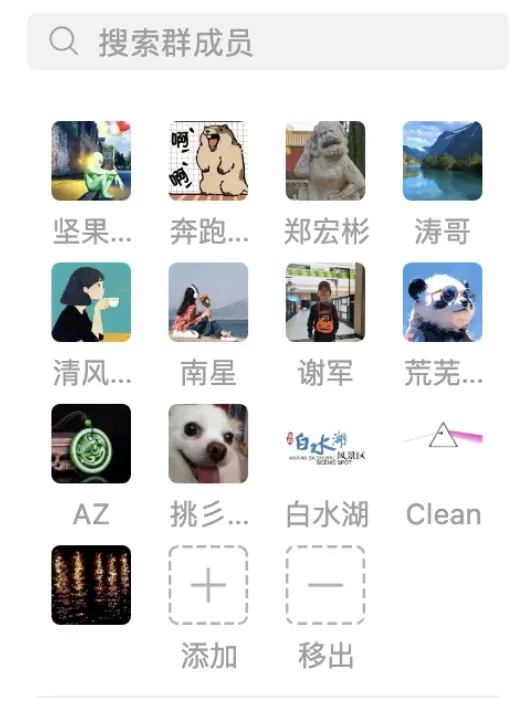
Overnight, this digital space, originally set up for information exchange, underwent a fundamental change in nature. It was no longer a simple community of followers, but a miniature, closed theater. The stage has been set, and the spotlight is focused on these 13 IDs. A dark battle around truth, lies, and power is about to be staged in this small WeChat group. At first, no one knew who among these 13 people was a real villager, who was an enthusiastic follower, and who was a “relevant department” personnel who had sneaked in with a mission.
The core question has emerged: who are these mysterious “Mianyang visitors”? Why did they come?
2. The 13-person WeChat group: mysterious actors on the digital stage
As the 13 members gathered, the curtain of this miniature theater slowly opened. The dialogue began to flow, but soon, the words and deeds of some of the characters revealed something unusual. Their speeches seemed casual, but they revealed carefully designed traces everywhere, as if every sentence had been rehearsed. A digital detective game began, and the clues were hidden in their avatars, nicknames, and contradictory words.
“Brother Tao”: a local with contradictions
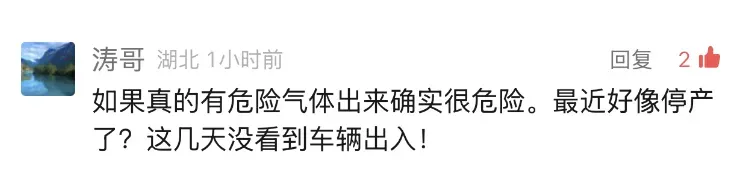
“Brother Tao” was one of the first characters to become active in the group. His initial image was that of an ordinary local who cared about his hometown’s environment. Under the deleted article, he left a comment, his tone objective and concerned: “If there is really dangerous gas coming out, it is indeed very dangerous. It seems to have stopped production recently? I haven’t seen vehicles coming and going these days” . This message portrayed him as a resident who carefully observed the local area, and his words seemed to provide circumstantial evidence for the seriousness of the incident, and also suggested that the situation might have improved.
However, when the author of the article took the initiative to add him as a friend, “Brother Tao”‘s persona became suspicious. In a private chat, he made a completely opposite statement to the author: “This enterprise should not be big, I have never heard of such an engineering (factory) at home… I am a local and have never heard of it” .
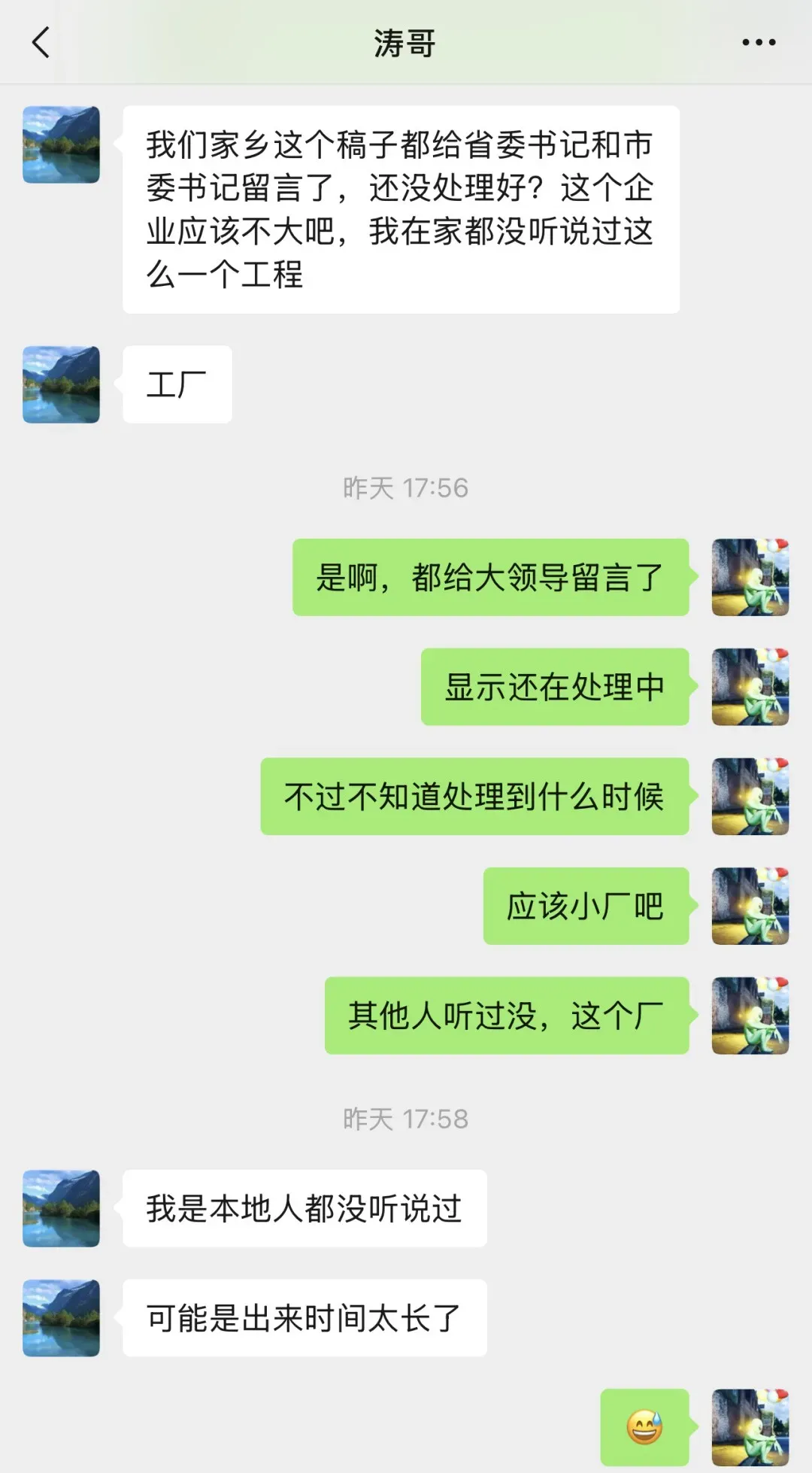
This is an inexplicable contradiction. How could a person who can notice the details of vehicles entering and leaving the factory gate “never heard of” this factory? This blatant self-denial is the first strong danger signal. It shows that “Brother Tao” is not a reliable narrator, and there is an unspoken agenda behind his words.
He is not sharing information, he is shaping information.
Later, he also claimed in the group, “I asked the people in my hometown yesterday to ask, and they also went to ask the neighboring village, and they didn’t say that they were producing”, trying to put a “solved” period on the incident in a seemingly neutral way.
“Xie Jun”: a lurking local official
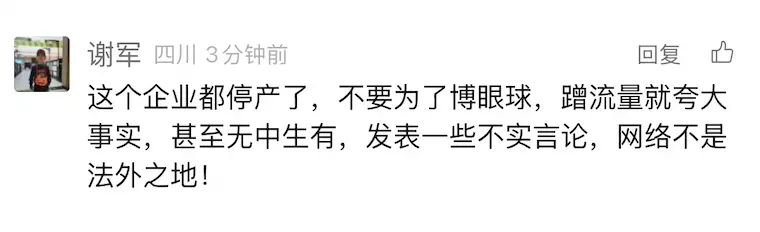
If “Brother Tao” played the role of a gentle guide, then “Xie Jun” was an unreserved “stability maintenance” executor. His first appearance was full of official deterrence. In the comment area of the article, he sternly accused the author: “This enterprise has stopped production, don’t exaggerate the facts, and even make up facts, just to attract attention and gain traffic, and publish some false remarks. The Internet is not a place beyond the law!” . These words are not like the doubts of ordinary netizens, but more like an official admonition.
After entering the WeChat group, “Xie Jun”‘s warnings were further upgraded. When someone in the group asked for a backup of the article, he immediately issued a warning: “Will this (article) be monitored by the public security? I’m afraid it will be @Brother Nuts” (I asked a friend in Sichuan, in Sichuan dialect, “I’m afraid it will be” is a very regional slang. Literal meaning: I’m afraid something will happen / I may be unlucky. It can be a reminder (“Be careful, something will happen”), or it can be a half-joking or threatening hint (“You may be arrested for doing this”), and then added: “It seems that someone was administratively detained for forwarding it before” . This is no longer a hint, but an attempt to suppress the spread of information by creating fear.
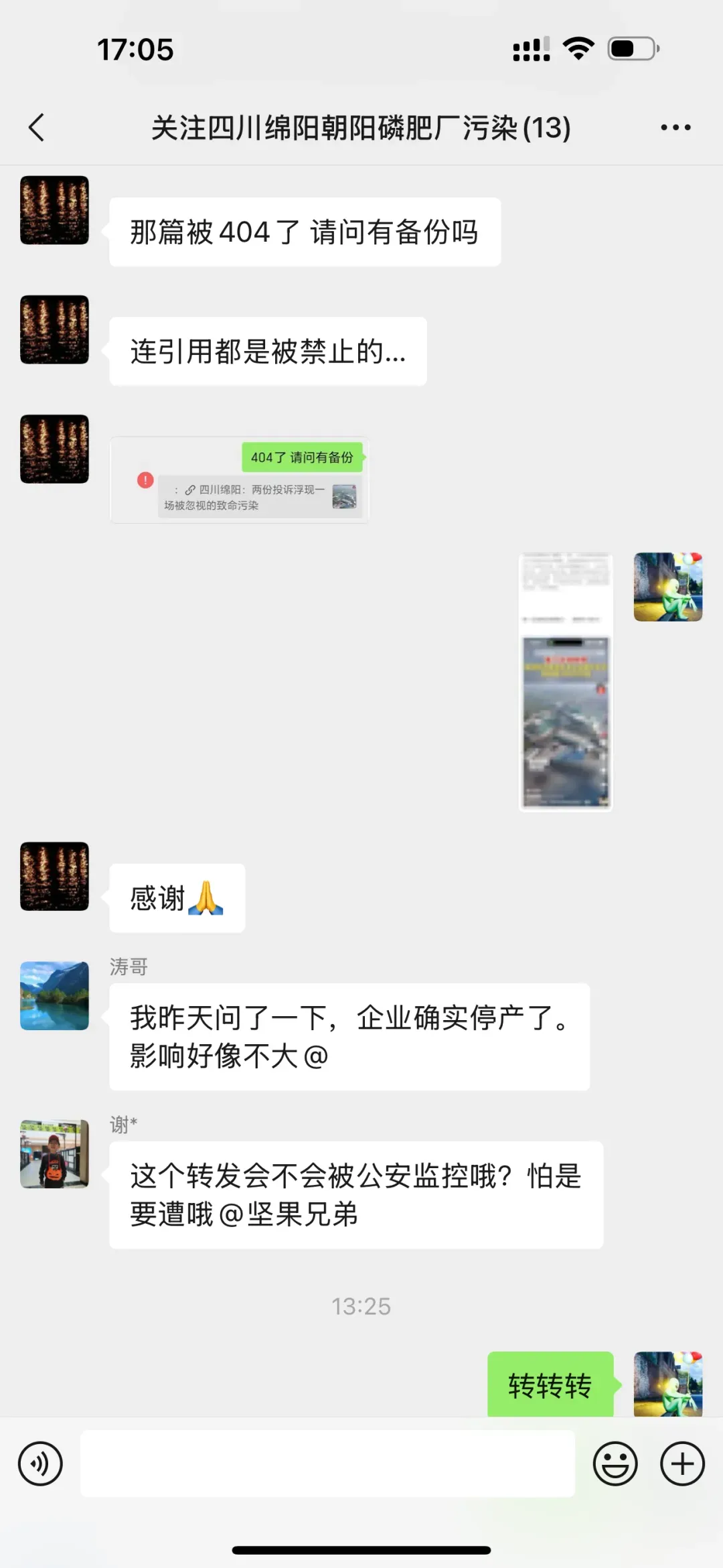
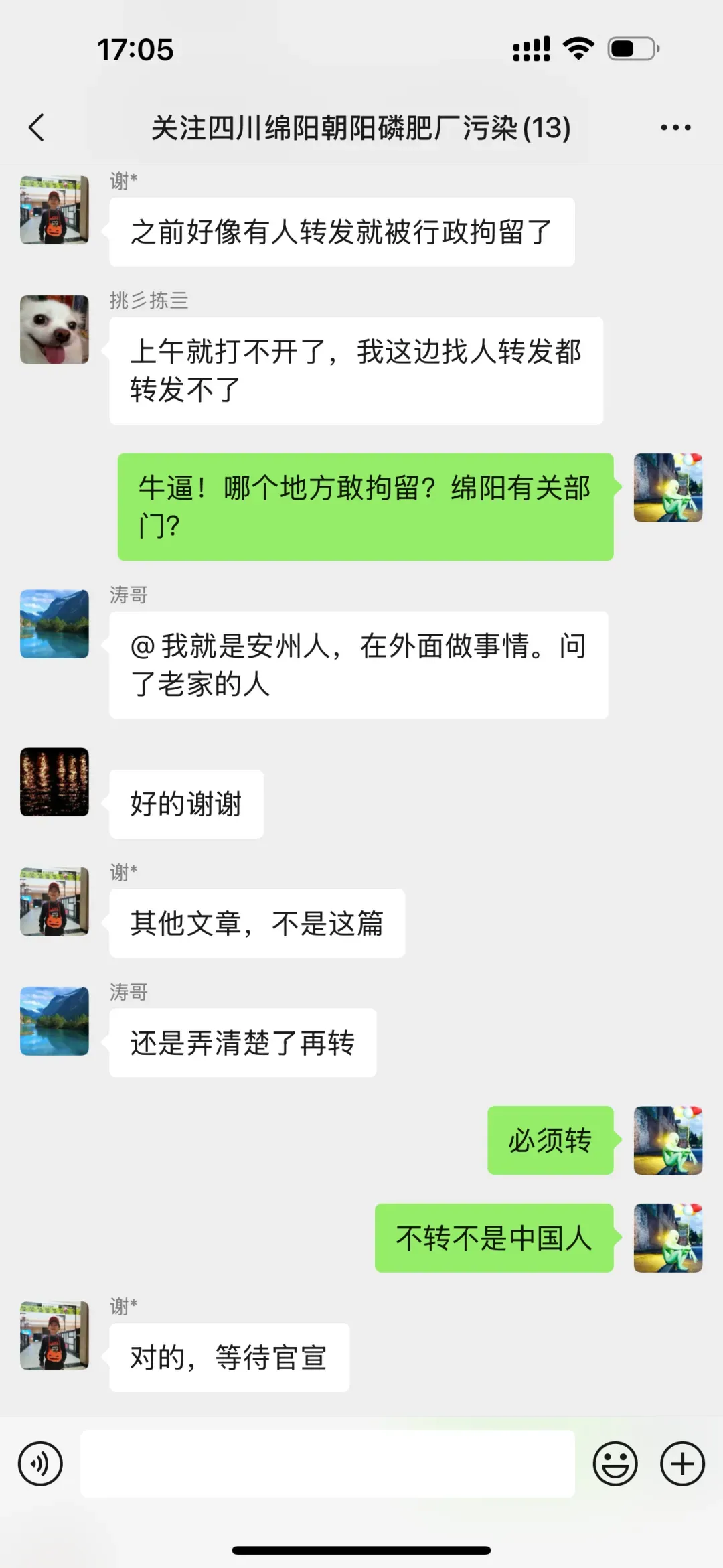
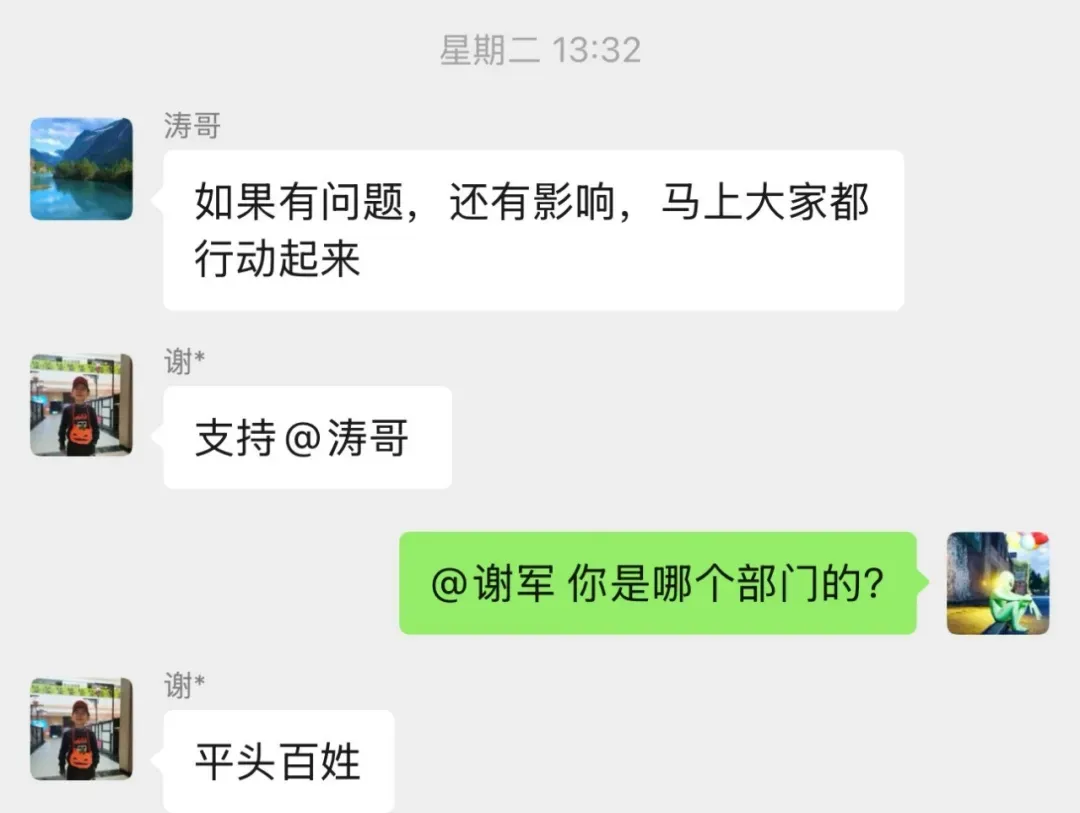
“Xie Jun”‘s true identity was exposed in a clumsy disguise. On the evening of October 21, the group owner found that “Xie Jun”‘s WeChat name had been quietly changed to “Xie*”. This act of trying to cover up the truth instead aroused deeper suspicion. Why would an ordinary person have to hide his name so hard?
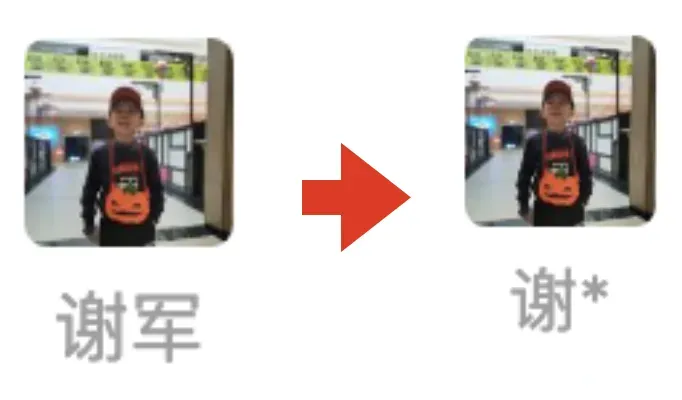
The breakthrough in the investigation lies in this hidden name. In the search engine, enter “Xie Jun, Xiushui Town, Anzhou District, Mianyang City”, and a shocking identity surfaced. The search results show that Xie Jun is the current member of the Party Committee and Chairman of the People’s Congress of Xiushui Town, Anzhou District, Mianyang City. More ironically, according to the public division of labor on the government’s official website, Chairman Xie Jun is in charge of “ecological environmental protection” .
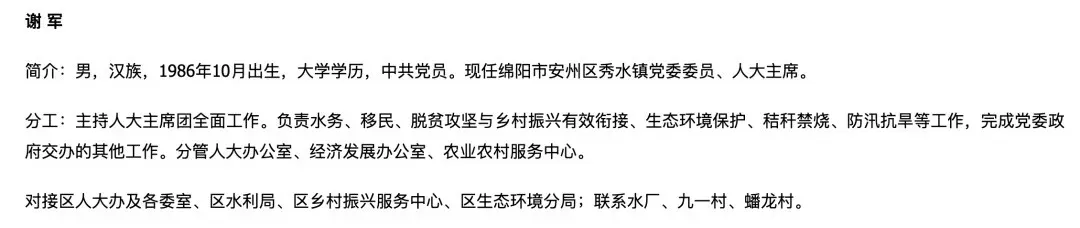
The truth was revealed at this moment, and the nature of the entire incident was also subverted. The highest responsible person who should have represented the people to supervise and protect the local environment was lurking in a 13-person WeChat group related to public interests, playing the role of a defender of the polluting enterprise, a suppressor of information dissemination, and a threat to citizens’ speech. This exposed a deep conflict of interest and a distortion of responsibilities.
In order to more clearly show the roles in this public performance, the following is an analysis of the key actors in the group:
| Group Alias | Suspected Identity/Background | Key Words and Deeds | Contradictions and Analysis |
| Brother Tao | Local government-related personnel/collaborators | Claimed not to know the factory, but also knows its operation. Shares carefully selected screenshots to guide specific narratives. | His contradictory remarks exposed his role as an unreliable narrator, whose task is to guide the direction of the dialogue and downplay the pollution problem. |
| Xie Jun/Xie | Chairman of the People’s Congress of Xiushui Town (in charge of ecological environmental protection) | Denies pollution, accuses the author of hype, and implies that forwarding the article may be detained by the police. | Suspected conflict of interest. |
| AZ | Local government-related personnel/collaborators | Through sharing the dialogue screenshots with “Tiansheng Maidong Yao Ge”, he strongly promoted the statement of “economic disputes”. | Collaborated with “Brother Tao” to try to redefine a public health crisis as a private grievance. |
| Qingfeng XX | Local government-related personnel/collaborators | Published general soothing remarks such as “We little people just want to live a peaceful life”, and used irrelevant information such as weather forecasts to divert the topic. | Plays a “soft” influencer role, trying to cool down the intense discussion and normalize the situation. |
3. Shaping a new narrative: from a public pollution incident to a private economic dispute
As the identities and motivations of the various characters gradually became clear, a carefully planned public opinion response was fully launched in the group. This strategy was not improvised, but followed a clear script, designed to dissolve the legitimacy of the pollution allegations by reshaping the narrative.
The first move: admit the problem, but create the illusion that “the problem has been solved”
On October 21, “Brother Tao” shared a set of key screenshots. These screenshots came from a WeChat group called “Chaoyang Collective”, which is said to be the villager group of Chaoyang Village, where the incident occurred. The dialogue in the group presented a harmonious scene:
“Starry Sky” said: “The government people came to see the situation a few days ago, anyway, I said it was very serious”.
“Zhao” said: “Believe in the government! Wait for the results!”
“Peaceful and Happy” said: “The town’s people reacted quickly this time, and they stopped the factory these days”.
“Pan Lao Er” said: “I went there recently, and the factory did stop, and I didn’t smell anything”.
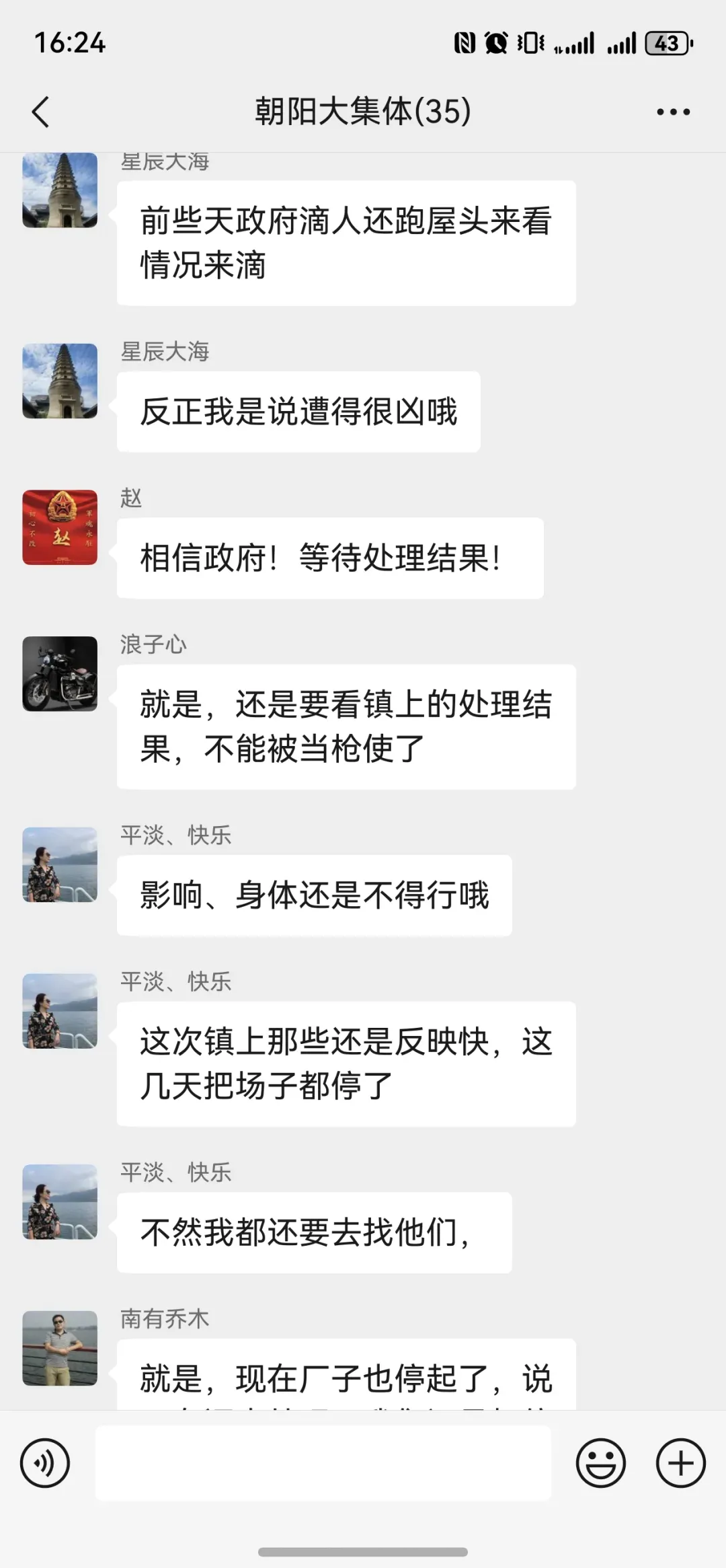
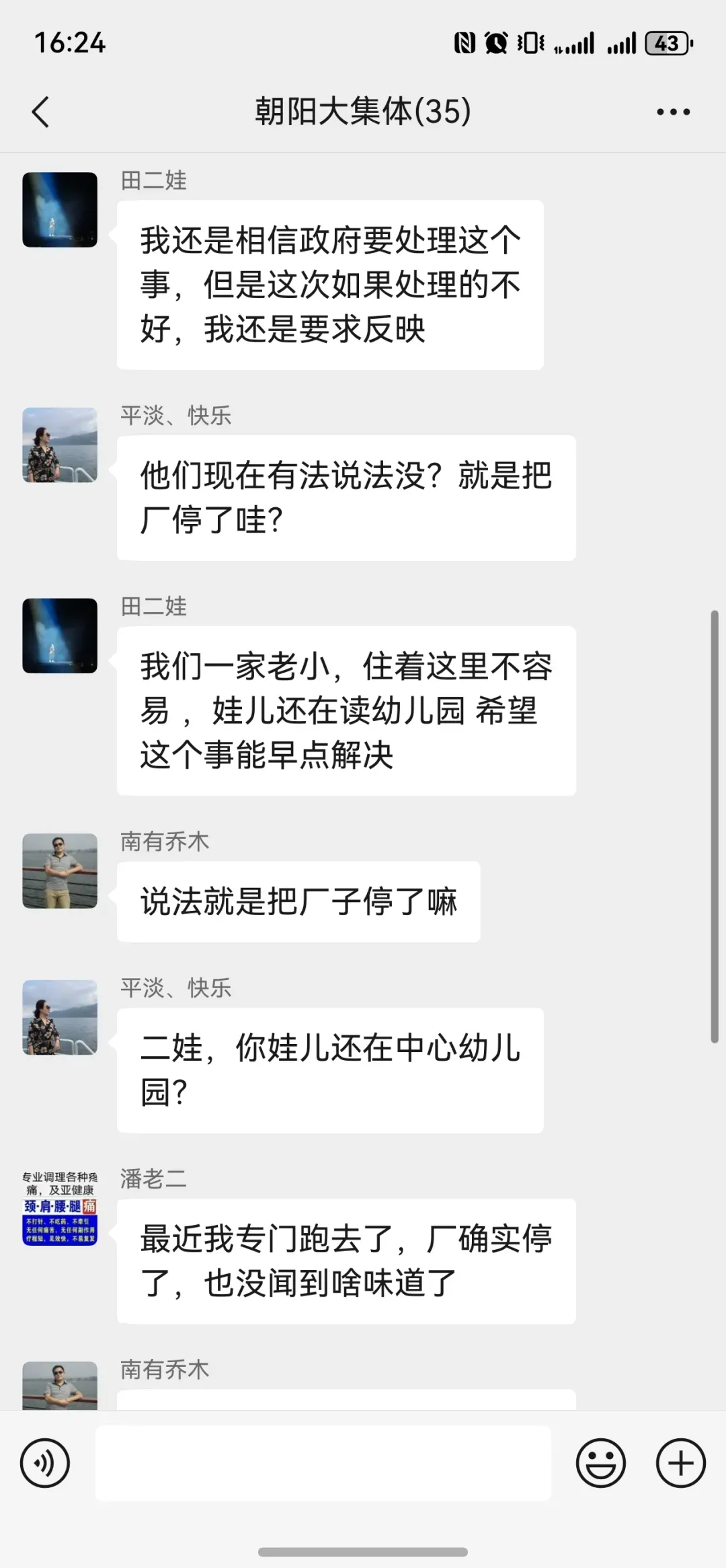
These dialogues conveyed three core messages: 1. The government has intervened and responded quickly; 2. The factory has stopped production and the source of pollution has been cut off; 3. The villagers trust the government and are satisfied with the results. This is a typical public relations strategy, which creates the illusion of “mass satisfaction” to declare that the incident has been successfully resolved, thus making further attention and questioning from the outside seem redundant and inappropriate.
The second move: “privatize” the public incident
On October 22, a member with the WeChat name “AZ” dropped another “heavy bomb” in the group – 4 screenshots of WeChat chats with a person named “Tiansheng Maidong Yao Ge”. In the dialogue, this “Yao Ge” described the entire pollution incident as a farce caused by personal greed.
His core argument is: the so-called pollution is just “the leaves of bamboo from another village near their factory, and then they said that their factory’s smoke smoked them, and they wanted to ask the factory owner to pay compensation”, but because “there were no problems in other places”, the owner refused to pay compensation, so “this old man is organizing to find the government” to make trouble.
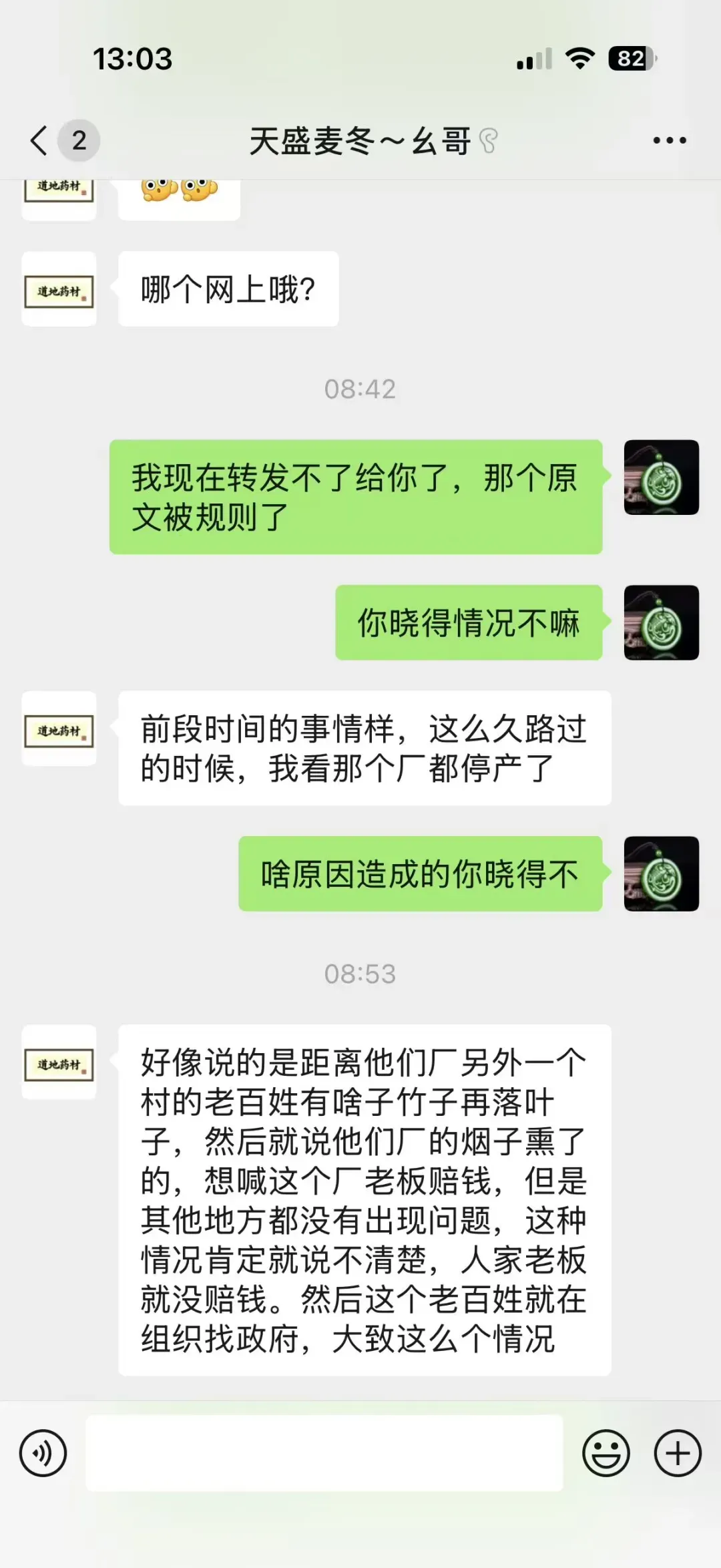
This narrative is extremely clever. It downgrades a public health issue involving “difficulty breathing” and “large-scale damage to crops” to an “economic dispute” about “a few bamboo”. It cleverly stigmatizes the victims by implying that the complainants have a motive to extort “to ask the boss to pay”, and deprives them of the moral legitimacy of their complaints.
The third move: “harmless” the source of pollution
When the group owner questioned the “irritating smell” emitted by the factory, “AZ” once again threw out the dialogue screenshots with “Yao Ge”. This “Yao Ge” gave a set of explanations that sounded quite “professional”. He claimed that the smell of the phosphate fertilizer plant was not a bad smell, but “the smell that regular phosphate fertilizer should have”, and even said, “We don’t dare to buy phosphate fertilizer if it doesn’t have that sour smell”. As for the bamboo leaves falling, he also explained it as “a small forest, with a few bamboo growing in it, only the bamboo leaves fell, and the other trees next to it were fine”, implying that it had nothing to do with the factory.
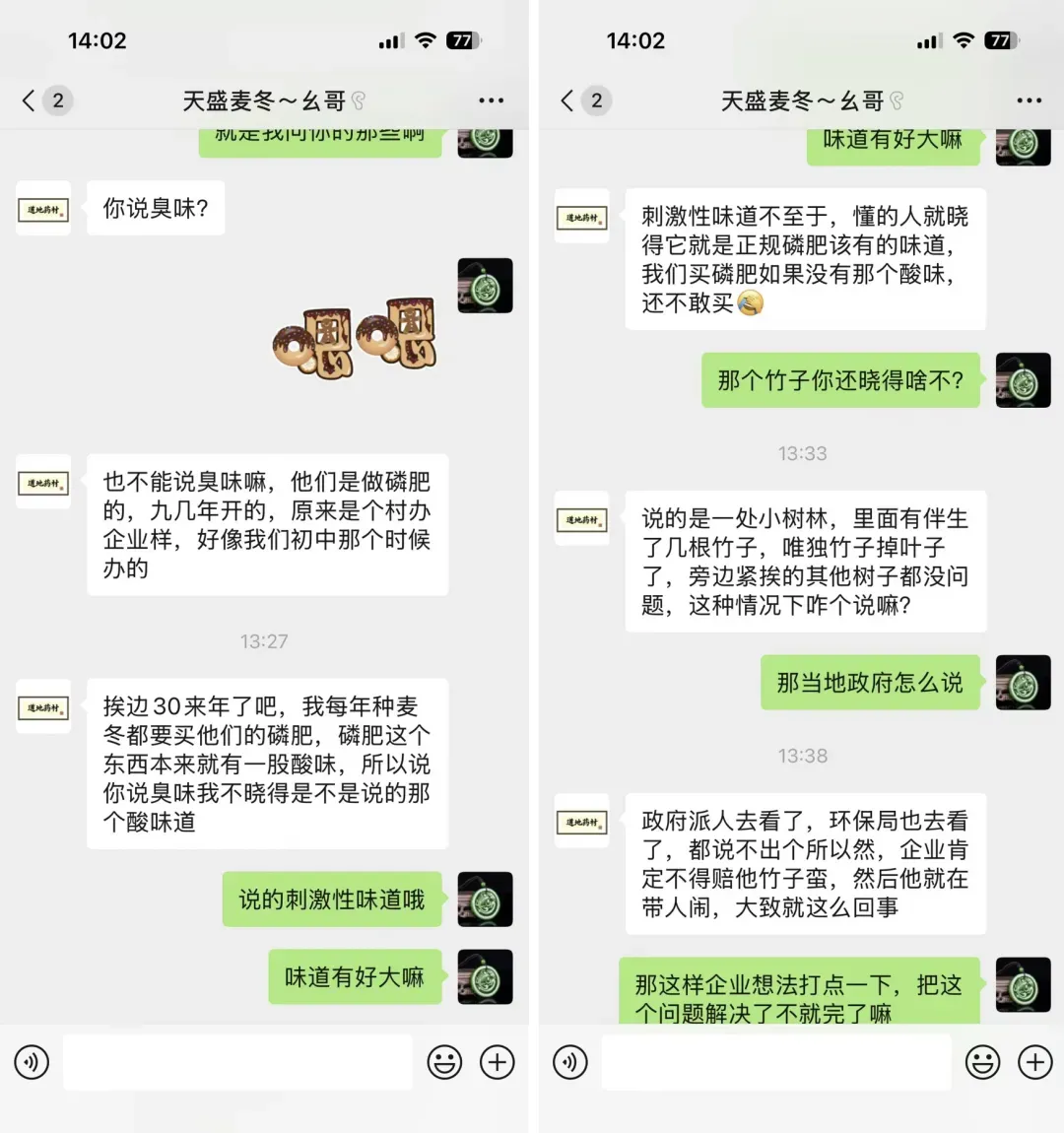
The purpose of this set of rhetoric is to “harmless” the evidence of pollution – pungent smell and plant death. It attempts to normalize the phenomenon of pollution with a pseudo-scientific logic, and even link it to “good product quality”, thereby completely undermining the core basis of the complaint.
In fact, the products of this phosphate fertilizer plant have been exposed for quality problems.
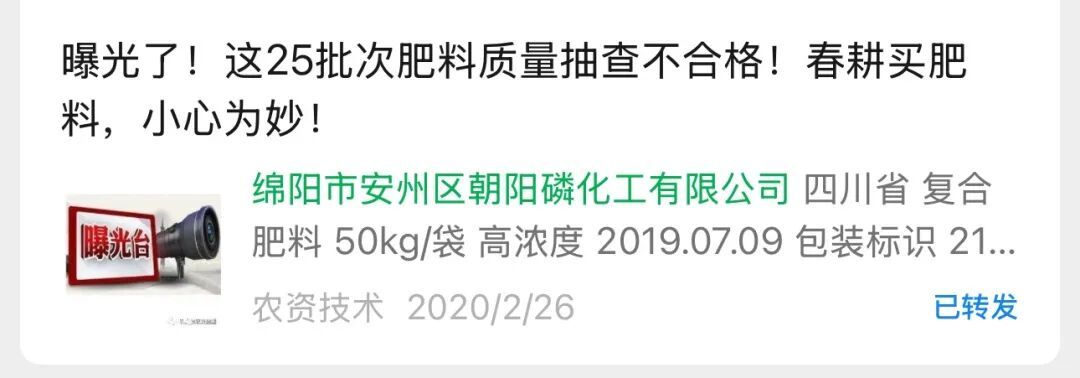
The fourth move: team cooperation, one singing and the other echoing
This public opinion response was not a solo effort. After “Brother Tao” shared the harmonious screenshots of the “Chaoyang Collective”, he concluded: “It seems to be effective, let’s wait and see”. And Chairman Xie Jun, who had been lurking, also echoed at this moment: “It seems to be true, it’s right that the problem has been solved”.
When “AZ” threw out the “economic dispute” theory, “Brother Tao” immediately followed up with a comment: “It’s probably just a little economic dispute” .
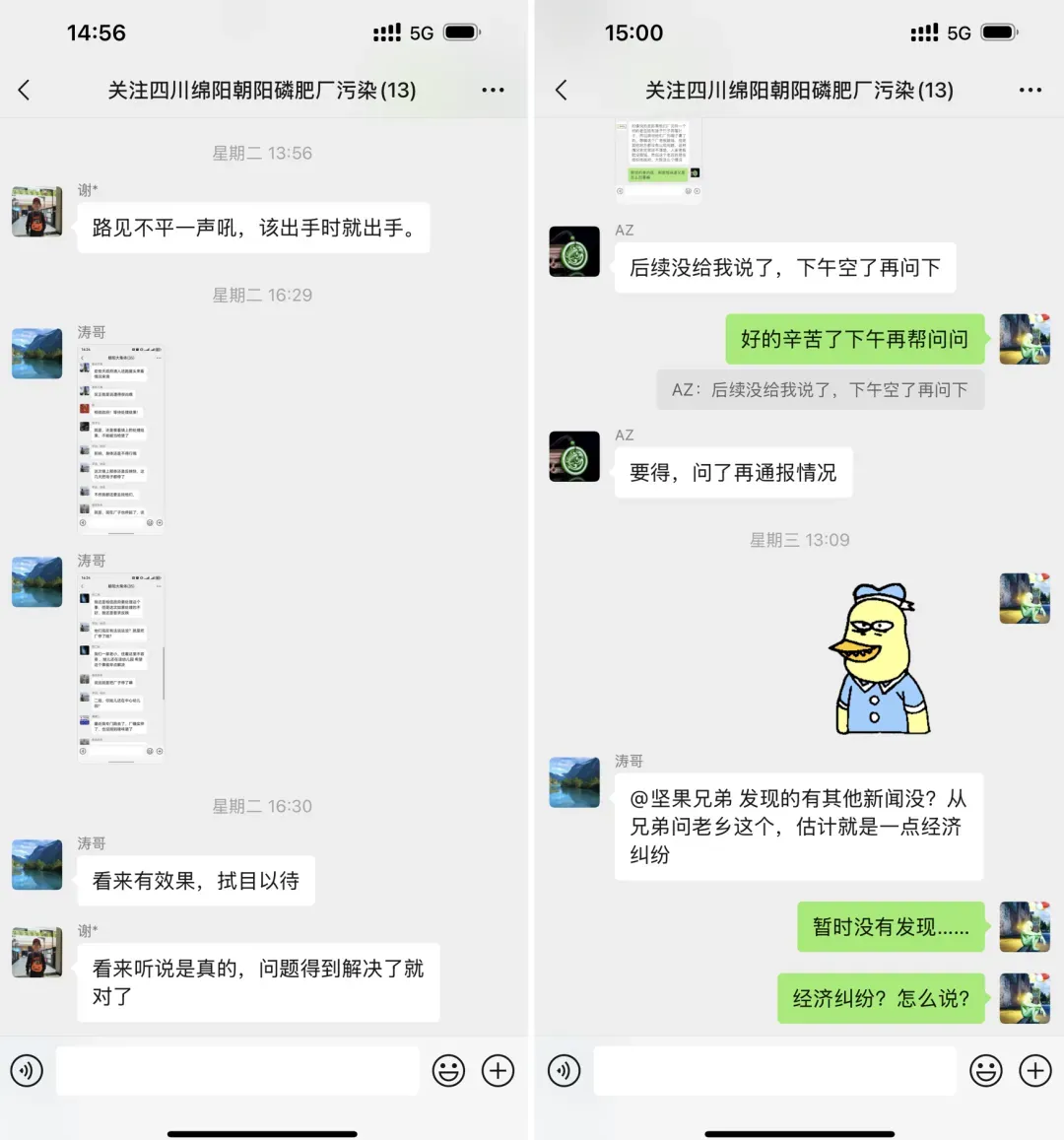
Even the “Qingfeng Xuxu” who likes to send weather forecasts, after the appearance of the “phosphate fertilizer sour smell instead of toxic gas” and “the smoke from the chimney is much smaller than in the early years” theory, issued a sentence “Oh, that’s about it”, expressing approval.
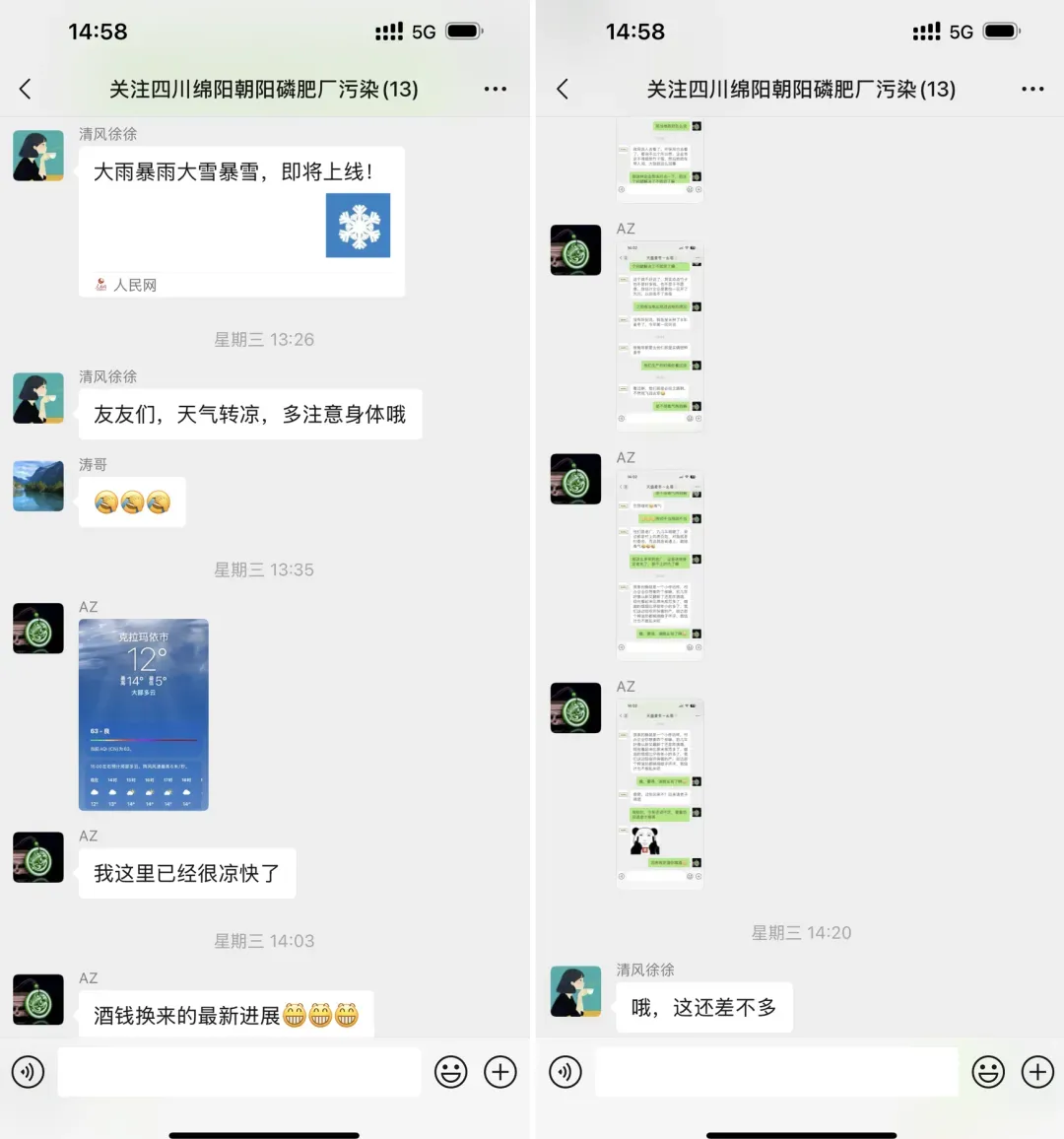
This highly synchronized response pattern exposed that there was a clear division of labor and collaboration between them. They formed a public opinion response team, with some responsible for providing “materials” (screenshots), some responsible for interpretation and guidance, and some responsible for echoing and affirmation, jointly leading the discussion to the predetermined track.
This set of public opinion manipulation performed in the 13-person WeChat group may reveal a standardized script for grassroots crisis management. It is divided into three steps: first, minimize, downgrade the serious public harm to a trivial private dispute; second, stigmatize, imply that the complainants have bad economic motives; third, declare victory, by creating or screening evidence, creating an atmosphere that the problem has been successfully resolved. The core of this script is not to solve the problem at the factual level, but to control the power at the narrative level.
4. Official complaints: pungent air and dead bamboo leaves
Outside the virtual world of carefully arranged dialogues and screenshots in the WeChat group, there is another completely different reality. This reality exists in the lungs of local residents, in the withered farmland, and in the help information that was quickly deleted.
Let’s go back to the origin of the incident – the two complaints posted on the “Leader’s Message Board” of People’s Daily. They are the fuse of the entire incident and the “surface truth” that is desperately covered up by the official narrative.
On October 14, a user left a message for the Secretary of the Mianyang Municipal Party Committee, with sincere and urgent words: “The Xiushui Town* factory in Anzhou District, Mianyang City, is polluting, the crops in Shihong Village, Xiushui Town, Anzhou District, Mianyang City, are polluted, and the people are having difficulty breathing. I hope the higher-level leaders will pay attention”.
A day later, another user sent a more detailed request for help to the Secretary of the Sichuan Provincial Party Committee: “The Chao* Phosphate Fertilizer Plant is polluting our crops and the bodies of our people. It has been getting worse for several months… August 13, 2025, crops were damaged on a large scale, and until the morning of October 9, the people were breathing the gas from the phosphate fertilizer chemical plant, and smoke was pungent again. On the morning of October 10, the leaves of the bamboo forest and trees all fell. I hope the leaders will pay attention”.
Juxtaposing the language of these two original complaints with the narrative of the official personnel in the WeChat group, a huge chasm emerges.
- The reality of the residents “Difficulty breathing”, “Pungent smoke”, “Large-scale damage to crops”, “The leaves of the bamboo forest and trees all fell”. These words describe a direct, painful physical sensation and economic loss. They are concrete, perceptible injuries.
- The narrative of the suspected official “A little economic dispute”, “A few bamboo”, “The sour smell that regular phosphate fertilizer should have”. These words are abstract and perfunctory, they blur, trivialize, and even normalize the specific injuries.
This difference in language reveals that the response strategy of the relevant departments is suspected of: de-publicization. By redefining a public safety crisis that affects the health of “the whole family” as a financial dispute about bamboo, they successfully erased the suffering of the victims from the equation. This allows them to feel at ease to “manage” it as a public relations issue, rather than “solve” it as a public health emergency that requires urgent intervention. The essence of this strategy is to replace humanitarian care with political rhetoric.
This incident is not an isolated case, but a symptom of the deep environmental problems in the area. Mianyang City has been facing challenges in the prevention and control of air pollution in recent years, and has been interviewed by provincial departments for the rebound of environmental air quality. The phosphate chemical industry (the so-called “three phosphorus” industry) has always been the focus and difficulty of environmental governance in Sichuan Province, and its production process is accompanied by the risk of serious water, gas, and slag pollution. Therefore, the pollution problem of the Chaoyang Phosphate Fertilizer Plant is not an accidental accident, but is rooted in a long-term high-risk industry and regional environmental governance dilemma. The rhetoric in the WeChat group is not only covering up an isolated incident, but also avoiding a structural problem.
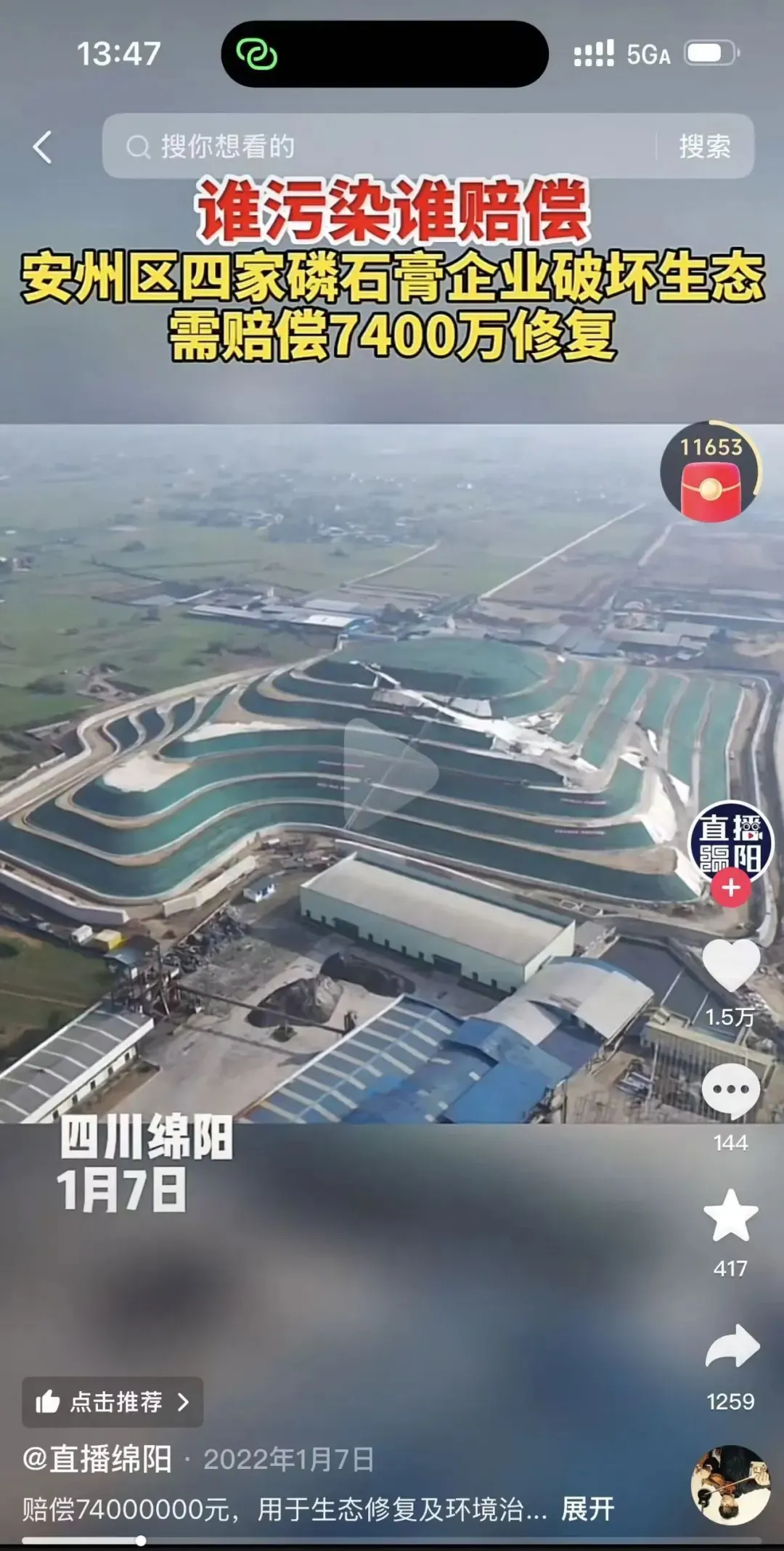
In November 2018, the Central Fifth Ecological Environmental Protection Supervision Team issued a stern notice, pointing directly to the phosphate chemical pollution problem in Anzhou District, Mianyang City. The core content of the notice includes:
- Huge pollution stock: As of the end of 2014, the four phosphate chemical enterprises in Anzhou District (where the Chaoyang Phosphate Fertilizer Plant is located) had about 2.6 million tons of phosphogypsum stored in the open air. These phosphogypsum contain residual acid, fluoride, heavy metals and radioactive components.
- Failure to rectify: Although the local government has formulated a reduction plan, “the progress is slow and no substantial progress has been made”. As of October 2018, there were still about 2.1 million tons of phosphogypsum stored, and less than 20% had been reduced in nearly 5 years.
- “**Three-prevention**” measures are in name only: **The anti-seepage, wind-proof, and flood-prevention measures of the storage yard have not been in place for a long time, and the leachate and flushing wastewater are discharged directly through the rain gutters without treatment, which seriously pollutes the water body.**
- Serious water pollution: Monitoring data shows that from January to September 2018, the total phosphorus in the groundwater and surface water along the Ganhezi River “generally exceeded the standard”, and at the same time, fluoride also exceeded the standard to varying degrees.
5. Behind the deafening silence, two complaints from official channels also disappeared
On the afternoon of October 21. After “Brother Tao” shared the harmonious screenshots of the “Chaoyang Collective” WeChat group, and Xie Jun also echoed that “the problem has been solved”, the group owner decided not to conduct roundabout probing. He directly quoted Xie Jun’s words in the group, and then asked a soul question:
“Chairman Xie, what do you think?”
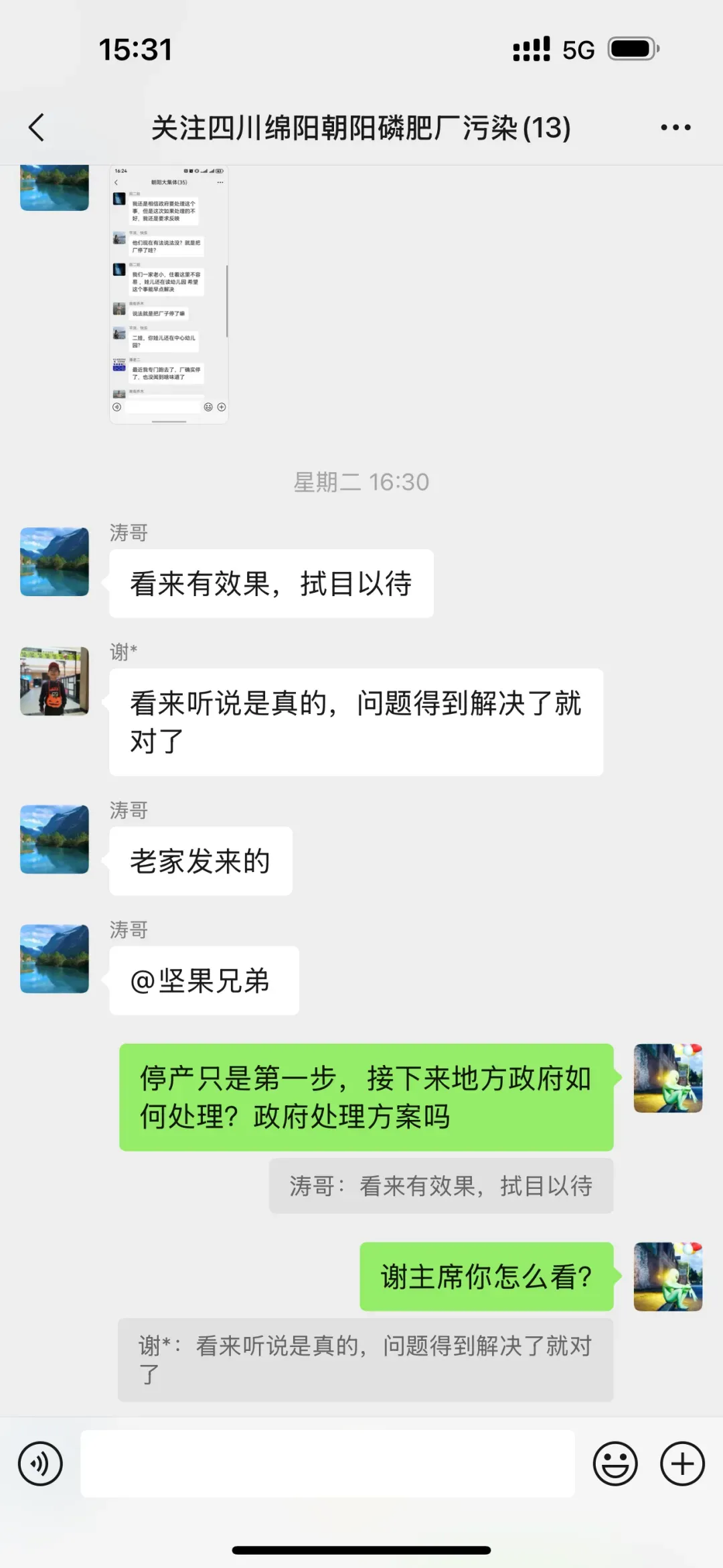
This is the first time that the true identity of “Xie*” was publicly pointed out – the Chairman of the People’s Congress of Xiushui Town. This title instantly pulled him from the anonymous and irresponsible netizen identity back to his real role as a public official. He is no longer “Xie*”, but Chairman Xie, the Chairman Xie whose statutory duties include “ecological environmental protection”.
Deafening silence.
Xie Jun, or “Xie*”, did not reply. He neither admitted nor denied it. He chose complete silence. From that moment on, he never said a word in this 13-person group. He was like a shadow suddenly illuminated by a spotlight, instantly solidified, and then disappeared into the darkness. This abrupt silence is in itself a default. It proves his identity more powerfully than any defense, and his predicament of being unable to face public accountability.
A few days later, when the author tried to add Xie Jun as a friend through the WeChat group, the request was like a stone thrown into the sea and was not approved. He not only disappeared from the group chat, but also cut off any possible private contact channels to him. His digital personality completely evaporated at the moment of collision with his real identity and public responsibility.
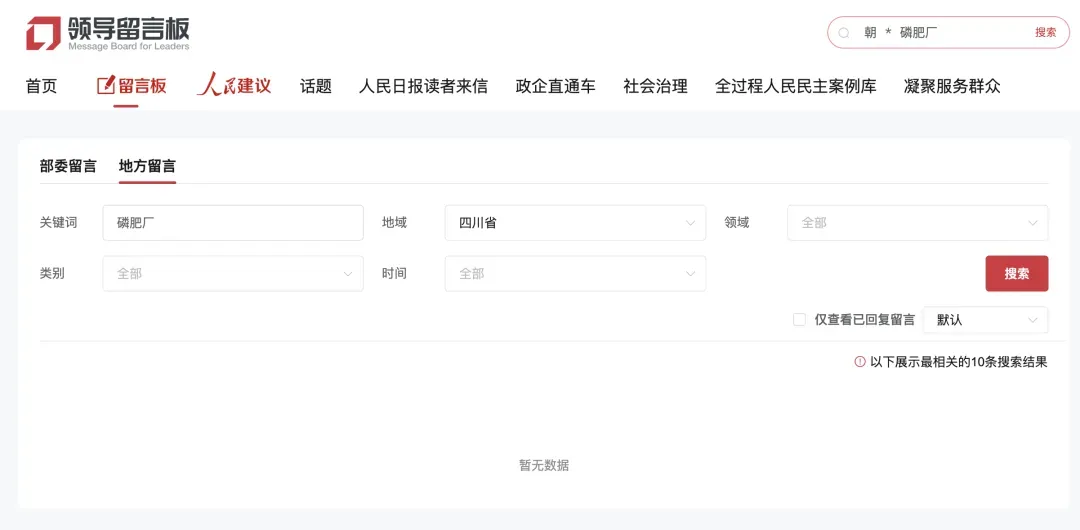
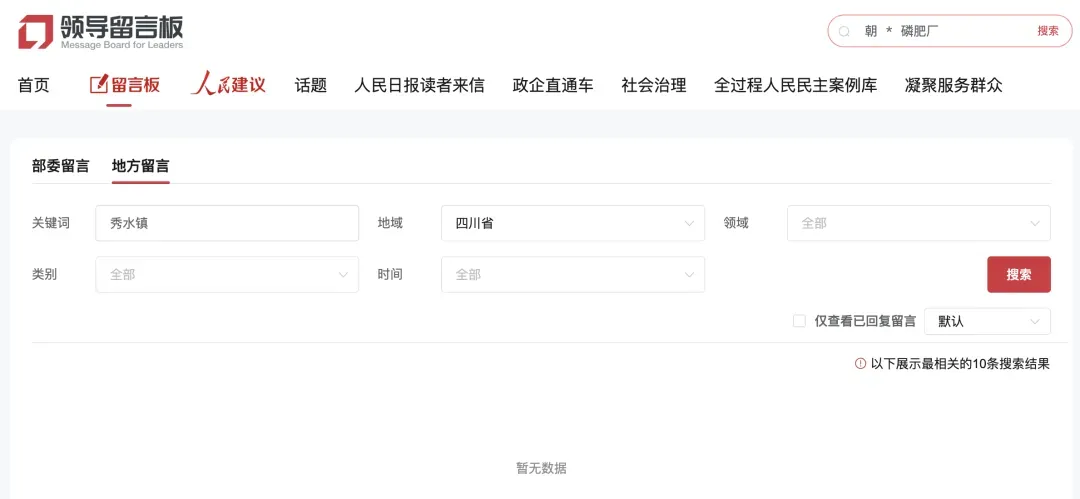
However, the ending of the story is more thorough than this. The action extended from within the WeChat group to the wider public domain. On the afternoon of October 23, when people revisited the Leader’s Message Board of People’s Daily, the two original complaints that triggered all this had disappeared without a trace. The official record was quietly erased, as if those calls for help about “difficulty breathing” and “falling bamboo leaves” had never existed.
Behind this ending, there may be a hidden rule called “delete the post first and then do things”. Local departments may contact the poster and ask them to actively delete the complaint in exchange for solving the problem, thereby eliminating negative public opinion. Sometimes, it may even evolve into “only deleting the post but not doing things”. Regardless of the specific process, the result is clear: the official accountability channel is closed, and the traces of citizens’ help are removed.
The entire incident demonstrates the fragility of the accountability mechanism in the digital age.
六
Regarding the pollution incident of Mianyang Chaoyang Phosphate Fertilizer Plant (how will it be handled in the end?),
Xie Jun said: “Wait for the official announcement”.
So when will the official announcement be made? Which department will announce it?
We’ll bring a small stool and sit in a row and wait…
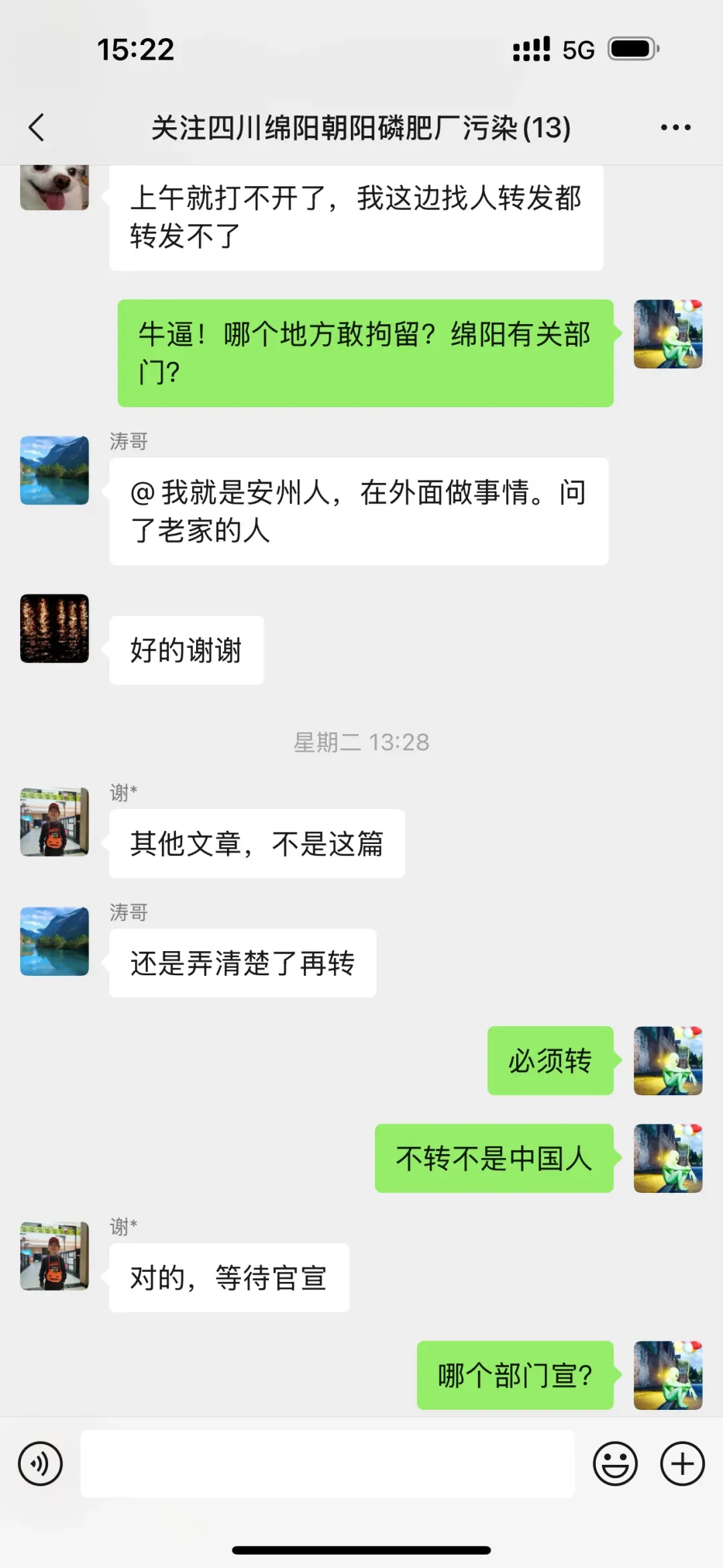
And, before the article was published on October 24, I just received a message:
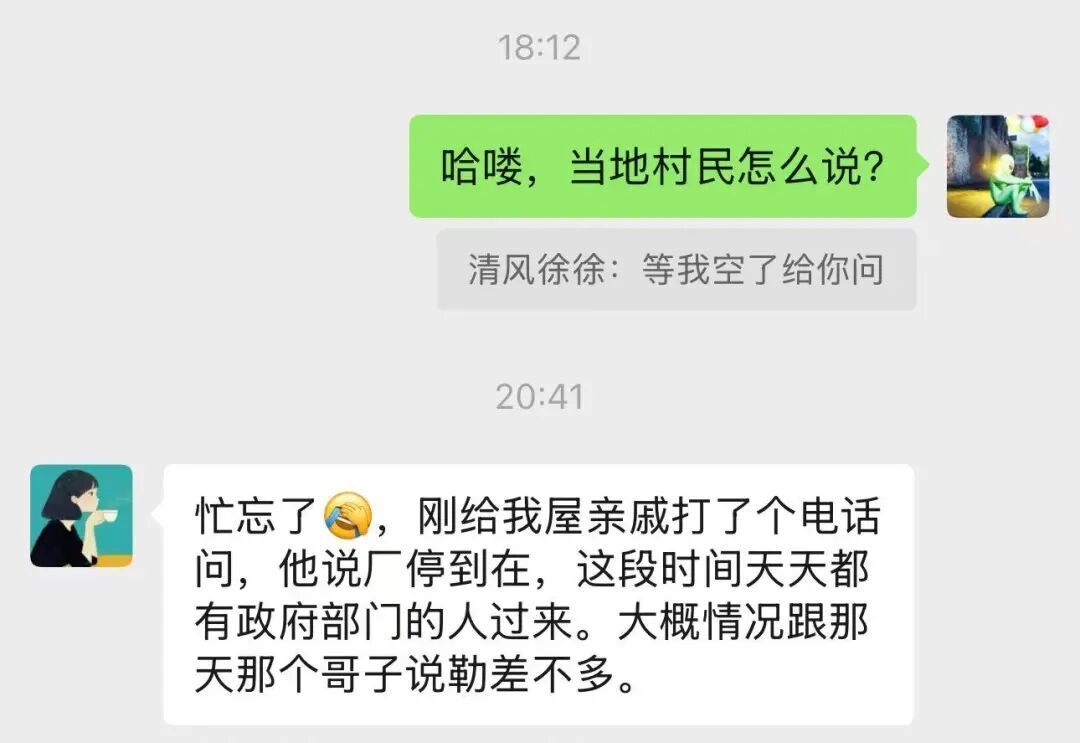

Friends, welcome to join the new group…
Other: “Trump Rings the Bell”: When Bangladeshi Villagers Sound the Alarm for the Global Climate Crisis
Discover more from 自由档案馆
Subscribe to get the latest posts sent to your email.