

Now the self-media all say that Miss Dong was born into a Beijing Brahmin or a privileged family. Yesterday, the author questioned this in a WeChat Moments post, which sparked the interest and discussion of many friends. In fact, Miss Dong's family in Beijing is only upper-middle class. Her smooth life is not due to privilege, because her family level has no privilege, but rather relies on "personal self-effort", shrewdness, and a lack of moral shame.
Coincidentally, today Professor Rao Yi also mentioned in the article "Please Do Not Misunderstand Professor Wang Chen of Peking Union Medical College": "Public opinion believes that a certain student's parents are privileged. I specifically asked an official who forwarded this kind of news, do you think her mother is an official in Beijing? He replied 'no'. Therefore, everyone can question some issues, but to say that a certain student's mother is an official, she may be at a loss for words."
It can be seen that Mr. Rao also holds this view. If readers understand the social ecology of Beijing, they will not agree with the statement that the Dong family belongs to the Brahmin or the privileged. Why is that?
Let's first look at the titles of Miss Dong's parents and their relatives compiled online. Of course, the information collected online may not be completely accurate, but the most crucial information about her parents is accurate. Dong's father is the Deputy Secretary and General Manager of China Metallurgical Construction Research General Institute Co., Ltd. The China Metallurgical Construction Research Institute is a second-tier enterprise under the China Minmetals Corporation. The second-in-command of a second-tier company under a central enterprise is generally at the deputy bureau (department) level or the positive division level. Of course, because the China Metallurgical Construction Research Institute is relatively old, it may be at the bureau level. Dong's mother is the Vice President of a certain college at Beijing University of Science and Technology, which is a relatively certain deputy division level.
In fact, this kind of family is a standard configuration in Beijing's social circles. They belong to the post-65s and pre-75s generation. As long as they graduate from a 985-level university, work diligently, and are not too rigid, they are relatively easy to reach this level. There are at least tens of thousands of such families in Beijing. It is certain to say that they are an upper-middle-class or highly educated family. If you have to say they are noble, then at most they are wealthy, but not privileged.
This kind of bureau-level family—the most basic symbols of upper-class identity, such as the Red Flag sedan and the security guards at the gate—have nothing to do with them. They will not enjoy privileges outside of their duties. If they have some connections, they also use their resources to seek relationships and go through the back door, rather than being naturally imposing, with others flattering them everywhere and taking the initiative to do things well for them.
A few days ago, I also talked about this topic with some friends: the group of officials in Beijing (and even the whole country) is far from as mysterious and omnipotent as everyone imagines. With the opening up and progress of society, and the gradual increase in the central government's anti-corruption efforts, at least at the deputy ministerial and ministerial levels, except for a few who have very professional expertise and can still use their knowledge to exert social influence, their influence will rapidly weaken after retirement, and they are just retired cadres who only receive retirement pay, and they themselves do not have many special treatments. Even deputy ministers don't even have dedicated cars, and they may be using Didi Chuxing like you and me. At least, it is very common to take a taxi at the bureau level.
If the Dong family is really privileged, then Miss Dong would not have gone to study medicine for four years after graduating from university in 2019, regardless of whether she was really studying or pretending to study, after all, it would still take four years of time cost. At that time, it was the most prosperous time for the financial industry. Miss Dong was also studying economics. If the Dong family had connections, they could have been arranged to work in the best state-owned financial institutions with high salaries, without having to engage in such a long "indirect salvation".
The author speculates that it was precisely because Dong's parents had limited resources that they used the remaining connections of her grandfather (a Peking Union Medical College alumnus and former director of the imaging department of a top hospital) to send their child to the 4+4 pilot program of Peking Union Medical College to give it a try, so that the family could help her and give her a ride. Miss Dong's doctoral dissertation was in the field of imaging, and she was guided by an academician, which just verified the author's above speculation. It is very likely that her grandfather found an old classmate of the academician to guide her, and the topic was the field that our family is most familiar with, and the granddaughter can't do it, the grandfather can help.
Therefore, the author believes that in the entire incident of Miss Dong, her grandfather is the most crucial figure, who determined her medical study path and career path (if the name of her grandfather disclosed online is true), rather than her parents, or her maternal grandfather and aunts and uncles.
In summary, the Dong incident cannot be explained by the privileged model, but rather by the degeneration of the intellectual class or the elite's self-corruption. The behaviors exposed by Dong show the family's exquisite egoism, or their extreme ability to operate:
1. People in the medical profession should at least talk about medical ethics. It is okay to guide their granddaughter to study for a medical doctorate, but what is the matter with tutoring their granddaughter's doctoral dissertation and arranging their child to work in the front-line medical position of a tumor hospital, which is related to human life? Isn't this harming the child, and even harming the patients in the future?
2. Dong's growth path was carefully designed by her parents, from avoiding the college entrance examination to studying at a community college in the United States, then transferring to Barnard College, successfully obtaining a degree from Columbia University, and then to the Peking Union Medical College doctoral program, showing that this family is good at using convenient channels to help their child succeed.
And the Dong family has always been good at using the media. When she was in elementary school, she appeared in the Beijing municipal media; after entering Peking Union Medical College and interning, she also found peripheral media of the central media to give exposure. Perhaps her parents felt that the higher the popularity, the more successful their child would be.
3. Miss Dong's behavior also shows that she is a very smart person, but she was also spoiled and raised, instilled by her family to pursue ultimate success, and lacks a moral bottom line. For example, she had an extramarital affair with a married man and had an abortion; for example, from 2022 to 2024, she published a total of 11 high-level papers, from orthopedics to gynecology, from radiology to urology, from polymer physics to chemistry to biomedical science, the span is astonishing.
Such complex and difficult academic research is unlikely to be completed even if Hua Tuo is reincarnated, let alone for a novice who has switched from economics to medicine with zero foundation. Behind her operations, we can clearly see the family's matchmaking for her, and the influence of the family's actions on her.
Therefore, the Dong family's behavior is clearly a typical example of a middle-class family's ability to seek profit. Dong's growth is more like a tiger mom raising a chicken baby, in the highly competitive environment of limited resources in Beijing, desperately trying to maintain their social status from declining, or even rising. This is essentially a logic of ordinary people, not the logic of a privileged family. If they are really at the upper level, they will be afraid of high exposure, fearing that others will know what they are doing, just like rich people are afraid of others knowing that they are rich, only those who are not rich like to show off and desperately earn some money.
In addition, these two days, everyone, in order to prove that Miss Dong is unlearned, said that Barnard College is equivalent to a third-tier university in China, which is roughly equivalent to Nanjing University Jinling College, and is a water school. The author does not agree with this point. We are not sure which community college Miss Dong first attended and how she transferred in, but Barnard is an old-brand liberal arts college in the United States, and is by no means mediocre.
Barnard College is one of the "Seven Sisters". These seven schools were all built around 1850, and were initially women's colleges, so they are called the "Seven Sisters". Among the "Seven Sisters", the most famous in China is Wellesley College, where Soong Mei-ling and Bing Xin both graduated; Barnard College was founded in 1889, and is geographically close to Columbia University. Perhaps because it encountered financial difficulties, it has been affiliated with Columbia University since 1900, but still retains an independent board of directors and financial institutions.
Therefore, although Barnard College is not as valuable as Columbia University's undergraduate degree, its teaching quality is not bad. After all, it is in New York, the center of the world, and will have first-class teachers. Just like the most ordinary undergraduate school in Beijing—Beijing Union University, the proportion of Tsinghua University and Peking University doctoral students among the teachers may exceed that of local first-tier universities. The difficulty for Chinese students to apply to Barnard College, the author believes, should be similar to the difficulty of taking the college entrance examination to get into a 211 university, and it is not a water school that can be entered by spending money. Of course, the difficulty may have decreased a lot for Miss Dong to transfer in through a community college.
The above analysis is not to whitewash Miss Dong. The author's attitude towards the Miss Dong incident can be seen in the article published yesterday, but it is only to point out some misunderstandings in the recent public opinion, so that we can avoid being emotional and respect the facts more to discuss this social event.
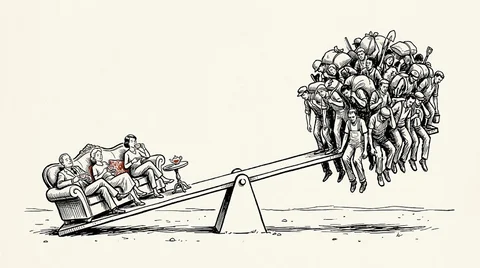
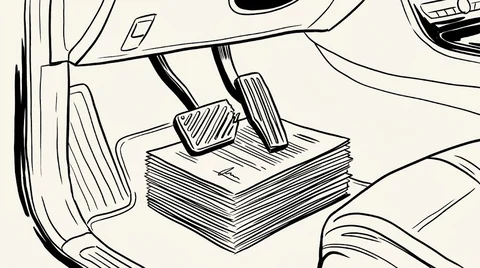
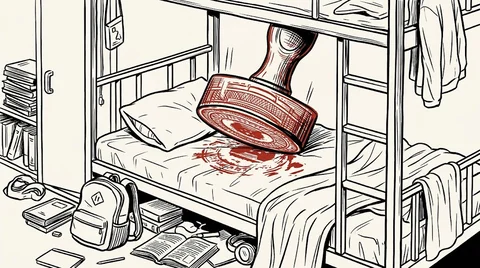
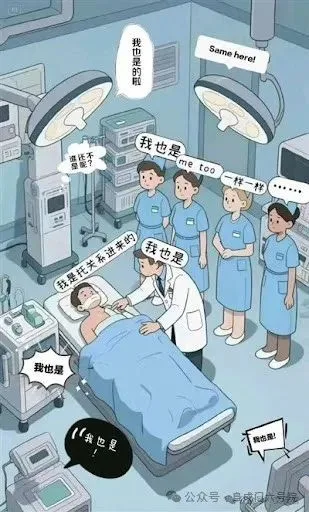
Finally, I wish everyone a happy holiday! And I have attached a picture for everyone to enjoy. This is a true portrayal of China's top three hospitals.