
The header image was generated by Doubao, prompt: River water quality testing
This is a piece of news that makes me feel very complicated:
On the evening of March 16th, the automatic monitoring station of a section of the Lei (pronounced Lei) River in Chenzhou, Hunan, detected that the content of the toxic substance thallium in the river water exceeded the standard. The national standard stipulates that the limit of thallium in surface water sources is 0.1 micrograms per liter, while the real-time monitoring of thallium content was 0.13 micrograms per liter, exceeding the standard by 30%.
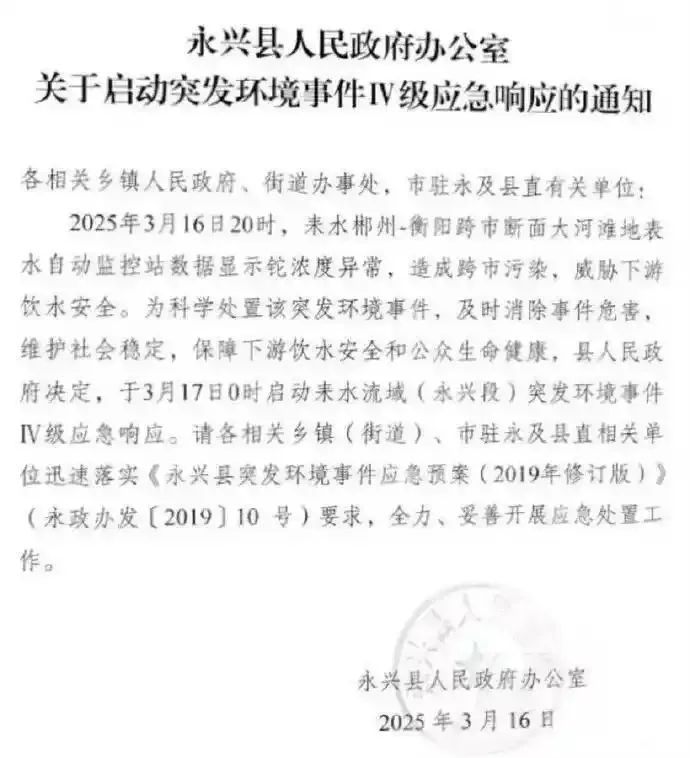
This abnormal data was immediately reported to the local government by the Hunan Provincial Department of Ecology and Environment, and an emergency response to sudden environmental incidents was launched that evening.
On March 22nd, six days later, a local netizen released a screenshot of a notice from the People’s Government of Yongxing County, and the public and the media only then learned that thallium had exceeded the standard in the river, which is a source of drinking water.
On March 23rd, the People’s Government of Chenzhou City issued a notice of the situation, confirming that the Lei River had experienced water quality abnormalities and stating that the drinking water along the line was currently safe.
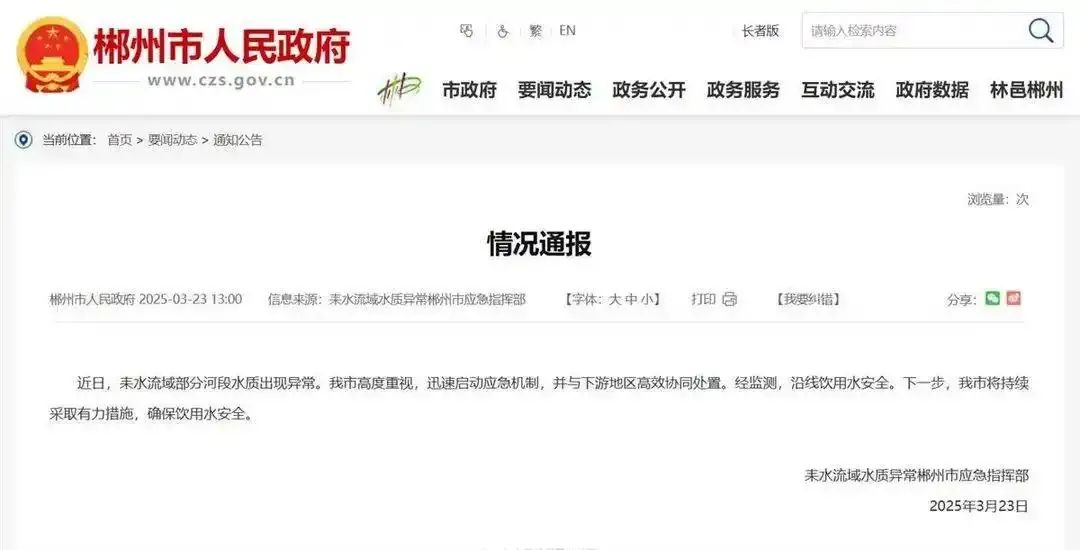
That day,
Hunan Provincial Department of Ecology and Environment
dispatched an expert group to Chenzhou to guide the disposal. But at this time, the thallium content in the Lei River had returned to normal, and the polluted river water had already flowed into the Xiang River a week ago, passing through the Orange Isle.
On March 24th, relevant personnel from the Hunan Provincial Department of Ecology and Environment told media reporters that the source enterprise that caused the abnormal thallium concentration had been identified, and it was a non-thallium-related enterprise. The responsibility is currently being determined, and it is not convenient to disclose specific information to the public.
It was not until March 25th, the 9th day after the thallium pollution was detected, that the Hunan Provincial Department of Ecology and Environment issued a disposal notice, verifying that the pollution source was a cement production enterprise in Chenzhou City, and that the thallium-containing dust in the kiln was washed into the river by rainwater.
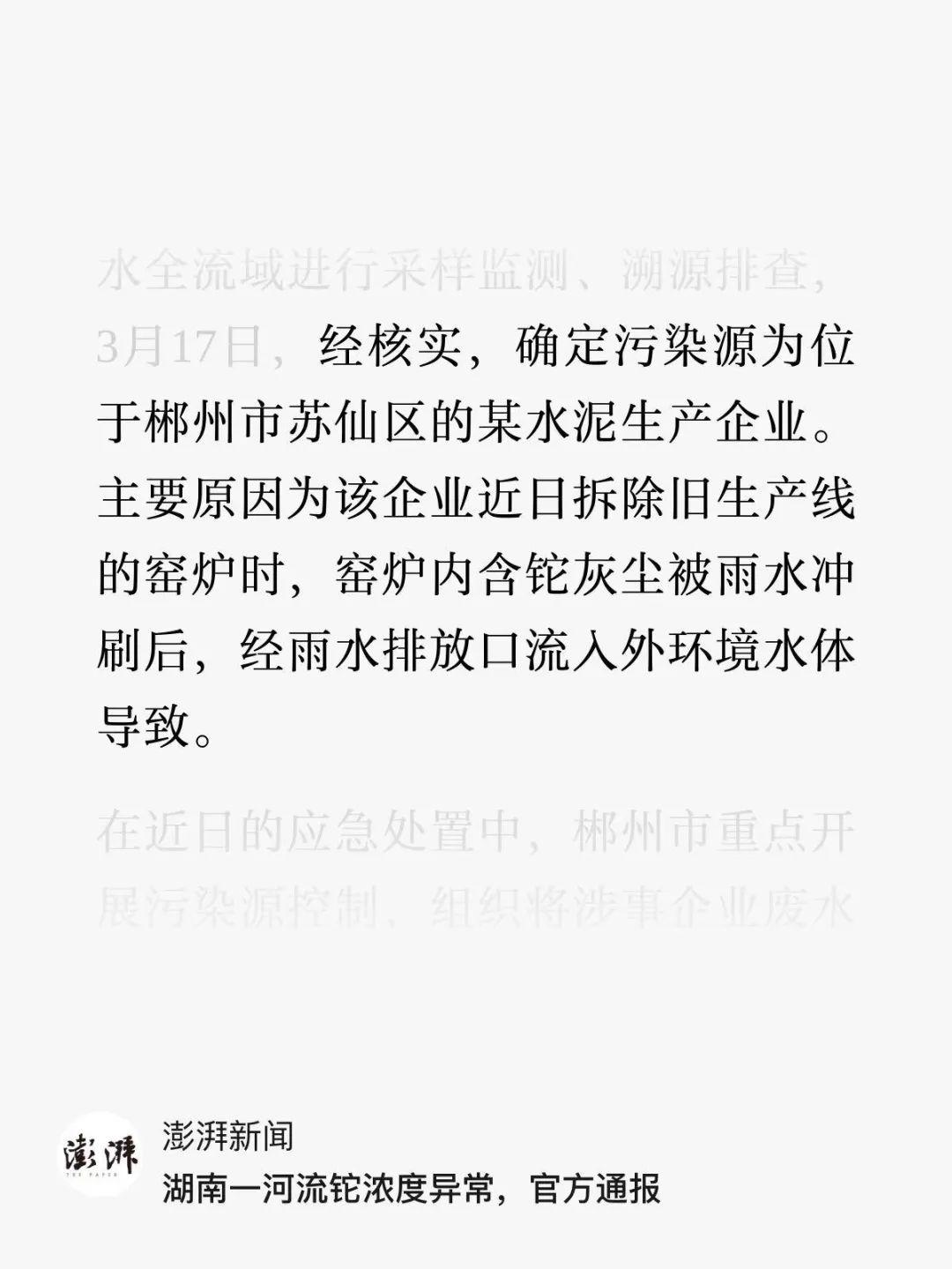
Yes, you are not mistaken, and the media has not written it wrong, it is a cement production enterprise, and the specific name has not been announced. The “Disposal Notice” mentioned the environmental protection treatment of the remaining sewage, but did not mention the punishment or treatment of the enterprise involved. Not a single word.
In terms of the handling process of this matter, there is actually a point that is quite gratifying and inspiring:
The automatic detection system used by Hunan Province to monitor the safety of surface water really works, and it can really detect abnormalities on the same day and immediately initiate an emergency response.
Before this, my impression of the environmental protection work in Hunan Province was still stuck on the local ban on any non-governmental organizations conducting soil heavy metal testing. I didn’t expect that, privately, they were still quietly carrying out environmental monitoring and disposal work.
Yes, privately.
Imagine, if the “netizen” who came into contact with the notice on March 22nd had not posted the screenshot, the local government would now have quietly completed the entire process of emergency response-pollution source tracing-pollution source disposal-summary reporting. During this process, whether the thallium content in the Lei River exceeded the standard of 0.13 or met the standard of 0.05, the residents along the coast were also drinking silently.
I don’t need to say much about the harm of the metal element thallium. Readers who know something about the “Zhu Ling case” can understand that this is something you would never want to come into contact with.
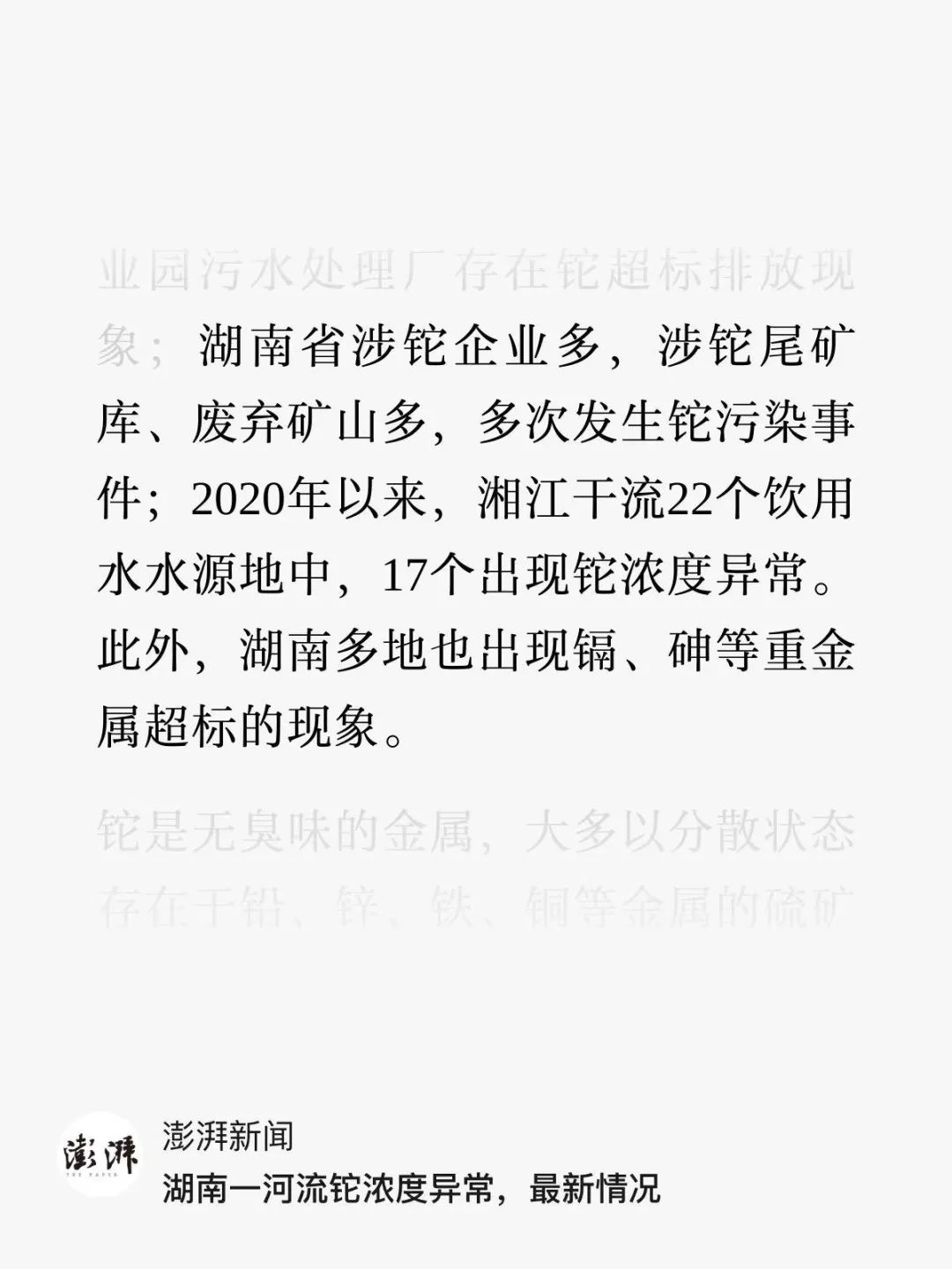
This time, the one that polluted the Lei River was not the traditional “thallium-related enterprise” such as mining, but a cement factory.
Why would the thallium content in the kiln ash of a cement factory exceed the standard? This involves another hidden knowledge:
The kilns of cement factories will be used for waste incineration treatment.
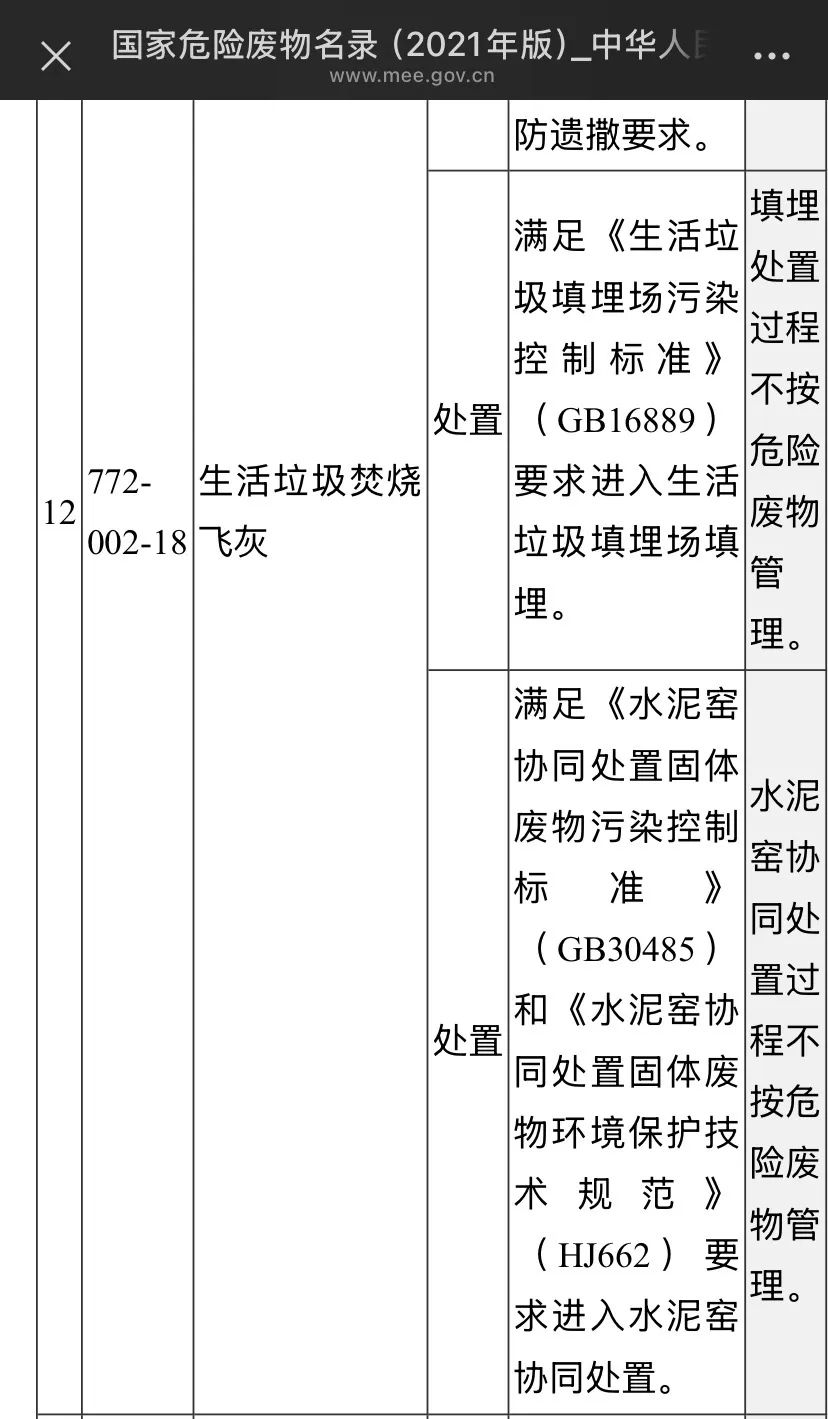
According to the “National Hazardous Waste Catalog” (2021 edition), solid domestic waste that meets relevant national standards can enter the cement kiln for co-processing, that is, the waste is burned together during the process of burning cement. However, the fly ash left after burning these wastes belongs to hazardous waste and needs to be specially treated and handled with care.
The notice of the thallium pollution incident in the Lei River in Hunan Province mentioned that the reason for the pollution was that when the cement production enterprise dismantled the old kiln, the thallium-exceeding kiln ash was washed into the natural water body by rainwater, which is something that should not have happened at all.
However, what should not have happened, it happened, and thallium flowed into the drinking water source.
Since people do not know the name of this cement enterprise, and considering that this cement enterprise does not currently intend to be punished, I guess that next time, thallium will still appear in the news.
Some basic common sense:
An adult consumes about 2 to 3 liters of water every day, most of which comes from surface water sources.
Discover more from 自由档案馆
Subscribe to get the latest posts sent to your email.