

It is said that a large number of "TikTok refugees" have flocked to Xiaohongshu, which has also made many Chinese people feel curious. Starting in 2025, young people from China and the United States seem to have started a dialogue, somewhat like 1979.
This is very intriguing. Regardless of how Xiaohongshu will face censorship issues in the future, the "encounter" between ordinary Chinese and Americans actually conveys a certain hope.
But you must know that in the internet age, this is a perfectly normal thing—because there is a freezing point, there is melting.
My personal understanding is that the freezing point was in the second half of 2023. At that time, I applied to study in the United States, and it was the most mysterious time. I had to prepare secretly, and it really looked like I was doing something bad.
American friends were also cautious. "Our goal is to ensure that you can return safely, and we don't want this visit to cause you any trouble."
At that time, there was a bit of sadness: going to the United States for a visit had become a dangerous thing? If I were to go to jail for this, I could really enter history.
In the past few years, China is moving away from that past "world," and this is the reality we are facing.
If I were to choose a symbolic scene, I would choose a day during the pandemic when an American young man held up a sign in Tongzilin, Chengdu, asking for help to adopt his dog. He was going back to the United States, and he couldn't take the dog with him. It was a parting of life and death.
In 2022, when having dinner with friends, I met "Brother Qiang," the British dean of the School of Economics and Trade at a certain university. He told me that in 2019, there were more than two thousand British people in Sichuan and Chongqing, but "now there are only two hundred or so." In Chengdu, there used to be many foreigners in the bars of Jiuyanqiao. But by 2022, foreigners were rare. Even near the University of Electronic Science and Technology, there were few African students.
This is the barrier of the pandemic, and it is also the influence of a cultural atmosphere. In fact, "pandemic" can also be understood as a certain cultural atmosphere: preventing "person-to-person transmission," encouraging "isolation" and vigilance.
In 2023, the pandemic ended, but the "xenophobic sentiment" did not end. Its peak was the widespread boycott caused by many media deliberately distorting reports on "Japanese nuclear wastewater."
Not only boycotting Japanese food, but also boycotting kimonos, to the point where people had to discuss whether "Chinese people wearing kimonos constitute a provocation to national sentiment." Of course, it's not surprising that some places don't allow young people to cosplay in the subway.
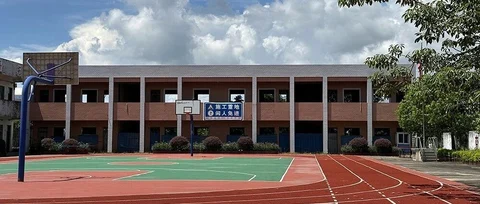
Its extreme form is that several places have experienced incidents of "storming Japanese schools," which is an extension from the internet to reality.
By 2024, the relevant departments realized the problems brought about by this atmosphere and continuously released goodwill, implementing visa-free policies for many countries, including Japan and South Korea, but it is not something that can be done in a day or two to reverse that xenophobic atmosphere.
For example, yesterday, a media outlet in Hunan reposted an article titled "Be Careful of Spies in the Comment Section," which received a large number of views. In fact, this was an article published by the National Security Agency on its public account last August (2024)—a local media outlet reposting old news as new policy.
It is perfectly normal for a department to publish such an article on its own public account, but many local media outlets repost it, which is entirely driven by traffic, and the number of views says it all. Many people like to read such articles, and the media knows it very well.
Such social interaction will eventually be passed on to young people. The simplest way to observe public opinion is to ask the young people around you what they think of the United States and Japan? Young people are as pure as blank paper, and their personalities are taking shape. Their "concepts" fully present the "mainstream concepts" of a society.
With Americans coming to Xiaohongshu, it is beneficial for young people in China and the United States to communicate more, and it is good for the whole world. But you must know that even in China, Xiaohongshu is a relatively niche platform. There is still a long way to go to integrate into the world.
A foreign friend came to the bookstore the day before yesterday. He said he used to be a Bloomberg reporter, "Are you going to write a report?"
"I'm unemployed, I'm not writing." He just came to the bookstore to check in and chat with me, and he is going to Yulin next, where he heard there are many young people, and a friend of his (also British) is waiting for him there.
I understand this as a beautiful thing.