

This article is reprinted from the "Culture Horizons" public account.
This article focuses on 20 cases of social revenge, analyzes the revenge psychology of those who seek revenge on society, and distinguishes four types of sources: market rejection, participation rejection, public service rejection, and social relationship rejection. When the rejected person encounters social setbacks and lacks sufficient social resources and psychological resources to relieve negative emotions, it is likely to form a revenge psychology, and then resort to extreme emotions and revenge actions. It is worth noting that some criminal acts of revenge on society belong to a form of performance violence, and the perpetrators want to gain public attention and social recognition through extreme behavior.
This article is selected from the Journal of Jiangsu Normal University (Philosophy and Social Science Edition) No. 6, 2019, with some editing and deletion.
Text/Ma Ziqi, Zhao Yunting
With the advent of the risk society, the development of social forces has also entered a stage of high individualization, independence, and decentralization. The power of individuals is constantly expanding, and the most obvious manifestation is the increase in extreme violent behavior of individuals. By using "revenge on society incidents" as keywords for online search, we can see that driving injuries, knife attacks, and arson on buses... similar tragedies are always happening, and every tragedy stimulates the public's nerves.
Individual revenge on society incidents refer to the sudden extreme events in which marginalized subjects rejected by society generate resentment due to repeated emotional and interest losses, and implement indiscriminate violent infringement behavior against the public in order to seek emotional and factual justice, thereby seriously threatening social stability and security.
From a nature perspective, individual revenge on society behavior is an extreme manifestation of emotional transgression behavior. Such incidents generally have the following characteristics: 1. The behavior subject is a single individual, mostly a marginalized group rejected by society. 2. The purpose of the behavior is irrational, and long-term accumulated resentment and a sense of injustice are the main psychological inducements. 3. The infringement targets are generalized, generally targeting uncertain social groups, such as the passenger group in bus arson, or specific individuals in specific groups, such as infringement behavior specifically targeting children and students. 4. The means of expanding killing, often choosing weapons that can cause widespread threats in a short period of time, such as explosives, arson, and knives. 5. Suddenness and terrifying consequences, there are no obvious signs before the incident, the duration is very short, difficult to predict and prevent, and it is easy to cause multiple deaths and injuries, with extremely bad social effects.
This article selects 20 typical cases from 2015 to 2019, and details the course of each case and the psychological and behavioral changes of the perpetrators, so as to reveal the general characteristics and generation rules of individual revenge on society behavior.
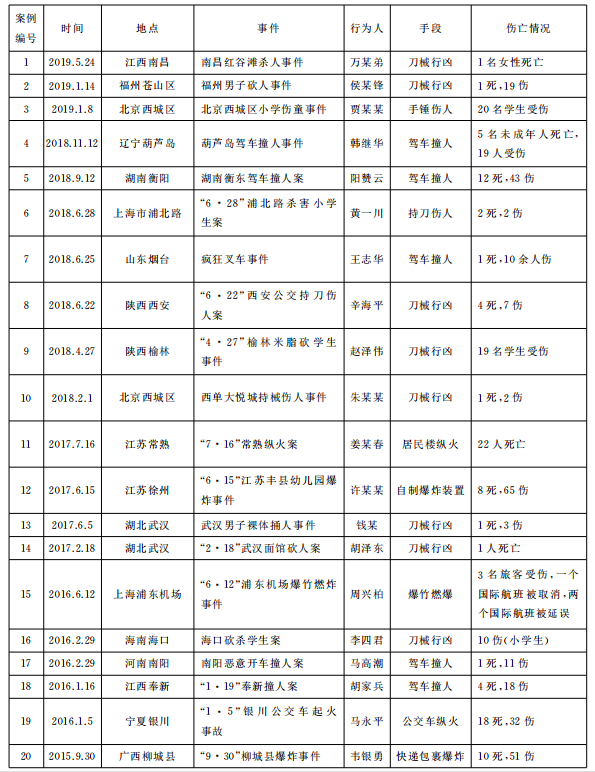
(A list of representative individual revenge on society cases reported by the media from 2015 to 2019)
▍Rejection and Deprivation: The Social Logic of Individual Revenge
(1) Social Rejection—The Internal Correlation of Individual Revenge
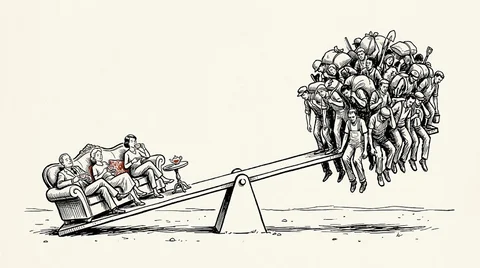
"When some individuals and groups do not obtain resources, opportunities, and endowments, and these states are considered normal, customary, or expected in the society in which they live, it can be said that they have been socially rejected." Social rejection means that the state of complete or partial absence of individual resources, opportunities, endowments, and power is fixed, and the relationship between the individual or group and society is severed, which will inevitably lead to the deprivation of the abilities of some individuals or groups, and restrict the life opportunities of individuals.
Faced with the survival dilemma caused by social rejection, individuals will make different reactions, such as compliance, innovation, formalism, retreatism, or resistance. Individual revenge on society behavior can be regarded as an extreme manifestation of retreatism—the perpetrator refuses to accept the existing social culture and goals, and at the same time resists social reality by non-institutional means.
In addition, the higher the probability of transgression, the more positively correlated it is with the degree of social rejection suffered by individuals. Generally speaking, the higher the degree of rejection of an individual, the more difficult it is to integrate into society, and the more likely it is to trigger transgression behavior. Especially when individuals cannot maintain the satisfaction of their ideal life through legal means, transgression may be more favored.
Through the above analysis, we can draw a conclusion: Deprivation of ability and the severance of social relations are the two basic inducements for social rejection to lead individuals to engage in transgression behavior.
By deeply analyzing the life trajectory of individuals who seek revenge on society before the incident, it is found that the vast majority of the subjects have a common behavioral characteristic before engaging in extreme behavior, that is, they spontaneously and actively alienate themselves from the social relationship network, and their social interactions are in a closed or semi-closed state, unwilling to communicate with others, and not participating in any social activities.
For example, Zhu, who was involved in the incident of injuring people with weapons in Beijing Xidan Joy City, was addicted to online games before the incident, frequently changed jobs, rarely communicated with others, and even severed contact with his family; For another example, in the case of the Haikou stabbing of students, according to his relatives, Li Sijun, the perpetrator, behaved abnormally during his return to his hometown before the incident, did not communicate with others, and did not participate in family activities.
According to Giddens's view, social rejection can be divided into two types: passive rejection of the lower social class and active rejection of the upper social class. The general meaning of social rejection we are talking about refers to passive rejection, that is, the groups at the bottom of society are forced to be excluded from the mainstream society. However, facts have proved that active rejection also occurs in the lower social class. The survival state of the avengers often goes through a process from passive rejection to active rejection. First, they are excluded from the edge of the social structure due to external social structural tension or their own congenital defects, forming "de facto rejection". When their personal desires cannot be met, they voluntarily and actively leave the mainstream society, or even completely isolate themselves, and even form an anti-social cultural characteristic, which is a more terrible "psychological rejection". When psychological isolation reaches a certain level or lasts long enough, it will be manifested in extreme and violent forms through individual behavior.
(2) Social Rejection—The Institutional Process of Individual Revenge
Social rejection emphasizes "who" (the promoter and the actor) excludes others from a certain social field through what kind of institutional process, and the focus is on revealing the internal mechanisms and processes. Therefore, it is necessary to explain in which mechanisms the subjects of revenge on society are excluded from the margins of society step by step, thereby increasing the possibility of transgression. In his latest research, Elliot Curry found that crime is a social consequence of the rampant release of market forces. Rejection mechanisms such as changes in the labor market, weakening of social network support, reduction of basic public services, Darwinism, and the amplification of resource competition culture will promote crime to varying degrees. From the perspective of the living dilemma of the subjects of revenge on society, they have mostly experienced the following four types of rejection.
1. Market Rejection
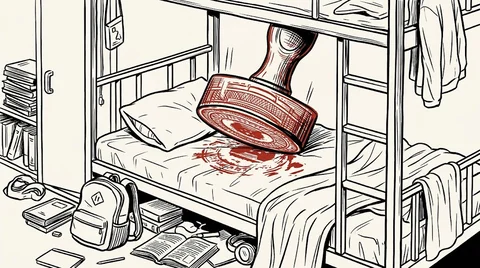
Market rejection includes rejection from the labor market and the consumer market. Labor market rejection refers to the fact that members of a certain group are excluded from the mainstream labor market, with the risk of frequent unemployment or unstable employment, and can only engage in heavy physical labor or service industries in their career choices. The rejection of the consumer market is manifested as the inability to afford or being restricted from using goods and services, and it is difficult to integrate into the mainstream lifestyle of consumption. They cannot enjoy the same welfare benefits and preferential policies as urban residents, and their material needs for life consumption are also difficult to be met, and they are seriously isolated from other classes in terms of economic status.
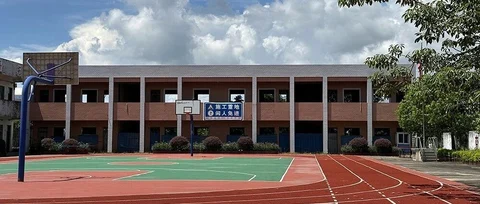
For example, Huang Yichuan, who was involved in the Shanghai student injury case, had long-term employment difficulties in many places. After coming to Shanghai in June 2018, it was even more difficult to find a suitable job, and he had been unemployed, with no livelihood, which led to a sense of despair, and thus came up with the idea of revenge on society. Jia, who was involved in the case of the First Affiliated Primary School of Xuanwu District, Beijing, was dissatisfied because he was not assigned to a suitable position after his labor dispatch contract expired. The market economy is essentially a rejection mechanism of survival of the fittest. Under the condition that resource allocation and labor selection are determined by the market, it will inevitably limit the market access opportunities of a part of the weak groups. In addition, market "failure" and the unsound development of the market economic system will also cause inequality in the enjoyment of resources and welfare, further intensifying the rejection of vulnerable groups.
2. Participation Rejection
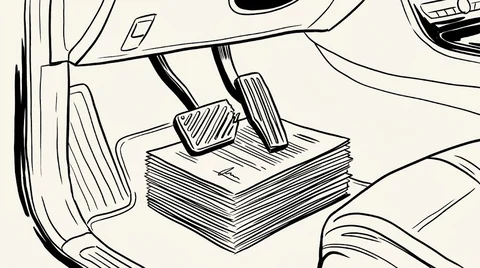
Participation rejection refers to the fact that the subject is excluded from the decision-making process, lacks the right to speak, has a low degree of participation in public affairs, and does not have the right and opportunity to fairly obtain political resources, enjoy political rights, and fulfill political obligations. For vulnerable groups, it is manifested as the vulnerability of their legitimate rights and interests, the obstruction of their channels for seeking interests, and the failure of institutionalized rights protection methods after their interests are damaged. For example, in the 2016 Yinchuan bus arson case, Ma Yongping, the suspect, was owed more than 200,000 yuan in wages by the subcontractor for three years. He had to borrow money from private lenders to repay his debts. During the period of seeking wages, he was even beaten by the construction boss and his thugs. He applied to the relevant departments of the county and town governments for rights protection, but was repeatedly shirked. Under the hopelessness of seeking wages and rights protection, he fell into extreme dissatisfaction and resentment.
Paying wages on time is the legitimate right of citizens protected by the system. However, at the actual implementation level, not all individuals' legitimate interests can be guaranteed, especially for the marginalized groups whose social status and resource possession are obviously weak, they themselves are very few or never participate in political activities, and their ability to protect their own rights and interests through legal channels is more limited. Due to the institutional environment and social structural defects, vulnerable groups are more likely to suffer the risk of rights damage than other classes.
3. Public Service Rejection
Public service rejection refers to "individuals or groups being unable to enjoy social rights because they do not have citizenship, or even if they have citizenship, they are also excluded from certain national welfare systems", which is particularly serious in the floating population in our country, especially the rural floating population. The regional barriers based on the household registration system divide urban and rural residents into two different social identities. Foreigners, due to not having formal resident status, are excluded from the urban public service system in terms of education, medical care, social security, housing, and other public services.
Unstable income and lack of necessary guarantees, the gap between the income of migrant workers and urban residents is becoming more and more obvious. The imbalance and inequality in the distribution of welfare resources have exacerbated the survival risks of marginalized groups. Risks such as unemployment, occupational diseases, and economic losses are amplified geometrically on vulnerable groups. Public service rejection further weakens the ability of marginalized groups to resist risks, and various risks in life may lead individuals to fall into the quagmire of survival.
For example, Xu, who was involved in the Xuzhou kindergarten explosion case, lost his educational opportunities due to his own physiological diseases, dropped out of school early to work, and it was difficult to find a better position due to his lack of skills and poor health. The pressure of life caused his psychological imbalance, and then he chose to end his life by seeking revenge on society.
4. Social Relationship Rejection
Social relationship rejection refers to the fact that groups or individuals cannot participate in normal social interaction life due to the severance of social relationship ties, which is manifested as a lack of support from family, friends, and community communities.
For example, Jiang, who was involved in the Changshu arson case, was introverted and taciturn since childhood, did not receive attention in the family, rarely contacted his family after adulthood, and his marriage life was not satisfactory. He was addicted to gambling all day long and gave up on himself. Seeing that his cousin Jiang Dashan, who came out to work with him, was getting better and better, he compared his own dark life and stimulated his inner jealousy. Jiang's father believed that his nephew Jiang Dashan did not give enough help to his son Jiang, which further deepened Jiang's resentment. For him, it was not only the difficulty of life but also the alienation from emotions.
With the disintegration of the traditional family structure and community, the individualization of society and the impact of social mobility have made the traditional kinship relationship based on blood ties and geographical ties extremely fragile. Especially for the floating population, they have left the original social relationship network and cannot immediately integrate into the new environment. The relationship ties are in a state of severance. When facing the risk of infringement, the unfamiliar city does not provide them with a harbor to buffer, and the family and kinship network of "living in a different place" is unable to provide help. Social relationship rejection cuts off the last line of defense for marginalized groups to defend against the risks of life.
In the case of Wan in Honggutan, Nanchang, he lost hope in life because he could not marry a wife, and he even wanted to kill a beautiful girl as a "yin and yang couple"; Hou, in Fuzhou, was resentful because his ex-wife found a new boyfriend, and stabbed his boyfriend to death and then vented his anger on passers-by. The emptiness of emotions broke the last line of defense for the survival of the bottom, and the indifference of life led them to the path of crime.
In addition, the multi-dimensionality and accumulation of social rejection make it possible for groups or individuals to experience multiple rejections at the same time. Rejection in one field will lead to rejection in other fields, and these rejections will interact with each other, leading to multiple rejections and weaknesses, which comprehensively create the living dilemma of vulnerable groups. For example, a person's lack of employment or access to public services will lead to economic poverty, and economic poverty in turn will lead to other forms of deprivation (such as rights damage or the severance of social relationship support). Therefore, social rejection is not only a part of the deprivation of ability, but also one of the reasons for the lack of ability to resist risks.
▍Behavioral Polarization: The Emotional Logic of Individual Revenge on Society
(1) The Emotional Attributes of Individual Revenge on Society Behavior
From a superficial point of view, the experience of social rejection prompts individuals to generate the motivation to seek revenge on society, thereby leading to the occurrence of transgression behavior. However, there is no necessary connection between the stimulation of the survival dilemma under the state of rejection and the occurrence of transgression behavior. Not all individuals who are rejected by society will go down the path of crime. The news reports about individual revenge on society almost invariably point out that the perpetrators have revenge psychology and a sense of despair in the reasons for the crime. Therefore, revenge psychology is the decisive factor that directly leads to the indiscriminate venting behavior of individuals.
Revenge psychology is a self-defense and protection mechanism to cope with and resist external unfavorable factors, and it is a compensatory reaction spontaneously carried out by individuals in order to maintain inner balance. Revenge psychology is accompanied by the negative emotional pressure of individuals, such as pain, inferiority, humiliation, and anger. From the perspective of value intensity and duration, the formation of revenge motivation is the result of individual emotional polarization. It evolves from negative emotions such as pain, anger, and humiliation, which are of high intensity but short duration, to extreme value judgments and psychological identification such as social insecurity, hatred, political indifference, and pessimistic despair, which are of low intensity but long duration.
For example, in the Yulin Mizhi case, Zhao Zewei was often bullied by his classmates when he was studying at Mizhi No. 3 Middle School, and he had accumulated resentment for a long time, which caused defects in his personality and formed serious psychological trauma. After adulthood, his work and life have not been smooth. Emotion is the regulator of human behavior, and it guides people's decisions between conscious and unconscious. Emotional defects can lead to defective social behavior. Elster pointed out: "If the possession of a certain emotion is itself harmful, then acting according to this emotion is also harmful." Generally speaking, people with higher social and economic status have more social resources and psychological resources to prevent the generation of extreme emotions. The lower the social status of an individual, the easier it is to come into contact with negative life events and problems that cause pressure. When an individual is always in a negative state in the "market position", that is, in a state of long-term deprivation and discrimination, those low emotional experiences will be stored and continue as "trauma". And the emotional individual or group does not have complete control over their behavior. Under the impetus of emotional power, the behavior of the individual or group may deviate from the pre-designed rational track and produce sudden changes, which ultimately leads to the occurrence of indiscriminate irrational attacks.
(2) The Behavioral Polarization Process of Individual Revenge on Society
The motivation of the rejected individual to seek revenge on society is formed under the impetus of emotion. By sorting out the psychological process of individuals who seek revenge on society, it is found that the formation of extreme behavior roughly goes through four stages: stimulation of the real environment and perception of rejection and harm, processing of harm experience and arousal of negative emotions, formation of revenge psychology and estimation of implementation effects, and externalization of extreme emotions and implementation of revenge actions.
1. Stimulation of the real environment and perception of rejection and harm
The individual's encounter with social rejection and the formation of initial emotional experience is the first stage of revenge psychology and the process of behavioral polarization. In this stage, individuals directly or indirectly come into contact with the damage from the social environment or other classes, such as resource deprivation, power restrictions, lack of opportunities, and broken relationships, and initially form negative emotional experiences such as inferiority, pain, and anger. In this process, the individual's perception of harm is a key factor affecting their response. Different people will have different psychological reactions to the same situational stimulation. In many cases, what seems to be not a major stimulus to ordinary people may be a devastating psychological blow to marginalized groups.
For example, in the "9·30" explosion incident in Liucheng County, Guangxi, Wei Yinyong had disputes with villagers many times due to the hidden dangers of the quarry and rent issues. He generated strong dissatisfaction in this process and even threatened to blow up the villagers' houses. After the quarry was shut down, the relationship with the villagers became increasingly tense.
2. Processing of harm experience and arousal of negative emotions
The second stage of behavior is that the rejected individual processes the harm from the environment and generates strong negative emotions. In this stage, the individual combines the perceived environmental stimuli with the existing knowledge and experience in the mind, makes judgments on the information, and thus draws basic conclusions. Due to the long-term effect of the rejection environment, the individual's own level of knowledge and experience in this stage has defects and deficiencies, which may make their processing of information and experience one-sided or extreme, deliberately exaggerating the consequences caused by environmental damage, and further intensifying the existing negative emotional experience, such as transitioning from the initial tension, anger, sadness, jealousy, and loneliness to deep self-poisoning negative emotions such as resentment, hatred, and a sense of helplessness. At this time, the individual's psychology is in a state of serious imbalance.
For example, in the case of Wei Yinyong, in his opinion, the quarry was shut down because the villagers were jealous of his earning money and deliberately made trouble, and the handling of the relevant units was also unfair. The quarry was forced to shut down before the validity period of the operating license, which was an infringement of his legitimate rights and interests by the government, while ignoring the safety hazards of the quarry and the adverse effects on the surrounding environment.
3. Formation of revenge psychology and estimation of implementation effects
The formation of revenge psychology and motivation is the key link and core stage of behavioral polarization. Based on the first two stages, the individual has clarified the damage caused by environmental stimuli. Out of the need to protect self-interests, a sense of security, and dignity, they have the idea of harming others to maintain self-esteem and restore a balanced state of mind, and decide to take revenge measures to fight back, and at the same time analyze the object of revenge and the feasibility of implementation.
For individuals who seek revenge on society, they suffer multiple harms from society. Some harms are not caused by specific individuals, such as poverty, unemployment, and disease, and it is difficult to find a clear object of hatred; some are because the opponent is too strong, such as the government and social groups. It is difficult for them to satisfy their psychological needs by simply seeking revenge on one or two people, so they expand their hatred. Only by seeking revenge on a large number of unsuspecting strangers can they produce an effect that is sufficient to match their angry emotions. At this time, the negative emotional energy of the individual reaches its extreme value, and any slight environmental stimulation or emotional fluctuation may trigger the individual's revenge behavior. Before the incident, Wei Yinyong wrote on Weibo: "When that day I become crazy, please remember that I was once played as a fool by you." "You must move forward because there is no way back, and I will desperately exchange for unexpected consequences." "The time for me to kill people has come", etc.
4. Externalization of extreme emotions and implementation of revenge actions
The implementation of revenge on society behavior is the externalization stage of revenge psychology and extreme emotions. Individuals implement violent behavior against unspecified masses through extreme violent means such as arson, explosions, and injuring people with weapons to vent extreme emotions. The long-accumulated negative emotional energy of the individual is awakened and activated, and they begin to consciously conceive revenge plans and put them into practice.
For example, on the day of the incident, Yang Zanyun first sent his girlfriend home, and then returned to the county town alone to implement revenge. He first drove his car to the vicinity of the Hengdong County People's Court and waited, intending to crash into the court staff. After failing to find an opportunity, he drove his car into the Mijiang Square in the county town and violently crashed into the crowd who were relaxing and entertaining in the square. After the vehicle hit an obstacle and the airbags opened, he got out of the car and wielded a folding shovel and a dagger to slash the crowd on the scene, causing serious casualties to innocent people.
(3) The Incubation Field of "Trauma" Emotions
Through the analysis above, we know that when an individual is always in a state of deprivation and discrimination in the "market position", those negative emotional experiences will be stored and continue as "trauma". So in what situations are these "trauma"-style emotional experiences nurtured? According to Collins's explanation, the close connection between individuals and social situations is realized through emotional energy, which is an emotional resource for individuals to conduct social interaction. When the situation can meet most of the individual's needs, it will remain at a high level of emotional energy. Otherwise, it will be at a low level of emotional energy.
The acquisition of individual emotional energy in society is realized in the following types of social fields, including family, school, community, work unit, social groups or social organizations, etc. According to the different places, interaction objects, and interaction frequency, the social situations of individuals who seek revenge on society can be divided into three types: familiar situations, social situations, and work situations. Familiar situations refer to daily interactions with acquaintances, without specific goals, and the relationship is the closest, which is also the main source of emotional energy, such as interactions in the family, and interactions with other relatives or neighbors. The traumatic experience from familiar situations is mainly manifested as the interruption of intimate relationships such as divorce and broken love; social situations are for interaction and interaction, with the purpose of obtaining pleasure, and the role is to communicate, understand, and exchange information, such as the township group and community activities. Its traumatic experience is manifested as contempt and isolation from the township group, and class discrimination associated with residential isolation; and in the work situation, both parties have specific goals and clear division of labor, there are behavioral restrictions, and there is less emotional communication, such as interactions in work units, schools, and transactions. Its traumatic experience is manifested as self-realization failure and peer rejection caused by unemployment, dropping out of school, etc. For example, in the Yulin Mizhi case, the perpetrator mainly encountered traumatic experiences in school life and society; in the Huludao car crash case, it was the diffusion and manifestation of family conflicts, and both encountered low emotional energy experiences.
The "trauma" experience of the rejected individual is not carried out in a single way. They may simultaneously or alternately encounter emotional harm or relationship severance in different situations. In the 2016 Fengxin, Jiangxi car crash case, a friend of the suspect Hu Jiabing recalled his life experience, saying, "Seven or eight years ago, his wife divorced him, and his son was imprisoned for fighting in 2014. Originally, he (Hu Jiabing) drove a car himself, and asked the driver to drive one. After he was released from prison, he had nothing, and he relied on driving for others, earning seven or eight thousand yuan a month... He took the money and went to Beijing to appeal... He doesn't take drugs, his mobile phone is very old, and he can't even access the Internet, but he loves gambling". The barriers of social rejection lead to the individual's inability to obtain sufficient emotional returns from daily life situations, and they are in a low level of emotional energy for a long time. Setbacks such as dropping out of school, unemployment, and divorce are all situational events that reduce the individual's emotional energy.
▍Performance Violence: The Dying Struggle of Individuals Seeking Recognition
Since ancient times, the traditional Chinese concept of revenge has followed the principle of "the wronged has a head and the debtor has an owner", and the infringement behavior of these individuals is no longer directed at the specific objects in the traditional sense but at the entire society. The purpose of the behavior is not aimed at the existing infringement of interests, which makes the generalized violent actions of individuals different from the general criminal behavior. It does not conform to the causal law of crime, nor is it a mental inducement. The perpetrator's purpose seems to be more inclined to create a sensational effect and send a "pay attention to me" signal to the whole society. For them, violent behavior is more of a purpose than a means. In Liu Bochao's view, "revenge on society" is the process by which individuals seek recognition and attention from others through this extremely harmful and seriously unethical behavior.
So why do perpetrators seek recognition from society, and why do they resort to performance violence to vent and seek recognition? Honneth's research on the social recognition relationship model provides an answer to this.
(1) "The Struggle for Recognition"
"People must live, but they must be (or become) human." Due to the existence of self-awareness, human beings have the need to express themselves and be evaluated by others, so as to confirm the entity and dignity of their own existence. Therefore, people need recognition and need to achieve a proper understanding of themselves in the recognition of others, so as to promote the realization of independent and autonomous individuals.
In Honneth's research, recognition not only involves the emotional experience of the human subject's inner self-awareness, but also involves the mutual care that individuals and society must possess. Individuals gain the confidence to interact with others without obstacles in social interaction. Equality is the core content of recognition. Everyone must be protected by legal relations, and at the same time, they bear certain moral obligations, and this moral obligation can just shape the behavior of individuals, regulate and regulate people's lives, and make people responsible for their own behavior.
Recognition is the basic condition for individuals to survive in modern society, and it is the expectation of individuals for a better life. Individuals expect society to recognize their current abilities and achievements and use them as a driving force. However, injustice is ubiquitous, and injustice originates from the violation of the hidden rules of mutual recognition by society, that is, society refuses to recognize or wrongly recognizes the subjectivity of individuals. Some individuals can use the resources they possess to make up for the damage caused by society. For the groups excluded from the margins of society, they just lack the ability to make up for the damage, and the result is inevitably a continuous experience of contempt. Honneth believes that contempt is the moral motivation for social resistance. In order to express and demand compensation, individuals have to use material, symbolic, or negative violence to fight with society, that is, "the struggle for recognition".
Ma Yongping wrote in his suicide note before the incident: "After three years of various efforts to seek wages, I failed. I cannot express my despair and anger in words... No one cherishes their own life, and I will not hurt anyone who deceives me. But when my life is... trampled by the conscience-stricken boss as if it were not as good as a dog, I can only take my blood and sweat money back by embracing death."
Therefore, we can understand the individual's revenge psychology as a manifestation of resisting the experience of contempt, in Honneth's words, that is, "recognizing justice". Social injustice, or social rejection, infringes on the entity and dignity of individuals, and infringes on the "justice" they uphold. In the case of seeking help without a door, they turn to transgression behavior that violates legal justice or procedural justice. Therefore, in their view, revenge on society is a tragic way to obtain recognition of justice.
(2) Performance Violence: Violence as a Means
Those who seek revenge on society often adopt extreme methods such as slashing, arson, detonating explosives, and crashing into people with vehicles in public places to abuse others. For them, violence is more of a means to vent emotions and gain recognition rather than a purpose.
The more easily deprived individuals are, the more they tend to seek obvious or high-profile actions, which makes the revenge on society rendered with a layer of performance color. The behavior of individuals seeking revenge on society is the violent performance implemented by individuals in order to obtain social recognition.
Different from the concealment of ordinary individual crimes, creating a sensational effect is one of the purposes of individuals seeking revenge on society. They pursue the maximization of social influence or social harm, and do not expect to obtain specific interests from this process. In order to ensure the sensational effect of the behavior, they generally choose vulnerable groups that are of social concern, such as children and students; they use large-scale lethal means, such as chemical substances and explosives; and they choose public places with dense crowds, such as public transportation, commercial places, and residential areas, etc. The reason for doing so is that there are enough infringement targets to facilitate implementation; and secondly, there are a large number of audiences to meet the needs of the actors to create stimulation and attract attention.
For example, in the Wangfujing car crash case in 2009, Ai Xuxian chose Wangfujing as the place of the crime. In his opinion, "Wangfujing is the most prosperous center of China and a place where the rich gather"; the Zheng Minsheng case in 2010 was also a cross-class revenge, and he chose a key primary school located in the city center, where students were mostly from well-off families, and after being subdued, he was still shouting wildly: "They don't let me live, and I won't let them live" "Kill one more and earn one".
In addition, it should be pointed out that the news media's reports on individual revenge on society behavior often attract widespread social attention, which is accompanied by the negative effect of spreading violence. Because this will make those who have similar experiences of being rejected realize that certain violent behaviors can emphasize or highlight their dissatisfaction and trigger public attention, so they may imitate the crime in the same way. Therefore, the harm of the revenge on society incident lies not only in the current threat of the incident to society, but also in the demonstration effect it causes.
For example, from March to May 2010, within a short period of two months, six incidents of malicious infringement of campus teachers and students' safety occurred nationwide. Although the identities of the criminals and the results were different, the methods, processes, and infringement objects of the crimes were highly similar. We have to suspect that the detailed and realistic description of such incidents by the news media has inspired some people with revenge psychology to imitate the crime. Therefore, the harm of the revenge on society incident lies not only in the current threat of the incident to society, but also in the demonstration effect it causes.
▍Conclusion