

Speaking of various topics, let's talk about a few things. Last night, Beijing time, the results of the next US presidential election were announced across the ocean, with Republican Trump taking the next four-year presidential term.
It has to be admitted that the US presidential election, held every four years, although it's the US president being elected, always attracts worldwide attention and focus. The reason is that the US is a superpower, and a four-year presidential term in the US, its policies and strategies during the term, are enough to affect all aspects of the world. Of course, China is also a member of the world, and China is also more or less affected by the presidents of different parties in the US during their terms.
Today, I received invitations from several media organizations and different groups or individuals for interviews, and the topics were all about the expected evaluation or outlook on this 47th US president-elect. Of course, as Chinese, or people of Chinese descent, or people with Chinese backgrounds, what they care about most is still various topics with China in the future. Therefore, taking advantage of the heat, I will write a short popular science article in the public account, focusing on several questions or topics related to China that have the highest reader attention today.
1) Trade between China and the US.
This is of course the most important and significant topic.
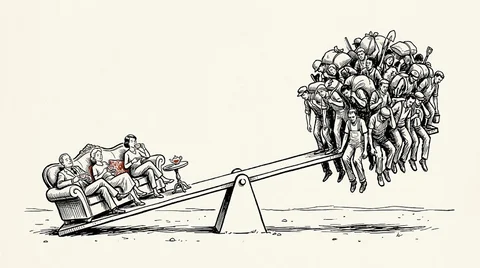
In the past thirty years, we have always heard the phrase "Sino-US economic and trade relations are the ballast of the stability and development of Sino-US relations", which is enough to illustrate the importance of Sino-US economic and trade relations. Trump said during the campaign that he would impose a 60% tariff on Chinese products. What is this concept? It should be noted that the products or goods China exports to the US are mainly low- and mid-end, with not much added value. Those products with medium added value generally have a profit of less than 20%, and most low-value-added products simply have a profit of only 5%-10%. If a 60% tariff is added, the profit compression of our exporters has reached its extreme, and it is basically impossible to squeeze out any more water. Therefore, after Trump takes office, the trade volume between China and the US is expected to decline by a relatively large margin, about 10%-15%; the main ones affected are low-end products, such as toys, clothing, Christmas decorations, etc.; but, in order to catch up with the current tariffs before Trump takes office, US importers will stockpile a certain amount of goods, possibly a considerable amount. Therefore, before the new president's term begins next year, the export of these low-value-added products or goods in our country is expected to usher in a sudden wave of orders, and foreign trade exports are expected to have a small peak; and after the new president takes office, the annual trade volume is expected to decrease by at least 10%.
2) RMB exchange rate against the US dollar.
This issue is related to the previous one.
Because our goods are expected to be subject to a 60% tariff, and the profit margin of most of our goods or products does not reach this value, the consequence is that either we will no longer export to the US, or we will lower the exchange rate; and lowering the exchange rate is affected by two aspects, one is market regulation, and the other is government intervention. In terms of government intervention, it is not difficult for us to do this, the key is to grasp the rhythm well, neither too fast nor too slow, otherwise it is easy to cause capital flight. There are also financial institutions abroad that predict that if the RMB depreciates to around 8, it will basically cover or offset the 10% decline in foreign trade exports, thereby reaching a new, lower level of foreign trade balance. Therefore, it is said that when the new US president takes office, our RMB is expected to depreciate by about 8%-10%.
3) China's real estate market and local debt.
This, at first glance, is purely an internal economic problem in our country, but it is not. Because Sino-US trade is blocked, the areas in our country that are affected are those provinces and regions that heavily rely on foreign trade. The Yangtze River Delta and the Pearl River Delta will be affected to varying degrees. In terms of the impact on the real estate market, because foreign trade is blocked, it leads to a reduction in production, which in turn lowers the income of employees, and then leads to sluggish consumption; and the main buyers of the real estate market are young people of the right age. Due to the reduction of the entire economic activity, it prompts a part of the young people of the right age who eat foreign trade in economically developed areas to leave the area, thus causing the real estate market to decline. Local debt is the same. Local governments, especially local governments in foreign trade developed areas, due to the obstruction of foreign trade, the reduction of tax sources, leading to the continuous deterioration of the scale of local government debt, laying hidden dangers for the stable development of social governance. Therefore, it can be foreseen that with the beginning of the new US president's term, the real estate market in our foreign trade developed areas will continue to show a sluggish trend; and the central government and local governments will reach debt swap agreements and/or debt extension agreements, so that local governments can have a certain amount of funds to invest, so as to continue to drive the slow growth of the economy.
4) Stock and financing markets.
The US continues to cut interest rates. Because the US Federal Reserve is independent of the president and the federal government, theoretically, neither the new nor the old president can interfere with the decisions of the Federal Reserve to raise or lower interest rates. However, the return of the new president Trump can also be seen as the victory of traditional capital and industrial capital. In the interest rate cut cycle, the stock and financing markets should be a beneficiary, among which, the first-tier traditional industrial capital such as electrical and mechanical manufacturing, precision and industrial machine tools will directly benefit, and the second-tier such as transportation, high-end technology will also benefit. Therefore, all those in the first and second tiers of US-funded industrial entities related to us will have a relatively positive result. Similarly, if Trump decides to withdraw from the global climate change agreement, it will also make the capital in the traditional energy sector have a better time. Therefore, it is said that the new US president taking office, the prospects for the above-mentioned aspects in the two stock markets and financing markets are still relatively optimistic.
5) Cross-strait issues.
This issue is more sensitive and not easy to answer, mainly because it is not easy to grasp the measure. According to my personal understanding, according to Trump's thinking logic and style of doing things, the other side of the strait is not a problem he cares about, at least not the main problem he cares about. If something happens on the other side, it is hard to imagine that he would send US soldiers to risk their lives to act as this meaningless umbrella. Trump has already asked the other party to pay a "protection fee" if they need the US; in fact, he is not only targeting the other side of the strait, his attitude towards NATO countries is also the same; Trump only does things that are beneficial to the US. That is to say, the new president's commitment to the other side of the strait will be significantly lower than that of his predecessor, the current president. Therefore, the issue we are concerned about, that is, whether the two sides of the strait under the name of one China will use force, the probability of this will increase after the new US president takes office (this issue can only be expressed in this way).
6) Other issues, such as US-Russia relations, the situation in the Middle East, which have already gone beyond today's topic. I will discuss them in another article at a suitable opportunity.