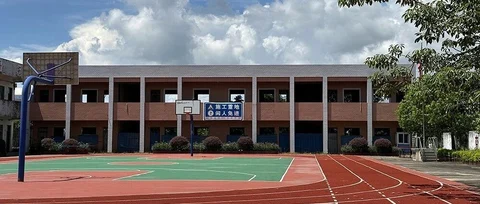


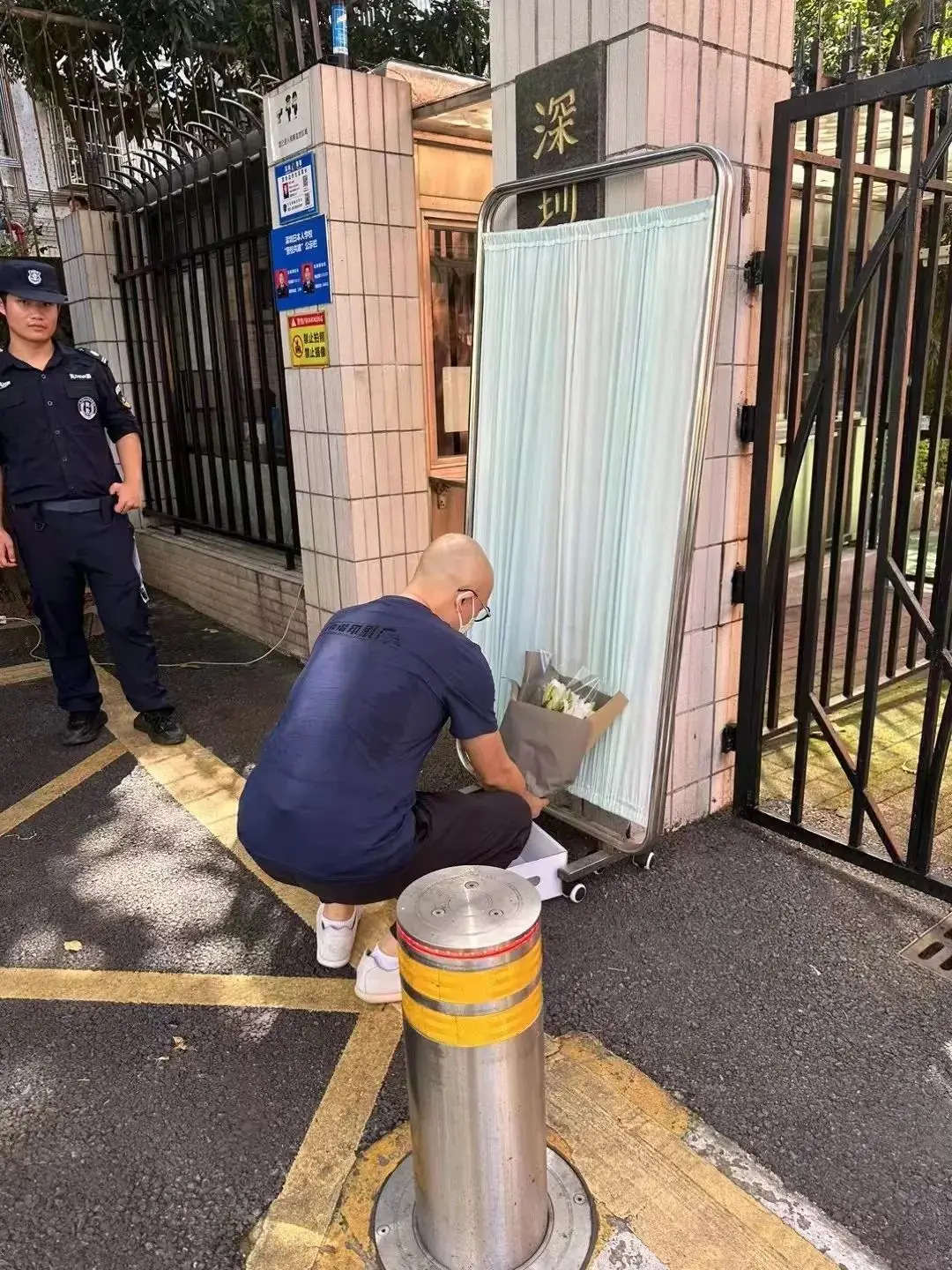
Shenzhen citizens spontaneously offer flowers in front of the Japanese School in Shekou.
On the morning of September 18th, a 10-year-old Japanese boy attending the Shenzhen Japanese School was attacked by a 44-year-old Chinese man surnamed Zhong on his way to school. He was sent to the hospital for treatment but ultimately died in the early hours of the 19th. The assailant was arrested on the spot, but there was no further official announcement explaining the motive for the attack.
That day was the September 18th “National Humiliation Day,” and Shenzhen sounded its air raid sirens in commemoration. Just two hours before the air raid sirens sounded throughout the city, the young life of a Shenzhen child ended on this ordinary morning.
It is said that the child's mother witnessed the attack. Facing the brutal and targeted assailant, she had no time to react and protect her child. This was a day of disaster for a Shenzhen mother.
On this grand day of commemoration, a Shenzhen family was completely destroyed.
Also on this day, the city of Shenzhen was dimmed, and many Shenzhen citizens felt ashamed of the extreme anti-Japanese incident that occurred in their city.
Perhaps the assailant did not necessarily live in Shenzhen. It is currently unknown why his hatred was directed at a stranger, a young student, but this public security incident occurred in Shenzhen (the last time was in Suzhou, also a city with a leading economic development).
Shenzhen's response and handling of this matter is a watershed moment for the city's future and destiny.
After all, without openness, there would be no Shenzhen; without new immigrants from all over the world, there would be nothing in front of this city; and after all, without confidence in a city, there would be no dreams, and even less of a so-called future.
Shenzhen has a resounding slogan: “Once you come, you are a Shenzhener.” Regardless of the child's nationality, since he lives and studies in Shenzhen, he is a child of Shenzhen. If a city is unable to ensure the safety of children going to school, then all the development of this city is invalid.
No matter how many skyscrapers the city has, no matter how high its economic achievements are, if it cannot protect the weak and cannot guarantee the safety of all children on their way to school, this city is a failed city.
Shekou, where the Shenzhen Japanese School is located, is a place that symbolizes contemporary China's openness: the first shot of China's reform and opening up was fired in Shekou; the first batch of foreign-funded enterprises in China were born in Shekou; Shekou is also the only community in the coastal city of Shenzhen where foreigners are concentrated.
Such an extreme hate crime against foreigners occurred in Shekou, which makes people even more frightened and apprehensive. Since it can happen in Shekou, it can happen anywhere in China.
How Shenzhen responds to this extreme incident that makes its citizens feel ashamed and heartbroken can show whether this city, which takes reform and opening up as its original capital, is still willing to continue to open up, and whether it still cherishes human life, dignity, and freedom.
The attitude towards this incident also tests whether this city is an honest city—since “Once you come, you are a Shenzhener,” then we should all enjoy the same treatment as citizens, regardless of their origin, nationality, or skin color.
The death of this Shenzhen child is heartbreaking! I hope that the city of Shenzhen will dare to defend its core values at the current crossroads of desolation, low ebb, and uncertain future, and once again, break through the fog and carve out a path.
Otherwise, there will be deeper hatred, destroying all of us, destroying the skyscrapers and common sense that have just been built in the past few decades. The spreading hatred will make us stagnate all expectations at this moment, and that will be the last generation of all people.
Written by: Leng Leng