This article is the text version of the YouTube video “【News Before Sleep 669】GDP ≠ Pension, Paying Attention to Jiangsu = Caring for Yourself” (Author: News Before Sleep). The original B station video was taken down from domestic platforms, and the text version was published on the WeChat public account “News Before Sleep World”, which was also deleted.
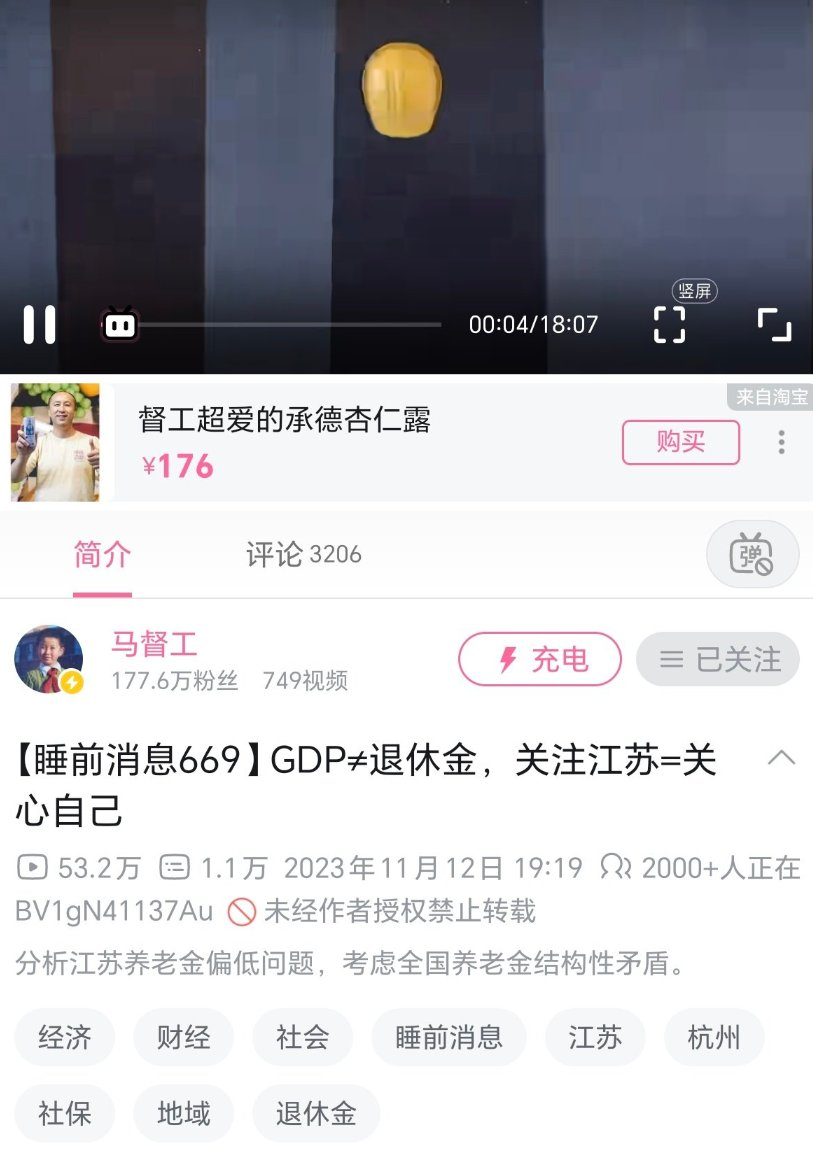
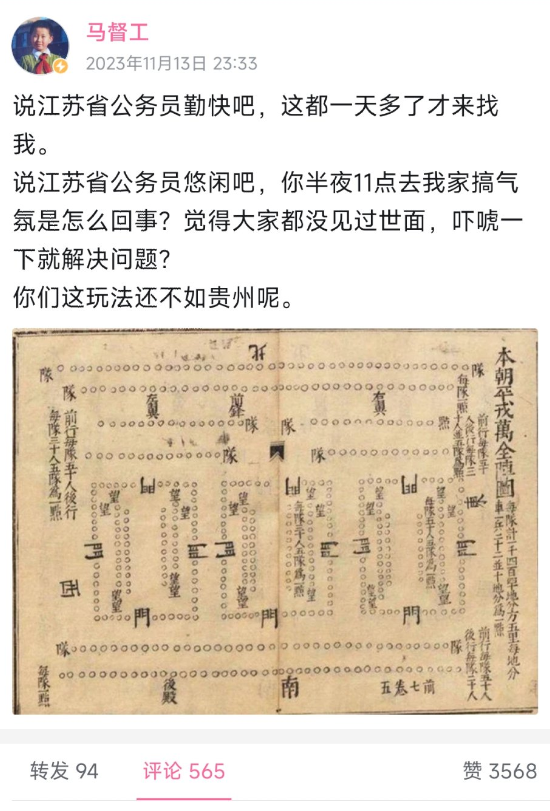
The video author, Ma Dugong, said that after making this video, some government officials came to his door in the middle of the night.
Hello everyone, it’s Sunday, November 12, 2023. Welcome to the 669th issue of News Before Sleep. Please Jingjing introduce the topic.
Since this year, people in Jiangsu have generally been concerned about the pension issue, complaining that they receive less money after retirement than in other provinces. In 2022, Jiangsu’s per capita GDP was 144,400 yuan, the highest in the province. Even including the municipalities directly under the central government, Jiangsu still ranks third, surpassing Tianjin, second only to Beijing and Shanghai.
Dugong, you have paid social security in Jiangsu for many years. Why did the pension issue first break out in Jiangsu?
Under the premise of consistent contributions, people in Jiangsu receive less pension than in other provinces, and the gap cannot be ignored.
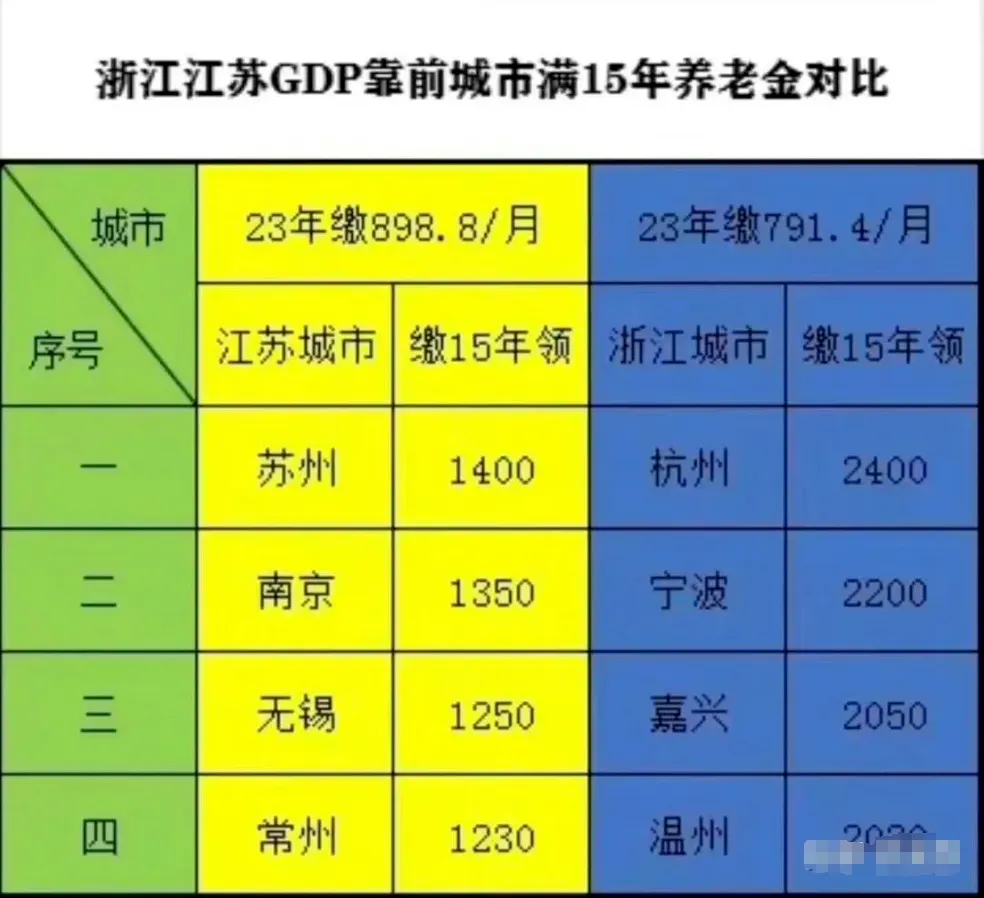
Someone has already done statistics. Retired enterprise employees in Jiangsu, after paying social security for 15 years, receive a pension of about 1,300 yuan per month. Similarly, retired enterprise employees in Zhejiang, after paying social security for 15 years, generally receive a pension of over 2,000 yuan. Moreover, the contribution standards in the two provinces are higher in Jiangsu and lower in Zhejiang. Employees in Jiangsu also have to pay about 100 yuan more each month.
Before 2010, retired elderly people didn’t use the internet much, and retired employees in Jiangsu were not aware of the gap with other provinces. In the past 10 years, WeChat and short videos have brought the retired group into the internet, breaking through the last regional cultural boundary. The retired group in Jiangsu began to realize the contradiction between economic level and retirement income.
Since 2018, several elderly people in Jiangsu have been tracking the issue and established the “Jiangsu Province Enterprise Retirement General Group”, requesting the social security system to give an explanation. Among them, the leading elderly people’s online IDs are A Gong and Hao Ge, who have expressed their appeals to the Provincial Department of Human Resources and Social Security, the Provincial Federation of Trade Unions, the Jiangsu Journalists Station of People’s Daily, and the Ministry of Human Resources and Social Security.
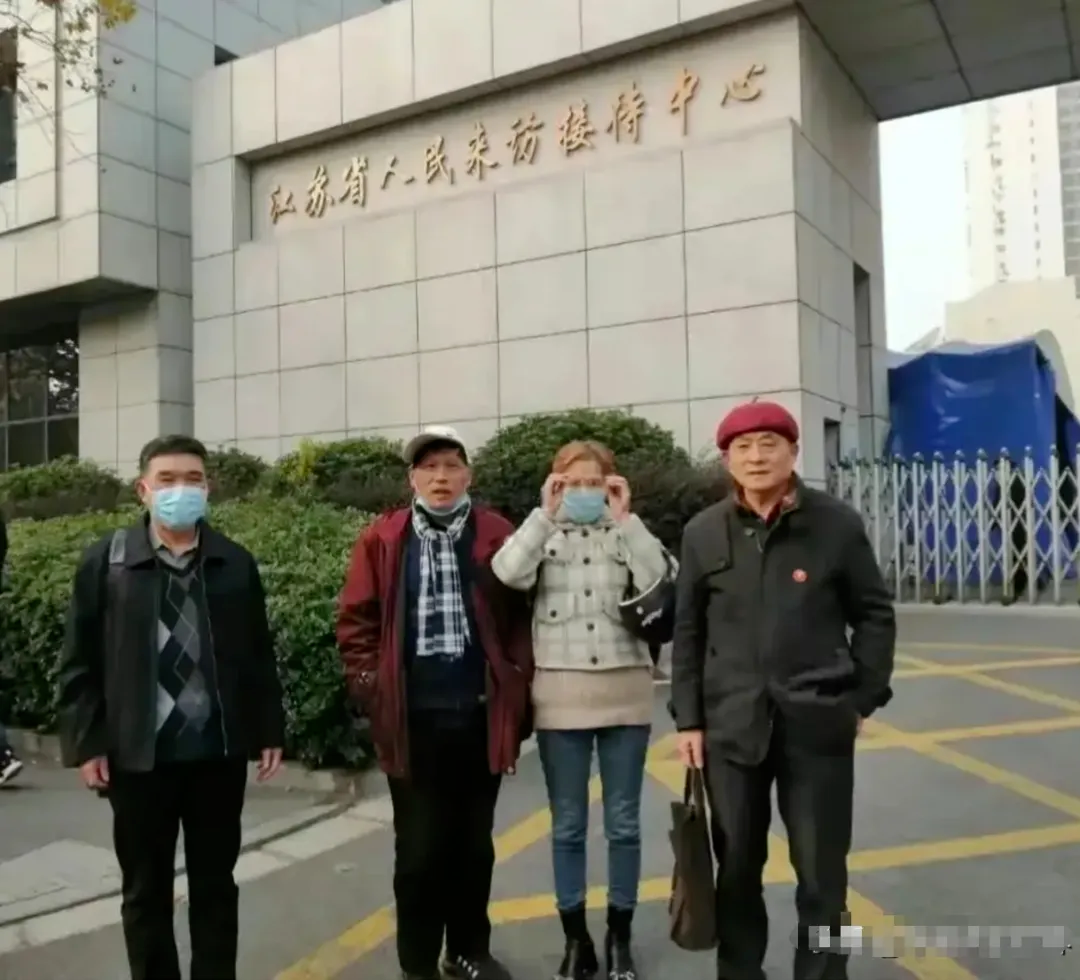
If you, the audience, have had dealings with official institutions, you should know that expressing emotions or stances is meaningless. If the cadres are amiable and say they understand you, they are definitely rejecting your request. If they firmly give the most basic decision-making basis, they are actually helping you. Because they point out a legitimate and successful route, as long as you find a more authoritative rule to override the existing documents, the matter can be handled for you.
A Gong and Hao Ge, these representatives who speak out for the retired elderly in Jiangsu, have been through many battles before retirement and have seen many government decision-making methods, so they accurately found the crux of the problem – the way Jiangsu calculates social security is wrong, using the low data from 1995 to calculate the current transitional pension.
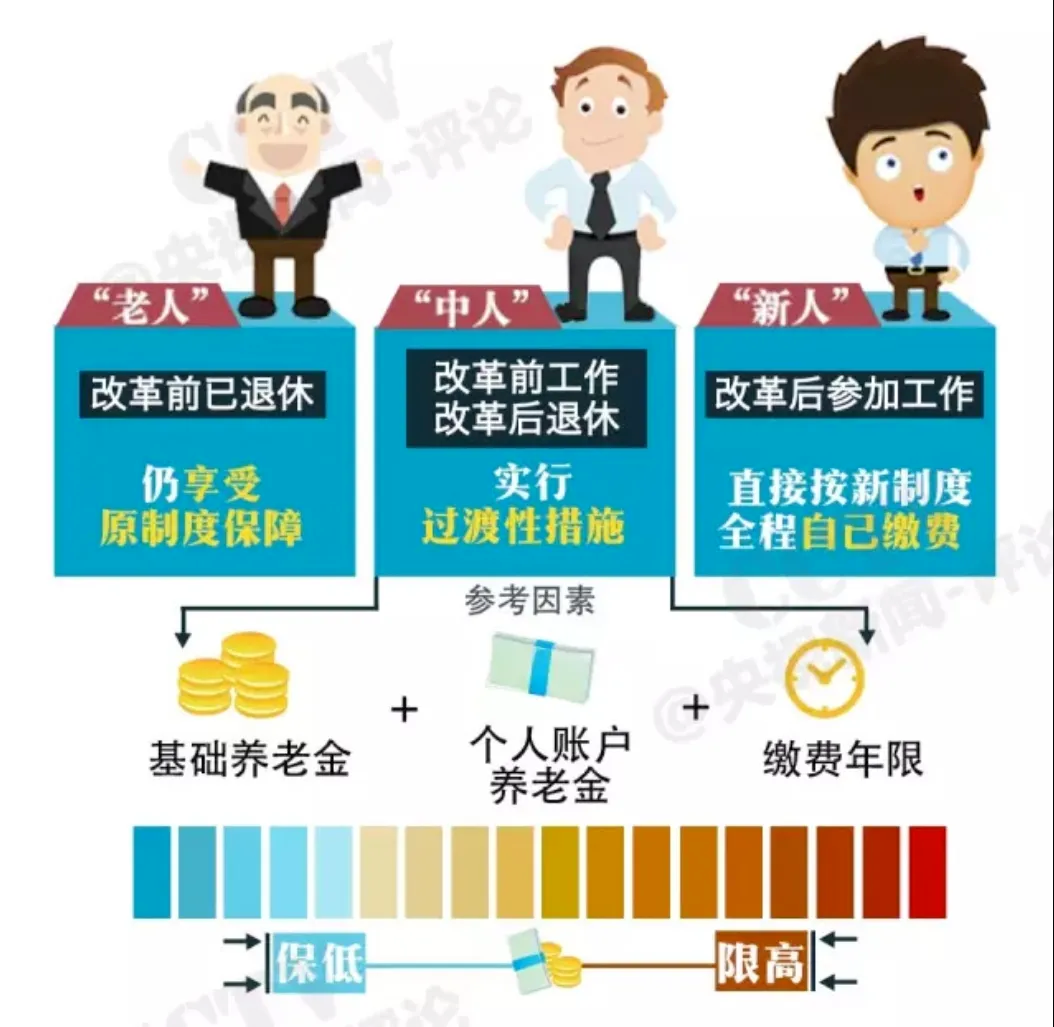
According to the current formula of the Ministry of Human Resources and Social Security, the pension of urban retired employees includes three parts: basic pension + personal account pension + transitional pension. Among them, the calculation of basic pension and personal account pension is consistent across the country and is linked to the amount of pension contributions. Jiangsu Province employees have an advantage in these two aspects because of its developed economy, and the amount of pension contributions is not low. Therefore, the reason for the low pension in Jiangsu is only that the transitional pension is too small.
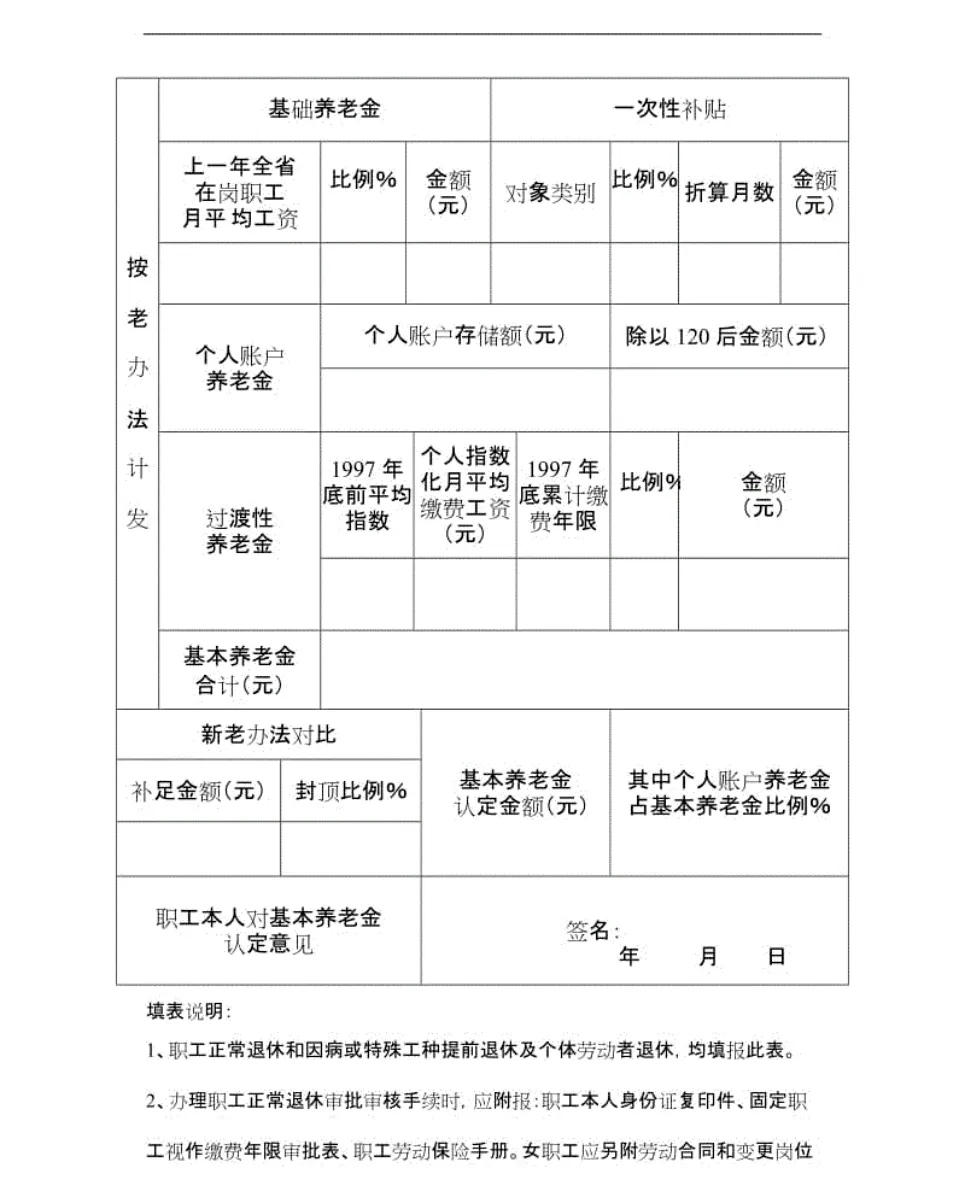
The retired group in Jiangsu has already calculated the standards of each province. In 2021, the transitional pension standard for employees with 40 years of service in Jiangsu Province is 574 yuan per month, the lowest in the country, less than half of the average level, and nearly 1,000 yuan less than that of the neighboring Zhejiang Province, perfectly explaining the gap in enterprise retirement pensions between the two provinces.
This video found two reasons for the low pension of retired enterprise employees in Jiangsu. In addition to the transitional pension, the basic pension in Jiangsu is also low, because the Jiangsu algorithm replaces the 1 in (1+pension insurance contribution index) with the lowest contribution coefficient, which is always less than or equal to 1. However, this only lowers the basic pension by dozens of yuan per month, so the key is still on the transitional pension.
Back to the social security topic, the transitional pension has lowered the retirement pension in Jiangsu Province. Why does the state allow each province to separately set up a transitional pension system?
The transitional pension is a historical legacy issue in China. It is used to make up for the losses of state-owned enterprises before 1995 by means of bookkeeping.
The basic standard for enterprise retirement pensions in China was formulated in the “Labor Insurance Regulations” in 1951, and there was a revision in 1953. The principle is equivalent to 40% to 70% of the salary. There is a certain fluctuation based on labor intensity, danger, and personal skills.
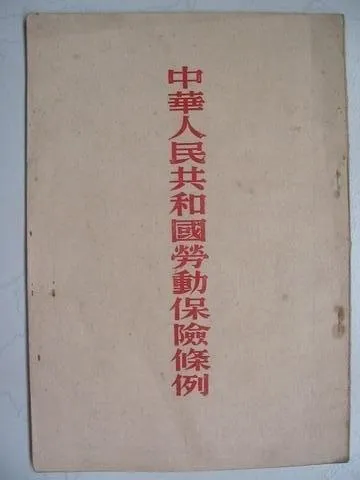
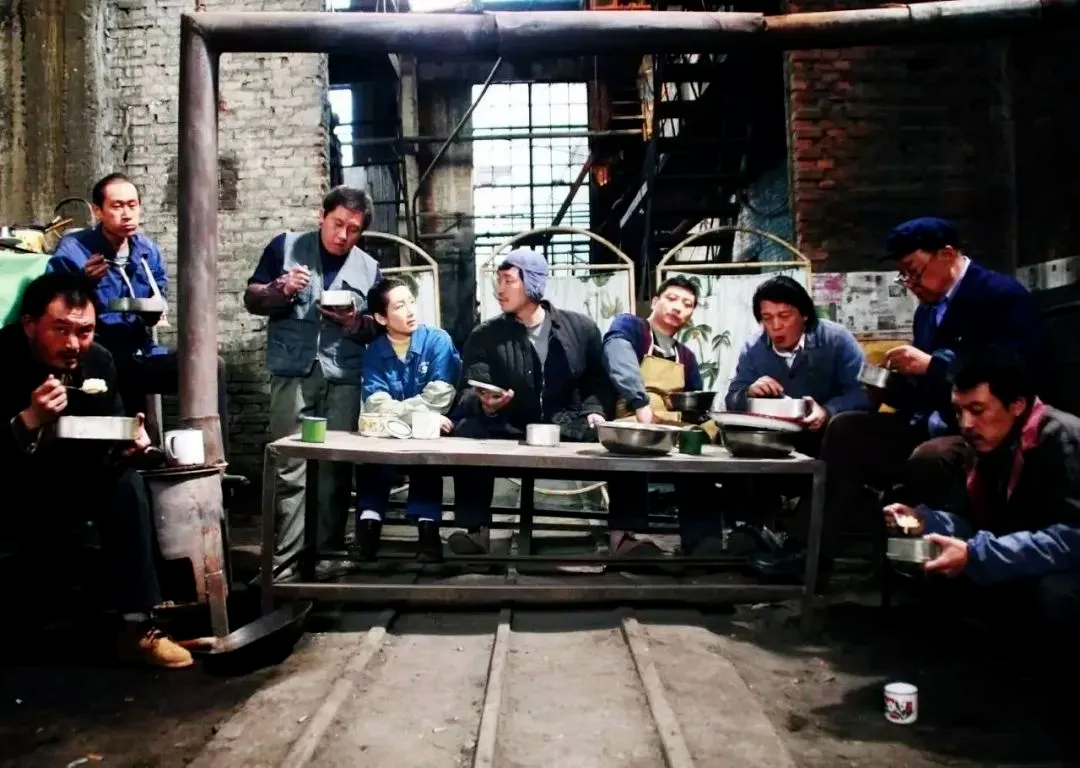
However, in 1969, the financial system was changed, and enterprises no longer paid money to the national social security fund, and they also had to be responsible for the pensions and retirement of all employees. This brought about an obvious contradiction: the older the enterprise, the heavier the burden. If labor protection is done well, and the employees live longer after retirement, the enterprise will suffer losses.
More importantly, with the establishment of the actual succession system in state-owned enterprises in the 1980s, the enterprises themselves did not accumulate retirement funds at all, and they would rather distribute benefits at the moment. Especially after the establishment of the contract system, the enterprise management lacked long-term planning and was eager to achieve results in the short term, and no one cared about retirement issues decades later. Therefore, the state was forced to re-establish the pension insurance system.
In 1995, the State Council issued the “Notice on Deepening the Reform of the Enterprise Employee Pension Insurance System”, stipulating that enterprise employees could retire and receive a monthly pension after accumulating 15 years of contributions.
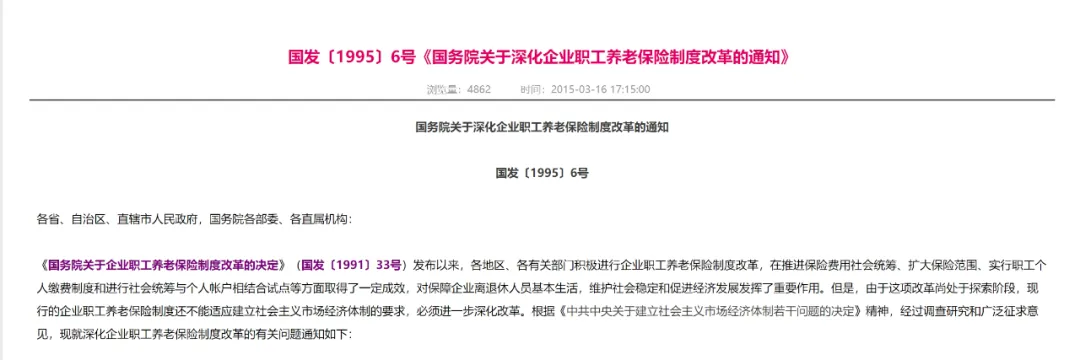
In 1995, a large number of old employees were waiting to retire, but state-owned enterprises gradually went into full loss, and there was no money to supplement the pension funds for these employees. If the 15-year standard was immediately cut off, a large number of employees would not be able to get money. Therefore, on the eve of the large-scale layoffs in 1997, the State Council issued a new document: “Decision on Establishing a Unified Basic Pension Insurance System for Enterprise Employees”.
After the unified insurance system was formed, everyone had to pay pension funds together with the enterprise. But the previous state-owned enterprises had already lost this pension fund, and it could only be supplemented by the government. Therefore, Article 5 of the 1997 document stipulates that for those who started working before the implementation of the document, a transitional pension will be recorded on the books until all those who started working before 1997 retire.
People who started working in 1996, if they were 20 years old that year, are only 47 years old now, and still have 13 years to retire. People who retired at the age of 60 in 1997 are now 86 years old and still have a high probability of being alive. Therefore, the transitional pension almost covers the broadest group of middle-aged and elderly people in China and directly determines the income of enterprise retirees.
The 1997 State Council document did not stipulate the specific algorithm for the transitional pension, but most areas of the country used the same formula:
Transitional Pension = Pension Calculation Base × (1 + Pension Insurance Contribution Index) ÷ 2 × Notional Contribution Years × Transitional Coefficient
I will not introduce the specific parameters of the formula. In short, most provinces will eventually multiply by the “pension calculation base”. This base changes every year and is proportional to the local average wage. Therefore, the transitional pension in other provinces will keep up with the local economic growth level.
Only Jiangsu Province is different. With the same formula, it uses “estimated account storage amount” to calculate the total data. And this storage amount is estimated from the average wage of Jiangsu Province in 1995, and the subsequent growth only calculates the interest on the funds, without considering the actual economic growth rate.
If time stays in the 1990s, the algorithm in Jiangsu Province is not much different from that in other provinces. But there is a basic economic law in the world, that is, bank interest rates are generally lower than the economic growth rate. If the interest rate exceeds the growth rate, enterprises will not invest, and it is safer to save money directly than to operate, and the whole country will collapse. For countries with economic growth, the longer the time, the greater the gap between the interest rate and the economic growth rate. After decades of accumulation, the social security base in Jiangsu Province has widened a huge gap with other provinces, which is the result of violating the most basic economic common sense.
In the past ten years, China has also had a special phenomenon, that is, economic growth is highly dependent on real estate. And real estate is borrowing money to buy houses, borrowing money to build houses, and the development speed is inversely proportional to the bank interest rate. The lower the interest rate, the faster the rise in prices and wages driven by real estate. Therefore, the calculation formula for Jiangsu Province to expand the base with interest rates is becoming more and more unreasonable.
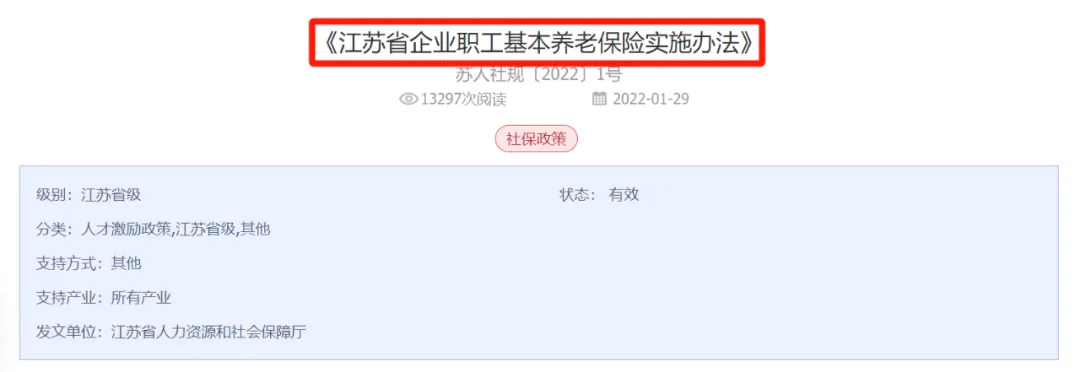
But until last year, Jiangsu Province still repeatedly emphasized that it should stick to the original calculation method. The Jiangsu Provincial Department of Human Resources and Social Security had a document in 2022: “Implementation Measures for Basic Pension Insurance for Enterprise Employees in Jiangsu Province”. This document cannot be found on the website of the Department of Human Resources and Social Security, but it is still available on the government website of Suzhou Industrial Park. Article 25 specifically introduces the method of estimating parameters from the data of 1995.
According to the data of the National Bureau of Statistics, the average social wage in Jiangsu in 1995 was 540 yuan per month, and it increased to 8,300 yuan in 2022, a multiple of 15.37. But until 2023, the calculation base of the transitional pension in Jiangsu Province was only 7 times the 1995 wage base, more than 2 times less. Therefore, the province with the most developed economy in China has an average retirement pension that is at the bottom level in China.
The issue of the pension gap in Jiangsu has received an official response from the government. How is it working now?
For bureaucratic institutions, once collective appeals have found an institutional basis, they cannot be ignored, so the Jiangsu government must express its position. Although Jiangsu Province has not yet made substantial adjustments, I believe that in the next few years, the calculation model of the transitional pension should be significantly corrected, at least to appease the collective emotions.
A Gong and Hao Ge, these representatives, based on their experience in their younger years, expressed their appeals from two directions. When directly negotiating, they opposed the wrong calculation formula, attacking one point without involving the rest. But in terms of publicity, they went beyond the pension contradictions in Jiangsu and criticized the national government’s retirement benefits, which received support throughout the internet. This is what Chairman Mao said, “Class struggle, grasp it and it works”.
It is a common phenomenon throughout the country that enterprise pensions are lower than those of the government and public institutions. Taking Tianjin as an example, in 2022, the per capita pension for civil servants and public institutions in Tianjin was 7,928 yuan, which is 2.18 times that of ordinary enterprise employees’ pensions. If compared with the pension for urban and rural residents, the difference is 15 times.
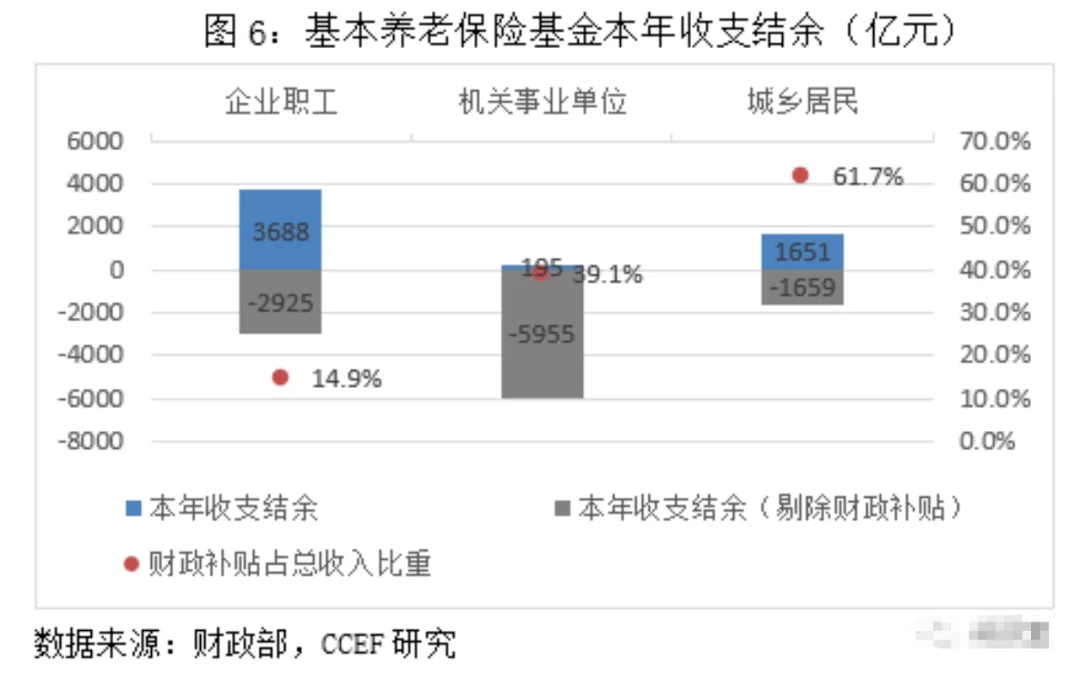
A Gong and Hao Ge pointed out to the whole network that the transitional pension in Jiangsu was calculated incorrectly, leading to low retirement pensions for enterprise employees, but the retirement pensions for Jiangsu civil servants were not low. This exposed another contradiction, that is, when civil servants retire, they do not consider the above formula at all, nor do they need to worry about whether there is money in the social security fund.
Of course, these representatives do not believe that they can reform the national retirement pension system, but in terms of publicity, they might as well ask for the sky-high price and exert pressure. For specific solutions, they have also put forward clear appeals, urging the government to bargain on the spot and first solve the problem of the transitional pension in the province. As the provincial government with the most money in the country, Jiangsu Province should make a relatively smart choice.
The timing of the retired people in Jiangsu to put forward their appeals is also relatively critical. This year, the country is promoting two things, one is the integration of government public institutions and enterprise pensions, and the other is the national coordination of pension insurance in each province. On September 25 this year, the Beijing social security system was included in the national coordination. 31 provincial-level units across the country have completed the formal social security unification, but in fact, they have not yet completely eliminated the independent accounts of each province, which is very suitable for each province to do a little bit of their own tricks.
National coordination must be that wealthy provinces pay out, and provinces with a low proportion of people in the system pay out. For example, Tianjin mentioned above, with a per capita GDP of only 80% of Jiangsu’s, but the proportion and level of officials are obviously higher, and they are under less pressure than Jiangsu when it comes to national coordination.

In the eyes of Jiangsu officials, the accumulation of social security in the province is first because of the rapid economic development; second, because they have been forcibly suppressing the retirement pensions of enterprise employees in the past few decades. If they give the surplus to other provinces as a result, it is equivalent to taking on social contradictions themselves and providing a sense of security for officials from other places. Then it is better to take advantage of the right to manage accounts and first resolve local contradictions.
After the retired elderly people in Jiangsu Province generally began to question the transitional pension policy, the 12345 hotline in Jiangsu replied to the Jiangsu Provincial Department of Human Resources and Social Security:
“After the implementation of the national coordination of pension insurance, various regions cannot independently introduce or adjust the pension insurance benefit payment policies.”
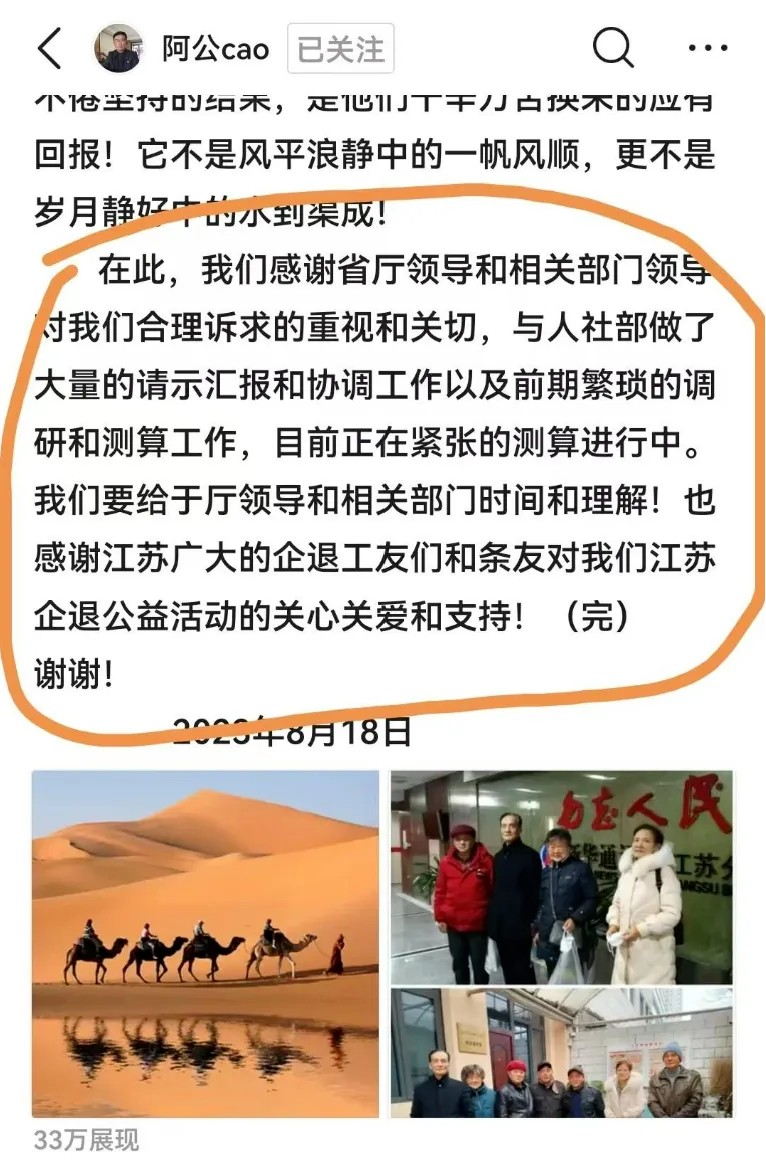
And the representative “A Gong” also introduced the government’s reply on his homepage: “The Ministry of Human Resources and Social Security has done a lot of requests for instructions, reports, and coordination work, as well as tedious research and calculations, which require time and understanding”.
I think this is very likely a real procedural issue. Jiangsu officials, starting from their own position, supported a part of the public appeals.
I graduated from university in 2002 and have paid social security in Jiangsu for less than ten years. The “transitional pension” has little impact on me. However, the national pension integration, especially the integration of enterprise and government pensions, will affect my life and the lives of everyone. If the social security department is unwilling to correct the obvious common sense errors at present, we will find it difficult to believe that there will be a more reasonable distribution method after the national account is unified in the future. Therefore, I support “A Gong” and other retired seniors in expressing their reasonable appeals.
The retired representatives in Jiangsu Province have very good struggle strategies, but after all, they have only found the logical problem of the calculation formula and cannot come up with a clear legal basis to deny the formula. If the retirement pension standard is finally modified as a result, is this considered a kind of “allocation based on trouble”?
The premise of opposing “allocation based on trouble” is to have a transparent and fair legal system. If the process of “making trouble” can expose the shortcomings of the existing legal system and promote a more perfect system, then “making trouble” is reasonable. The current pension dispute in Jiangsu Province lets us know two problems:
First, the policies that affect thousands of people may not have any foresight or far-sightedness at all. It is the result of a middle-level cadre’s decision back then, and then it is used by bureaucrats who seek convenience and becomes an untouchable practice. Next, the national social security is going to be merged into one account, and we must learn from the negative lessons and let the people of the whole country see the process of formulating the unified social security standards and fully discuss the rationality. If the national social security calculation formula also makes mistakes, the problem may be dozens of times the current retirement pension in Jiangsu Province.
Second, although the system has defects, some people are affected, and some people are not. The retirement pension of enterprise employees in Jiangsu is thousands of yuan different from that of the neighboring province, but it does not affect civil servants at all. The people who formulated the policy and the people who maintain the policy now will never experience the gap themselves. If the people don’t make trouble, they won’t even know that there is a logical problem with the calculation formula of the retirement pension. Therefore, we must support “A Gong” and these representatives to break the information barrier.
Here I will explain the accounting reason why civil servants cannot feel the gap in pensions.
The reform of integrating the pension of the system and the system outside the system started in 2014. In January 2015, the State Council issued the “Decision on the Reform of the Pension Insurance System for Staff of Institutions”, please Jingjing help me read Article 8:
Institutions should establish occupational annuities for their staff on the basis of participating in basic pension insurance. The unit shall pay 8% of the total wages of the unit, and the individual shall pay 4% of their own wage. After the staff retires, they shall receive occupational annuity benefits on a monthly basis. The specific measures for occupational annuities shall be formulated by the Ministry of Human Resources and Social Security and the Ministry of Finance.
Wang Xiaochu, Vice Minister of the Ministry of Human Resources and Social Security, said to the “Outlook” weekly: “A basic principle of the reform is to ensure that the treatment level of retired employees of institutions is not lowered.” The occupational annuity system is to provide additional subsidies to civil servants who have been included in the social security fund to avoid a decline in income.
In 2015, the official comment “Civil Servants’ Salary Adjustment: The Inevitable Product of Pension Integration” was published on the State Council website, and please Jingjing read it as well:
“Whether civil servants or employees of institutions, their pension benefits are no longer linked to titles and levels, but are the same as enterprise employees, and the unit and the individual must pay fees when they are employed, and receive pensions from social security after retirement. In this way, the salary level of staff of institutions will be reduced. And in order to achieve the integration of pensions and reduce the salary gap, adjusting the salaries of staff of institutions will become an inevitable trend.”
Putting these two pieces of information together, even if the social security is integrated, the way to calculate the retirement pension of civil servants is different from that of enterprise employees. Therefore, the pension formula problem in Jiangsu Province can accumulate for decades until someone “makes trouble” before it is discovered by civil servants.
I am introducing the above content not to oppose civil servants having relatively high incomes. Hiring excellent people with high salaries to manage society is a solution that conforms to the principle of efficiency. But the problem is that, since ancient times, constraints are always two-sided. Civil servants must be made to fear losing their high salaries, fear to the point of not being able to sleep, so that high salaries can provide efficiency. Now civil servants generally implement a lifelong employment system, and it is more difficult to dismiss a lazy civil servant than to shut down a large enterprise that pays tens of millions of taxes every year. For civil servants who have already taken office, high salaries are not a temptation, but a matter of course.
If civil servants and institutions can refer to the level of general occupations in the local area and ensure that the elimination rate reaches one-third of ordinary occupations, I will admit the rationality of the high salary system. As for some people worrying that the elimination of civil servants will lead to excessive personnel power of superiors, it shows that they do not believe that the government can be transparent and assume from the beginning that the government must operate in a black box, must be decided by a few people in a meeting, and must be managed by a few cadres at will. As a Chinese citizen, I suggest that they have a little basic goodwill towards the civil service system. Don’t start by slandering your own country.
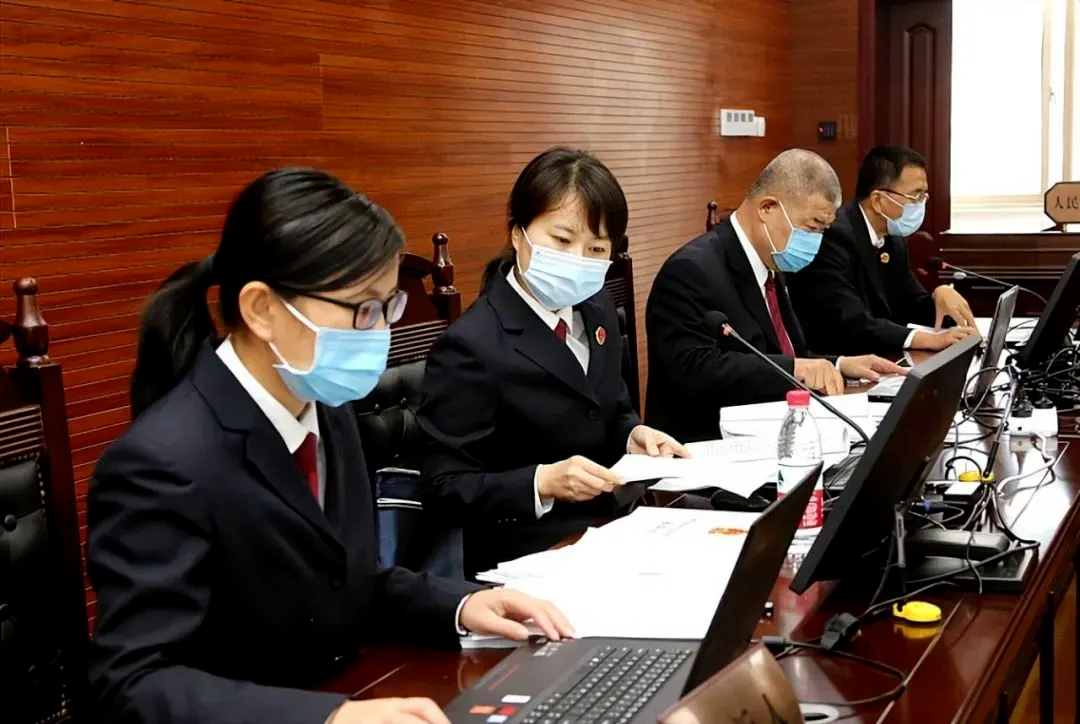
Returning to the topic of pensions in Jiangsu, the formula that has logical problems at the basic economic level has been used for decades. The local government and social security management agencies do not check themselves, do not reflect on themselves, and it is not an exaggeration to get the comment of “numbness and inaction, holding a position without doing anything”. This also proves again that high salaries cannot guarantee efficient management, and only sufficient punishment can play the role of high salaries.
I suggest that all cadres who have participated in social security work in Jiangsu Province, as long as they enjoy the treatment of a level IV director and above, bear the leadership responsibility, give up their occupational annuities, and apologize to the whole society. Only in this way can it be proved that the occupational annuities of social security cadres in the other 30 provinces and cities are a reward.
The main purpose of punishing relevant civil servants is not to make up for losses, or even to let the masses vent their anger, but to ensure the authority of social security policies. In the next ten years, China will inevitably launch a greater social security reform. If the masses suspect that the policy is made up by a middle-level bureaucrat, and if the masses do not believe that civil servants are punished for making mistakes, the reform will not be able to be smoothly implemented. For the sake of the country’s future, it is really a trivial matter to deduct the occupational annuities of tens of thousands of people.
In 2022, the total expenditure of the national social security fund was 9 trillion yuan, and the total income was 10 trillion yuan, with a surplus of 1 trillion yuan. But at the same time, the national finance subsidized the social security fund by 2.3 trillion yuan, with an actual loss of 1.3 trillion yuan, and it has been unable to make ends meet. Moreover, now it is nearly 800 million laborers working, and only 140 million people receive full retirement pensions. From a historical perspective in China, now is the most favorable year for the social security fund.
Next, as my generation grows older, China will soon have to pay for the population structure, and will have to use millions of new people each year to support tens of millions of new retirees. The gap in the social security fund will inevitably increase sharply, and at the same time, the number of laborers paying income tax will also decrease rapidly. If the retirement is not delayed, the social security fund will definitely not be able to maintain the purchasing power of the retirement pension, which is not a small problem that can be solved by adjusting the calculation formula.
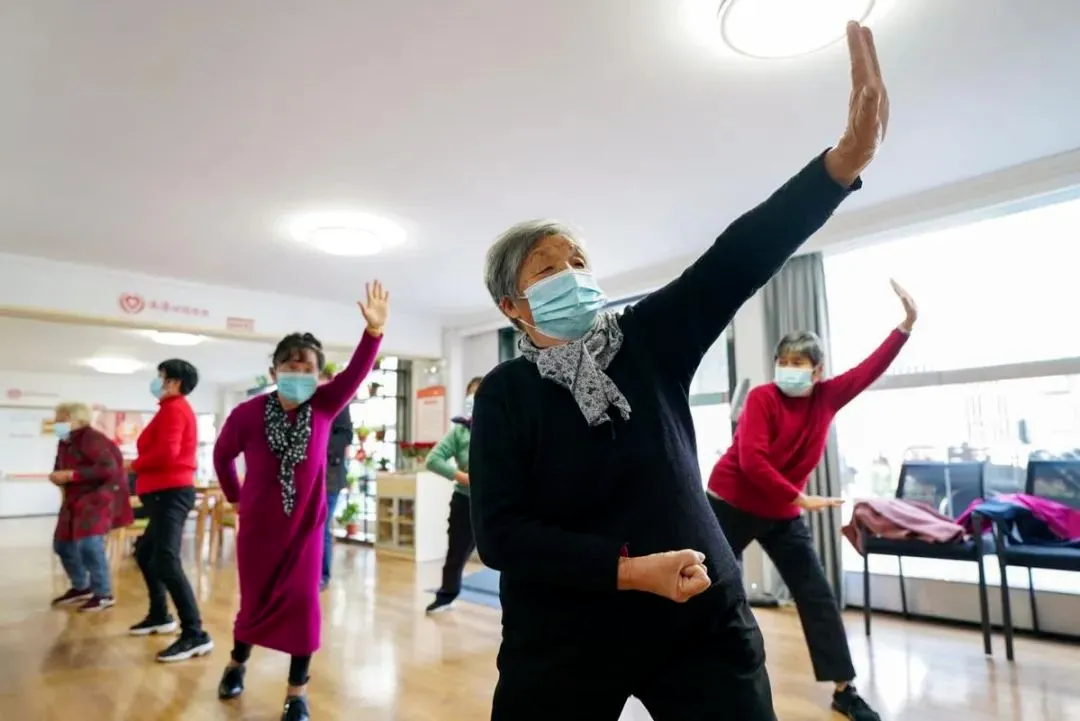
We mentioned earlier that the pension includes three parts – basic pension + personal account pension + transitional pension. The problem in Jiangsu Province is that the transitional pension is calculated incorrectly, but the bigger problem lies in the other two parts.
The basic pension is linked to the local average wage, ensuring that retirees can also keep up with the growth of prices. But if there are fewer people receiving wages locally and more people receiving pensions, determining the basic pension entirely based on the average wage will inevitably create inflation.
The problem of the personal account pension is even bigger. The current payment standard is to divide the balance of the personal account by 139 months, and pay it monthly. 139 months is 11 and a half years, plus 60 years old is 71.5 years old. According to the regulations of the social security fund, if a retired employee dies before receiving 11 and a half years of retirement pension, the balance belongs to the children. But if it exceeds 11 and a half years, the state pays according to the previous average number. Now the average life expectancy is 78 years old, which is more than 6 years longer than the sustainable time of the personal account. This money has no place to go at all and can only be expected from the wisdom of future generations.

Therefore, if you expect Chinese people to be healthy and live long, you must admit that delaying retirement is a solution that benefits everyone. Refusing any delay in retirement reform is equivalent to choosing to print money and cause inflation, and it is no different from the monkeys that change their minds. The next step of social security reform must be to persuade the people of the whole country to delay retirement and ensure that the proportion of working time in life remains unchanged while life expectancy is extended.
China’s social security fund is not enough, and the loopholes are expanding every minute, but the reform of delaying retirement has not had any substantial action. The main obstacle is the problem of trust and public opinion. Now the retirement pension in one province, Jiangsu, exposes a low-level error, which is actually a good thing for the whole country. Because it only needs to compensate the people in Jiangsu who started working before 1997 to fix the error. We remember a social security principle, that is, a one-time expenditure, no matter how large, is a small amount of money, and a permanent expenditure, no matter how small, is a black hole.
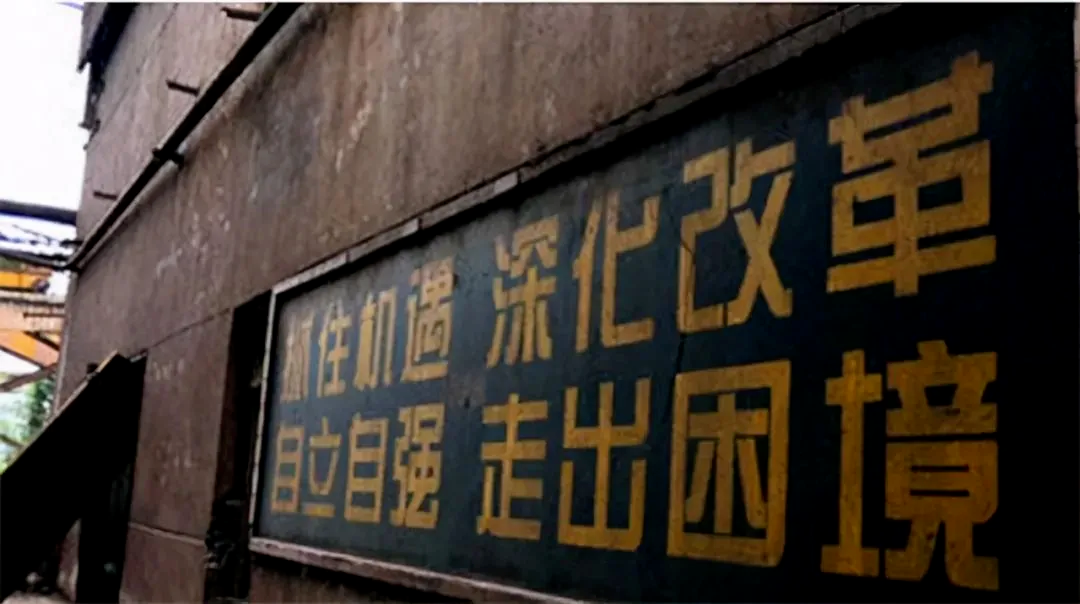
If the state can face the limited historical debt, establish trust, and repair the retirement pension standard in Jiangsu; kill the chicken to warn the monkeys, and punish the responsible units for their numbness and inaction, it can instead reduce the resistance to the national social security reform. I hope that the relevant departments will not pretend to be invisible.
The 669th issue of News Before Sleep ends here. The public account of the News Before Sleep editorial department is continuously updated, and the text content of the video will be posted on the “News Before Sleep World” public account, and the video will be updated simultaneously on Weibo “News Before Sleep Video Base”. See you on Tuesday.
Discover more from 自由档案馆
Subscribe to get the latest posts sent to your email.