January 17, the National Bureau of Statistics released the 2022 national economic operation data:
In 2022, China’s population experienced its first negative population growth in nearly 61 years. At the end of 2022, the national population was 1.41175 billion, a decrease of 850,000 from the end of the previous year.

National Bureau of Statistics: China’s population experienced negative growth in 2022, with 32.37 million more men than women
Seeing this data, the first reaction of many people is to think:
Is negative population growth related to the pandemic?

This question needs to be considered in two ways, it is both related and not related.
If you are mainly thinking that the reason is that the pandemic has led to an increase in the number of deaths, then you are thinking too much; if you are thinking that the reason is that the strong lockdowns of the pandemic over the past few years have affected the birth rate, then it is still somewhat related.
The timing of excess deaths from COVID-19 doesn’t match
Large-scale COVID-19 infections will definitely lead to deaths. With China’s huge population base, the number of deaths caused by a round of infections may be as high as tens of thousands to hundreds of thousands.

According to data released by the National Health Commission, from December 8, 2022 to January 12, 2023, a total of 59,938 deaths related to COVID-19 infections occurred in medical institutions across the country. Although this number is also shocking, it is still far from the 850,000 decrease in the population for the whole year.
Of course, I know that many people do not fully believe the number of COVID-19 deaths released by the National Health Commission, and I myself also hold a cautious attitude towards this. However, from the analysis of time, it can also be found that the negative population growth in 2022 has nothing to do with the excess deaths from COVID-19.
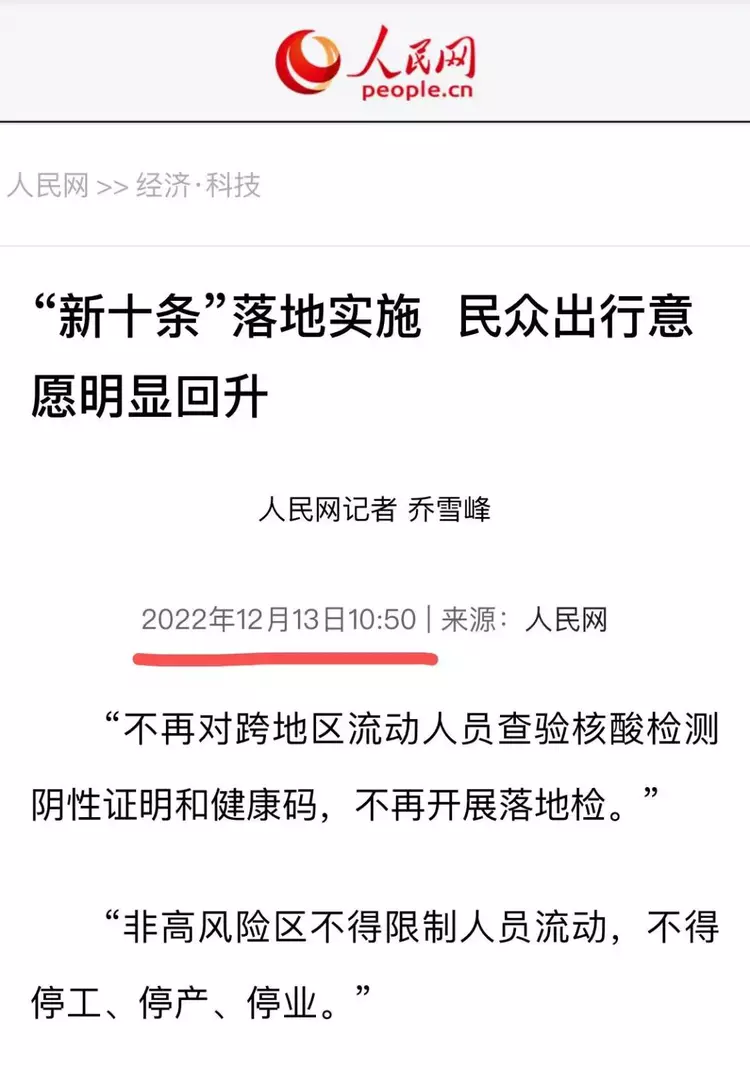
The “Ten New Measures” for easing pandemic control were released on December 7, 2022. After a few days of policy observation and a few days of virus transmission, the peak of infections, which truly reached the level of tens of millions of new cases per day, would have to be in the mid-to-late December.
Furthermore, it usually takes one to two weeks from being hospitalized with a COVID-19 infection to developing severe and critical illness, and finally to death. When the relatively concentrated COVID-19 deaths actually occur, it will definitely be at the end of December to the beginning of January.
Therefore, most of the COVID-19 deaths will appear in the statistics of 2023.
On the other hand, the population statistics released by the National Bureau of Statistics are as of the end of 2022, which is not what everyone usually understands as the end of 12 o’clock on December 31st.
The national population statistics, reporting at all levels, and analysis and summary is a very arduous and heavy task, which cannot be completed by working overtime for a few days. From the actual working rules, the time for this population number statistics can only be roughly understood as the fourth quarter of 2022.
The number of COVID-19 deaths since December will likely be reflected in the statistics for 2023.
Pandemic control significantly affects willingness to have children
The key factor that truly affects the trend of population growth is the number of births. In the three years of the pandemic, the number of new births in China decreased from 12.01 million in 2020 to 10.65 million in 2021, and then to 9.56 million in 2022, with a decrease of more than one million children each year, a decrease of nearly 10%.
Correspondingly, the growth of the death population increased from 9.97 million to 10.14 million, and then to 10.41 million in 2022, with an increase of only about 200,000 each year.
Therefore, the main reason for the negative population growth is that fewer babies were born, rather than more people died.
The reason why the government and the academic community use the term “negative growth” for population data is not to make it sound better. Considering the needs of species reproduction and survival, population growth is also our instinct and expectation as human beings, and growth is also the natural state of population development. Negative population growth in a country is an abnormal state, and the reasons need to be explored in depth.
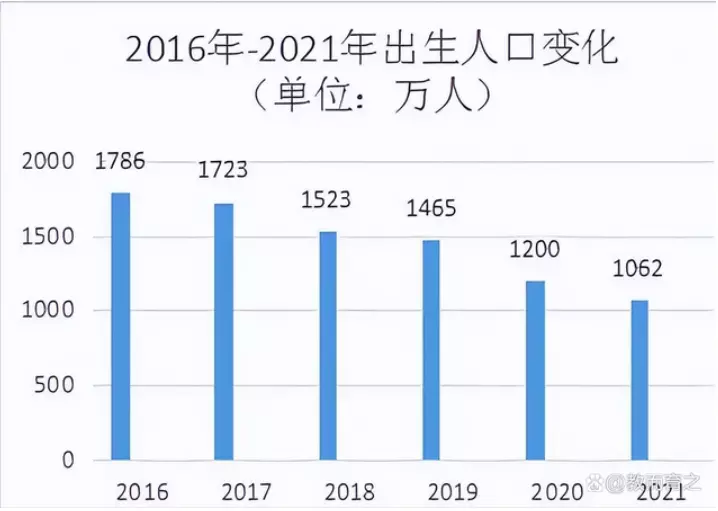
The number of new births in China has been declining from the peak of 17.86 million in 2016, mainly due to the factors that everyone knows: the increase in urbanization rate, the increase in education level, and the increase in childcare costs, which lead to the delay of marriage age and the decrease in willingness to have children. This has precedents in developed countries all over the world.
However, since the outbreak of the COVID-19 pandemic, relevant pandemic control policies have led to inconvenience in population mobility, obstruction of love and marriage development, decline in residents’ income expectations, and more pessimistic expectations for social development. More and more young people are determined to be the “last generation”… These factors have further reduced the willingness to have children to varying degrees, and have further exacerbated the decline in the number of new births.
For the decline in the number of newborns, pandemic control is not a bolt from the blue, but it is definitely adding insult to injury.
Please note that the influencing factor mentioned here is pandemic control, not the pandemic. Taking a certain country across the Pacific Ocean as a reference, its new births in 2020 were 3.6 million, but in 2021, it increased to 3.66 million, and it reversed the downward trend for six consecutive years. If we talk about pandemic infections, they were much more severe than China in 2021.
Many media outlets are reporting that this is the first time China has experienced negative population growth in 61 years. What happened 61 years ago? I looked through the history books, and they all wrote about the three-year natural disasters.
But my 86-year-old grandma told me that it was the “three-year natural disasters” in quotation marks.
Population decline will also affect ordinary people
In fact, to be honest, compared to China’s total population of 1.4 billion, a decrease of 850,000 a year is a negligible number. However, don’t underestimate this reversal of the trend. Whether it is for the macroeconomy or for personal life, it will have a real and far-reaching impact.
First of all, it will become more and more difficult to make money
A simple truth is that all economic activities serve people, and all economic activities are also participated in by people. The population is declining, and it will continue to decline for a long time in the future, then the whole society’s expectations for economic development will be adjusted. Among them, the most sensitive is the investment enthusiasm of the financial market.
Although the proportion of population decline is still very low, its symbolic significance is extremely strong.

Then, the money to be paid will be more and more
The current population decline in China is not a proportional and uniform decline in all age groups, but the continuous growth of the elderly population and the continuous decline of newborns. Problems such as school places and nursing home beds may take a few more years before everyone can feel a significant change, but the increase in medical insurance expenditure and pension insurance expenditure will quickly make everyone feel the pain.
Fewer young people are paying medical insurance, and more and more elderly people are consuming a large amount of medical insurance. Fewer young people are paying pension insurance, and more and more people are receiving pensions. What should we do? We can only make those who pay social security pay a little more each time, and pay for a longer time.
Finally, there are fewer and fewer excuses to find
All along, Chinese people have been accustomed to the fact that we are the world’s largest population country. When explaining various social problems, we often use the fact that we have a large population and few resources as an irrefutable reason, so that the concept of controlling population growth has once been deeply rooted in the hearts of the people.
Such a concept will be reversed soon. Under the circumstances of the rise and fall, in three to five years, India’s population will surpass China. Some institutions even predict that India’s actual population will exceed China’s in 2023.
Perhaps, it will be a good thing when we are no longer the largest population country, and more people will begin to pay attention to the real development problems, instead of attributing all problems to the large population.
Discover more from 自由档案馆
Subscribe to get the latest posts sent to your email.