

On November 28, according to a notice issued by the Altay City People's Government of Xinjiang, on the evening of November 26, seven workers died and one was injured at a construction site in the city due to extreme cold weather. The seven workers were all from Fuqing City, Fujian Province, and were workers on the G217 National Highway Aku Line. Since the lockdown in Xinjiang, a large number of migrant workers have been stranded in Xinjiang. Although in the past month, there have been special trains and charter flights to transport stranded people in Xinjiang back to their hometowns, workers working in the wild environment such as mountains and Gobi have always been a marginalized group on the way out of Xinjiang.
Migrant workers in Altay
Recalling the afternoon of November 26, Zhang Jun (pseudonym) once thought he would die on the G217 National Highway Aku Line.
On this day, the Xinjiang Meteorological Observatory issued the first cold wave red warning in the Altay region since 2008. Zhang Jun and his co-workers planned to drive to the county town via the G217 National Highway. Heavy snow and strong winds, the sky and the earth were connected into a white, the driver who was very familiar with this road could not see the road at all, could only feel the way forward. The car drove out of the road and fell into the pit twice. The first time was very lucky, there was a car passing by, they borrowed other people's shovels to dig the snow, and pushed the car back on the road. The second time, Zhang Jun and his co-workers could only get out of the car and dig the snow with their hands. Without gloves, their fingers were worn and bleeding. After three hours, they finally pushed the car back on the road. Recalling the helplessness at that time, Zhang Jun was still afraid, she suspected that if she did not persist, she would be frozen to death.
They were not the only ones who tried to leave Altay in this extremely cold weather on the same day. At 7:10 p.m. that evening, eight workers from the K58 field station (hereinafter referred to as "G217 National Highway K58 field station") of the first contract section of the Abugong Road of G217 Line took a car to Alahak Town. The K58 field station is located in the Gobi Desert of Karashilik Village, only 4 kilometers away from Alahak Town. About 500 meters away from the station, they also encountered a car stuck in the snow. After a long time of self-rescue, they still could not get out of trouble, so they decided to abandon the car and walk back to the station.

However, unfortunately, at 8:30 p.m. that night, the extreme weather of the Altay cold wave intensified. Under the headlights of the car, the visibility was less than 3 meters, and the snow thickness reached 1 meter. The eight workers eventually got lost due to getting lost. At 11 o'clock the next morning, Cai Hechuan, the secretary of the village branch of Karashilik Village, saw the eight missing persons in the snow and immediately sent them to the hospital. In the end, only one of the eight workers still had vital signs, and the remaining seven died unfortunately. A family member of the deceased once told the media that the seven deceased were all from various towns in Fuqing City, Fujian Province, and many of them were relatives, aged between 30 and 60 years old, with 6 men and 1 woman among the seven.
According to relevant information, the G217 Line Altay to Burqin Grade 1 Highway Project, which the seven deceased workers were building, started construction in May 2021 and officially resumed work on April 10 this year. The highway is 105 kilometers long and is a key highway construction project in the Xinjiang Uygur Autonomous Region. It is responsible for the passage of the western three lines and the famous scenic spot Kanas in the Altay region, and its geographical location is very important.
And the workers' task this time is to rebuild the original two-way two-lane highway of G217 National Highway into a two-way four-lane highway. "In the past two years, there have been many outsiders going to the Altay region for engineering construction, because the Altay region is focusing on development and construction, including Altay city, etc., are carrying out various basic engineering renovations." Tao Yu (pseudonym) told this magazine.
In early March this year, as an external employee of a state-owned enterprise, he flew from his hometown in Sichuan to Altay City to participate in the Altay municipal construction, responsible for equipment technology measurement and other miscellaneous tasks. In a wine party, Tao Yu met the relevant person in charge of the G217 National Highway project. He remembered that there were about twenty or thirty people in the K58 field station, most of whom were outsiders. Tao Yu told this magazine that the roads, heating systems, and sewer pipe networks in the entire Altay city are being renovated and constructed. And the workers of the specific construction projects are mostly in the form of outsourcing, going to Altay from other places. Taking the state-owned enterprise where Tao Yu is located as an example, at least 80% are outsiders. Having worked in Altay for nearly a year, Tao Yu has run around many construction sites and almost always meets fellow villagers from Sichuan.
The environment of the construction team is generally difficult. According to Tao Yu's recollection, the workers who come to Altay to do the most basic physical labor usually live in container-style iron houses, the rooms are not big, the 30-square-meter rooms have more than 10 beds, one next to the other, there is no extra space at all. In winter, they can only rely on electric ovens and electric blankets for heating. Generally speaking, in Xinjiang, especially in northern Xinjiang, after entering winter in November, all outdoor construction tasks are stopped. "Because the construction conditions of materials like concrete have rigid indicators requirements, after reaching minus how many degrees, it cannot continue to operate. Many machines and equipment cannot operate normally in winter. The climate in Xinjiang, we can generally work outdoors from March to November." Tao Yu said.
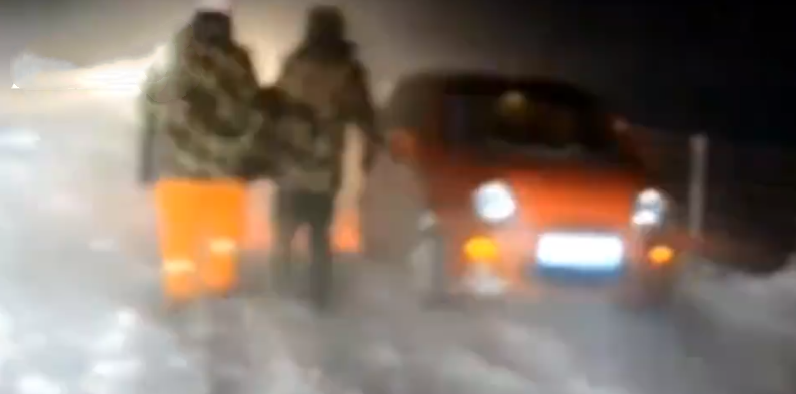
Screenshot of workers stopping work and returning home
The marginalized group returning home
In fact, because of the Xinjiang epidemic, most of the engineering projects in the Altay region stopped work in early October. The family members of the aforementioned deceased told the media that the workers of the G217 National Highway K58 field station had stopped work for more than a month. Tao Yu remembered that it was around October 10th that he, for personal reasons, was no longer responsible for the construction projects of the state-owned enterprise in Altay City, but went to Hongdun Town, Altay City, to help a local fellow friend with the project. At about 5 p.m. that day, Tao Yu was going to direct an excavator to dig out the underground pipeline, but as soon as he arrived at the scene, everyone told him that it was locked down, and the superior required everyone not to gather, not to huddle, and could only go to the nearby village committee for nucleic acid testing every day.
On October 4, at the press conference on epidemic prevention and control held by the Information Office of the People's Government of the Xinjiang Uygur Autonomous Region, it was emphasized that it is not necessary to leave Xinjiang, and to strengthen the management of transportation places such as airports, railway stations, and traffic intersections. Xinjiang has suspended passenger trains throughout the region, inter-provincial passenger bus lines and provincial charter bus services, and flights outside the region have been significantly cancelled, and the passenger load factor of the operating flights is controlled within 75%.
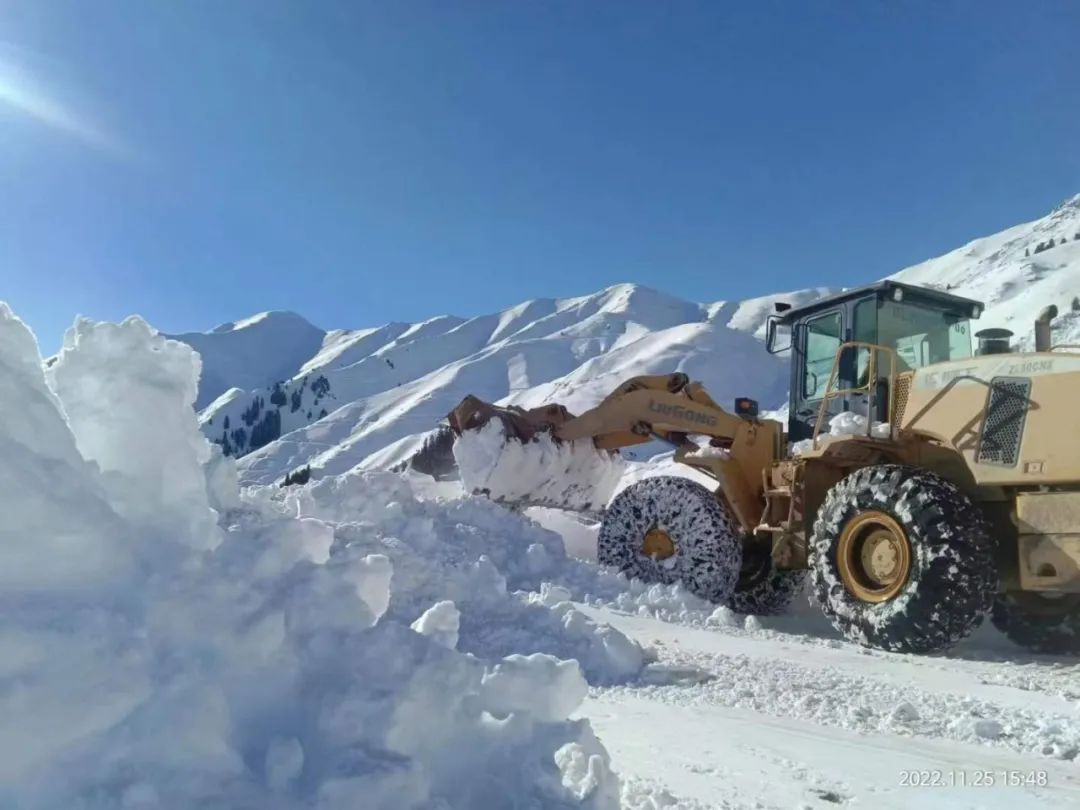
Zhang Wen provided the picture
Zhang Wen (pseudonym) is a local from Xinjiang. Since September, many friends from outside Xinjiang have asked him for help, and he began to pay attention to the problem of a large number of tourists stranded in Xinjiang. He once wrote an article on his personal public account about the difficulties of leaving Xinjiang, which has now been read nearly 100,000 times. Since then, more strangers have left messages to Zhang Wen asking or seeking help on how to leave Xinjiang. "Overall, in October, except for the tourists stranded in Kashgar who left Xinjiang in a concentrated manner through charter flights, most people were unable to leave Xinjiang. I remember that the Xinjiang government only began to pay attention to the work of leaving Xinjiang for the people stranded in Xinjiang on October 30, and at that time, it was proposed to give priority to the problem of leaving Xinjiang for students, tourists, migrant workers, and those who go to Xinjiang for medical treatment." Zhang Wen said. It was from then on that Xinjiang began to have special train trains to leave Xinjiang.
The special train to leave Xinjiang is undoubtedly good news for all outsiders stranded in Xinjiang, but how to get a ticket is a problem. Tao Yu remembered that the tickets for the special train were not sold publicly, but were issued uniformly by the government, and it was necessary to apply for tickets through the community or companies with a large number of migrant workers. Tao Yu submitted an application to the local village committee of Hongdun Town and has been waiting for arrangements.
At first, he got a place on the special train to Chengdu on November 7. At that time, he only needed to provide a negative nucleic acid test certificate for 5 consecutive days to leave Xinjiang. But inexplicably, the village committee suspended the collective nucleic acid testing for one day, which led to Tao Yu's nucleic acid record not being enough, and he could not leave Xinjiang. The second time, he successfully applied for a special train to Chongqing. Because this train would stop at Nanchong in the middle, Tao Yu planned to transfer from Nanchong to go home. That time, all the procedures were passed, but the night before the departure, the people from the village committee told him that he could not take this special train, the reason being that Tao Yu was from Sichuan and could not take the Chongqing special train. What made Tao Yu angry was that a fellow villager he knew in Fuyun County, Altay, successfully took this Chongqing special train back to Sichuan.
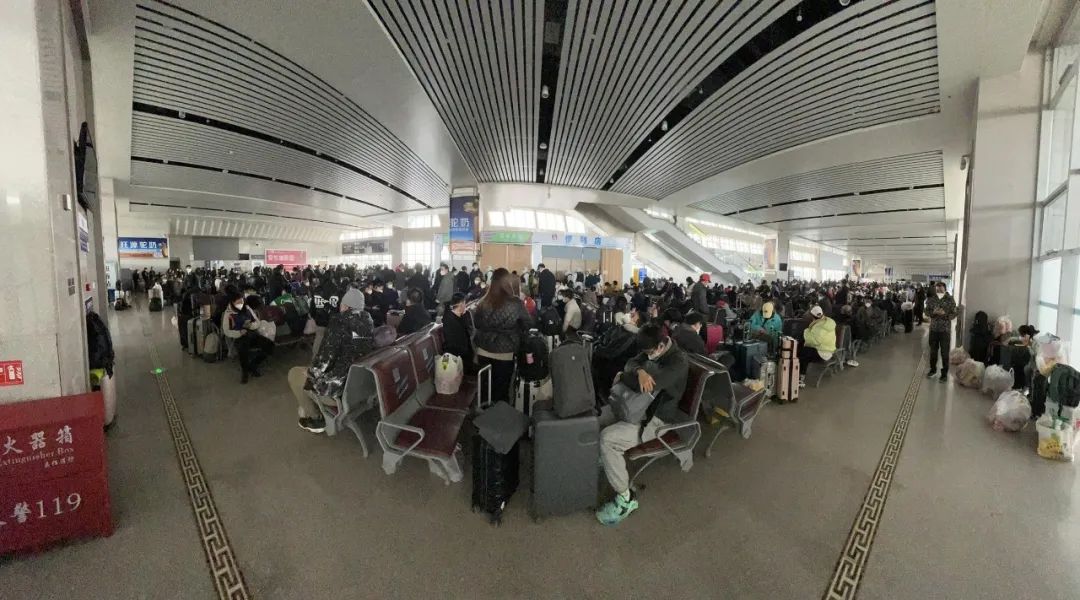
Karamay High-speed Railway Station (provided by Zhang Wen)
In the process of trying to apply for a special train, Tao Yu also noticed another thing. In the former state-owned enterprise group in Altay City, he learned that many people obtained special train places quickly through the enterprise application. He more or less felt that it was more difficult for him to obtain the opportunity to return home in the town area than for his co-workers in the city.
Zhang Wen also believes that in this special train application process to leave Xinjiang, the more remote areas are relatively ignored. "Because the process of going on the special train is a closed-loop transfer, those who get the place to board the train need to be organized by the community and pulled to the station by a special car. In rural areas, migrant workers are relatively scattered, and it takes more time to send them to the special train, so when the special train first starts to operate, they often do not have the opportunity to get on the train." And for workers in more remote areas such as mountains, the lack of direct management by the community is another obstacle. Whether it is taking a special train or driving out of Xinjiang, it is necessary to apply for approval through the community. The mountains are remote, and there is no community management, which also means that they do not even have a direct application channel.
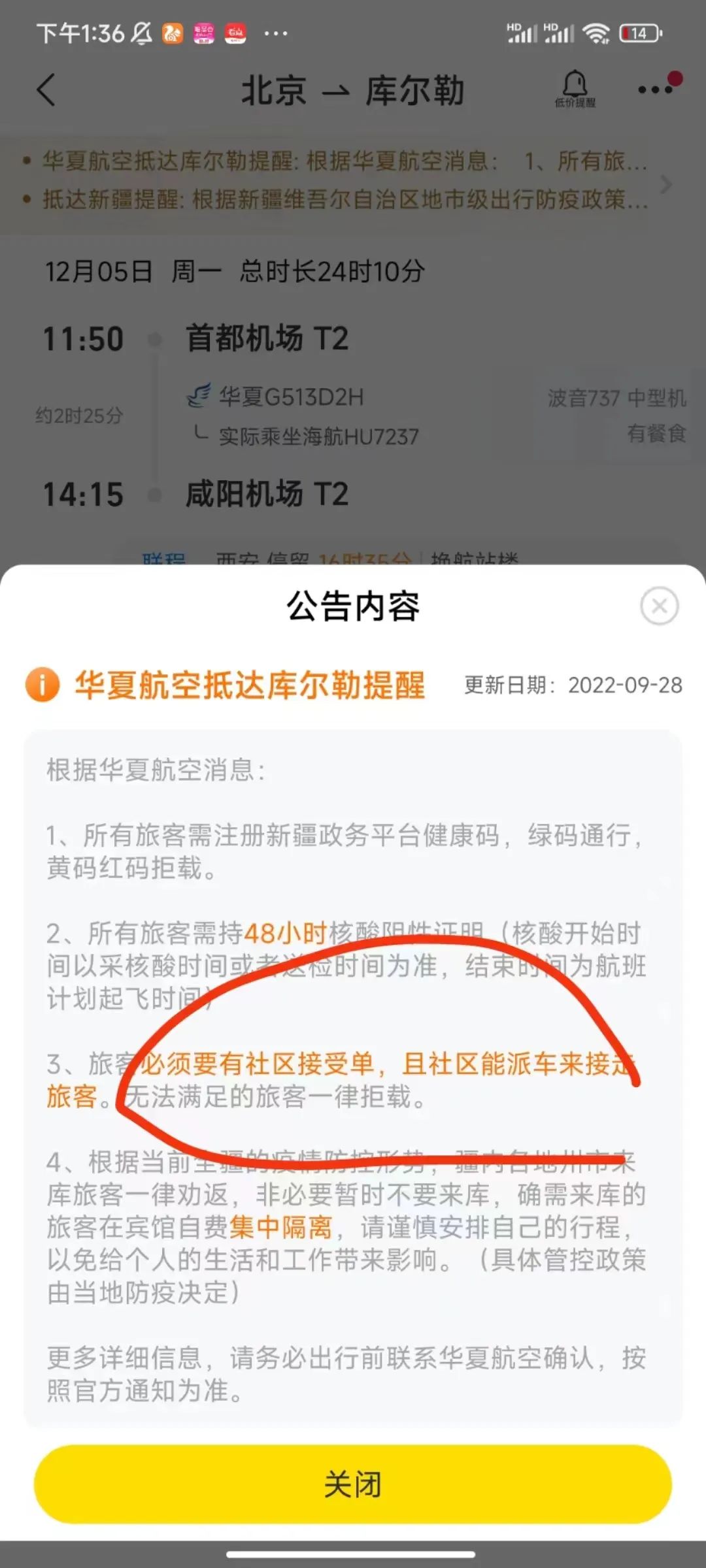
For most migrant workers in remote areas of Xinjiang, life during the lockdown period is extremely difficult. At the end of October, Zhang Wen received a request for help from a worker named A Kai (pseudonym) in Fuhai County, Altay. A Kai is in the construction industry. During the lockdown, he and his co-workers were arranged by the contractor in a rough house, the environment was very poor, and there were no bathing facilities. At the end of October, the weather became cold, and the rough house leaked air. The co-workers could only find plastic foam to block the holes in the walls and rely on iron barrels to burn gasoline for heating. And because they were in a remote area, the supplies were also very scarce, and they could only rely on eating potatoes and noodles during the period.
On the 26th during the day, the reason why Zhang Jun chose to leave Xinjiang by car in such weather was also because she could no longer bear the life during the lockdown period. Zhang Jun is from Hunan. She came to Xinjiang on July 16 this year and is a blasting worker in the mountains. The place where the female workers live does not even have a toilet, and the environment is cold. She was worried that if it took a long time, she would be frozen.
The difficulty
In November, although there were special trains and charter flights to leave Xinjiang, driving was the way more people considered to leave Xinjiang. This is because the destinations of the special trains to leave Xinjiang are limited and cannot meet the needs of everyone; on the other hand, the approval process to leave Xinjiang is difficult, which leads to many people not being able to obtain special train places and turning to driving.
Many of Tao Yu's fellow villagers drove back to Sichuan themselves. In mid-November, a contractor fellow villager of Tao Yu was eager to go home and even spent 20,000 yuan to buy a second-hand Wuling Hongguang locally. Tao Yu also had the opportunity to take his fellow villager's car back that time, but he felt that the second-hand car was too broken and unsafe on the road, so he did not go. In the end, the fellow villager gathered 6 people who were on the same road, and drove for two or three days with luggage and people to return to Sichuan. The car is not good, the road is difficult to walk, and the checkpoint is also not easy to pass. Xingxing Gorge is a high-speed road intersection at the border of Gansu and Xinjiang. Those who have passed the nucleic acid record to leave Xinjiang also need to re-collect nucleic acid and antigen tests at Xingxing Gorge. Many people were blocked at the Xingxing Gorge exit, and then re-did the nucleic acid and waited for the results, and some even waited in line for a day.
However, Tao Yu's fellow villager is considered to be a lucky one who has successfully left Xinjiang. At that time, few people were approved to drive out of Xinjiang. Driving and taking the special train to leave Xinjiang both require submitting materials to the community and submitting an application to leave Xinjiang on the Xinjiang government affairs App. Most of the applications of the people around Tao Yu were not approved, but it is not known where they were stuck.
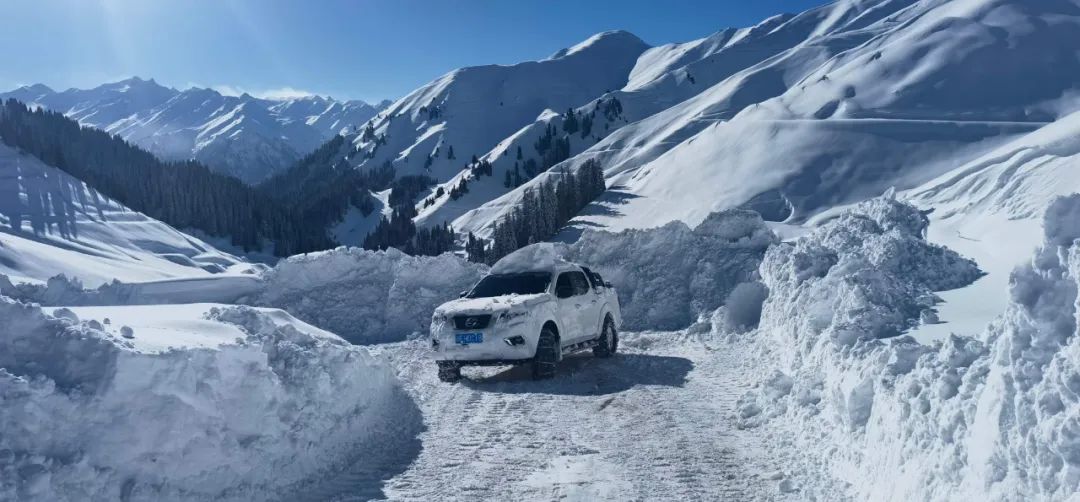
Zhang Wen provided the picture
After the fellow villager successfully drove home, Tao Yu and several friends discussed renting a car to return to Sichuan. Because the license plate number needs to be written when filling out the application form to leave Xinjiang, Tao Yu rented a car first and waited for the results. Unfortunately, the applications to leave Xinjiang of him and his friends were not approved, and the car was rented by another person whose application was approved. This tossing had already reached November 20. On that day, Altay had its first snow in winter, about 10 centimeters thick. Stepping on it, it could completely submerge the face. Tao Yu looked at the snow all over the sky and had more doubts about the safety of driving home. From November 20, Altay has been snowing intermittently for several days, accompanied by short-term strong winds. The temperature also gradually decreased, from minus four or five degrees to minus twenty or thirty degrees. The low temperature made it difficult for the snow to melt.
On November 24, the long-term lockdown problem in Xinjiang was taken seriously, and it also completely changed the process of people stranded in Xinjiang leaving Xinjiang. "From the 25th, I clearly felt that the policy of leaving Xinjiang had undergone a 180-degree change. That feeling was that the village committee wanted you to leave this place quickly." Tao Yu recalled. One change was that it was no longer necessary to check the nucleic acid at Xingxing Gorge for those who drove out those days, and the cars went directly when they came, and there was no inspection. On November 28, Tao Yu received a call saying that he could take the special train back to Sichuan. There were two special trains to choose from that day, one to Sichuan and one to Yunnan, and the village committee finally arranged for him to take the Yunnan special train back to Sichuan. This time, Tao Yu did not need to fill out the application to leave Xinjiang to get on the train.
On the 26th, Zhang Jun received an urgent notice from her boss, saying that they could leave Xinjiang. On that day, not only Zhang Jun, but also other workers in the Altay mountains, including the 7 deceased, finally got the news that they could go home after a long wait. Tao Yu still remembers the coldness of the red cold wave on the 26th. At more than 11 o'clock that night, he went out for nucleic acid testing, and he deliberately dressed very thick, wearing thermal underwear inside, a fleece sweatshirt, and a thick down jacket outside. Despite being fully armed, despite the absence of wind, as soon as he went out, his face felt like it was being cut by a knife. He looked at the weather forecast and remembered that the real-time temperature was about minus 28 degrees.
From the 27th, Tao Yu remembered that the Hongdun Town village committee no longer allowed people to drive out of Xinjiang, and it stopped for about two or three days, and sent staff to shovel snow. People who were eager to drive out of Xinjiang asked the village committee why they were not allowed to go again? This time, they got a patient answer. The village committee said that this was purely because of the heavy snow weather, and it was suspended from leaving Xinjiang from the perspective of everyone's safe travel. Once the road snow was cleared, everyone could leave Xinjiang. On the night of November 28, the Altay City People's Government issued a notice announcing the news of the death of the 7 workers.
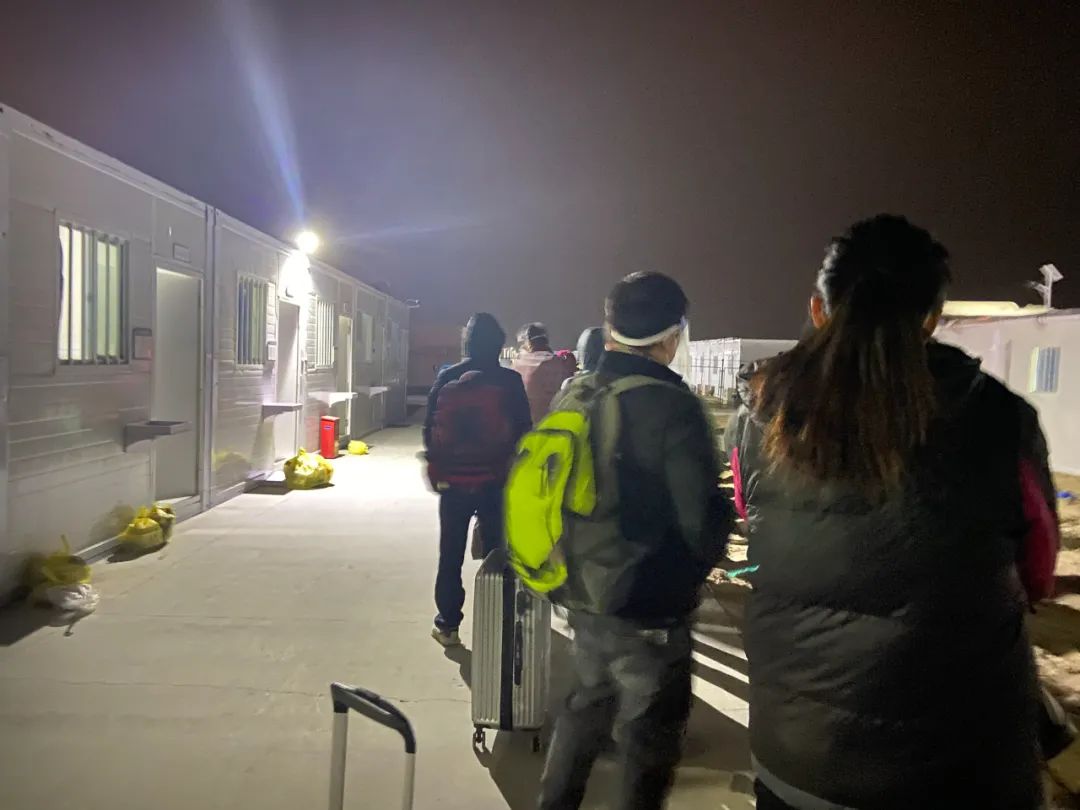
At 2 a.m. on December 2, people waiting in line to take a car to the railway station after being isolated in Korla (provided by Zhang Wen)
(Intern reporter Zhang Qiyu also contributed to this article)