Dear Representative,
Hello!
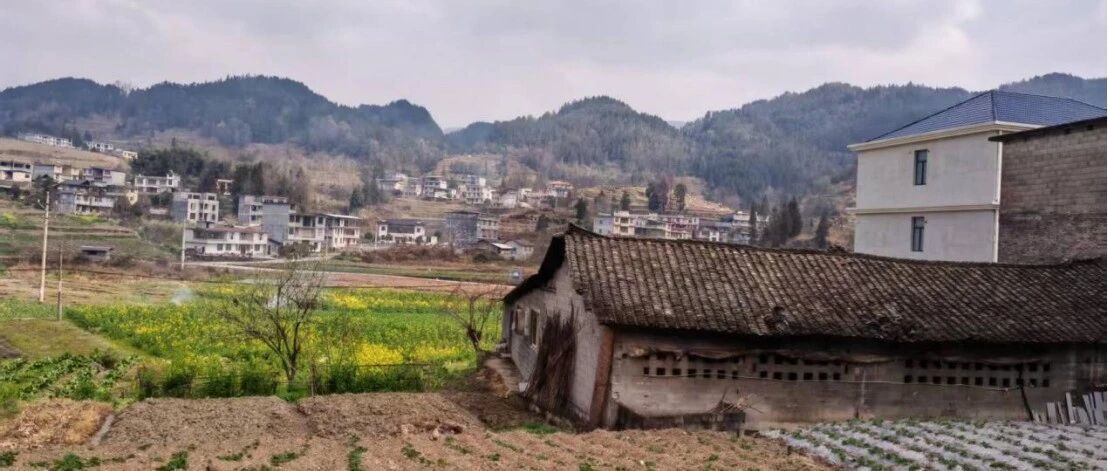
I am a grassroots resident from Xuanhan County, Dazhou City, Sichuan Province. During a recent visit to my parents in my hometown, I personally learned that the current low level of old-age pension for rural elderly people is a prominent issue. I am writing to you to reflect on the relevant situation and put forward some suggestions.
1. Basic Situation
Although the basic old-age pension for urban and rural residents in our country has gradually increased since the establishment of the system, the overall level is still relatively low. Taking the national adjustment as an example:
- 2009: 55 yuan
- 2012: 55 yuan
- 2015: 70 yuan
- 2018: 88 yuan
- 2020: 93 yuan
- 2021: 98 yuan
- 2022: 103 yuan
- 2023: 123 yuan
- 2024: 143 yuan
- 2025: 163 yuan
From the growth trend, although there is an increase, the overall level is still relatively low.
Taking Xuanhan County as an example:
- The registered population is about 1.2506 million, and the permanent population is about 941,400
- The population over 60 years old is about 206,200, accounting for 21.61%
- The number of people receiving urban and rural resident pension is about 189,000, accounting for about 20% of the permanent population
Currently, most rural elderly people receive a pension of between 150 and 220 yuan per month, with an average of about 190 yuan.
Taking my parents as an example, both are 73-year-old farmers, and they only receive about 190 yuan in pension per month. Under the current price level, it is difficult to meet basic living needs, especially when medical expenses increase, the guarantee is obviously insufficient.
2. Comparison
Taking the pension levels of different groups in Xuanhan County as an example:
| Category | Monthly Pension | Compared with rural residents |
|---|---|---|
| Civil servants | About 6500 yuan | ≈34 times |
| Enterprise employees | About 3200 yuan | ≈17 times |
| Rural residents | About 190 yuan | Base |
It can be seen that the gap in old-age security between urban and rural areas is obvious.
In the era of “agriculture as the foundation”, the level of agricultural productivity was limited and material conditions were relatively scarce. This group has long been engaged in agricultural production labor and has undertaken the basic guarantee function in the grain supply system.
In the early stage of national economic development, the vast rural masses, in collectives or families, gave priority to the better harvests in agricultural production for national planning and grain procurement, which effectively supported the basic supply needs of the urban population and industrial system within a certain historical stage. In the era of “grain is the guarantee of survival”, they guaranteed the basic living needs of a wider population with limited material conditions, and provided an important foundation of grain and labor for the initial development of the national industrial system.
At the same time, in the period when the construction of a large number of infrastructure was still in its initial stage, the vast rural labor force participated in or collectively participated in the construction of infrastructure such as roads, bridges, dams, ponds, irrigation canals and dams in the form of voluntary labor or low remuneration for a long time. These infrastructures are still playing a continuous role in agricultural irrigation, flood control and drainage, and regional economic development, and their historical value and practical functions still exist.
In addition, in the process of accelerating population mobility, a large number of rural families, through their own fertility and nurturing investment, have provided an important source of labor for the urban industrial system, and their children have entered the city for employment and construction, which objectively supports the rapid advancement of industrialization and urbanization in our country. From this perspective, the group has undertaken not only the function of agricultural production in the course of historical development, but also the important basic support for the transformation of the national population and labor structure.
It should be pointed out that this generation of rural population has generally not been included in the modern social old-age insurance system in the above-mentioned historical stage, and what they have undertaken is more the “implicit social security function” embodied in the form of labor and contribution, rather than institutional social security arrangements. Therefore, from the perspective of historical contribution and intergenerational fairness, it is of practical necessity and institutional rationality to appropriately increase their pension compensation.
3. Main Problems
(1) The living security level of rural elderly people is still low
The current basic old-age pension for urban and rural residents still mainly stays at the level of “basic bottom line”, which is difficult to cover basic living needs such as food, medical care, and daily expenses. Especially against the background of the continuous growth of medical expenses, some rural elderly people are facing the practical difficulty of “having security but not enough”.
(2) The burden of family pension continues to increase
With the rural labor force going out to work and the small-scale family structure, the traditional family pension function is gradually weakening. While children are shouldering the responsibility of supporting the elderly, they are also facing multiple pressures such as education and housing, which leads to an increase in the overall burden on the family.
(3) It is not conducive to releasing the consumption potential of rural areas
The rural elderly group is an important consumer group, but due to the low level of pension, their consumption capacity is limited, mainly concentrated in basic living expenses, it is difficult to form stable consumption demand, which is not conducive to expanding domestic demand.
(4) Affecting the sense of social fairness and institutional recognition
The gap in pensions between urban and rural areas and between regions is large, which is likely to trigger a comparative sense of unfairness and affect the public’s recognition and satisfaction with the social security system.
4. Relevant Suggestions
(1) Gradually increase the minimum standard of basic old-age pension for urban and rural residents
It is recommended that the state formulate a medium and long-term improvement plan and clarify the growth path.
Reference direction:
- Link the basic pension to the minimum living security standard
- Or link it to the per capita consumption expenditure of rural residents
It is recommended that by the end of the “15th Five-Year Plan”, the basic pension should be increased to no less than 50%-70% of the local minimum living allowance standard.
For example, the basic old-age pension for urban and rural residents in Shanghai has reached a higher level, while some central and western regions are still around 200 yuan, and there is a large space for improvement.
(2) Establish a dynamic adjustment mechanism linked to the price index
It is recommended to establish an institutionalized adjustment mechanism:
- Based on the consumer price index (CPI)
- Implement the mechanism of “annual automatic adjustment + moderate manual adjustment”
- At the same time, consider the growth of residents’ income and fiscal affordability
Ensure that the pension level can effectively cope with price increases and maintain the stability of actual purchasing power.
(3) Increase the central government’s financial support for the central and western regions
In view of regional differences, it is recommended to:
- Increase the proportion of central government subsidies
- Tilt towards the central and western regions and financially difficult areas
- Set up a special fund for raising the basic pension standard
For example, the pension in some areas of Jiangsu Province and Zhejiang Province has exceeded 500 yuan, while some western regions are still significantly low.
(4) Promote the coordinated development of urban and rural old-age security systems
It is recommended to:
- Increase government subsidy standards and enhance the enthusiasm for participation in insurance
- Improve the “more payment, more gain” mechanism
- Promote system connection and transfer continuation
Gradually narrow the gap in pensions between urban and rural areas in the long run and improve system fairness.
5. Conclusion
The pension issue concerns thousands of households and is an important foundation for social stability. With the deepening of population aging, improving the pension level of rural residents is not only an important livelihood project, but also an important measure to promote social fairness and expand domestic demand.
I implore you to pay attention to and promote the improvement of this issue in relevant meetings.
Sincerely!
Proposer: Fu Hailu
Contact information: 18008086269
Date: April 19, 2026
Discover more from 自由档案馆
Subscribe to get the latest posts sent to your email.