

Strong!
Cannot go out freely
Then no one dares to come in
Against the backdrop of the two giants in AI technology vying for supremacy, the Sichuan Fine Arts Institute has lowered the iron curtain, implementing a strict maritime ban on high-tech industries in this region, stating, 'Not a single plank is allowed to go to sea.'
Meanwhile, the strictest-ever new regulations on outward investment, 'Regulations on Outward Investment,' have been introduced, mirroring the move.
A situation has emerged where both sides claim to oppose decoupling, yet are actually building high walls against each other.
First and foremost, I unequivocally oppose the US maritime ban policy.
Some ask why Europe isn't afraid. Because they use it directly; they don't face technological sanctions.
As for the G2, they want to start anew, which inevitably leads to mutual suspicion that the other side wants to destroy them, thus leading to mutual defense.
The visit by Trump some time ago was not to seek improvement, but to prevent further deterioration. In other words, it was to manage the risk of sliding into an irreparable lose-lose situation, as discussed in 'Why Aren't State-Owned Enterprises at the Table?'
Strategic mistrust has reached such a point that the B2B sector will cool down first. Investments like the acquisition that was halted some time ago are unlikely to happen again.
Ordinary people caught between two major powers will likely have a very difficult time. The new regulations include C2C management for the first time, and specific implementation measures are currently being formulated.
I have a friend who has been investing in both sides' stock markets. In his words, he's been 'iron-clad,' straddling the wall, jumping to whichever side offers better prospects.
However, starting last year, he found this approach increasingly difficult. Until recently, US stock investments were completely halted, as reported in 'Banning US Stock Investment: The Only Correct Move Among Global Powers'
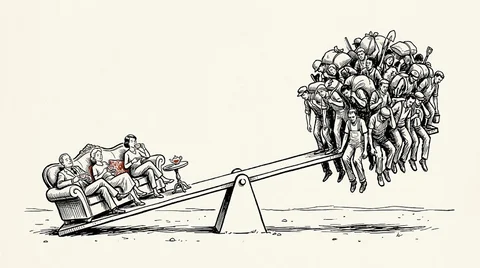
Some say that in the past, there was the internet, but at least there were eyes. Now it's like a brick and stone structure, where not even air can pass through, leaving only physical escape as an option.
But wait, a factory owner said that he even needs approval to send engineers to Vietnam to set up a production line.
In the past, the fear was that core technology would leak out. Now, the fear is that people will leave with their brains.
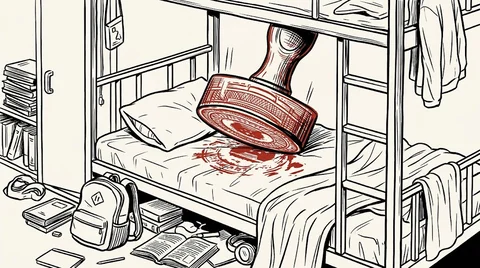
Since that's the case, to retain brains, bodies cannot move freely either. It is said that professionals in AI-related fields, including those in private enterprises, require vetting before being allowed to leave.
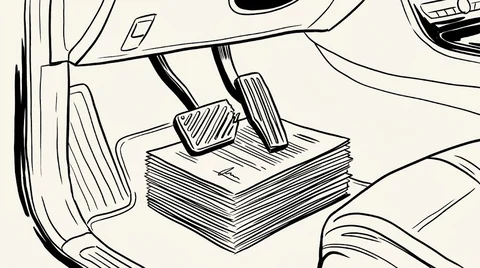
If people are restricted, money is even more so. Although the annual $50,000 quota still exists, even exchanging $5,000 requires a written explanation of the purpose.
This strongly resembles the 'maritime ban' that was enforced for a long time in ancient history.
Logically, it shouldn't be this way. After all, foreign trade is so good that it generates a trillion-dollar surplus in 10 months, as reported in 'Trade Surplus Hits New Record, Still Need to Fight On, CPTPP is a Must!'
Furthermore, the RMB exchange rate has risen from 7.3 to 6.8, further increasing appreciation pressure.
If this were the case, then international hot money should be flocking to China for arbitrage.
But the reality is that foreign investment has significantly decreased, as seen in 'Foreign Investment Drops 27.1%, Back to 2010 Levels! The State is Trying to Recover...'
Even the trillion-dollar trade surplus is being held abroad, refusing to return.
What does this indicate?
You offer interest rate differentials as an incentive, but they fear losing their principal entirely.
If the door is closed and money cannot flow out, what is the point of those small interest rate differentials?
Some say that if people cannot go out freely, it means no one dares to come in.
It's the same for money; if it cannot go out freely, it dares not come in.
There's a story in our elementary school math textbook: there are three birds on a tree. Hunter shoots one down, how many are left?
The 'smart' answer is two, and the remaining one can be stewed for soup.
But the market doesn't behave like that. The money that stays abroad and the long-undervalued prices of Chinese concept stocks are clear evidence.
You want security, and so does capital. In the words of Li Ka-shing's son, stable regulatory expectations and complete property rights protection are the most important safety indicators for capital.
Some say that the luckiest people are those who could travel physically after the masks came off, while the most miserable are ordinary people who are still waiting.
The most laughable are those who returned during the mask era, disdaining the outside world for not being responsible for health, and those who returned in the last two years due to concerns about public safety abroad.
Of course, for the sake of national interest, whether it's overseas students or every cent, they should return to China. As for those who have returned, accept your situation and don't think about leaving again.
This is our destiny.