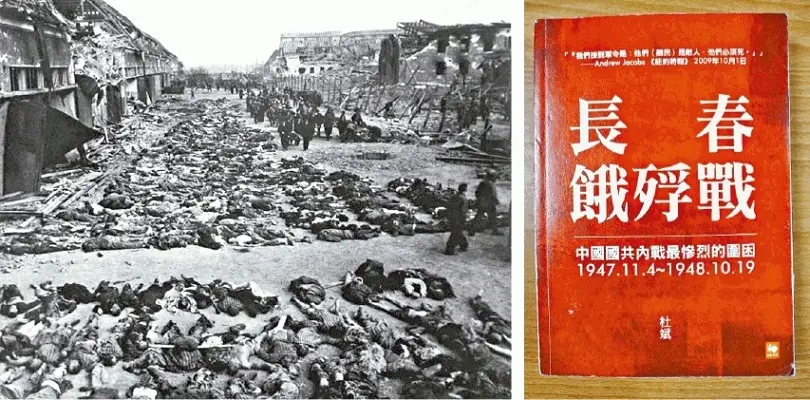
This book was originally intended to be called “Road to Heaven”, but later I changed it to “Tombstone”. “Tombstone” has four meanings: firstly, to erect a tombstone for my father who starved to death in 1959; secondly, to erect a tombstone for the 36 million Chinese who starved to death; thirdly, to erect a tombstone for the system that caused the Great Famine; and fourthly, when I was halfway through writing this book, Xuanwu Hospital in Beijing found a “lesion” (alpha-fetoprotein positive) during my physical examination, so I accelerated the writing speed and made up my mind to write this book, which can also be regarded as erecting a tombstone for myself – fortunately, the re-examination ruled out the lesion, but writing this book has great political risks. If I were to be harmed because of this book, it would also be considered as dedicating myself to the idea, and naturally, it would become my own tombstone.
Of course, the main focus is still on the first three meanings. A tombstone is a solidified memory. Human memory is the ladder for the progress of a country and a nation, and it is the road sign for the advancement of human voyages. We must not only remember the good, but also remember the evil, not only remember the light, but also remember the darkness. The rulers under the totalitarian system conceal evil and promote good, cover up mistakes, and forcibly erase people’s memories of human disasters, darkness, and evil. Therefore, Chinese people often suffer from historical amnesia, which is amnesia caused by the forced power.
The tombstone I erected is precisely to make people remember human disasters, darkness, and evil, in order to stay away from human disasters, darkness, and evil in the future.
Loading Viewer…
Discover more from 自由档案馆
Subscribe to get the latest posts sent to your email.