
In the grand narrative of a rising great power, numbers are often the most dizzying footnotes. Since 2013, China has embarked on an unprecedented global capital outflow. From the heartland of Eurasia to the coasts of Africa, trillions of funds have been transformed into railways, ports, stadiums, and presidential palaces.
However, as these astronomical figures illuminate “friendship landmarks” on the world map, the other side of this huge sum—the local society that needs pensions, medical security, and solutions to unfinished buildings and employment anxiety—seems to be bearing the cost of this prosperous carnival.
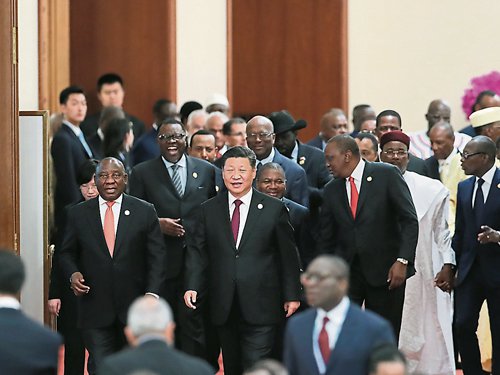
1. The Lavish Start: A Thousand-Billion-Yuan Beginning (2013-2015)
When the curtain of the “Belt and Road” was raised, funds flowed overseas like a flood from a dam. This was not just an economic calculation, but also a political one.
- The Birth of the Silk Road Fund (2014): An initial investment of 40 billion US dollars (approximately 260 billion yuan). This was the first astonishing “start-up fund,” specifically used to support projects in countries along the “Belt and Road.”
- China-Pakistan Economic Corridor (2015): In this country known as “Pakistan’s iron brother,” China promised an investment of 46 billion US dollars (later increased to 62 billion US dollars). This money was enough to rebuild the underground pipe network systems of several second-tier Chinese cities at the time.
- Venezuela’s Black Hole: During this period, China provided Venezuela with approximately 65 billion US dollars in loans in exchange for oil. With the collapse of the Venezuelan economy, most of this huge sum remains unrecoverable bad debt to this day.
2. The “Big Spends” of the Peak Period: Commitments in “Hundreds of Billions” (2016-2019)
During this period, foreign aid and loans reached their peak. Whenever there was home-court diplomacy or a leader’s visit, there would inevitably be a huge check accompanying it.
- The “Generosity” of the Forum on China-Africa Cooperation:
- 2015 Johannesburg Summit: Promised to provide 60 billion US dollars in financial support.
- 2018 Beijing Summit: Again promised 60 billion US dollars.
- These two meetings alone promised 120 billion US dollars (approximately 800 billion yuan). If this money were used domestically, it would be enough to fill the pension deficits of several provinces in China at that time.
- “Big Spending” Project List:
- Kenya-Mombasa Railway: Loan of approximately 3.2 billion US dollars.
- Malaysia East Coast Railway: Initial contract of approximately 13 billion US dollars.
- Jakarta-Bandung High-Speed Railway: Loans and investments exceeding 7 billion US dollars.
- Cambodia, Laos, Sri Lanka: Billions of dollars in infrastructure aid and loans continuously.
3. The Pandemic and Post-Pandemic Era: The Blood Transfusion Continues (2020-2026)
Even against the backdrop of three years of pandemic lockdowns domestically, tight fiscal revenues, and the explosion of local government debt, the pockets for foreign aid have not been tightened.
- Anti-epidemic Aid (2020-2022):
- Provided 2 billion US dollars in anti-epidemic aid to the world.
- Promised to provide 2 billion doses of vaccines (some as free donations), and waived the interest-free loan debts of the least developed countries that year.
- The Latest Commitments (2024-2026):
- 2024 Forum on China-Africa Cooperation: While promising to live a “tight life” domestically, it once again promised to provide 360 billion yuan (approximately 51 billion US dollars) in financial support to Africa in the next three years.
- Various Bilateral Aid: From budget support to the Solomon Islands, to food aid to Zimbabwe, to the Shanghai Cooperation Organization’s 2 billion special loan, funds are still flowing out continuously.
4. Calculating the Overall Account
Although the Chinese government separates “foreign aid” (Grant) from “commercial loans” (Loan), in the reality that recipient countries lack the ability to repay and ultimately solve the problem through debt reduction (Debt Forgiveness), these outflowing funds are essentially not much different for Chinese taxpayers.
According to comprehensive estimates from international authoritative institutions (such as AidData, Boston University) and official data:
- Total Broadly Defined Foreign Development Financing and Aid (2013-2026): Conservatively estimated to exceed 1.3 trillion US dollars (approximately 9 trillion yuan).
What is the concept of 9 trillion yuan?
- It is equivalent to 4 times the total health expenditure of China in 2023 (approximately 2.2 trillion).
- It is enough to achieve free medical care for all for several years.
- It can solve the real estate unfinished building delivery guarantee funds shortage that currently troubles millions of families at once.
- It is enough to give 10,000 yuan in cash to each of the 1.4 billion people in the country, or completely fill the current medical insurance and pension black holes.
5. Conclusion: Whose Dream?
When we see African children laughing in the brand-new schools built with Chinese aid on television, and see Southeast Asian trains speeding on the tracks built by this generation, the camera turns back to China:
Those are the depositors who cannot withdraw money from the rural banks in Henan; those are the workers who go to work sick to get a few hundred yuan in full attendance bonus; those are the left-behind children in the mountains of Guangxi who are still eating yellow bean and rice; those are the retired elderly people wandering at the door of the pharmacy to save money after the medical insurance reform.
These 1.3 trillion US dollars have bought the votes of the United Nations, bought the scene of “all nations coming to pay homage,” and bought geopolitical chips. But what it has not bought is the sense of security that the people of this country need most.
The greatest dignity of a country should not be how generous it is abroad, but how comfortably its citizens live on their own land. On the scales of “great power rise” and “dignity of the people,” the weights seem to have already been unbalanced.
Discover more from 自由档案馆
Subscribe to get the latest posts sent to your email.