Author: Xi Yun
China’s garbage isn’t enough to burn, to the point where they have to dig up the garbage from underground to burn it.
Recently, some companies in Shanghai, Zhejiang, Hunan and other places have also started to “snatch” garbage, offering referral fees to property management companies to compete for channel resources.
Some people interpret this as a typical case of China’s garbage incineration technology surpassing the environmental protection hegemony of Europe and the United States, leading the way and being immensely proud. But I want to remind everyone that,
Have you noticed that the protests against garbage incineration have become less and less, and even completely disappeared?
Is garbage incineration really completely harmless?
What is the truth behind the highly profitable waste industry chain?
How profitable is the garbage incineration business?
Don’t think that garbage incineration is a “low-end” industry, the gross profit margin is as high as about 40%, and the gross profit margin of the industry leader Weiming Environmental Protection even exceeds 59% (2024).
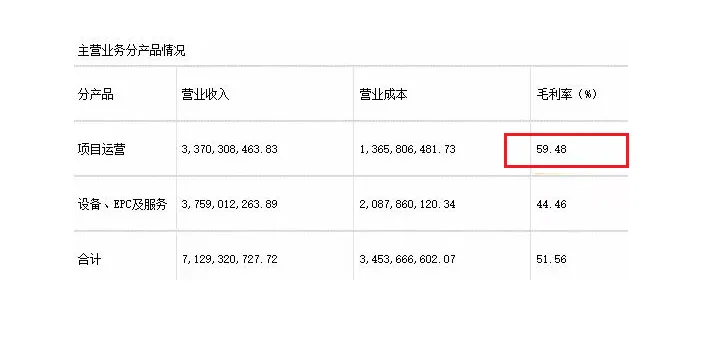
Source: Company Financial Report
The profit roughly comes from:
In addition to receiving garbage management fees of 65-150 yuan per ton from local governments, they can also generate electricity by burning garbage. One ton of garbage can generate 280 kilowatt-hours of electricity, plus national subsidies, the on-grid electricity price is 0.52 yuan, adding these two profits together, burning one ton of garbage can earn two to three hundred yuan.
So, garbage is a gold mine, a cash cow in the hands of others.
In 2010, a documentary called “Garbage Siege” became popular, exposing a shocking scene under the urbanization frenzy: wild garbage factories outside the municipal treatment system, without even landfill measures, openly dumping in the open air, and the clear river water was dyed gray-green. After the river was drained, a thick layer of garbage was laid at the bottom of the riverbed.
At that time, China’s annual garbage output was 150 million tons, and by 2015, this number had soared to 260 million tons. If all this garbage was piled up in one place, Shanghai would be completely buried by a three-meter-high garbage pile.
Garbage incineration has become a life-saving straw for local areas, which can directly solve the problems of garbage storage and disposal.
Subsequently, garbage incineration plants surged forward, and were built crazily. Today, China has 1010 garbage incineration plants, accounting for half of the world’s total. At least 1/3 of the provinces have overcapacity, and 30% of the 90 incineration plants in Jiangsu Province are forced to “work for three months and stop for one month” due to insufficient garbage. According to the research of Wuhu Ecology, in 2023, of the 76 incineration plants in Zhejiang Province, 18 were idle for more than 50 days on average each year, and the longest shutdown was 155 days.
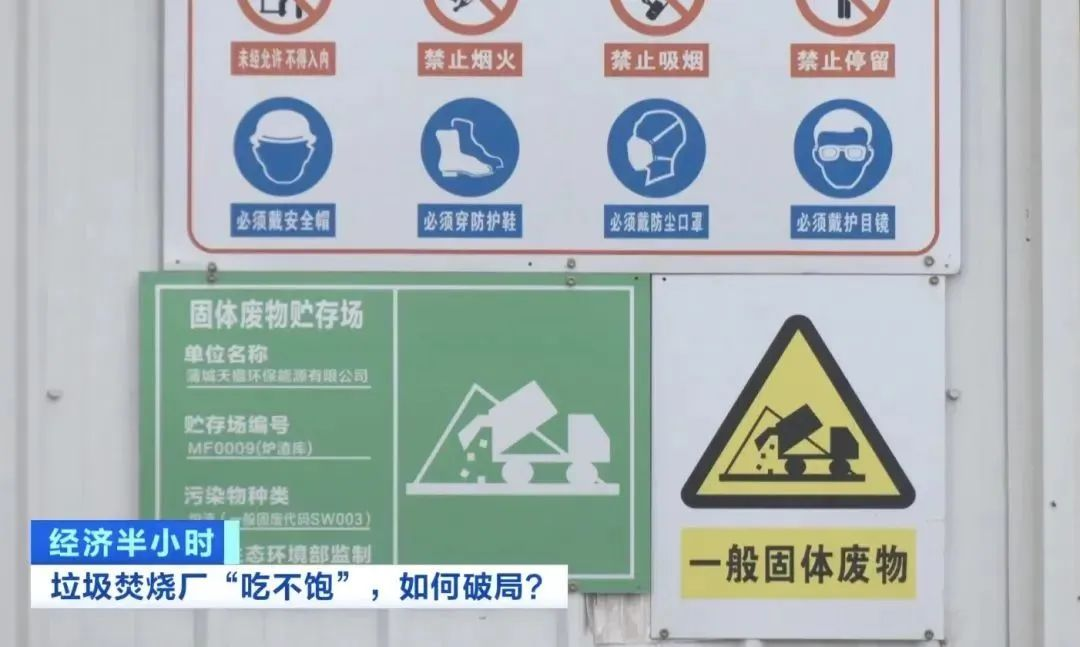
“Snatching garbage” happened against this background.
Because the situation is completely different now, there is not enough garbage to burn, and it has become a sought-after “hot commodity”.
Last year, Guangzhou Xingfeng Emergency Landfill passed the approval to dig up the 3.5 million cubic meters of garbage that was buried before and burn it again.
What is the concept of 3.5 million cubic meters? It can fill 3.7 Water Cubes, which is 1.3 times the size of the Great Pyramid of Giza.
After that, Haikou, Shanghai, Wuhan and other places also began to join this competition, passed the approval, and started to excavate the landfill.
In order to snatch garbage, two companies in Hunan offered a “referral fee” of 50 yuan/ton to property management companies, and were criticized by the environmental protection inspection team for this, which was said to have seriously disrupted market order.
There are also those who go to other places to snatch garbage. Henan Shangshui Jingmai Industrial Park received all the domestic waste from Xiangcheng City, and some garbage from Huaiyang towns and the central urban area of Zhoukou; Xianyin City’s garbage incineration plant received garbage from Liquan County and surrounding counties and cities.
So, can our garbage incineration today really be completely harmless?
According to Workers’ Daily, as of 2023, the qualified rate of garbage incineration furnace temperature is over 99%, and the sampling qualified rate of dioxin-like pollutants has also increased to over 98%, basically achieving standard emissions.

Source: Workers’ Daily
Our standards have always been benchmarked against the EU, and a 99% qualified rate indicates that our treatment technology is already leading the world.
But behind the standards, there are still double hidden dangers.
The first hidden danger is that EU standards cannot guarantee absolute safety.
According to the public account “Intellectuals”, in 2021, a study funded by the environmental organization Zero Waste Europe on three garbage incineration plants in Spain, the Czech Republic and Lithuania showed that the sampling data did meet the EU directive standards, but the bioaccumulation and amplification effects still led to the dioxin concentration in free-range eggs around the area being generally higher than the EU food safety limit.
The second hidden danger is that the detection technology needs to be improved, especially for dioxins, which cannot be quickly and real-time monitored.
Dioxins are the most toxic substances in the world to date, known as the “poison of the century”, with a toxicity 300 times that of arsenic and 1000 times that of potassium cyanide. Once it seeps into the environment, it is difficult to degrade naturally.
And China’s garbage, due to its high organic matter content, high water content, and lack of a complete garbage classification system, is more likely to produce dioxins due to incomplete combustion.
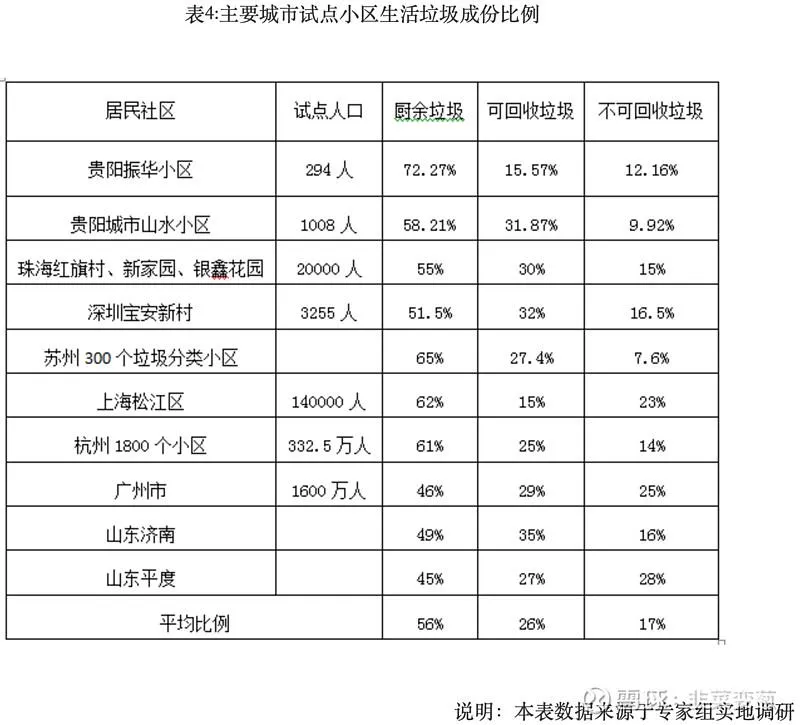
At present, China only has short-term sampling requirements for dioxins:
At least once a year, at least 3 samples are collected each time to take the average value, and the sampling time for each sample is 0.5-8 hours, which only accounts for 0.3% of the operating time of the incineration furnace, and there may be a huge error between the sampling results and the actual emission situation.
The School of Energy Engineering of Zhejiang University has conducted continuous sampling of the garbage incineration furnace for 168 hours, and 56% of the 500 monitoring samples did not meet the standards.

Source: Intellectuals
You see, the sampling methods are different, and the compliance situation is completely different.
And China’s current detection technology is not mature enough, not only does it take half a month, but the material and labor costs of each detection are also very high, and it is impossible to achieve real-time and rapid continuous monitoring of dioxins.
This means that the actual emission of dioxins does not completely correspond to the compliance data.
A few years ago, there were still many studies in China revealing the serious pollution problems and health threats brought about by garbage incineration.
In 2018, after on-site testing of the soil and vegetables within 3 kilometers around a garbage incineration plant in Tianjin by many researchers from Tianjin University and Tibet University, it was found that the heavy metals cobalt, lead, zinc and mercury in the soil in the area reached a moderate pollution level, and arsenic and cadmium reached a severe pollution level, and the conclusion was drawn after analysis that the atmospheric pollutants emitted by the garbage incineration plant were the largest potential source of pollution.
For the surrounding residents, the cancer risk and non-cancer risk brought about by this pollution level are unacceptable.
In 2019, researchers from the Zhejiang Center for Disease Control and Prevention and the Second Affiliated Hospital of Zhejiang University School of Medicine investigated and studied mothers and breastfed infants within 3 kilometers of a garbage incineration plant that had been operating for 10 years, and found that the mothers living near the incineration plant had a significantly higher physical burden than the mothers living in the non-exposed area, and the blood lipid levels of dioxins in the children’s serum were significantly higher than those in the control group.
In July 2022, researchers from Tianjin University, Hainan University and Vienna University of Technology, based on the monitoring data of five pollutants emitted by 510 garbage incineration plants in China – particulate matter, sulfur dioxide, nitrogen oxides, carbon monoxide and hydrogen chloride, as well as the emission characteristics of heavy metals, conducted a model assessment of the hazard index and cancer risk. The results showed that: the hazard index and cancer risk 1 kilometer downwind of the garbage incineration plant were both higher than the safety value.
Calculations show that a protection distance of 1.5 kilometers can maintain the pollutants at an acceptable risk level. 1.5 kilometers is a minimum value, and the area affected by the downwind of the prevailing wind direction may be larger due to the influence of wind direction on the pollutant landing point.
And the standard for the environmental protection distance of garbage incineration plants set by China is only 300 meters, which is theoretically not safe.
These pollutants come from the waste gas, wastewater and waste residue fly ash emitted by garbage incineration. The waste gas contains dioxins, and its serious harm has been pointed out in the previous article.
Wastewater is also the brown-black leachate produced after garbage accumulation, which smells extremely foul and also contains a variety of pollutants. Once it is spilled or discharged in excess of the standard, it will pollute the residents, soil and groundwater along the way.
What is more worth警惕 is the fly ash in the waste residue, which not only contains dioxins, but also contains a variety of heavy metal elements such as arsenic, chromium, lead and mercury.
These are the key points of the central ecological and environmental protection supervision, but judging from the supervision situation, the problems of non-compliant treatment are still prominent.
For example, in the second round of central environmental protection supervision in 2021, the total amount of leachate directly exposed was as high as 9.443 million tons, and the problems of long-term storage and illegal disposal caused by insufficient leachate treatment capacity were the most prominent.
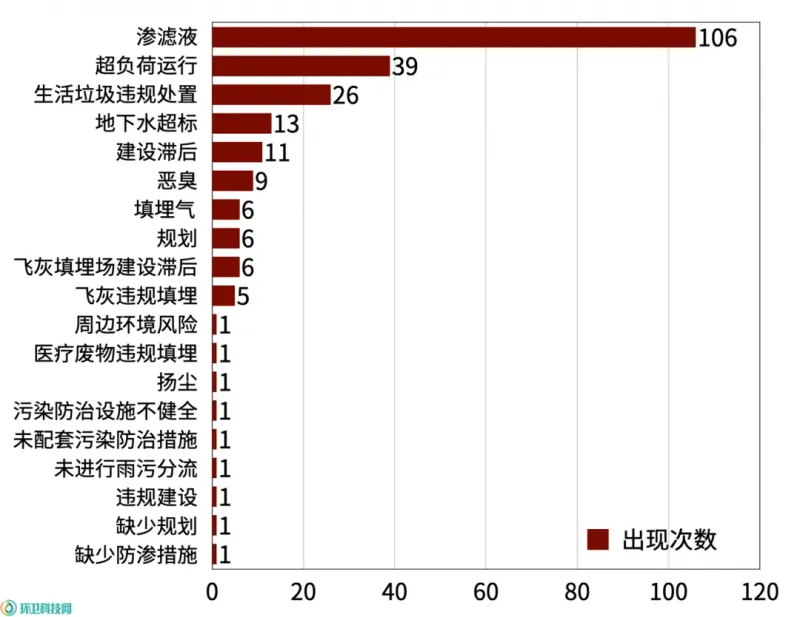
Problems and distribution of domestic waste landfill disposal
The fly ash problem is the most serious. Currently, the fly ash produced by garbage incineration reaches 10 million tons per year, becoming the largest category of landfill for a single type of hazardous waste, which can be said to be a “time bomb” buried in the current domestic waste treatment.
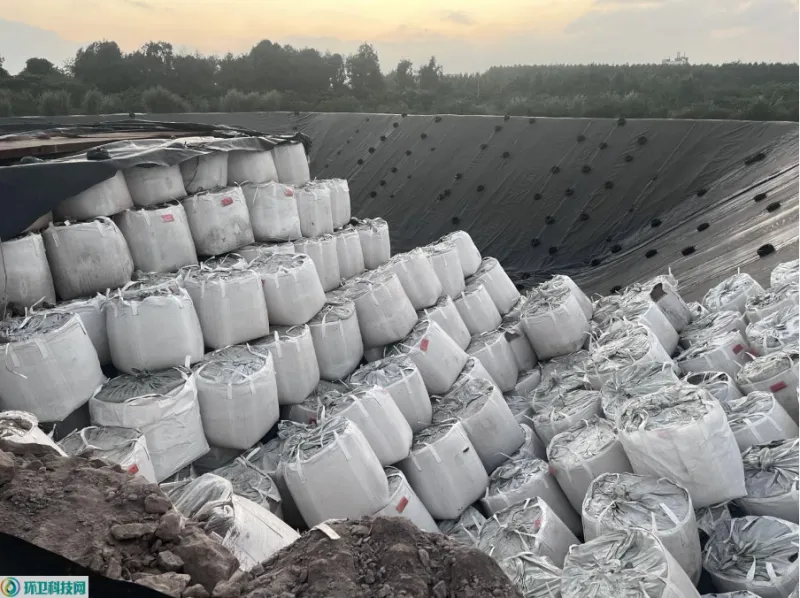
These fly ash are usually solidified and then landfilled. But after a few years, this solidification will fail, and in an acidic environment, this solidification will also accelerate the failure, and various toxic substances will seep out, polluting the soil and groundwater, and eventually entering the human body through food.
Chelated and solidified fly ash in the fly ash landfill in Chengmai County, Haikou City, Hainan Province
And due to the high economic and environmental costs of disposal, only the second round of central environmental protection supervision found that the amount of fly ash that was stored for a long time or disposed of in violation of regulations was as high as 1.05 million tons.
More than ten years ago, Zhao Zhangyuan, an environmental protection expert who firmly opposed garbage incineration, still has a valid judgment:
It is still too early to say that garbage incineration is completely harmless.
In the case that the technology has not yet progressed to 100% harmless treatment of garbage incineration waste gas, wastewater and waste residue, the more garbage is burned, the more serious the harm to the environment and public health will be.
Discover more from 自由档案馆
Subscribe to get the latest posts sent to your email.