Recently, Trip.com CEO James Liang’s “worker bee economic model” has become a hot topic.
Liang Jianzhang believes that in a bee colony, worker bees are responsible for collecting food, nurturing larvae, and building the hive. They work tirelessly, but cannot reproduce—this state of existence is similar to the South Korean economy.
The characteristics of this “worker bee” economy in South Korea can be summarized as follows: people work hard all year round, providing a large number of cheap industrial products to the world. Their income, in addition to meeting daily needs, is more likely to be used for tourism, etc., but they are unwilling to have children; even if they choose to have children, their goal is for their offspring to be able to join large enterprises in the future, so they choose to desperately “chicken their kids,” but they don’t have many.
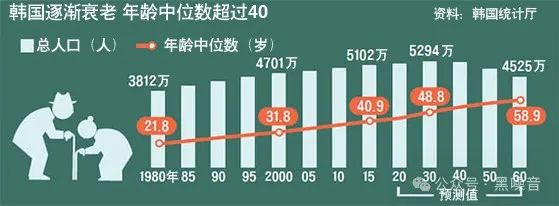
In 2024, South Korea’s fertility rate fell below 0.72, once again breaking the global record low. It seems to be just a number, but behind it lies the future direction of a country.
The birth rate is not the ultimate indicator of a country’s strength, but it is a direct signal of whether a society can still “allow people to live.”
South Korea, once the most hardworking of the Four Asian Dragons, has become the country with the lowest fertility rate in the world today. This is not just a demographic problem, but a manifestation of a comprehensive imbalance in the social system.
And is today’s South Korea the future of China?

Young people not having children is not their own choice, but rather that they have no way out.
Many older people cannot understand the “not marrying and not having children” of young people. They think it’s laziness, lying flat, and irresponsibility. But the truth is that more and more young people are not “unwilling,” but “cannot afford to have children.”
South Korean society is superficially modern, but behind it is extremely conservative and oppressive.
You may have heard of the term “cram school hell.” In South Korea, this is the norm. Children have to attend three or four hours of cram school after school, the schedule is packed, and they are almost without rest seven days a week (of course, it’s about the same here).
Education is only part of the pressure, and housing is even more burdensome.
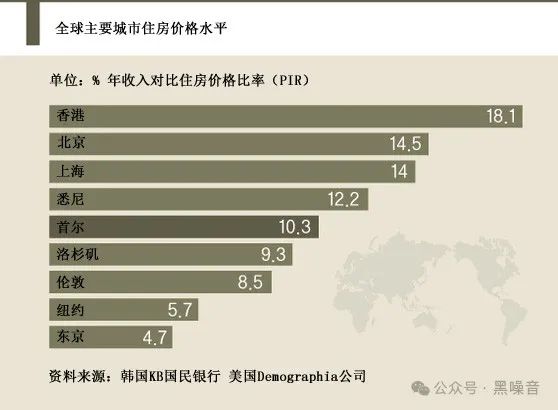
The price of an ordinary two-bedroom apartment in Seoul is about 4 million yuan. And the annual salary of young South Koreans after graduation is only about 150,000 yuan. Not to mention buying a house, even renting a house requires careful calculation. Rent, utilities, transportation, food, plus the education and living expenses of raising a child, almost overwhelm everyone (of course, the ratio of housing prices to income here is even more exaggerated, even after the decline).
Under such conditions, not getting married and not having children has become the default way out. It’s not that young people lack a sense of responsibility, but that reality has pushed them to the edge of a cliff.
In addition, for women, giving birth is almost equivalent to withdrawing from the workplace, which is a cruel unspoken rule in South Korea.
Many South Korean women choose not to have children even after they get married. A South Korean mother said on social media: “The day I gave birth, my career ended.”
South Korea is very unfriendly to working mothers. Although the law stipulates maternity leave, in reality, many companies do not welcome women with children to return to work.
Large companies are more inclined to hire women who are unmarried and childless, and even ask about their marriage and childbearing plans in interviews. Workplace discrimination is invisible, but it still exists (it’s the same here…).
Therefore, more and more women simply make a choice—either career or family, and they cannot have both.
The predicament of women is essentially an institutional predicament.
There is also something in South Korea that is frightening: subsidies and policies cannot restore the confidence of young people in life.
Faced with a serious population crisis, the South Korean government has not been unresponsive. Subsidies, rewards, and free childcare services have all been launched. But what they don’t understand is that the problem is not how much money they give out, but that the basic structure of life has been distorted.
According to a report by the Korea JoongAng Daily, according to the new policy in 2024, parents with infants under 1 year old can receive a monthly subsidy of 1 million won (about 5,450 yuan), an increase of 300,000 won (1,635 yuan) compared to last year; parents raising children aged 1 to 2 years old can receive a monthly subsidy of 500,000 won (2,725 yuan), an increase of 150,000 won (818 yuan) compared to last year.
In addition, both men and women can enjoy a maximum of 1.5 years of parental leave, which can be applied for 4 times and can be used at any time before the child turns 8 years old.
However, it’s still not working.
Because what young people want is a predictable life, not temporary subsidies. They know that as long as the structure remains unchanged, today’s subsidies will become tomorrow’s costs.
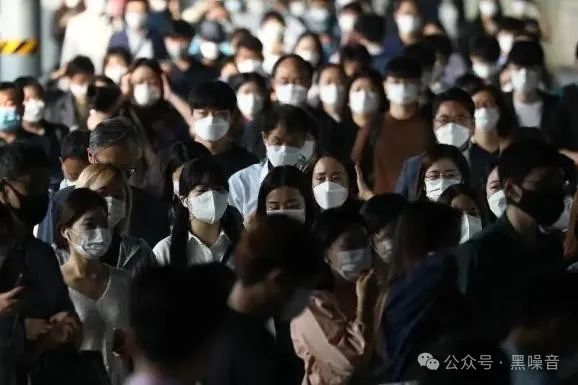
South Korea’s urban layout is extremely concentrated, with more than half of the country’s population living in the Seoul metropolitan area, resources are crowded, housing prices are soaring, and educational competition is unsolvable. This is the root cause of the decline in the fertility rate.
As long as these structural contradictions remain unchanged, no amount of money will help.
It’s not just South Korea’s problem—from “fighters” to “worker bees,” young people in East Asia are collectively withdrawing from this suffocating survival game.
In the past few decades, Koreans have been one of the most hardworking nations in Asia. From the “Miracle on the Han River” to the rise of Samsung and Hyundai, it is the result of generations of hard work.
But today, more and more young people no longer want to continue this “relay race.” They use the word “worker bee” to describe themselves. They work more than ten hours a day, have no life, and have no future. The money they earn is not enough to live on, let alone get married and have children.
The struggle of the past had hope, but today’s efforts only bring fatigue. They are not afraid of being tired, but they are afraid of meaningless repetition, becoming “social consumables” that are exploited and have no sense of value and dignity.
Choosing not to marry and not to have children is a collective silent protest. They refuse to continue to work hard for a system that no longer has a future.
So the question is: Will China be next?
Many people see the predicament of South Korea and inevitably worry that China will also go the same way.
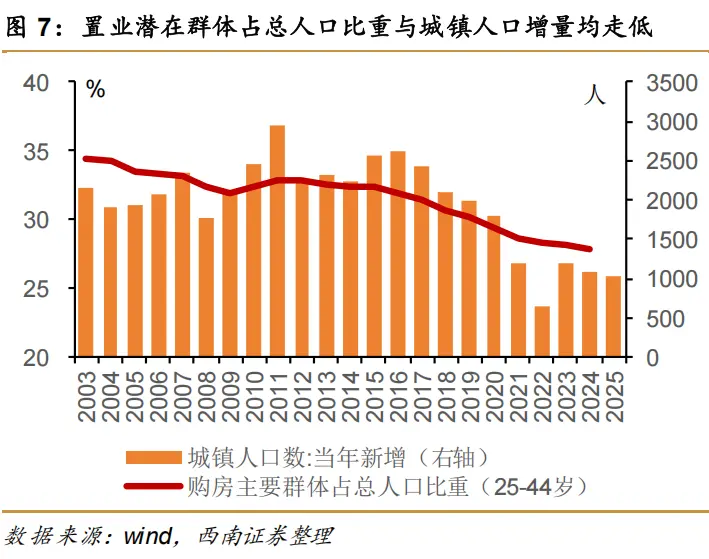
The reality is that the fertility rates in some major cities in China have already fallen below those in South Korea. In 2023, the fertility rates in Beijing and Shanghai were below 0.7, and Guangzhou and Shenzhen were about the same. And the national total fertility rate also fell to 1.0, the first negative population growth in 60 years.
In comparison, China has a large size and still retains some “buffer zones.” For example, the living pressure in second- and third-tier cities and counties is slightly less, and the parents’ generation is still willing to spend money and take care of their children. But how long can these advantages last? Moreover, it is more difficult to find employment in small cities, and housing prices are still very high.
The most critical problem is that the confidence of young people in China in the future is rapidly declining.
When “hard work is useless” becomes a common consensus, the fertility willingness of the entire society will naturally collapse.
It must be noted that: having children is not a number, but a vote of young people on the current state of life. When the education model becomes more and more perverted and distorted, when employment becomes more and more competitive and exploitation continues, when wages do not rise but the cost of living is high, when people cannot have enough holidays, when inferior and toxic food still fills the market, who is still willing to have children and continue to endure all this?
Many policymakers treat the fertility rate as a cold number. But for ordinary people, having children is a “vote of confidence” in the future of society.
Only when people feel that this society is worth living in will you be willing to pass on life.
But today, more and more young people don’t want to make this decision—it’s not that they don’t love their children, but that they don’t accept this kind of life.
If young people in a country are generally unwilling to have children, you shouldn’t first blame them. What you should reflect on is what kind of living conditions this society has given them.
China is rapidly moving forward on the road of a “worker bee society.”
The window of time for change is not much. If we don’t truly solve the life anxiety of young people from the root, no amount of subsidies and encouragement will be empty talk.
The metaphor of “worker bee economy” is really brilliant, thanks to James Liang for his brave voice.
But I also want to say a cold joke: Although the bee colony society has worker bees as consumables, at least there is a complete set of mechanisms that can reproduce, but what about our society?
Discover more from 自由档案馆
Subscribe to get the latest posts sent to your email.