

The reason I can publish here, and the reason you can read my words—we enjoy the internet and our current material lives, without having to worry about whether our hungry stomachs can be filled at night, without having to worry about who in the family can wear the only pair of patched pants to go out and see people…
All of this is because after the 1980s, China chose marketization and gradually abandoned the planned economy.
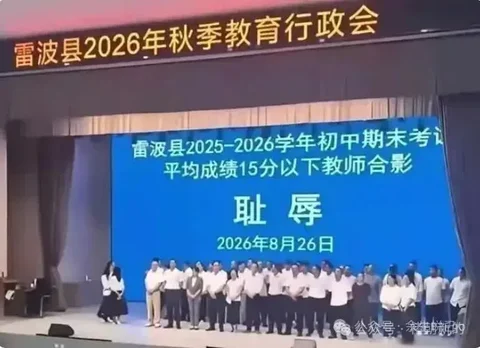
Although this is common sense, I feel that more and more people are abandoning this common sense. Especially under the propaganda of certain big Vs (the so-called "people's economy"), more and more people are beginning to miss the planned economy.
Among them, especially the young people who have not suffered from the planned economy are the majority.
Everyone can have different ideas about the interpretation of economic history and the degree of government intervention in the economy, but we must respect some basic common sense.
This common sense lies in the fact that the economic model characterized by the central government's full command of the economy and planned rather than market-driven, has been proven to lead to material scarcity and economic rigidity, thereby bringing poverty and hunger.
This is not the lesson of one country, China, but the lesson of many countries that have gone down this road.
If state-owned enterprises are not your own, then who will worry about state-owned enterprises and manage them well?
Before the 1980s, China was learning from the Soviet model. Although there were some very small attempts at free market economics among the people, the main body was completely determined: the government directly planned and controlled economic production and circulation.
This model seems to make sense: in our imagination, the government has information about the overall economic situation and also has the smartest minds—economists and politicians, so the government should direct economic production, build factories where it is more suitable for production, and supply where there is demand.
However, it is this beautiful imagination, and the social experiments it has brought, that have made countless people pay a heavy price. No one knows this pain better than me, because my parents have both experienced long-term hunger.
Why is the market economy effective? Because since the classical economists represented by Adam Smith, Western economists have discovered one thing—the market itself has the function of regulation.
They found that if they didn't manage the market, the market would generate commodity prices on its own, and the supply of commodities would also fluctuate, and those who participated in production and circulation would also flow naturally, and money would also flow naturally, and the economy would become prosperous on its own.
Adam Smith's innovation lies in the fact that he formally acknowledged for the first time that human selfishness is actually a good thing.
He believes that it is the selfish human nature and the instinct of self-interest that allows individuals to constantly improve their own interests—but this will not destroy society, but will instead promote the overall interests of society.
So he said, this is the "invisible hand", that is, the self-regulation of the market.
Although this is only the starting point of modern economics, and it is a very simple and unadorned idea, its earth-shattering degree is no less than that of Newton discovering the Earth's gravity.
Like universal gravitation, classical economics has also been constantly revised and improved by later new theories, and government intervention in the economy has also been proven not necessarily wrong, thus leading economics to the controversy of "to what extent should government intervention be appropriate".
But there is a basic premise that always remains unchanged, that is, the rule of law comes first—even if the government wants to intervene in the economy, it must abide by legal procedures.
The combination of market economy and the rule of law just restricts the "greedy hand" of the government's direct control of the economic core. In other words, the economic core is determined by the market, and the government can only do some repair work within the authority granted by law.
When we recognize this "underlying logic", and then look back at the course of China's economy and its impact on us, we will understand many things.
In the era when the government fully controlled the economy, although there were some benefits, such as forcibly allocating resources to places where capital was unwilling to flow naturally, and it was also conducive to building some basic industries and large industries when the country was still extremely poor, but its shortcomings were also fatal.
This shortcoming is that the industries that are truly related to people's lives cannot develop. This is also why China at that time could develop nuclear weapons while being hungry—in other words, why can we develop nuclear weapons, but we still have to be hungry?
Because in many economic fields, government regulation will inevitably lead to failure.
This is because the starting point of the market is each individual. For example, if you want to eat dumplings now, this demand arises, and your purchasing behavior automatically regulates the market, and countless people like you who buy dumplings to eat determine the market supply of dumplings.
But the government cannot know what everyone wants to eat, maybe it thinks you want to eat rice with toppings, but you actually want to eat dumplings.
It is these countless subtle individual needs, and the ever-changing needs, that combine to create the macro market.
However, in the opposite extreme situation, the government will estimate that farmers can produce more grain, so it takes away all the grain of the farmers, and the farmers are hungry.
This is a major defect in government control.
Therefore, when China moved towards marketization in the 1980s, especially in the 1990s, as if overnight, we had a rich material life and spiritual life—the market itself has power.
Our fate has been saved like this, until now.
Those who have not been hungry, please do not continue to hold the idea that a "omniscient and omnipotent" government can help you solve everything, because there is nothing in this world that is omniscient and omnipotent and always wants to be good to you.
The market economy is one of the greatest discoveries of mankind; the market economy plus government regulation constrained by law is the most beautiful state we can achieve at present.
(End of the full text)
Hello everyone, Black Noise has just established its own reader WeChat group. Readers who want to join the group, please scroll down from here, you can see my personal WeChat, scan the QR code to add WeChat to join the group. Because I am worried that people with bad intentions will join the group, I have set a 38 yuan entry fee as a threshold, please understand.
·END·
Also welcome to join my "Knowledge Planet" discussion community, where 800 readers are already interacting with me, asking questions and answering questions, exchanging economic dynamics and financial investment knowledge, and there are also exclusive column articles to share, discussions on current affairs, book recommendations, and sharing of previously banned articles, etc.
The "Knowledge Planet" fee is 88/year. Welcome to scan the QR code to join:

To prevent loss of contact or for consultation on joining the WeChat group and Knowledge Planet, you can add my personal WeChat:

The writing theme is sensitive and there is a risk of being blocked. To prevent loss of contact, you can follow my backup account:
Black Noise: heizaoyin21 (WeChat ID)