Family Researcher 2026-08-31 20:37 Zhejiang
The following article comes from: Xiaoganti Xiaoganti
Family Editorial Department, a professional institution for writing family histories, memoirs, entrepreneurial histories, and local chronicles, 18657107601

History Turns a New Page
Indeed, the world has changed dramatically and is full of emotion
Xu Jiayin’s Sacrifice

Yesterday, five departments issued 8 documents, completely dismantling the logic of real estate operation for decades!
Other points, such as pre-sale only upon completion, full pre-sale funds under supervision, and repayment after completion and registration, are not mentioned. Just the rule that banking financial institutions are not allowed to issue loans for paying land transfer fees and related taxes and fees alone has pushed the vast majority of developers to a dead end.
In other words, this is almost tailor-made for Evergrande-style real estate development, which relies on using land as collateral to banks and then using loans to pay land transfer fees – a ‘nothing for something’ approach.
A few days ago, I said that the operational logic of local finance for decades might be reconfigured, abandoning support for new housing development to preserve the existing market for second-hand homes. “Understanding the Signals: Walking with the Nation, Defusing Bombs to Protect Finances“
Now it seems this judgment is not wrong.
Moreover, these eight golden decrees are a combination of moves, on one hand, strangling real estate and banks, and on the other hand, strangling local governments through urban investment to leverage banks.
It is clear that among the banking financial system, local governments, and real estate developers, the most fearful is financial instability, followed by local governments. As for real estate developers, they are already beyond redemption.
Therefore, the priority of rescue is also clear: local governments must suffer first; even if they run out of funds, banks must be protected.
The world only knows how big Evergrande and others play, but not how much bigger local policies play.
If developers don’t buy land, then let urban investment companies buy it; if urban investment companies are prohibited from bidding for land, then let local state-owned enterprises and private enterprises form joint ventures for real estate development, where private enterprises are merely a borrowed ‘hat’ – the opposite of private enterprises borrowing collective ‘red hats’ over 40 years ago, but in reality, it’s still state-owned enterprises bidding.
In this game, urban investment companies borrow development loans, working capital loans, and renovation loans from banks, bid for their own land, transfer the fees into local treasuries, and then the finance department repays urban investment companies with construction fees and capital injections. Urban investment companies then use the land as collateral to borrow another round from the bank.
And the shareholders of small local banks are local governments themselves. Even if they see through it, they dare not cooperate, thus financial risks continue to accumulate, only 0.5 millimeters away from a meltdown.
In fact, some individual banks have already collapsed. “As expected, banks become landlords…“
Even in the prosperous Yangtze River Delta and Pearl River Delta, this leverage has been pushed to the extreme.
In Yancheng, northern Jiangsu, urban investment companies account for over 74% of land acquisition, reaching as high as 92% at its peak.
Zhenjiang is between 70-88%.
Huzhou might be the highest in Zhejiang, accounting for 65-77%.
The proportion in Huizhou, Zhuhai, and Zhongshan in Guangdong is also not low.
Now, it’s almost like pulling all the ladders away at once. Not only can urban investment companies not use land as collateral to obtain loans, but urban investment companies themselves are either transforming into ordinary state-owned enterprises or must clear their hidden debts and divest their government financing functions by the end of June 2027, completely withdrawing.
I wrote about a protagonist of a family history who was a general manager of an urban investment company. He led the reform of the urban investment company, splitting it into more than a dozen subsidiaries, each with its own business, with the main goal of preserving employees’ jobs and solving their livelihood problems.
Due to his successful transformation, he was smoothly transferred to be the general manager of another state-owned enterprise.
However, for local finances, the coming days will be even more difficult. “Finally, no province can sustain itself. Why can’t local finances be cleared?“
But when God closes a window, he will surely open another: on the same day, the draft for comments on the “Local Additional Tax Law” was released, merging urban construction tax with two surcharges, totaling 11%-13%, with tax and fee transfers.
Of course, this money was already being collected, and it’s not enough for local governments to make ends meet.
In the future, either consumption tax will be accelerated downwards, or the central government will fully cover local finances.
This sophisticated game, now reaching its peak, originated in 1993.
That year, Comrade Zhu traveled to 17 provinces to discuss the tax-sharing system, centralizing financial power and collecting the bulk of value-added tax. In exchange, all land transfer income was left to local governments.
This ushered in over thirty years of revelry. “The Deputy District Mayor came first, but Mr. Zhao didn’t make it, and instead hit the girl, causing minor injuries?“
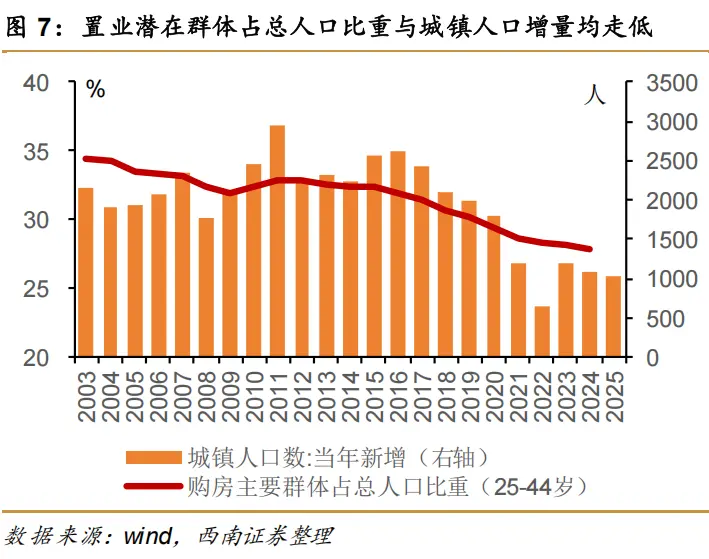
But this game had a prerequisite: the public would exhaust their savings to buy houses, and the supply would never run out.
In fact, the ultimate ‘anchor’ that truly paid for this game was the ordinary homebuyer.
The proportion of housing assets in total household assets for urban families is about 69.3% according to the People’s Bank of China’s 2025 Urban Household Asset-Liability Survey, and nearly 71% including commercial properties according to the Chinese Academy of Social Sciences!
In other words, the wealth of an ordinary family, seven-tenths of it, is in those property ownership certificates, with the remaining three-tenths being deposits, investments, and stocks.
The household leverage ratio once exceeded 60%, and apart from mortgage loans, it was almost negligible.
This is the public’s unreserved support for local finances.
It’s just that now, after searching through all the wallets, they truly cannot afford it anymore. And so, Mr. [the buyer] is also gone.
Since the game is no longer fun, the ladders are being removed.
For local governments, on top of the 10 trillion yuan in transfer payments received last year, the first half of this year has already exceeded 9.4 trillion yuan – they will only become more reliant on the central government in the future – ordinary people in the six southeastern provinces will have to bear more. “How Much Have You Contributed to the Nation?“
For the public, when the ladders are pulled away, many people are still left hanging in mid-air.
Of course, if you firmly believe that housing prices will rise, then it’s not necessarily a bad thing. People always need hope.
It’s just that the logic of wealth has been completely reconfigured.
Thirty years of real estate has seen its final nail hammered in.
The experience of many people has been overturned overnight.
Thinking back now, those who were full of optimism and encouraged people to buy houses in the past two years, I wonder what their current situation is.
It is said that many people dislike Elder Li and Xiao Pan, perhaps because the latter saw through the bottom line of this game and did not express their love by hanging in mid-air with themselves?
Then let’s first find a ladder to bring down the debt.
Discover more from 自由档案馆
Subscribe to get the latest posts sent to your email.