
The group of county Brahmins has unified characteristics: they are all within the system (or doing big business), and through mutual marriage and relationships with relatives and friends, they have become a closed-loop vested interest class.
They are mainly distributed in small counties, towns, and small prefecture-level cities, and even in some marginalized areas of provincial capital cities.
In a small county, often dozens of families can constitute the central node of this closed loop, and then radiate from the central node to form a network.
They will never marry their daughters or take in daughters-in-law who are not within the system; if they are in business, they must be quite wealthy (or the kind of people with connections in business) to be considered worthy.
If their children want to marry ordinary people who are not within the system, it’s like taking their lives, and they will oppose it at all costs, even severing their relationship with their children. Because in their eyes, this not only ruins their own children, but more importantly, ruins their own family class.
They also look down on all work outside the system, and even feel that it is not “work.” In their eyes, the definition of the word “work” refers to within the system. Outside the system, even if you are in a good company or a foreign company, it’s still nothing.
Of course, there is a lot of discussion about this online, and this group is like this, so there is no need to always talk about it.
What I want to talk about today is mainly the “destructiveness” of the county Brahmin group.
On the surface, this group cannot be said to have any “destructiveness,” but rather represents stability—they “stably” constitute the elite group of the county.
But from the perspective of modernization and economics, the county Brahmins are really not a good phenomenon.
I. Reverse Elimination of Talents
With the county Brahmins, only one situation will occur in the county, which is the outflow of real talents and the reverse elimination of talents.
Most of those who enter the system are seeking stability and don’t want to venture out. Of course, you can’t say that they are not talents, but from the perspective of social progress, what is needed is not such talents.
Social progress needs people who dare to venture, can innovate, and are willing to take risks. Only when they have the soil for development can that place truly have vitality and a future.
But the more ambitious and capable people are, the less they see a future in the county.
They know that they cannot rely on their fathers, and their abilities are not as good as their connections. If they want to do something innovative in the county, they often face many obstacles and it is difficult to achieve.
In the eyes of the county Brahmins, they look down on such people: your drive is an anomaly in their eyes, your adventure is dangerous in their eyes, and your talent is useless in their eyes.
So the result is that a large number of truly capable people go upstream and go to big cities to develop.
This is a big problem for the development of the county. The county itself is not very good at retaining talents, coupled with class solidification and intricate relationships. Those who cannot integrate into this network of relationships, as long as they want to have some pursuit, have only one way to leave.
Reverse elimination of talents, this is the first destruction of the county economy.
II. Brahmins Simply Look Down on Market Value
You tell a county Brahmin that there is great potential for opening a milk tea shop here, and you can open a fashionable shop with an annual profit of two or three hundred thousand, and there will be opportunities to open chain stores in the future.
They will only sneer: nonsense, you think that two or three hundred thousand is so easy to earn, the key is—unstable. Even if you can earn two or three hundred thousand this year, what about next year and the year after?
This is a deep-rooted way of thinking of the county Brahmins: they only trust stable things, but what they call stability can only be brought by being within the system.
This creates a result—the most important market value in the eyes of big cities is worthless in the eyes of the county Brahmins.
Those words discussed in big cities: market vacancy, free competition, commercial value… are not as good as their monthly fixed salary of a few thousand yuan and extra benefits in the eyes of the county Brahmins.
This determines that the county economy can hardly have modern industries, but can only revolve around those low-end service industries and industries where resources have long been monopolized.
Even, it simply cannot develop any industry and can only rely on transfer payments.
But the county Brahmins don’t care about these things. They don’t care about the county economy. Maintaining relationships and maintaining their status is the most important thing, and the rest has nothing to do with them. What about developing the economy? In their eyes, those are just serving themselves.
III. Resource Monopoly and Nepotism Destroy Market Fairness
In fact, when we talk about these things, we are all revolving around one thing: the market economy.
We have become rich in these thirty or forty years, all thanks to the market economy, but the county Brahmin group is inherently against the market economy.
The market economy must first be fair, and this point cannot be achieved. With the word fairness, how can the county Brahmins exist? Their interests often come from some privileges.
From engineering to procurement, from industry licenses to land, which one is not monopolized by the county Brahmins? Outsiders, if they don’t have connections in it, it is difficult to get involved. As long as it is a good resource, it has long been “internally digested” by them.
The intricate relationships and nepotism within the system also destroy social fairness. The children of ordinary families in some counties all hope to get a good job within the system through hard work, but the good units and positions have long been internally allocated to the county Brahmins themselves, and the children of ordinary families will only feel that it is useless to struggle.
In their eyes, all the interests of the county are “internal interests,” and internal interests can only be distributed by people within the circle.
In this way, outside capital does not dare to enter the county at all, and there is a high probability of being cheated or kicked out.
Small and micro enterprises are even more difficult to mix, they have no resource background, they can only make a living in the county, it is difficult to grow, and the ceiling is extremely low.
IV. The Fatal “Sense of Deprivation”
The above are all specific and visible destructiveness, and there is another one, which is hidden but the most destructive problem.
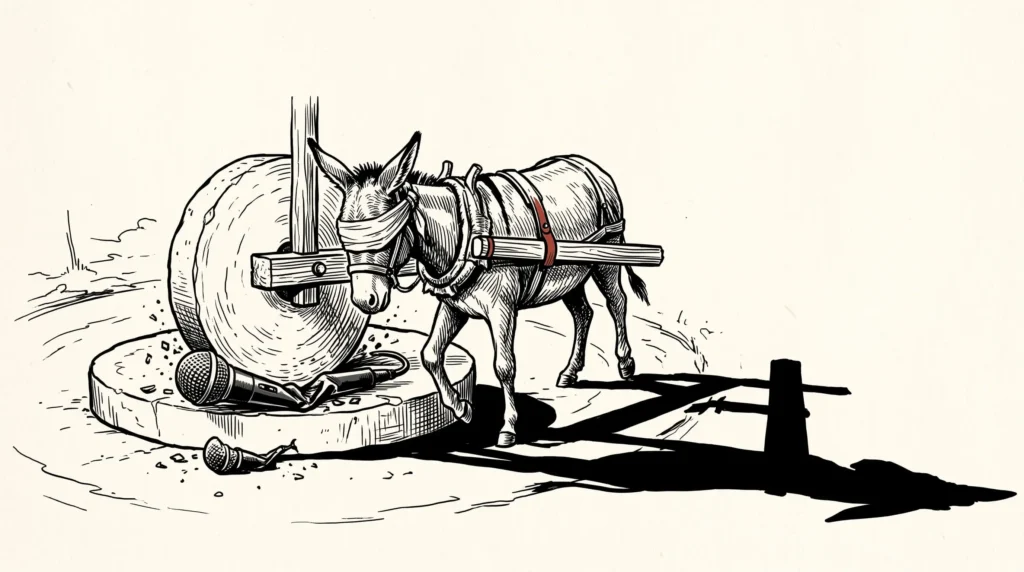
That is the “learned helplessness” and “sense of deprivation” of ordinary people brought about by the county Brahmins.
The marriage barrier has already made many young people feel severely frustrated. No matter what strong love you have, and no matter how talented you are, as long as you are not within the system, it is a direct no.
Parents would rather jump off a building to force you, and they will never agree to such a marriage. This kind of tragedy is very common.
This attitude frustrates the hearts of many young people, and they see the invisible barriers and class walls in social reality.
The “sense of deprivation” comes from the arrogance of the county Brahmins. They actually look down on people outside the circle, and people outside the circle will intensify the sense of opposition.
They realize that no matter how hard you try, you cannot break through that invisible barrier. This emotion, in the end, is only anger and helplessness.
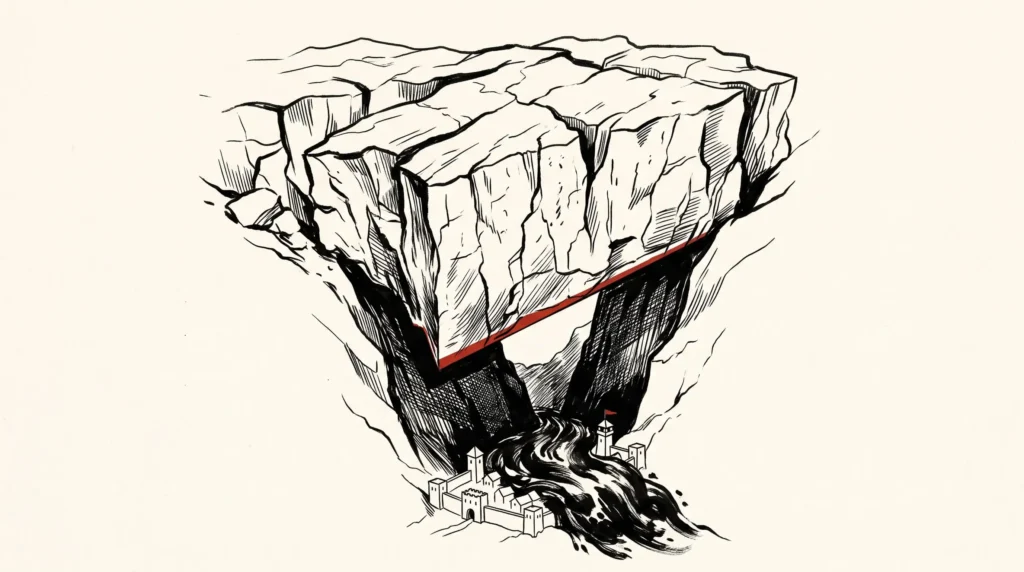
When dozens of families can monopolize the resources of a county, when the county Brahmin group uses intricate relationships to occupy the vast majority of the benefits of a county, the small counties can only gradually sink, become a pool of stagnant water, and gradually become a “cold city” with only the elderly and those with connections.
More fatally, when far away from a fair market mechanism, that kind of ideological regression can even be passed down from generation to generation by the Brahmin group, allowing a place to be completely locked and solidified ideologically.
·END·
Discover more from 自由档案馆
Subscribe to get the latest posts sent to your email.