In 1948, George Orwell reversed the last two digits of the year and wrote that prophetic novel. More than thirty years later, a German director looked back at the story of East Berlin with his camera and named the film “The Lives of Others.”
There is a line in the film that later became a thorn in the heart of the nation: “We are everywhere.”
The speaker is Stasi, the full name of which is the Ministry of State Security of the German Democratic Republic. The motto of this institution is a Latin phrase, which, when translated, carries a chilling pride. In a country with only 18 million people, they established the world’s largest secret police system, with 91,000 official employees, and one out of every six and a half citizens was their informant.
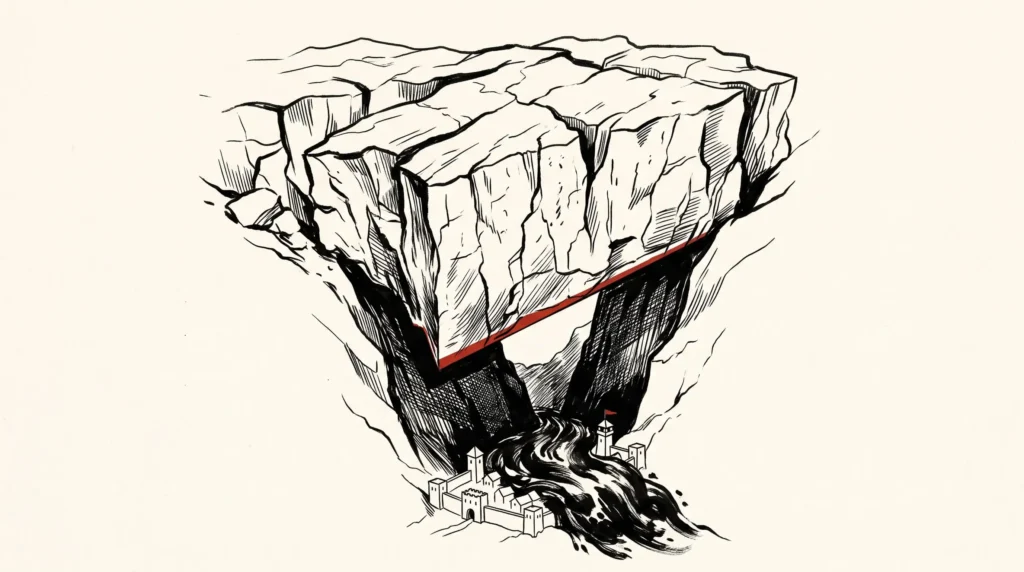
This is not simple surveillance. This is a dismemberment surgery of trust.
What can you hide?
In East Germany in 1984, an environmentalist named Beretes lived a strange life.
His studies were inexplicably interrupted, and his academic efforts never received a response. He could not travel abroad. He did not get any promotion. No one told him why, and the whole country was like a deep well, and he was silently pressed to the bottom of the well.
What he didn’t know was that the one who designed all this for him was not some distant bureaucrat, but the people around him. His acquaintances, his friends, and perhaps even closer people.
Years later, when he was finally allowed to open his top-secret files, those names jumped out one by one like cold bullets. Wives monitored husbands, students monitored professors, children monitored parents, and lovers monitored lovers. They all had a unified code name, “Informal Collaborators.”
The Stasi had a creed that was not written into the motto but was carved into the bone marrow: Those who are not friends are against us; those who are against us are enemies; and enemies will be eliminated.
Under such logic, you are either a friend or an enemy. But the problem is that you cannot prove that you are a friend. The only way is to become the one who submits the report.
Thus, people are no longer people, but potential informants. A hug is no longer just a hug, it may be an exchange of information. The whispers on the pillow are no longer just private murmurs, they may be a “reactionary remark” recorded in the files of tomorrow.
The lead actor of the film “The Lives of Others”, Ulrich Mühe, experienced such a betrayal in reality. The person who betrayed him was his beloved wife. When the secret files were opened, the former home became a stage, and the former love became a long surveillance report.
This trauma is more lasting than any torture. Torture hurts the body, but betrayal corrodes memory. When a person recalls the past, a pair of peeping eyes suddenly appear in those warm pictures, and the person you once looked at in the candlelight may be thinking, “Should I report this sentence?”
Perhaps, the only thing you can hide is dreams.
The door of self-censorship
The most terrifying thing about totalitarian surveillance is not how many people it arrests, but how many people build a prison in their hearts for themselves.
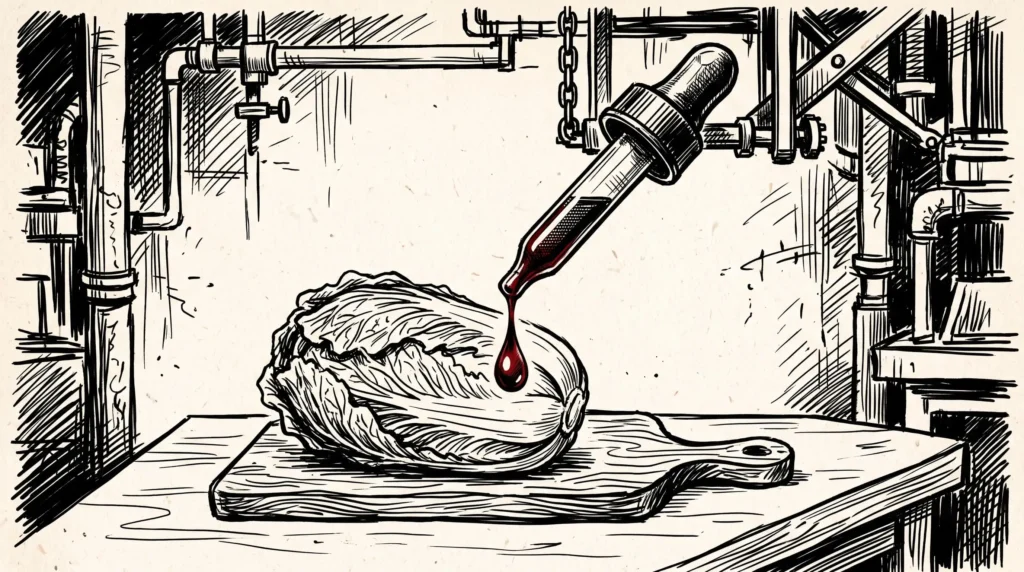
Scholars studying technological surveillance have found that when people realize that they may be under surveillance, a “super panopticon” effect appears. You don’t have to be watched, you just need to know that the eyes watching you may be everywhere. So, you start to censor yourself.
The Main Administration for Publishing of the Soviet Union was established in 1922, and its charter clearly stipulated “uniform censorship of all forms of publications.” This institution had the power of life and death: in 1925, 221 books were banned, and in 1926, 4,379 foreign periodicals, 5,276 books, and 2,674 printed matter mails were banned. In the Stalin era, censorship became even more severe, and even rare books from the 17th and 18th centuries were destroyed in large numbers due to “ideological incompatibility.”
This official censorship gradually internalized into the self-censorship of the whole people.
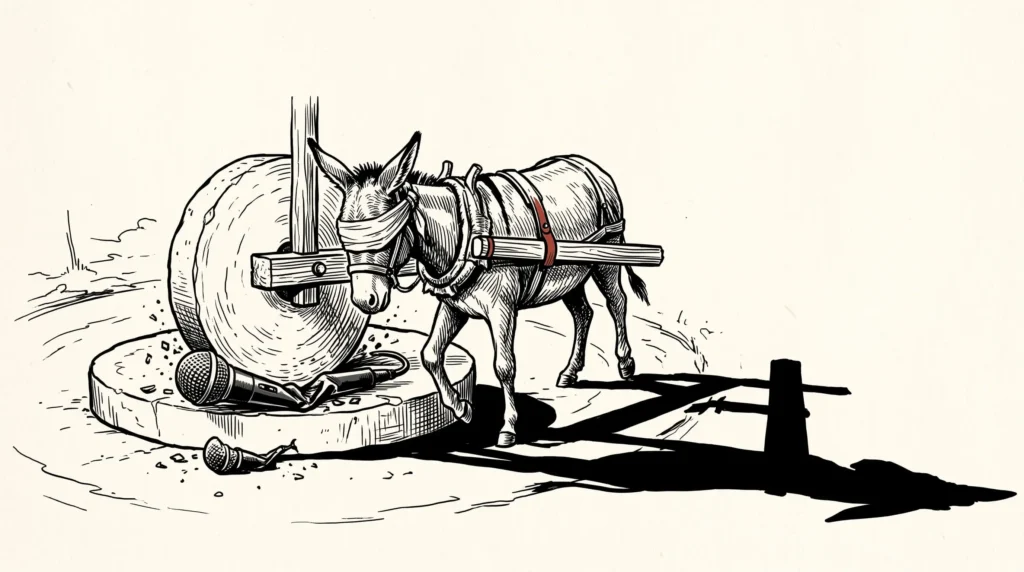
Writers no longer dare to express their thoughts truthfully, and scholars no longer dare to freely explore the truth. The Soviet writer Solzhenitsyn once described such a scene: when writers were creating, they would automatically filter out all content that might cause controversy, and only write those words that conformed to the official ideology. They knew which words were taboo, which views were dangerous, and which topics were absolutely untouchable.
After self-censorship, there is active censorship. At this time, not only do you not speak, but you also help to see if the people around you are talking nonsense.
Finally, everyone knows: what can be said and what cannot be said. The boundary is drawn there, and no one needs to point it out, everyone knows.
In those years in East Germany, people learned a way of survival. Scholars call it “niche society”, which means “niche society”. In public places, everyone wears a face. Real conversations only take place in the most private spaces, and often the curtains have to be drawn, the voices lowered, and no electronic devices are allowed. Even so, there is still a voice in my heart: will the person I trust also be an informant?
This self-censorship is more efficient than any censorship system. Because it doesn’t cost anything. It makes everyone a guard, guarding not others, but themselves.
And when everyone in a society is guarding themselves, freedom of speech dies. It is not strangled, it is suffocated. Because there are no listeners, no responses, no real communication. Every sentence can be evidence.
Humanity in the file bag
On December 4, 1989, one month after the Berlin Wall was torn down.
Black smoke billowed from the top of a government building in Erfurt, East Germany. It was the Stasi destroying the files. The fire alarmed a female doctor passing by, and she immediately realized what it meant. She rushed in and, with her bare hands, stopped the secrets from being destroyed.
Subsequently, thousands of citizens rushed into the Stasi headquarters. What they saw was mountains of shredded paper. The files that could not be burned were torn into pieces by hand, filling as many as 16,000 large burlap bags. The shredders in the building malfunctioned due to overload.
There were more files that could not be destroyed: thirty-nine million file cards, and documents that were one hundred and eighty kilometers long when lined up. Each piece of paper was a secret. Every secret concerns a person. Behind each person, there is another person’s name.
After the reunification of Germany, a special institution was established to begin restoring these files. At first, the staff could only piece together ten pages a day. At this rate, it would take four centuries to fully restore them. Later, computers were used, high technology was used, and six million euros were used, but the core problem was not technology: how should those restored secrets be faced?
In 1991, Germany passed the “Law on the Files of the Ministry of State Security of the former German Democratic Republic”, which stipulated that the public had the right to view the secret police files related to themselves. To date, 1.7 million people have submitted applications, which is equivalent to one-tenth of the population of the former East Germany.
Some people found that the informant was their own wife. Some people found that the person who ruined their lives was a long-time friend. Some people found that the colleague who patted their shoulder at the meeting and said “don’t worry” turned around and wrote a report.
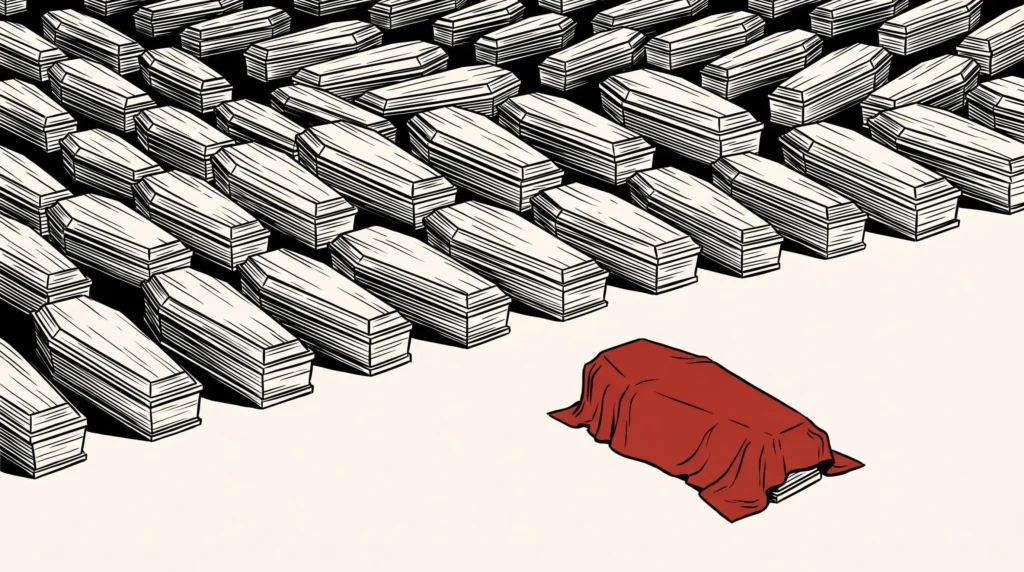
This is not the page number of a history book, this is a living tear. Many families broke up, and many friendships came to an end overnight.
But there is another phenomenon: people are more rational than expected. There was no large-scale retaliation, and no new bloodshed. Those victims held the files, looked at those names, some chose to forgive, some chose to remain silent, and some chose to turn and leave. Because they knew that the person who submitted the report might also be trapped in the same system. He may also be afraid, may also regret it in the middle of the night, or may just want his children not to be hungry.
This is not forgiving evil, but understanding the complexity of human nature.
People in the gap
So, in such a nightmare of no trust, can a person still be a person?
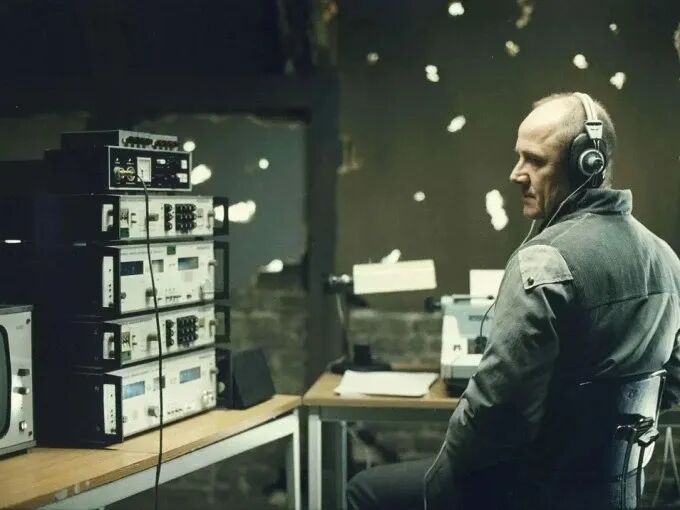
The film “The Lives of Others” tells such a story. Captain Wiesler of the Stasi police was ordered to monitor a writer. He wore headphones and listened to the sounds of the house day and night. He heard love, struggle, art, and soul.
Then he made a choice. He concealed key information, modified the report, and protected the person who should have been destroyed.
The film is fictional, but its power lies in the fact that it asks a real question: when the whole system is making you a machine, can you still choose to be a person?
Wiesler’s choice is not a victory of the system, but a victory of man. It proves one thing: No matter how strict the surveillance, no matter how common the reporting, the soft spot in a person’s heart is still likely to survive.
Scholars analyzing the history of East Germany have found that although the Stasi was ubiquitous, they never completely penetrated the “niche society”. In the private sphere, within the family, and among true friends, people still found ways to talk. Those external compliance, those ritualized expressions of loyalty, were actually just shells. Under the shell, the soul is still breathing.
This is why so many people cried when the Berlin Wall fell. It was not because they lost their country, but because they could stop acting.
Torn and glued back together
In today’s Germany, those 160,000 bags of shredded paper are still slowly being glued back together.
The staff sits at the table, holding tweezers, and pieces together the size of a fingernail. A piece of paper costs fifteen euros in labor costs. But they are doing it.
Why do it? Because those fragments contain the memory of a nation. And because only by facing that memory can we really come out.
Orwell wrote in “1984”: “Under the shady chestnut tree, I betrayed you, and you betrayed me.” This sentence is engraved in the hearts of countless people. But perhaps there is another sentence worth remembering: what we betray is not only others, but also a part of ourselves. When trust dies, the person who submits the report can never truly trust anyone. Because he also knows that if he can be bought, so can others.
The nightmare under totalitarian surveillance is not concentration camps, not torture, not those bloody things. But one day, you find that you dare not speak. You find that you see everyone as an informant. You find that even yourself may, at certain moments, have the idea: should I report first to avoid being suspected?
That call to the darkness of human nature is the deepest hell.
And the first step out of hell is to acknowledge the existence of those fragments. Then, face them.
References:
- Pamela Bernabei, “The Psychoanalytic Analysis of the Film <The Lives of Others>”, Guangming Daily, January 27, 2014. -1
- Huang Yanzhen, “Impact Assessment under Technological Surveillance – Taking the Chinese Cyber Police as an Example”, Chinese Local Autonomy, 2020. -2
- “Historical Inquiry: What kind of people were Hitler’s supporters?”, China Review, October 20, 2013. -3
- He Weifang, “The Torn Book of Evil: Twenty Years of Declassifying the Secret Police Archives of East Germany”, Weekend Pictorial, September 14, 2018. -4
- Steven Pfaff, “The Limits of Coercive Surveillance: Social and Penal Control in the German Democratic Republic”, Punishment & Society, 2001. -9
- Zheng Yifan, “The ‘Informant Culture’ of the Soviet Union”, Tongzhou Gongjin, No. 7, 2015. -10
Discover more from 自由档案馆
Subscribe to get the latest posts sent to your email.