

In the comments of articles discussing cultural tourism these days, some fans mentioned elderly tour groups, and I happened to recall the news I just saw: the Ministry of Human Resources and Social Security has increased rural pensions by another 20 yuan, and increased the retirement pension by 2%. It's quite funny to think about!
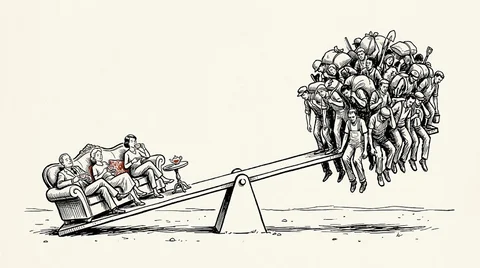
The "killing line" of the United States is far away from us, but the gap in old-age care between urban and rural areas is very close to us! If the gap in pensions between urban and rural areas is not broken, contradictions will erupt sooner or later!
The current gap in old-age care between urban and rural areas has become so large that it is somewhat psychologically uncomfortable. The average monthly pension for retired urban workers has soared to more than 3,300 yuan, and for government and public institutions, it has even reached over 6,000 yuan. The money for a cup of coffee and a newspaper may be more than the monthly pension of rural elderly.
And for rural elderly, the national basic pension is only 143 yuan, and in most provinces, it is only around two hundred yuan. In some places in Yunnan and Guizhou, it even fails to meet the national standard. This is not old-age security, it clearly divides people into different classes!
A group of well-fed retired urban people, going all over the country, either releasing rice or releasing mineral water, either competing in road races or disturbing the public with square dancing.
While some are still struggling to make a living, others are wasting food and affecting society. They have contributed a lifetime to the country, so why should their later lives be so different?
Some people say "more contributions, more benefits, longer contributions, more benefits", which sounds reasonable,
But looking back at history, in the early days of reform and opening up, farmers relied on the "scissors gap" to accumulate 1.2 trillion yuan in capital for industry. That was 1.2 trillion yuan 40 years ago, which can be said to be the foundation of the country. Now, the food and water that urban elderly eat and drink are from the water channels and reservoirs built by rural compulsory labor back then. And in recent years, urban expansion, more than 30% of the land transfer fees come from the collective land acquisition in rural areas.
The current rural elderly, when they were young, could only face the loess and turn their backs to the sky, planting food to feed urban people, and paying public grain to support industrialization. Now that they are old and can't work, they can't even guarantee basic food and clothing.
The current situation is that the unfairness was created by a special historical period 30 years ago. 78-year-old Zhang Guifang from Anhui receives a monthly pension of 200 yuan. She earns less than 30 yuan a day selling vegetables. The 20 yuan increase in her pension is only enough for her to buy a few more catties of potatoes or a box of painkillers. However, facing the rising prices of pork and medicine year after year, this money is not even enough to fill the gaps between her teeth.
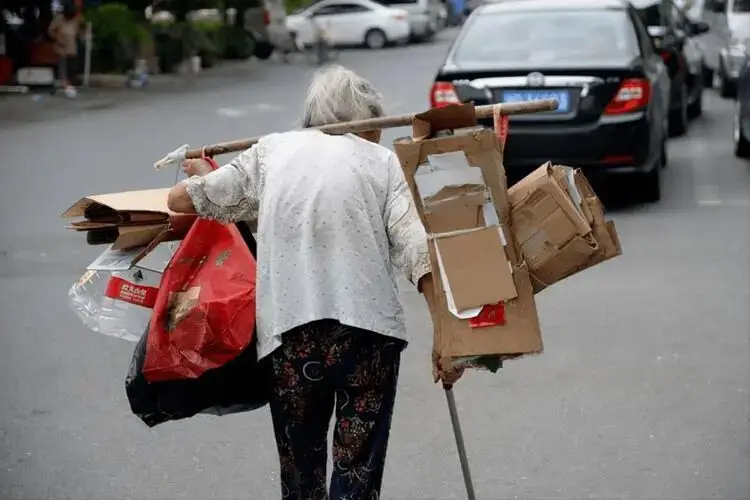
In contrast, the pensions of retired urban elderly have been rising year after year, from 2005 to 2025, for more than 20 years. Some have increased from more than two thousand to more than four thousand, and their lives are getting better and better.
What's even more heartbreaking is that the gap is still widening. The basic pension for urban and rural residents in Shanghai has risen to 1,555 yuan, and in Beijing it is close to a thousand yuan. However, the rural elderly in Yunnan and Guizhou are still receiving the minimum standard of 143 yuan, with a difference of more than 10 times between regions; looking at the urban-rural comparison again, the pension for urban workers is more than 16 times that of rural elderly, and the difference for retired personnel in government and public institutions is even 30 times.
This is not a numbers game, it is a living reality: urban elderly can travel freely and enjoy medical insurance reimbursement, while rural elderly have to work in the fields with a hoe at the age of seventy or eighty for a few hundred yuan a month, enduring minor illnesses and waiting for death for major illnesses.
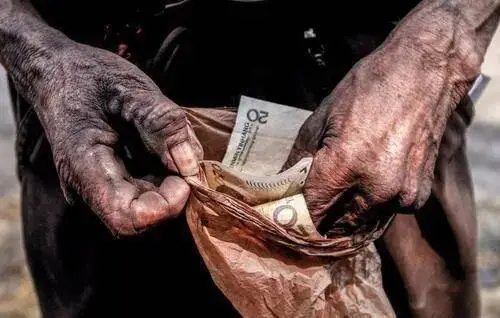
Some people say that the gap in living standards between urban and rural areas is large. I want to curse when I hear this: Isn't the salt in the city 2 yuan a bag? Isn't mineral water 2 yuan a bottle? Isn't rice more than 2 yuan a catty? They all say they are maintaining the minimum living standard, what are they talking about the difference in living standards between urban and rural areas? They want to live a good life and also want to set up a memorial archway?
In the view of the vast majority of Chinese people today, snow leopards are as cute as kittens; when they hear about an aging society, they think of a group of uncles and aunts dancing in the square or playing chess and tai chi in the park.
However, in today's countryside, 43% of people over 65 are still doing farm work, and 28% are purely to survive. When the rural elderly watch their urban peers enjoying their retirement, and then touch their own meager pension passbooks, can they feel balanced? This imbalance accumulates to a certain extent. In the past, it was due to information blockade, but now in the internet era, these gaps are all in front of us, and the outbreak of contradictions is only a matter of time!
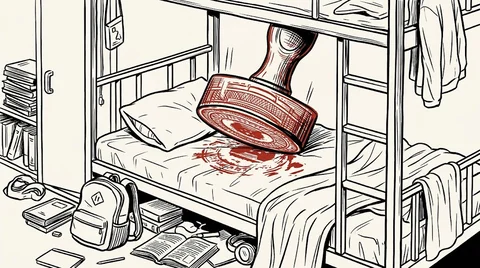
Some people defend that rural old-age insurance is "voluntary participation", and the elderly choose the lowest grade to pay, and the treatment is naturally low. But this is purely talking without any pain! Did everyone not want to go to work in the city and buy social insurance back then? No, they didn't have the opportunity. The household registration system restricted people to death. The blogger had to get a floating population certificate when he graduated from high school in 2004 and went to work in the coastal area during the summer vacation.
For our generation born in the 80s, it is barely acceptable to say "more contributions, more benefits, longer contributions, more benefits". The urban and rural circulation is open, and it is easy to work in the city. As long as you are not excessively lazy, find a job, earn money for food and pay social insurance, at least everyone is on the same starting line.
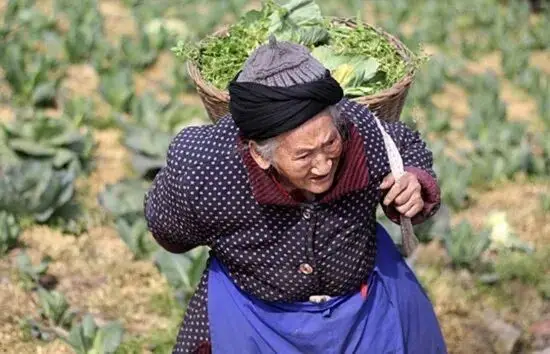
The current rural elderly couldn't go out back then, and could only make a living by farming for a lifetime. They couldn't earn much money throughout the year. Supporting their children to go to school and building houses had already emptied their savings. How could they have extra money to pay high insurance premiums? Most rural elderly can only choose the lowest grade of 300 yuan or 500 yuan per year, and it is not bad to pay for 15 years. Their personal accounts only accumulate a few thousand yuan in total, and they can only receive a personal account pension of twenty or thirty yuan per month after retirement.
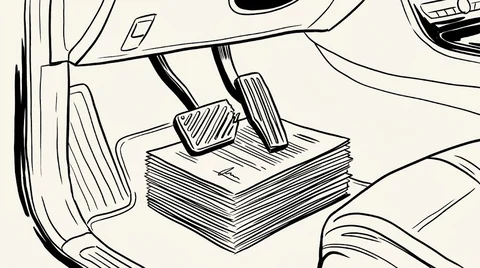
And what about urban workers? The unit pays 16%, and the individual pays 8%. The monthly payment may be more than the rural elderly pay in a year, and the personal account can accumulate tens of thousands of yuan after 15 years. This is not a question of "voluntary or not", but a question of "can they afford to pay". Attributing this unfairness caused by a special historical period to individual choices is purely a matter of changing the concept!
Some people also say that "the state is gradually increasing rural pensions", from the initial 55 yuan to the current 143 yuan, which has increased eight times. But can this increase keep up with the rise in prices? Can it keep up with the speed of the widening gap between urban and rural areas? The purchasing power of 143 yuan in 2026 is not as good as 55 yuan a dozen years ago. This "symbolic increase" is more like a perfunctory attitude towards the rural elderly than a policy temperature.
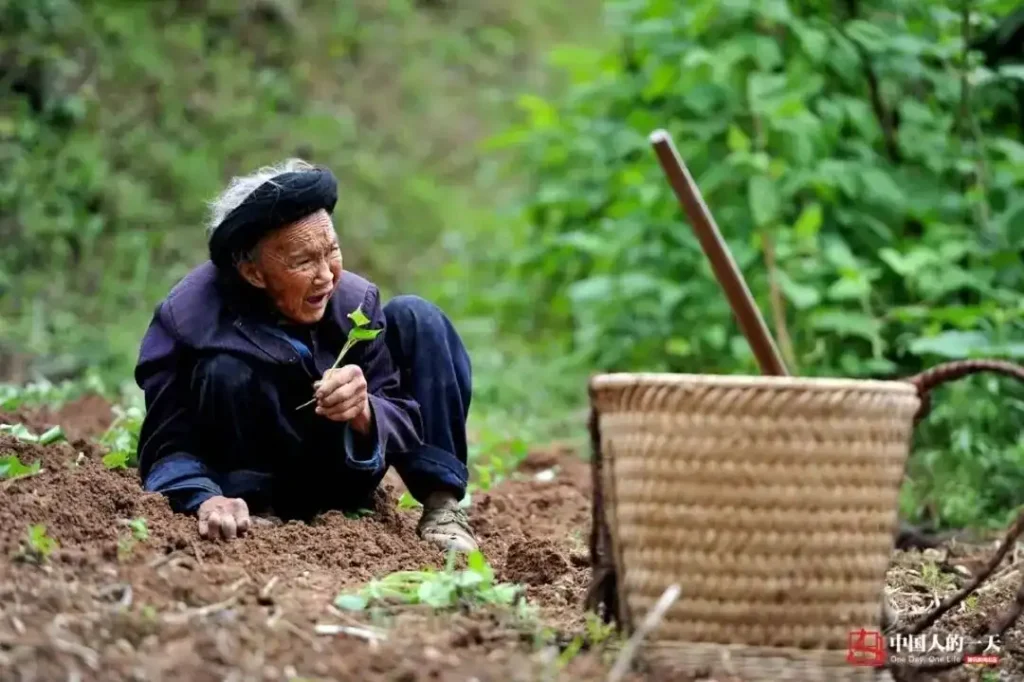
Pension fairness is the bottom line of social fairness. The rural elderly are not a burden, but the founders of national development; what they want is not alms, but the deserved return. If you randomly catch a "big tiger" or a "small fly" in the news, they are all worth hundreds of millions or billions. If you catch a few more of these corrupt officials, the pensions of the rural elderly will be enough to double several times.
The nine sons of the dragon are not all the same height. In a family, even the most biased parents rarely see that they favor one child and ignore the other children's food and clothing. They are all flesh and blood from the parents. Some children are obedient and well-behaved, and it is normal for parents to favor them. Now this gap clearly divides the urban and rural elderly into different classes, which is contrary to the purpose of a communist society. The system is set by people, this is naked human disaster!
Of course, to be fair, compared to other countries on this planet, we have already done a very good job and have not abandoned anyone. But from an internal perspective, the current gap and contradictions are also real.
Don't wait for the "contradictions to erupt" before remembering to solve the problem! The gap in old-age care between urban and rural areas was not formed in a day, but we must start to narrow it from now on.
Either let rural pensions keep up with the pace of economic development, or make the system design more fair, and no longer let the rural elderly feel disheartened.
Otherwise, as more and more rural elderly watch the comfortable lives of urban people and compare them to their own difficult old age, this accumulated dissatisfaction will sooner or later turn into irreconcilable contradictions. By then, it will be too late to make up for it!
END