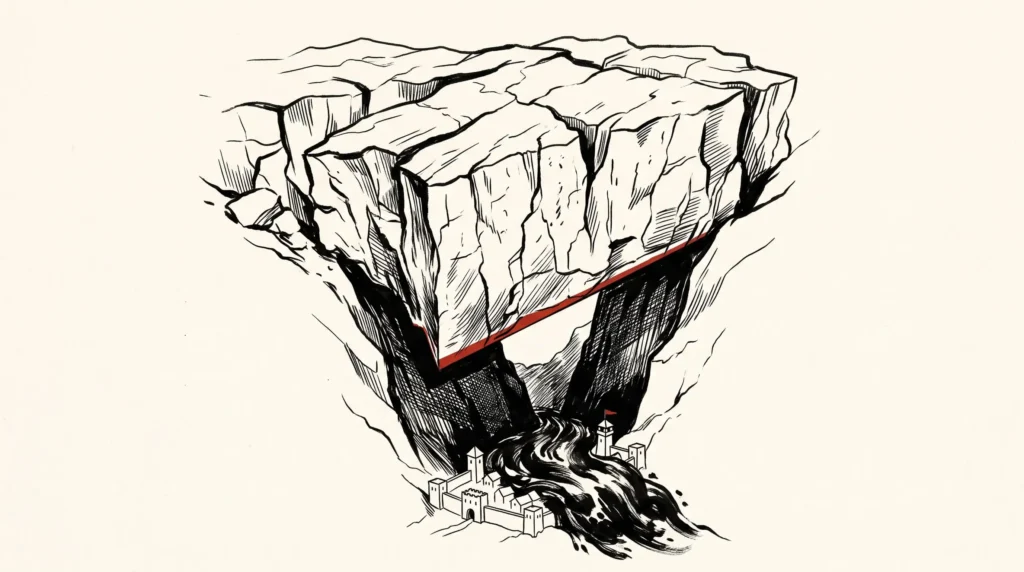

Reusable rockets are not far off
Preliminary statement: This article does not contain any sarcasm or schadenfreude, please understand it literally.
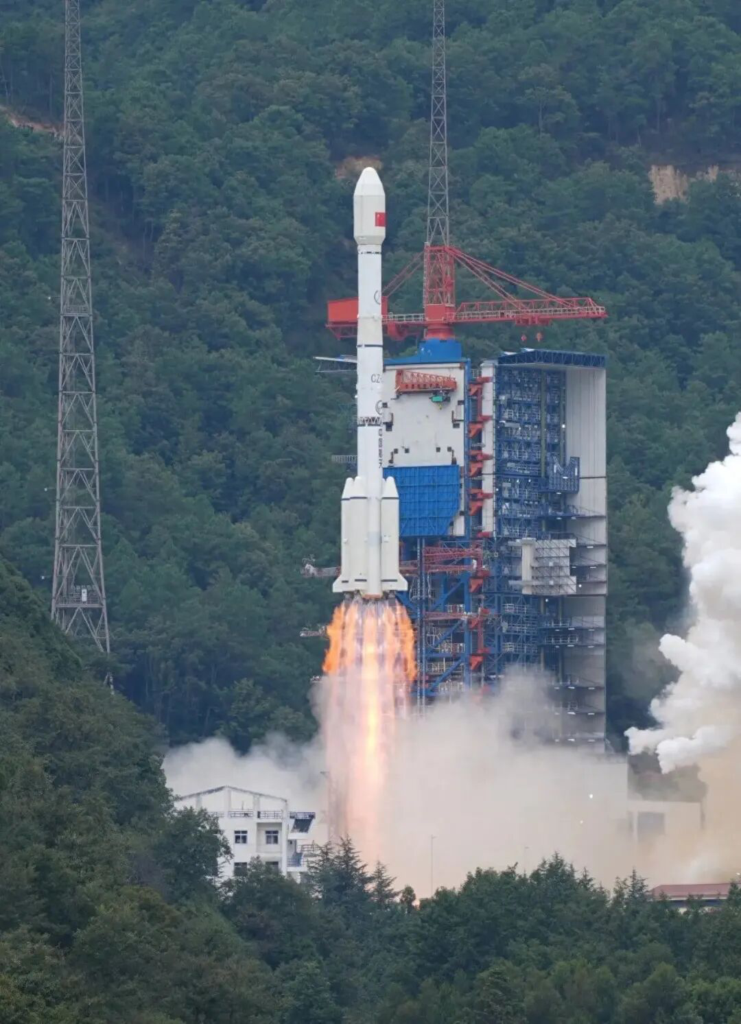
In the early morning of January 17th, the Long March 3B rocket launched a space probe satellite, but unfortunately the satellite failed to enter the predetermined orbit and the launch was unsuccessful.

Photos of the Long March 3B rocket’s previous launches
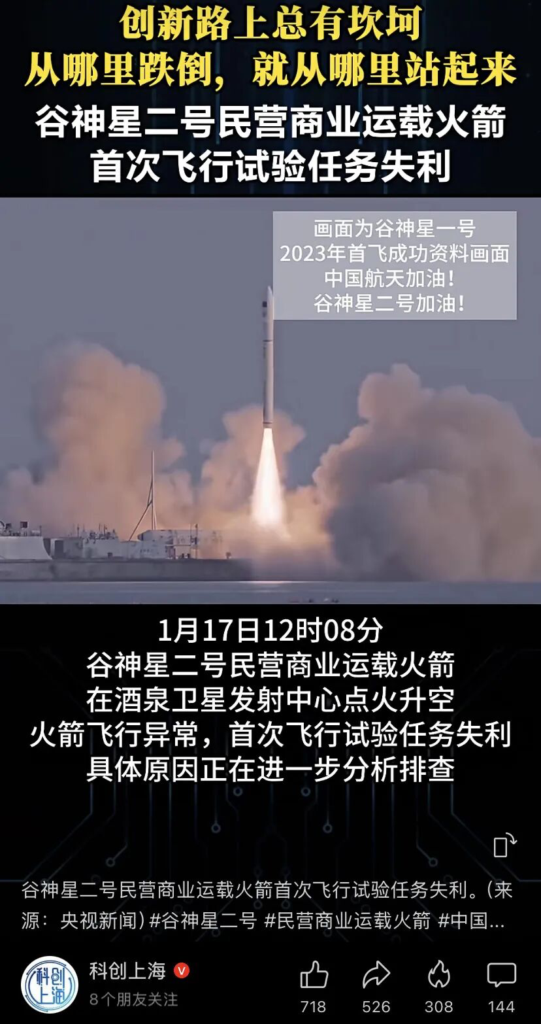
On the same day, January 17th, China’s private commercial space company, the Ceres-2 carrier rocket, conducted a flight test. Unfortunately, the rocket’s flight was abnormal and failed to achieve the test objective, resulting in failure.
Two rockets exploded in one day. In my memory, this is the first time in China’s space history.
Rocket launch failures, explosions, or crashes were very serious matters in the past, and accountability procedures would be initiated immediately. But now, they are just ordinary, unremarkable news.
Even, my first reaction to these two news items was:
Wow, that’s impressive! Congratulations!
This is not gloating. Rocket launch failures are not something to be congratulated, but the new changes in the space field reflected by the two launch failures in one day are still very encouraging.
New changes in the space field one:
The number of rocket and satellite launches has exploded
Aerospace is an industrial category, and as an industry, it will follow the basic laws of industry. Product updates and iterations will always require trial and error. When rocket launches increase, failures are inevitable.
Two rocket launch failures in one day do not mean that China’s aerospace is getting worse, but because the number of rocket and satellite launches has exploded in recent years. As the total number increases, the number of failure cases will inevitably increase accordingly, which is why the coincidence of two rocket failures in one day occurred.
A simple mathematical principle: if only one rocket is launched per month, it is naturally impossible to have two failures in one day. If eight rockets are launched per month, it is possible to encounter a situation where two rockets fail to launch on the same day. Yes, eight per month, China’s aerospace industry needs to launch a rocket into space every four days on average.
According to statistics, China’s aerospace industry launched a total of 92 rockets in 2025, accounting for about 30% of the global total of 329 launches. (The model of the Long March rocket family in the picture is from the Zhuhai Space Center)
Last year, 90 out of these 92 launches were successful, with 2 failures, which did not happen on the same day. This year, unfortunately, there were 2 launch failures shortly after the beginning of the year, and they happened on the same day.
It can be predicted that the number of rocket launches in China in 2026 will definitely exceed 100, and the proportion of global launches will continue to increase. As a price, the number of rocket launch failures will likely exceed that of 2025.
New changes in the space field two:
China’s commercial space is about to mature
These new rocket launch demands mainly come from the tests and applications of private commercial space companies, including those in the exploration and verification stage, as well as those that are technically mature and starting to make money.
In the 92 space launches in China last year, private commercial space companies accounted for 16 launches, including 5 by CAS Space, 6 by Galactic Energy (1 failure), 3 by LandSpace (1 failure), 1 by Space Pioneer, and 1 by OrienSpace. (I know the reaction of the Three-Body fans when they see these names, and so do I, I won’t elaborate today)
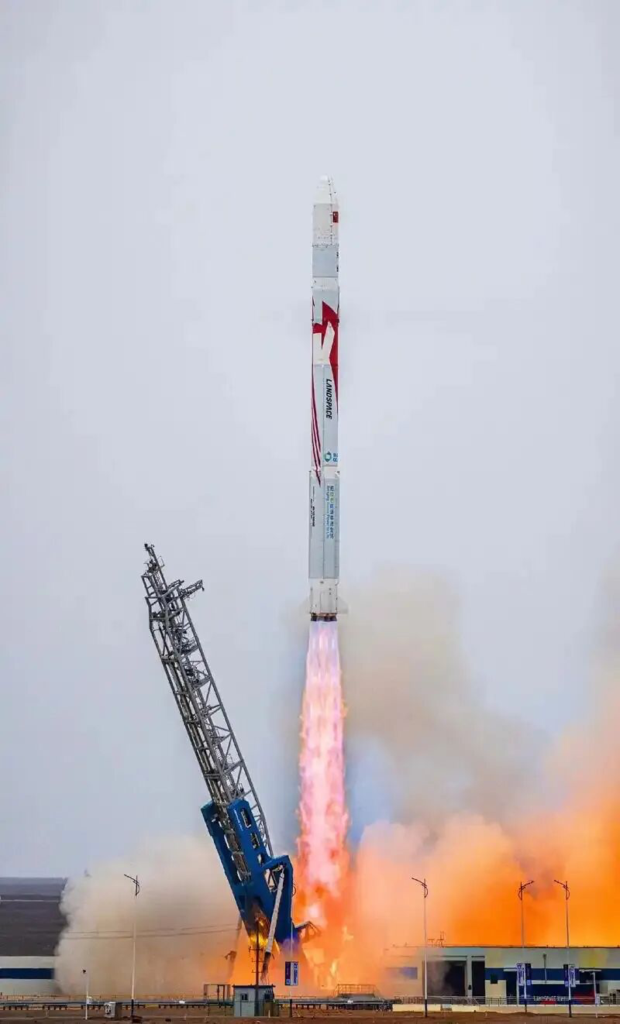
The launch of LandSpace’s Zhuque-2 was successful
Private commercial space companies usually test new rocket technology routes, and the failure rate in the testing stage is naturally much higher than that of mature technology rockets in regular service. Fortunately, these failures are not just a waste of money and fireworks. Several of the top private commercial space companies have accumulated a lot of experience and lessons from the tests.
In 2026, China’s private commercial space should gradually enter the stage of technological maturity, gradually moving from experimental exploration to commercial practice and application, and starting to earn some dollars. (Note by Dongliang: This does not constitute investment advice)
There are different versions of predictions on which company can first overcome the most difficult exploration stage, and I do not have the professional judgment ability. But almost all predictions are absolutely certain that China’s private commercial space will definitely produce several outstanding companies in the next few years.
As a space exploration enthusiast, I don’t care which private commercial space company can have the last laugh, and I am happy to see each one succeed. Because private rockets are the real opportunity for ordinary people like us to enter space in this lifetime.
New changes in the space field three:
The national pride associated with space launches has faded
As a person born in the late 1980s, I have a very deep memory of the successful launch of the Shenzhou 5 spacecraft in 2003. The success of China’s first manned spaceflight at that time triggered a lasting wave of national pride.
Yang Liwei successfully returned on Shenzhou 5
Since then, the successful launches of China’s space station and lunar exploration satellites have also, to some extent, replicated this propaganda approach.
The progress of space technology is interpreted as the most direct example of the rise of a great power and national pride, which is a formula that every Chinese person is very familiar with.
Associated with this, for a long time, the mistakes and failures of the Chinese space system have been kept secret and rarely entered the public eye. Because it is tied to national pride, it is subjectively difficult to accept the existence of failure. Rockets explode, pride shatters, which is absolutely unacceptable.
However, in the past 10 years, as China’s space technology has developed to a considerable height, a series of brilliant achievements have also been reported, and objectively speaking, there has indeed been some diminishing marginal utility. When astronauts enter space again, whether it’s five or ten, the public can’t remember the names and won’t be very excited. Unless it’s a manned lunar landing or exploring Mars, it may trigger a new wave of national pride.
The national pride associated with space launches has significantly faded in recent years.
Correspondingly, the public’s negative perception of rocket launch failures has also weakened a lot. Rockets, there are plenty of them anyway, so let them explode, it’s no big deal.
Space X Starship spacecraft’s 8th launch failure
Of course, a more critical factor is to thank Space X, and Musk, who have been educating the public in the most direct and spectacular way with a series of explosions over the years:
The space industry grows in failure and explosion. Don’t be afraid, and don’t pay too much attention. Just make progress each time.
This change in public perception has also largely contributed to China’s loosening of restrictions on private commercial space and the current vigorous promotion:
The negative impact of rocket launch failures is controllable, so it’s no big deal to let private enterprises try a few more times, let’s get it started!
Reality shows that two rockets exploded in one day, and indeed, it didn’t cause any waves, right?
This is the mentality of a society gradually moving towards maturity.
China’s aerospace industry has entered a peak period of launch failures, so is the era of cheap and reusable rockets far away?
The future is promising!
Discover more from 自由档案馆
Subscribe to get the latest posts sent to your email.