

A Letter of Appeal to the Supreme People's Court, the Supreme People's Procuratorate, and the Ministry of Public Security:
Esteemed Leaders of the Supreme People's Court, the Supreme People's Procuratorate, and the Ministry of Public Security:
I am Dai Man, born in 1988, a generation that grew up during the development of the rule of law in China. I once firmly believed that the law is the last line of defense for fairness and justice, and the highest judicial organs are the ultimate guardians of this line of defense. However, today, as the wife of Wu Shaowei, the defendant in the "Shanghai Baoshan Cross-Provincial Arrest of Wu Shaowei Case," I must write this letter with immense sorrow and confusion.
1. The "Deep-Sea Fishing"-style Law Enforcement Destroys Enterprises' Faith in the Rule of Law
My husband, Wu Shaowei, legally operates the company "Hengwan Construction" in Beijing. His business involves helping students pass the national "Registered Safety Engineer" exam through training. The company provides genuine course services, signs formal training agreements, and students pass the exam by attending classes and studying. How can this be considered "fraud"?
However, on June 29, 2023, the Public Security Bureau of Baoshan District, Shanghai, crossed thousands of miles to Beijing and staged a "sweep"-style law enforcement operation. Subsequently, Prosecutor Zhu Jialin accepted everything, and Judge Zhang Guobin sentenced my husband to twelve years in prison in the first instance.
This series of operations is called a typical "deep-sea fishing" by legal professionals. The crime scene, the place where the results occurred, and the company's operating location are all in Beijing. No one reported the case before it happened. Where does the jurisdiction of Baoshan District, Shanghai, come from? What we see is not law enforcement according to the law, but a standardized "reporting template" provided to create a "jurisdictional connection point," and the absurdity of even filling in the "address of the case-handling agency" as the "victim's" address.
May I ask: Who gave the power to create jurisdiction artificially and abuse criminal means to intervene in normal economic disputes? Is this "law enforcement according to the law" or "making laws for the sake of the case"?
2. The Unity of "Three Effects" Should Not Be Based on Framing the Innocent
Judicial organs often emphasize the need to achieve the unity of "political effect, social effect, and legal effect." But I implore the leaders to think deeply:
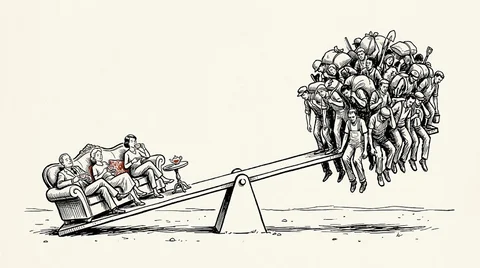
1. Is the real "social effect" to create thousands of opposing faces? An entrepreneur who originally operated in accordance with the law, created jobs, and served students was framed and convicted. How will his employees, students, family members, and all entrepreneurs who hear about this case view our judiciary? Isn't this creating social opposition with our own hands and burying hidden dangers for future instability?
2. Is the real "source governance" not to severely punish the culprits who create wrongful cases? If the country is still troubled by the phenomenon of "going to Beijing to appeal," then what should be done most is to strike hard and eliminate "using criminal charges to replace debt," "profit-seeking law enforcement," and "using criminal means to interfere in economic disputes" from the source? Not punishing the departments that create wrongful cases is the greatest injustice to law-abiding citizens.
3. When "presumption of innocence" becomes a mere formality, where does the basis for judicial justice lie?
In this case, all accusations are based on serious procedural violations:
1. The investigation agency forged the signature of the so-called "victim" (there is already judicial appraisal as evidence);
2. Systematically concealing evidence of innocence (refusing to question the back-end teaching staff, refusing to seize the work phone containing a large number of service records);
3. The prosecutor copied and pasted the interrogation records, completely abandoning the review responsibility;
4. The court of first instance ignored the defense's application, and the trial procedure was idle;
5. The court of second instance seriously violated the statutory procedures and, without proper reason, refused to respond to the defense lawyers' multiple applications for evidence collection beyond the time limit;
6. The Shanghai High Court is suspected of illegally making a jurisdictional decision, violating the principles and procedural requirements of jurisdiction;
The "presumption of innocence" principle explicitly stipulated in the "Criminal Procedure Law" has been transformed in practice into the gangster logic of "if you cannot 100% prove him innocent, I will sentence him guilty"!
May I ask: Which law gives the Shanghai Baoshan judicial organs the confidence? If even core procedural documents like the "Notice of Rights and Obligations of Victims" can be forged, then what exactly is China's Criminal Procedure Law in the eyes of individual law enforcers?
4. My Mission: If Anti-Corruption is Destiny, I am Willing to Accept It
I, an ordinary citizen, a wife, a mother, stand here today, unafraid. I will never let go of the Shanghai Baoshan judicial organs' suspected abuse of power, dereliction of duty, and procedural violations in this case. I will use all legal means to clear my husband's name and sound the alarm for such phenomena.
If, as a citizen, with my own strength, to promote the correction of a typical wrongful case, and then deter those who abuse power and violate the law, is the mission given to me by the times—then, I accept this destiny!
I implore the highest judicial organs to truly come down and listen to this desperate cry from the bottom. Immediately investigate the "Wu Shaowei Case," send personnel to directly investigate, uncover the black curtain of procedural violations by the Shanghai Baoshan judicial organs in this case, and let this case be tried back on the track of the rule of law. Hengwan Company in Beijing is the real-life version of "Wanhai Group" in "In the Name of the Law."
This is not only to save my family, but also to save the confidence of countless entrepreneurs in the rule of law business environment, and to safeguard the sacred authority of the national judiciary in the hearts of hundreds of millions of people!
I believe that the dignity of the law lies not in being unquestionable, but in correcting mistakes when they occur.
Sincerely!
Reflector: Dai Man
January 12, 2026