

“Power leads to corruption, and absolute power leads to absolute corruption.” Countless bloody facts in the history of human civilization have written footnotes to this maxim. Playing with power politics has never been a simple case of personal corruption, but rather the greatest evil that can shake the foundation of a country and trample on human nature.
How does power become the “worst evil”?
In 410 AD, the Visigoths captured the city of Rome. When the heart of this millennium-old empire was crushed by barbarian iron hooves, Saint Jerome lamented in the monastery of Bethlehem: “The light that illuminates the world has been extinguished.” But the decline of Rome was not a matter of a single day. As early as the heyday of the empire, the historian Tacitus sharply pointed out: “The more deeply the desire for power is rooted in people's hearts, the more it craves to be satisfied.”
Power should have been the guardian of public well-being, but it has continuously staged the tragedy of alienation in human history. The ancient Greek philosopher Plato once dreamed of an ideal country ruled by a “philosopher-king,” but in his later years, he had to admit in “The Laws”: “Absolute power is a fatal test for anyone.” His student Aristotle more directly asserted: “Once a person departs from law and justice, he is the worst animal.”
This alienation is equally shocking in Chinese history. The late Ming Dynasty thinker Huang Zongxi lamented in “Mingyi Daifang Lu”: “Later rulers are not like this, thinking that the power of the world's interests and harms all comes from me, I take all the interests of the world for myself, and I take all the harms of the world for others, and it is also permissible.” When the emperor regards the world as private property and the officials become domestic slaves, power degenerates from public responsibility to a tool of private desires.
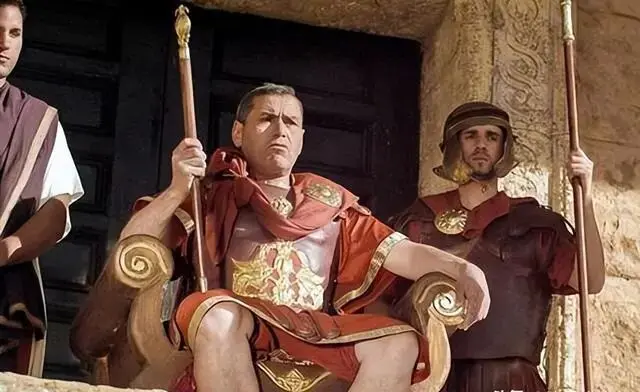
The French thinker Montesquieu's warning transcends time and space: “Everyone with power is prone to abuse power, this is an unchanging experience of all ages.” From the tyrant Nero of Rome to the Reign of Terror during the French Revolution, from Wei Zhongxian of the Ming Dynasty to the dictators of the contemporary era, history has repeatedly proved: Unrestricted power is bound to be corrupt, and absolute power is absolutely corrupt.
When the national public instrument becomes a private instrument
In 1933, the German Reichstag caught fire. Hitler took this opportunity to pass the “Enabling Act,” completing the “legal” transition from democracy to dictatorship. The political philosopher Hannah Arendt later analyzed in “The Origins of Totalitarianism”: “The essence of totalitarian rule lies in transforming all political institutions into megaphones for conveying the leader's will.”
This process of power privatization often wears the cloak of “national interest.” The famous saying of Lord Acton, a British historian, still resounds: “Power leads to corruption, and absolute power leads to absolute corruption.” He further elaborated: “History is not driven by moral forces, but by the growing awareness of power.”
In the long scroll of Chinese history, the rise and fall of the Qin Dynasty provides an excellent case. Sima Qian recorded in “Records of the Grand Historian” that Qin Shi Huang “was resolute, fierce, and deep, and everything was decided by law,” concentrating the power of the world in his hands through severe punishments and strict laws. The result was that “half of the people were punished on the road, and the dead were piled up in the market every day.” The powerful Qin Empire collapsed in just 15 years, which was the inevitable result of extreme power privatization.
In the long corridor of Chinese history, the party strife at the end of the Ming Dynasty can also be regarded as a typical example of the harm of power politics to the country and the people. Starting from the Wanli period, the Donglin Party and the Qi, Chu, and Zhe parties fought for control of the cabinet, turning the court into an arena. What they debated was no longer the strategy of governing the country, but how to fabricate charges to suppress dissidents.
During the drought in Shaanxi, local officials, in order to cater to the needs of the factions in the capital, not only did not reduce or exempt taxes, but instead increased exploitation to serve as “political donations,” leading to the rise of refugees. The memorials of the time recorded: “There were people who ate their own children, and there were people who hanged themselves in their homes,” while the officials in the capital were still arguing over who could enter the cabinet to assist in the government.
The abuse of power in modern society, although less violent than in ancient times, has become more concealed. The American scholar David Cotton recorded the details of the corruption of the Marcos regime in the Philippines in the 1980s in “The Trap of Power”: The Marcos couple, through amending customs regulations, manipulating land approvals, and other means, continuously transferred national resources into private accounts. Imelda, his wife, had a collection of more than three thousand pairs of brand-name shoes in her shoe cabinet, while one-third of the population in the Philippines was below the hunger line.
What is even more chilling is that when a typhoon caused floods, the Marcos government hoarded international aid supplies as a bargaining chip for political support, resulting in the deaths of tens of thousands of victims who did not receive assistance.
The contemporary political scientist Francis Fukuyama pointed out in “The Origins of Political Order”: “When a country cannot restrain the autonomous and capable state power, good governance is impossible.” Once power becomes the private instrument of those in power, public interest becomes the first sacrifice.
How power privatization erodes the foundation of society
In 1788, the French Controller-General of Finances, Necker, reported that the country was on the verge of bankruptcy. At this time, the Palace of Versailles was still singing and dancing every night, unaware that the great revolution was about to stir up a huge wave.
The greatest harm of power privatization is its systematic destruction of social trust. The sociologist Max Weber once distinguished between instrumental rationality and value rationality, pointing out that when power loses its value orientation, the moral foundation of the entire society will collapse.
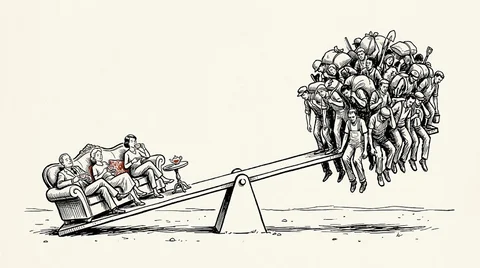
This erosion is particularly evident in the field of people's livelihood. When those in power regard public resources as private property, it inevitably leads to serious inequality in wealth distribution. The economist Amartya Sen discovered through research that large-scale famines have almost never occurred in democratic countries, because free media and electoral pressure force the government to respond to the basic needs of the people.
The more profound impact of power privatization is the stifling of the spirit of innovation. The historian Joel Mokyr pointed out in “The Culture of Growth” that an open social order is a breeding ground for technological innovation. When power monopolizes the market of ideas, the creativity of society will wither. From Galileo's forced repentance to the rampant Lysenkoism in the Soviet Union, they are all bloody lessons of power suppressing thought.
When power lacks effective constraints, the private desires in human nature will break through the dams of morality and law like a flood. During the Western Jin Dynasty, Shi Chong and Wang Kai competed in wealth, using candles as firewood and brocade to pave the road. Their wealth did not come from business operations, but from the “robbery of merchants” when they served as the governor of Jingzhou. They relied on their military and political power to openly plunder the property of passing merchants. This practice of turning public power into a tool for private gain is the core essence of power politics.
The damage of power politics to national credit is often irreversible. Stefan Zweig recorded the process of the decline of the Austro-Hungarian Empire in “The World of Yesterday”: When the ruling class constantly deceived the people and broke promises in order to compete for power, the people's trust in the government gradually collapsed. Finally, in the gunfire of World War I, this once vast empire disintegrated.
The consequences of this collapse of trust are more terrifying than economic recession, because it will undermine social cohesion and plunge the country into a state of chaos where “everyone is for themselves.” As George Bernard Shaw said: “All worldly power will make people scoundrels.” When those in power become scoundrels, the moral bottom line of the entire society will be completely lost.
The root cause of the prevalence of power privatization
The reason why power politics can repeatedly appear in human history is not simply individual moral corruption, but the institutional dilemma composed of autocratic style, lack of democracy, and low sense of participation of the people.
In the more than two thousand years of feudal autocracy in China, the concept of “the emperor's power is supreme” has been deeply rooted in the hearts of the people. Although there were relatively clear periods such as “the Rule of Zhenguan” and “the Prosperous Age of Kangxi and Qianlong,” it was essentially “rule by man” rather than “rule of law.” Emperor Taizu of the Ming Dynasty, Zhu Yuanzhang, abolished the system of prime ministers and concentrated power in the hands of the emperor. Although the original intention was to prevent the power of powerful officials, it ultimately led to the chaos of eunuchs interfering in politics—when the emperor was lazy in his duties, power would fall into the hands of the eunuchs around him, forming a corrupt pattern of “power held by proxy.”
The core feature of autocratic style is the one-way flow of power and its lack of constraints. Before the French Revolution, the Bourbon dynasty, the king had the absolute power of “divine right of kings.” The parliament was just a formality, and ordinary people had no channels for political participation.
The nobles at that time occupied high positions by virtue of hereditary privileges. They neither understood the hardships of the people nor needed to be responsible to the people. Their only goal was to maintain their own power and interests. This system of “power granted from top to bottom, responsible to superiors rather than to the people” will inevitably lead to the disconnection between power and people's livelihood, providing fertile ground for power politics.
The lack of a democratic system makes power lack effective checks and balances and supervision. Montesquieu emphasized in “The Spirit of the Laws”: “To prevent the abuse of power, it is necessary to restrain power with power,” and the democratic system is the core mechanism for achieving checks and balances of power.
Although Athenian democracy had its limitations, it achieved the initial constraints on power through institutions such as the citizens' assembly and the jury court, which is also an important reason why Athens was able to stand out among the many city-states in ancient Greece. In contrast, in the late Roman Republic, when the Senate gradually lost the power to supervise the consuls, power quickly concentrated in the hands of military strongmen such as Caesar and Octavian, and the republican system was eventually replaced by the imperial system.
The low sense of participation of the people is an important social basis for the prevalence of power politics. The failure of the “preparatory constitutionalism” at the end of the Qing Dynasty was largely due to the long-term feudal rule that made the people lack a sense of political participation. When the rulers tried to carry out institutional reforms, ordinary people neither understood nor cared, while the power class took the opportunity to turn the reforms into a tool to protect their own interests.
Fei Xiaotong analyzed in “Native China” that Chinese traditional society is a “differential pattern,” and the people pay more attention to family interests rather than national public affairs. This mentality enables power politics to spread wantonly in the absence of public supervision.
The practice of modern society shows that the degree of perfection of the democratic system is significantly negatively correlated with the incidence of power politics. The reason why the Nordic countries are rated as the “most honest countries” lies in the establishment of a sound democratic supervision system: the openness of government affairs makes the operation of power transparent, the multi-party system forms effective checks and balances of power, and the social supervision mechanism of all people's participation makes the abuse of power nowhere to hide.
After the former Prime Minister of Finland was exposed for using a government credit card to purchase a small amount of private food, he quickly resigned and was investigated. This strict constraint on power is the embodiment of the superiority of the democratic system.
From power monopoly to popular sovereignty
In January 1649, the guillotine was erected in front of the Whitehall in England, and Charles I was sent to the execution ground. This was not the end of the revolution, but the beginning of the modern democratic system. John Locke systematically expounded in “Two Treatises of Government”: The power of the government comes from the consent of the governed.
The core of this path of hope is to establish an effective mechanism of checks and balances on power. The theory of the separation of powers proposed by Montesquieu, after more than two centuries of practical testing, is still the most effective power constraint scheme. As James Madison, one of the founding fathers of the United States, said: “Use ambition to counter ambition.”
But institutional design is only the first step. The political scientist Robert Dahl emphasized in “On Democracy” that the true meaning of democracy lies in “effective participation, equal voting, full information, and final control of the agenda.” This means that a comprehensive mechanism of citizen participation must be established.
Chinese traditional culture also contains rich ideas of people-oriented thought. From Mencius's “The people are the most important, the state is secondary, and the ruler is the least important” to Huang Zongxi's “The world is the master, the ruler is the guest,” these ideological resources provide us with a unique ideological foundation for constructing modern democracy.
History's lessons tell us: Power can only become a force to promote the progress of civilization when it operates in the sunlight, is exercised in the cage of the system, and operates under the supervision of the people. Otherwise, it will eventually become a black hole that devours all good values. This road is long and difficult, but every step is worth it.
Looking back at human history, although power politics has brought great disasters to civilization, mankind has never stopped the effort to tame power. From the signing of the Magna Carta to the implementation of the United Nations Convention Against Corruption, from the ancient system of supervision to the modern anti-corruption system, every improvement of the system, every awakening of civic consciousness, is promoting power towards standardization and democratization.
As Charles Goreton said: “No one is so wise and good that he can be given unlimited power.” Recognizing the dangers of power and restraining it with systems and supervision is a sign of the continuous progress of human civilization.
For a country, the greatest fortune is not how much wealth and resources it has, but the establishment of a set of systems that can effectively restrain power and cultivate citizens with civic consciousness. When power operates in the sunlight, when those in power respect the people and the law, and when every citizen can participate in national governance, power politics will lose its space for survival, and the country can achieve true stability and prosperity.