

Starting in September, a mosquito-borne infectious disease, chikungunya fever, spread in Jiangmen, Guangdong. On September 20, the Jiangmen Municipal Government initiated a Level III response to the public health emergency, launching a "war" between people and mosquitoes. Mosquito control and elimination became the top priority for the people of the city.
Under pressure, conflicts between grassroots workers and residents sometimes occurred. Some staff members entered residents' homes without permission to clear green plants that might breed mosquitoes; some residents, out of worry, decided to take their plants away overnight; grassroots workers also complained online that they had been working continuously for more than 70 days.
On October 25, Jiangmen decided to terminate the Level III response to the public health emergency and shift the epidemic prevention and control work to a normalized state. However, many grassroots workers reported that their work had not changed much, and their goal was still the endless mosquitoes.
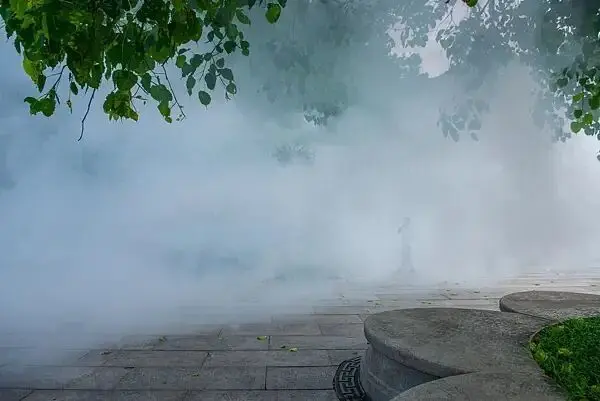
During that time, the disinfectant spray was as thick as clouds, spreading in narrow alleys, residential areas, and schools. The air was a mixture of insecticides such as cypermethrin, propoxur, and fenthion. The community broadcast repeated slogans, "Do a good job of mosquito control and elimination to protect a healthy life." Chu Hong, a grassroots worker, felt an itch on the back of her foot, and the body of a mosquito that had sucked blood stuck to her palm.
Her latest instructions came from the epidemic prevention and control meeting, "At all costs, use 3-4 days to eliminate adult mosquitoes and kill mosquito eggs, and quickly reduce the adult mosquito density index in the city to a safe level."
So, Chu Hong's day became like this:
Morning: Dump garbage, disinfect, and kill mosquitoes.
Afternoon: Dump stagnant water, publicize, and kill mosquitoes.
Evening: Enter households to distribute mosquito coils and kill mosquitoes.
She couldn't count how many days she had been working continuously, "The National Day holiday was canceled, and the weekend was also canceled."
This summer, chikungunya fever, a mosquito-borne infectious disease, spread throughout Guangdong, with the main symptoms including fever, joint pain, and skin rash. In early July, Foshan, Guangdong, reported the first confirmed case. On July 28, Foshan reached the peak of the epidemic, with more than 400 new cases reported in a single day.
Chu Hong works in a town in Jiangmen, Guangdong. When cases appeared in Foshan, Jiangmen had already started related epidemic prevention and control work. At first, she felt that this temporary job might end soon, as the number of new cases in Jiangmen had been hovering in single digits, and the situation was not serious. At that time, her work was mainly online publicity and popular science. Sometimes, the weekend holidays would be canceled, and she and her colleagues would join the mosquito control and disinfection team twice a week.
Until September, the mosquito control campaign ushered in an unexpected climax. More than 90% of the newly reported local cases of chikungunya fever in the province were distributed in Jiangmen. On September 20, Jiangmen initiated a Level III response to the public health emergency.
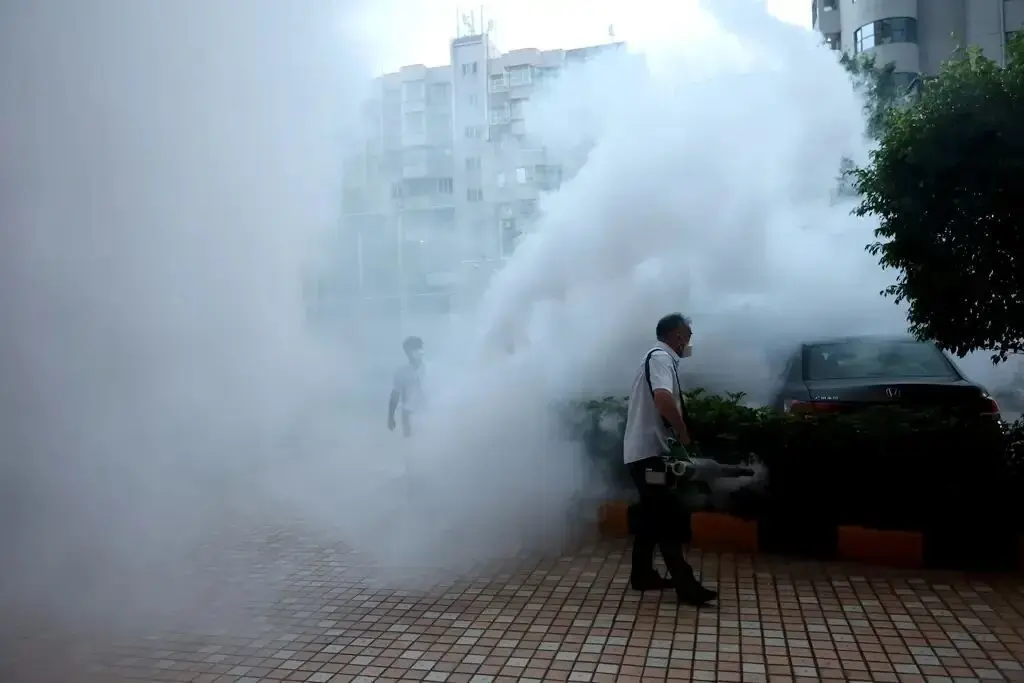
● October 16, 2025, Shenzhen, Guangdong, disinfection personnel spraying mosquito repellent in a community in Futian District. IC photo
A war between people and mosquitoes sounded the horn. On the morning of the third day after the Level III response was launched, a citizen took a picture of the scene of the staff disinfecting. The white mist sprayed by the insecticide covered half of the community, and the strong pungent smell seeped in through the tightly closed doors and windows. This citizen joked, "Are you filming Journey to the West? It seems like you're going to heaven."
Such a scene is familiar, but this time the enemy is not a virus, but a tiny arthropod called the Asian tiger mosquito, which is no more than 0.5 centimeters long, but its existence has once again changed the daily life of a city.
In response to the chikungunya fever epidemic, Guangdong adopted the "1335" prevention and control strategy. Simply put, if an outbreak point is found, the risk area will be delineated and mosquito control work will be initiated within 1 day, household investigations and disposal in the core area will be completed within 3 days, full coverage adult mosquito elimination will be completed within 3 days, and mosquito density will be controlled within 5 days. Jiangmen later upgraded this set of disposal mechanisms to "1113", requiring household visits and elimination work to be completed within 1 day.
This requires a lot of manpower. Zhang Qiaoqiao, an extra staff member of a town government in Jiangmen, said that after the Level III response was launched, the town unit she worked in divided personnel into disinfection groups, household visit groups, and cleaning groups. In addition to carrying a sprayer to disinfect twice a day, they also had to go door-to-door to inspect and clean up corners in residents' homes where mosquitoes might breed, including flower pot trays, buckets, and vases, and distribute mosquito coils and mosquito repellent sprays.
According to the inspection results, residents will be classified as high, medium, and low-risk households. Households that could not be visited or had mosquito breeding grounds that could not be cleared were high-risk households and needed to be inspected again within 24 hours. Households with stagnant water corners, such as those with rooftops and a large number of plants, were medium-risk households and needed to be inspected again within 3 to 5 days after cleaning. Low-risk households without stagnant water were arranged for another household visit in a week.
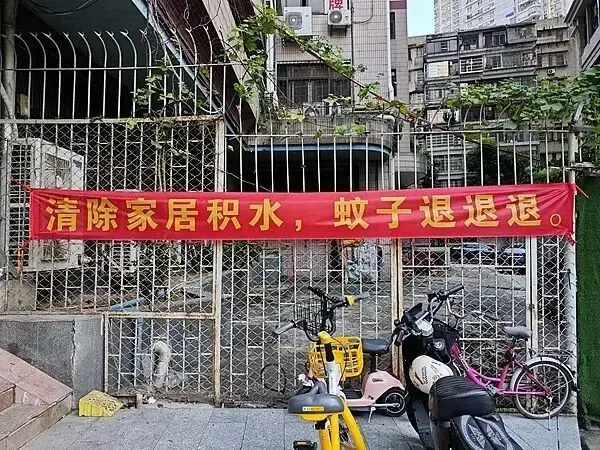
● Guangzhou community posts mosquito control and elimination propaganda slogans to remind residents to prevent chikungunya fever. CFP picture
According to the requirements, Zhang Qiaoqiao also needs to go down to the countryside with other staff, sometimes helping to dismantle and clean up the abandoned houses in the village, and also checking whether there is stagnant water that breeds insect eggs in front of and behind the villagers' houses, green spaces, vegetable gardens, and sewers, "There is no time to rest."
Chikungunya fever is not transmitted from person to person and is mainly spread through mosquito bites. Therefore, the most effective measure to curb chikungunya fever is mosquito control and elimination. During the National Day holiday, Jiangmen launched a "two-clearing and one-elimination" (clearing stagnant water, clearing garbage, and eliminating poisonous mosquitoes) patriotic health campaign throughout the city.
Xiao Ai, a Jiangmen citizen, had a lucky bamboo plant that she had been raising for more than three years. When community staff came to her door in September, they only told her to change the water frequently and left her mosquito coil. In early October, the staff visited again and asked her to immediately throw away the hydroponic lucky bamboo. Xiao Ai asked why the request had suddenly changed. She remembered the staff saying, "This is the regulation, please cooperate with the epidemic prevention requirements."
"The goal is mosquito control and elimination. If you let the masses keep the plants, what if there are cases?" Zhang Qiaoqiao's voice was also a little helpless, "It may be the safest to clear everything."
The pressure was transmitted downwards to the grassroots workers responsible for implementation, and some behaviors in the mosquito elimination war were distorted. On October 14, a resident of a community in Jiangmen took a picture of an urgent notice, which required residents to send their keys to the community neighborhood committee to cooperate with disinfection. Those who were overdue or did not open the door would be forcibly unlocked. After the notice was exposed online, community staff said, "The notice is true but has been invalidated and will no longer be enforced."
"Langchao News" once reported that Mr. Hu, a citizen of Jiangmen, was sleeping at home when staff members suddenly broke into his home and took away his three green plants. The incident once topped the trending searches. Mr. Hu's wife said that the community and the police came to communicate overnight, and the staff apologized in person.
Citizen Chen Fei initially felt that the grassroots workers were just following orders, "So we have been cooperating with epidemic prevention." Around October 14, he received a call from the neighborhood committee, "At that time, about 10 cases were found in my area, and the community said that the green plants and some sundries needed to be cleared."
Chen Fei lives on the top floor, connected to the rooftop, and has more than a dozen green plants, "I said no problem, and I also made an appointment with them about when they could come."
When the community staff came to inspect, they said that his green plants all needed to be cleared and thrown away, "I also said no problem." Only a money tree, which Chen Fei had been raising for nearly twenty years, was really reluctant to part with. He told the staff that it was soil-based and the soil was dry, "Does it have any impact if I keep it?" The staff took a picture on the spot and said it didn't matter, but it couldn't be placed outdoors. Chen Fei cooperated with the staff to move the money tree indoors.
However, the next night, when Chen Fei returned home from work, he found that the money tree had only the stump left, and all the leaves had been cut off. He described that his anger instantly surged to his head, "This was done without our consent, and they climbed over from the neighbor's house to deal with our private property."
He immediately called the community to question them, and Chen Fei said that the community denied it, saying that they didn't do it.
He also called the 12345 complaint hotline, but the official replied, "Due to the communication gap between community staff and volunteers in the epidemic prevention and control group household cleaning, we express our apologies. We will strengthen personnel training to ensure that we communicate in advance and operate in a civilized manner when performing prevention and control tasks in the future to avoid similar incidents."
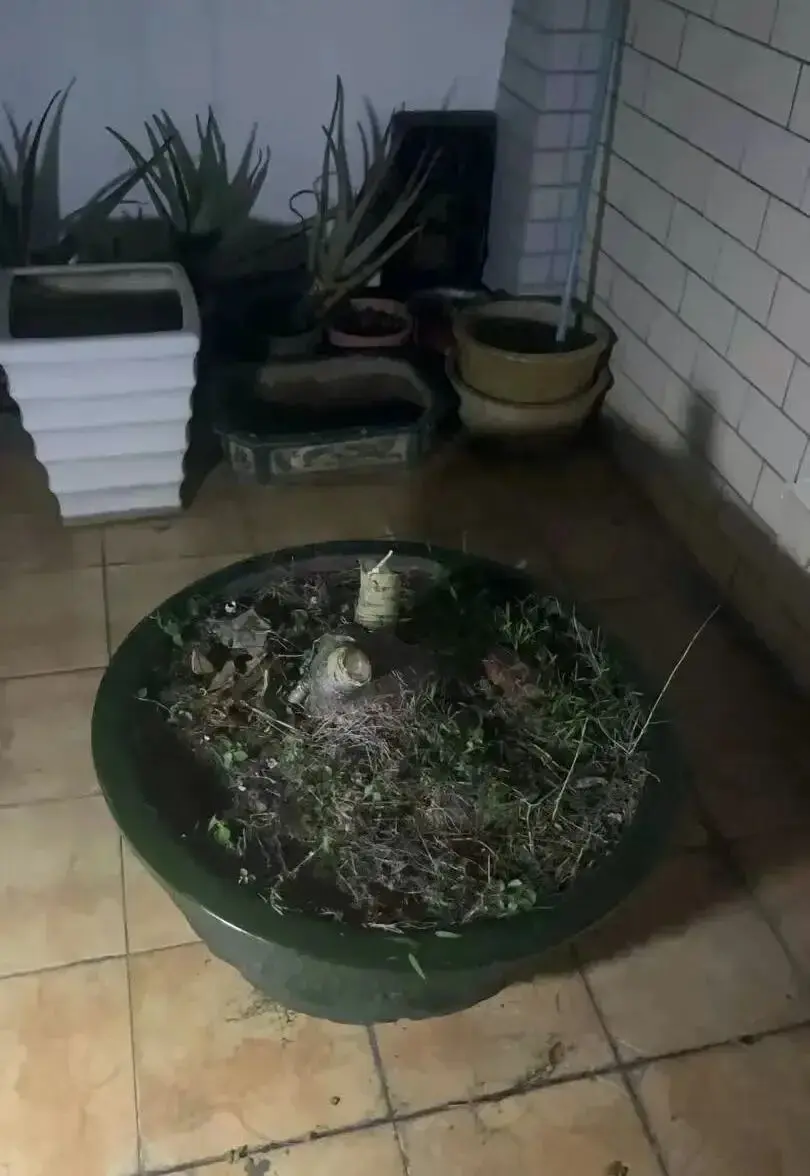
● The money tree that Chen Fei had cut down. Storyteller's picture
Not only grassroots civil servants participated in the household visits. Chen Fei said that they received a home visit notice from the school, but after the teacher came to the door, they did not communicate the children's learning situation, but went to the rooftop to check the stagnant water situation and took pictures before leaving.
Chen Fei believes that some of the implementation in the mosquito elimination campaign is blind, "As long as the goal is achieved, nothing else matters." He remembers that once community staff passed by his company and saw a chemical water tank, "It's used for that kind of bacteria breeding, decomposing chemicals. The grassroots staff directly told me that you need to pour out this water."
Several times, he saw the green plants cleared from residents' homes being randomly piled up on the side of the road. He speculated that the staff might be too busy, "It takes 2 to 3 days for someone to come and clean it up."
Chen Fei was very puzzled, "Isn't this more likely to breed mosquitoes?"
Sun Xiaoqing, who lives in the city, also noticed the various plant remains piled up downstairs. She knew that these were cleared from each neighbor's home. Two days ago, there were cases of chikungunya fever in the community. The green plants in the community and the public flower beds on the side of the road were also pulled out and cut, leaving only sparse, bare branches.
At around 10 p.m. on October 15, she made a temporary decision - to "rescue" the dozens of plants on her balcony overnight. The bougainvillea that was just in bloom was packed in large plastic bags, and more than a dozen succulents were hurriedly stuffed into two large foam boxes, exposing the flower buds. The dendrobium orchids were carefully placed in the car trunk with the bottom of the pots. She drove for an hour and sent the plants back to her hometown in the countryside, placing them near a farmland far away from human habitation, "There are no cases in the village, and the management is not strict."
From the data, the mosquito elimination war has achieved certain results. According to the "Jiangmen Daily", the number of new cases reported daily in the city dropped significantly from 574 on September 20 to 81 on October 16. The confirmed cases were all mild, with no severe cases or deaths.
Mr. Zhao, a citizen of Jiangmen, was diagnosed with chikungunya fever. His symptoms were not very serious. At first, he felt a little uncomfortable in his throat, and some red rashes appeared on his body. The next day, he had a low fever, but after two or three days in the hospital, he took antipyretics, and the symptoms basically disappeared, with only the red rashes not completely disappearing. On the day of the diagnosis, the community staff went to his rooftop and cleared all his dozens of plants.
"I don't think it's necessary to clear everything, some plants don't have stagnant water," he sighed, "But I don't want to cause trouble, what if it brings risks to the surrounding neighbors? We also can't say for sure where this mosquito came from."
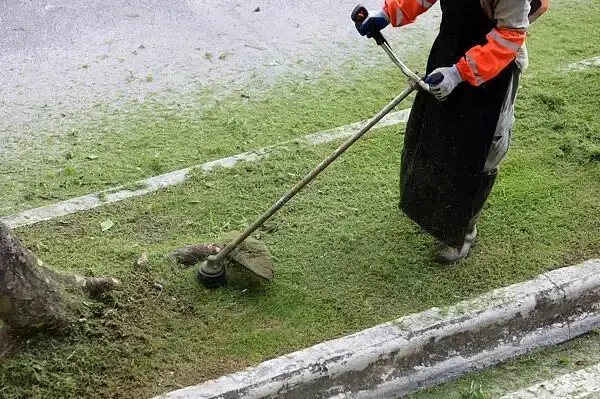
● Zhanjiang, Guangdong actively carries out weeding and mosquito elimination actions to reduce the risk of mosquito-borne infectious diseases and protect the health of residents. CFP picture
Every time Chu Hong, a grassroots worker, conducts a household inspection, she will encounter residents who are not very cooperative, "Especially when clearing flowers and plants, the masses all feel that they planted them and took good care of them, why should they be thrown away or cut off? Explaining it to people is annoying. Some of them are flowers that were planted many years ago and were suddenly cleared, which will make people very angry."
Chu Hong understands the emotions of the masses, but she is also helpless. The work requirement she received was to clear places that are prone to stagnant water, "Aquatic plants such as lucky bamboo and green dill must be cleared."
Soil-based plants without stagnant water are required to cut off branches and leaves, but does this really help prevent mosquito breeding? Chu Hong admitted frankly, "I don't know."
In response to the citizens' concerns and criticisms about epidemic prevention issues, on October 21, the Jiangmen Municipal Government issued relevant documents, listing 22 prohibited behaviors in epidemic prevention, including not illegally entering residents' homes, vehicles, and other private areas; not illegally disposing of other people's property, including personally cultivated green plants, water containers, and other items; and not implementing ineffective prevention and control measures such as burying fish ponds and draining artificial lakes in parks.
Sometimes, Chu Hong feels that this job seems to have no end. The enemy is mosquitoes, but how can mosquitoes be completely eliminated? As long as it rains, the work of several days may be in vain, and there will be stagnant water on the ground again, and they have to clean up the stagnant water again. The mosquito repellent spray may also lose its effect, "The medicine packs in the sewers can work, but the ditches and dark ditches all need to be sprayed again."
Everything goes in circles.
Her biggest expectation now is when the weekend can return to normal holidays? She wants to go back and spend time with her family.
On October 25, the 36-day mosquito elimination war seemed to be coming to an end. Jiangmen held the fourth press conference on the prevention and control of chikungunya fever. The meeting introduced that the mosquito density in Jiangmen had reached a standard rate of more than 99% for 15 consecutive days. After comprehensive research and judgment, Jiangmen decided to terminate the Level III response to the public health emergency and shift the epidemic prevention and control work to a normalized state.
Chu Hong didn't feel any change, "I thought I could return to a normal working state," but the instructions she received were, "The original intention remains unchanged, the standard does not decrease, and the intensity does not decrease."
Online, grassroots workers like Chu Hong exchange "countdown" notices they have received. Some say mid-November, some say the end of November, and some say February next year, but "May is summer again." Chen Fei's rooftop is still empty, and Sun Xiaoqing's green plants are still hiding in the countryside, and everyone is waiting and seeing.
"The cases have been dynamically cleared in the past week, and the workload of each group has been reduced, but there is no rest." On the first weekend of November, Chu Hong received a notice that all staff members would work as usual.
(The names of the characters in the text are pseudonyms)