

Author: Li Yuchen
Recently, two events have cast considerable stones into the public sphere, and the ripples they created have converged.
These two events are both related to the jarring word "eavesdropping," and the protagonists are both:
Legal professionals based in Beijing.
To see clearly, one must first carefully distinguish them, and then look at them together, to discover the big problem lurking beneath the surface of the water that truly deserves our vigilance.
Professor Lao Dongyan of Tsinghua University is a highly influential public law scholar in contemporary China.
Her words have always been based on rationality, restraint, and a deep understanding of law.
This kind of intellectual recently publicly recounted a rather "irrational" experience.
The cause was a sentence that appeared out of nowhere in her mobile phone calendar:
You can get reimbursement again, don't miss it.
This sentence accurately corresponded to a private conversation she had with her students in the office the day before.
She inferred that this might involve an infringement of her communications, and the infringer, she suspected, was a certain:
Local public power department.
Therefore, Professor Lao did the thing that best suited her identity and beliefs—she called the police.
However, it was this request for help that presented a specific and subtle legal dilemma, like a specimen.
At the police station, the record was made, and the situation was also explained. But when she asked for a legally justified document, she encountered soft but extremely firm resistance.
That document is called:
Report receipt.
The police's multiple-choice question is:
Either accept a "Notice of Non-Establishment of a Case" that trivializes and falsifies the serious accusation of "being eavesdropped"; or, you won't even get proof that you came and reported the case.
The altered case is:
A sentence was added to the mobile phone memo.
Professor Lao argued that the case should be written according to the facts. The police officer told her that how to write the reported case is:
Their power.
This matter seems simple in terms of materials, but the questions it raises are not simple at all.
It first questions the dignity of the procedure.
When a citizen, even a top legal scholar, cannot even get the first document to initiate legal proceedings, and is even asked to accept an official record that distorts the facts, where is the foundation of the rule of law we are talking about?
Looking deeper, this reflects a disturbing posture of power.
Why is the Haidian police so afraid of a small receipt?
The answer is probably in the "local public power" that Professor Lao suspects.
This tacit understanding between powers is more corrosive than blatant illegal behavior, because it makes citizens face cross-regional power infringement, and fall into:
Nowhere to seek help.
If Professor Lao's experience is a calm, theoretical procedural question, then what Beijing lawyer Liu Jiajia experienced is a real storm that is happening and is incredibly cruel.
The center of this storm is in a building called "Yinhe Hotel" in Shijiazhuang. Its other name is:
Shijiazhuang Municipal Public Security Bureau Law Enforcement Case Handling Center.
Six years ago, 40-year-old Liu Donglin was taken into this place and died seven days later. The official conclusion is five words:
Pulmonary embolism.
These five words attempt to cover up the memories of his fellow workers who were "detained" with him: the sound of the hand-cranked generator, the excruciating pain of the rolling pin rolling over the legs, and Liu Donglin's last scream before his death:
A shrill "ah".
After that, a lawyer Li Haifeng, who held the dual identities of "special expert of the Municipal Political and Legal Committee" and "legal counsel of the Municipal Public Security Bureau," appeared. Under his "coordination," the family members signed an agreement and took a sum of money.
The core of that agreement is:
No objection to the legality and fairness of the public security organs' law enforcement procedures.
The amount of money is:
A "relief fund" of 450,000 yuan.
A case of suspected murder seems to have come to an end.
Lawyer Liu Jiajia is the legal person who was entrusted by the family members to try to reopen this heavy door.
However, her legal actions have not brought about a re-examination of the old case, but a:
A dragnet.
The Shijiazhuang police quickly established the "5.11 Special Case Team." The business of this special case team is not to investigate the screams from six years ago, but to target:
All those who questioned the source of the screams.
A valuable list was born, with lawyer Liu Jiajia, four reporters, and two local father and son who helped the family members. They were given a fashionable crime:
Group crime.
This is by no means a false statement. The person who helped the family members find the witnesses was actually detained for "obstructing testimony."
On June 10, the storm approached the core.
Li Dong, an investigative journalist who once worked at Beijing Youth Daily, because of an article that could not be published:
Lost contact after being summoned.
That night, after he returned to Beijing, he immediately conveyed the message from the Shijiazhuang police to Liu Jiajia:
Next, it's you, and the next one is Liu Chengwei, the investigative journalist from New Yellow River.
At this point, the picture facing lawyer Liu Jiajia is already very clear:
Being filed, being eavesdropped, and about to be summoned.
Her application for rights protection to the Lawyers Association is not only for herself, but also because she realizes that in this hunt, she is also:
A victim.
Now, let's put these two independent events together. From Professor Lao Dongyan's gentle and rational procedural question to the cruel and intense real storm that lawyer Liu Jiajia is in.
What we see is that the shadow of "eavesdropping" is shrouding the legal professionals in different forms.
It points to a fundamental question that we cannot avoid:
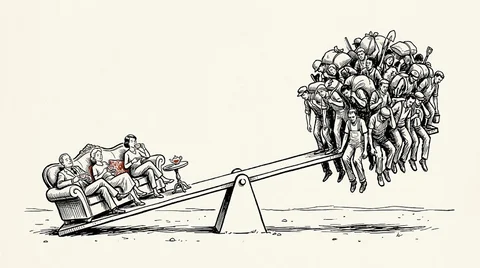
In a society that claims to be ruled by law, where exactly are the boundaries of power? When it faces criticism, questioning, and investigation, does it choose to restrain itself and accept supervision, or does it choose to use more powerful power to suppress these voices?
Professor Lao's experience tells us how fragile procedural justice is. Lawyer Liu's experience tells us how terrifying unrestrained power is.
These two alarms, one light and one heavy, one slow and one fast, all point in the same direction.
They remind us that protecting the freedom of speech and professional safety of legal professionals is not just a matter for their group. Because when the guardians of society themselves feel unsafe, whose rights will be protected? This is the most important lesson behind these two news stories that is truly worth our deep consideration.
Written on June 20, 2025
My WeChat: leelovephoebe
My email: lixunhuang@protonmail.com or lixunhuang1996@gmail.com