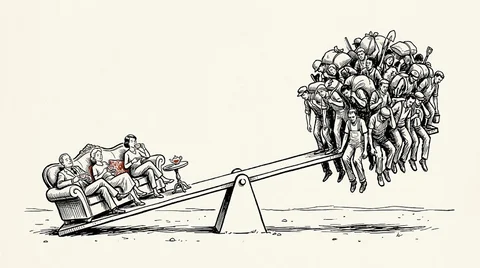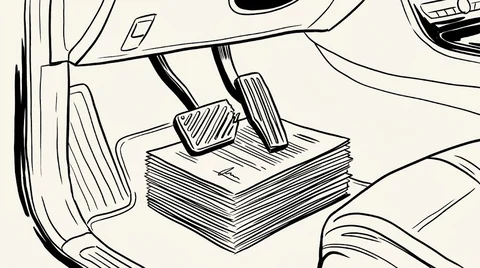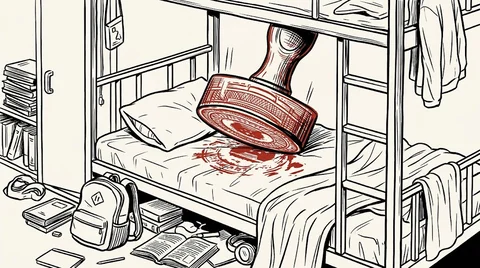


- Trade unions are independent and decoupled from the government.
- No subsidies or tax incentives for state-owned enterprises; fair competition between state-owned, private, and foreign enterprises.
- Foreign companies' servers can remain in their home countries.
- Public disclosure of civil servants' assets.
- A stable and transparent political system.
- An open and free economic environment.
- Possessing long-term market potential.
- Good labor rights and working conditions.
- Unanimous agreement from other member states.
The above 9 points are not a fantasy, but rather selected from over 2300 rules of CPTPP (Comprehensive and Progressive Agreement for Trans-Pacific Partnership). The reason they are so shocking is that these terms were originally 'tailor-made' as 'exclusion clauses' specifically for our country's system!
However, since 2021, our country has been rejected for the fourth consecutive year in its application to join.
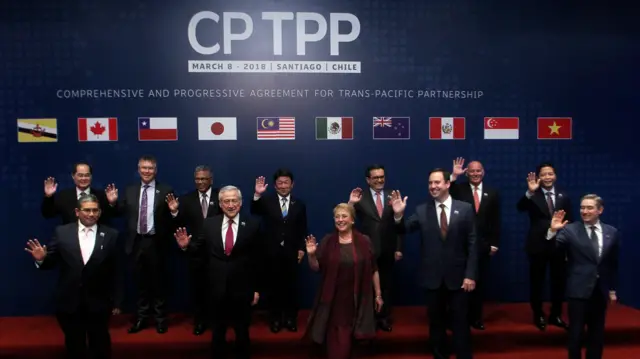
Related reading: Yicai|Three Key Issues for China's Application to Join CPTPP
China has experienced 15 years of WTO accession negotiations and the successful signing of 21 free trade agreements, which have provided China with rich experience in negotiations in the fields of trade and investment. Due to the overlap in the content of the chapters, the signing of RCEP (Regional Comprehensive Economic Partnership) also, to some extent, played the role of a 'stepping stone' for China to join CPTPP. However, CPTPP has the following additional chapters compared to RCEP: Textiles and Clothing (Chapter 4), Technical Barriers to Trade (Chapter 8), State-Owned Enterprises and Designated Monopolies (Chapter 17), Labor (Chapter 19), Environment (Chapter 20), Competitiveness and Business Facilitation (Chapter 22), Development (Chapter 23), Regulatory Consistency (Chapter 25), and Transparency and Anti-Corruption (Chapter 26). Some of these chapters have already been covered in the WTO system, such as textiles and clothing, and technical barriers to trade.
In subsequent negotiations, key chapters will focus on state-owned enterprises, labor, e-commerce, and regulatory consistency. Currently, some members still pay close attention to China's state-owned enterprises, including issues such as non-commercial assistance, subsidies, and transparency for state-owned enterprises. In the negotiations on this chapter, the regulations of Vietnam can be used for reference to some extent. For example, there are many transitional clauses or exceptions in the transparency requirements. Regarding the labor chapter, in subsequent negotiations, there may be disagreements among the parties on the understanding of 'collective bargaining rights,' 'forced or compulsory labor,' and 'discrimination in employment and occupation' in CPTPP, for which sufficient preparation is needed.
Last week, the spokesperson of the Ministry of Commerce, He Yongqian, said that they are conducting in-depth communication and exchanges with all members and actively promoting the joining process. He also said that they will achieve the CPTPP rule standards through reform.
Moreover, unlike the commitment system of the WTO, CPTPP requires meeting the standards before joining. Our country's eagerness to join at this time shows its determination.
But the difficulty lies in whether these conditions, tailor-made for our country, can really be met?
If we want to join, we need the unanimous agreement of all members, and the 12 economies led by Japan and Australia, many of which do not have a good relationship with us, especially between China and Japan, can it really be negotiated?
It should be known that the 8-hour work day and two days off were promised when joining the WTO. Young friends may not know that we used to work half a day on Saturdays.
And once we cannot join, the WTO is dead, and we will be completely excluded from the international trade system.
In addition, the United States is legislating to cancel our most-favored-nation trade treatment, and some international entities refuse to recognize market economy status, a storm is coming.
If things go wrong, foreign trade will return to 1978.
Comprehensive Overtures to Seek Membership
When Trump withdrew from TPP, the predecessor of CPTPP, in 2017, we breathed a sigh of relief.
Zhang Jingwei, a guest researcher at Chongyang, wrote that Japan wants to lead 11 countries to continue the play of the reduced version of TPP, but it is neither 'comprehensive' nor 'progressive'.
His view is that the United States' Asia-Pacific rebalancing strategy has failed, and without the United States taking the lead, many countries participating in TPP have lost the opportunity to benefit from the power of the United States, and thus have lost interest in TPP.
Now it seems that the wolves have misled the country, and CPTPP has not only disappeared, but has become the highest standard free trade area at present, and even the UK in Europe has joined.
Recently, our country's sincerity in joining the alliance is evident: Japan has become our country's unilateral visa-free country, and the duration of Australia's unilateral visa-free stay has increased from half a month to a month. Some people say, what are the Japanese coming for these days? This is another matter, first you must have an attitude.
In addition, our country will also remove the buoys near the Diaoyu Islands—everyone knows how sensitive this is.
As for the import of seafood caused by nuclear wastewater, it will also be restored soon.
The Japanese should not see through our expedient measures, right?
However, I am optimistic about it. A recent case is that the overcapacity of new energy vehicles, which we are proud of, is severe, but because the shareholders behind them are all state-owned enterprises, they cannot go bankrupt and withdraw, which seriously distorts the allocation of market resources.
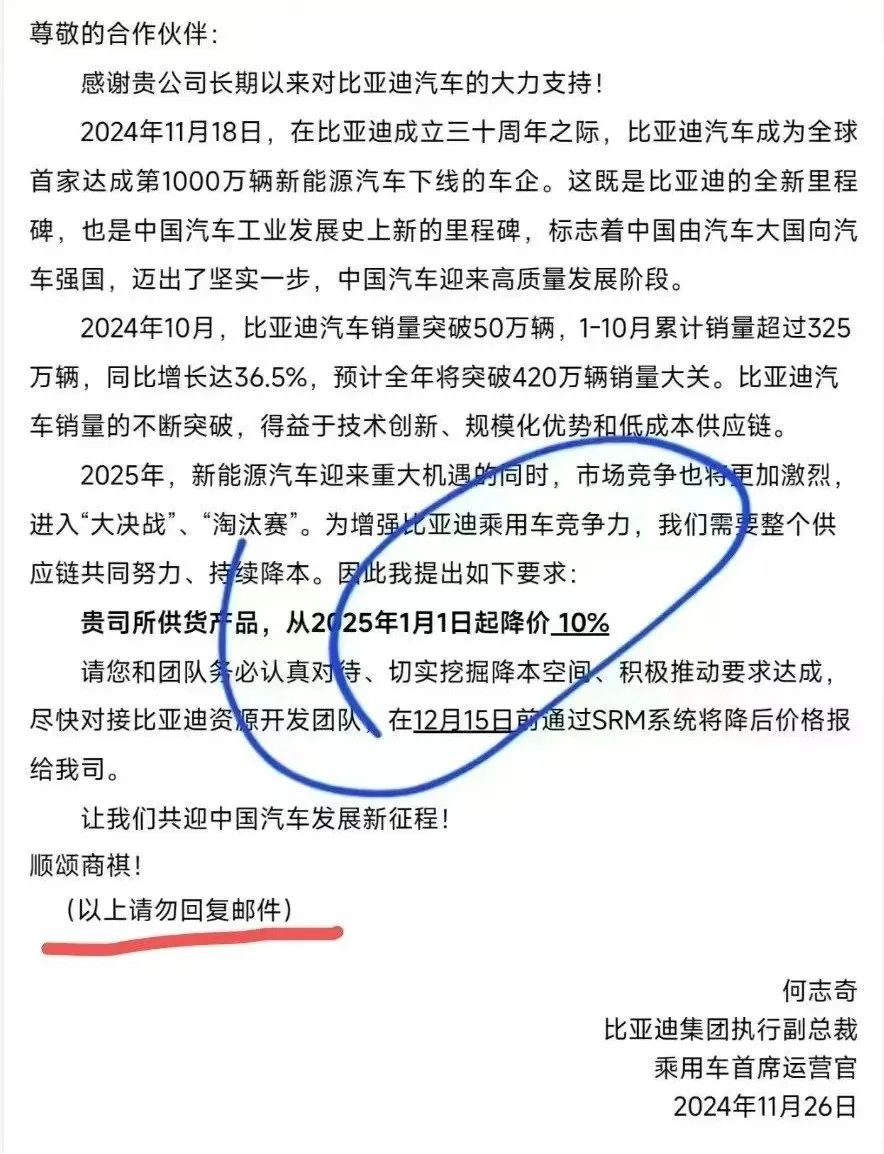
This price reduction letter circulating today is backed by various countries imposing a 30% or 50% tax on Chinese new energy vehicles on the grounds of industrial subsidies. How much you subsidize, they tax that much, so there is no price advantage.
Some media found that SAIC Maxus also wrote to its suppliers on the 25th, saying that the imbalance between supply and demand in the market is expected to be difficult to fundamentally improve in the short term, leading to a price war that is difficult to quell, and demanding a price reduction.
If this is not resolved, everyone will be killed, which is also the reason for the CPTPP state-owned enterprise clause!
The Path is Blocked, and the Restructuring is Fruitless
Recently, as Trump threatened to impose a 25% tariff on Mexican and Canadian products, Mexico took the initiative to remove Chinese-made parts, either produced locally or in North America.
In the past two years, many of our companies have entered the US market through Mexico and Canada, and it seems that this path is in trouble again.
In recent years, many countries have accused our country of not implementing WTO commitments and are not playing anymore, and are forming a new group. But our country has been the biggest beneficiary of the WTO system in the past 20 years, so we have been sticking to the WTO, hoping to relight the lamp. But now the weeds on the grave are as tall as a person, and no one will come.
As a substitute, CPTPP, which targets our system, did not intend for our country to participate from the beginning, and our country also held a critical attitude and could not actively join.
There is also a second plan. In 2020, our country took the lead in forming a new group, RCEP.
In comparison, RCEP implements zero tariffs on 90% of goods, while CPTPP has 98%. From a trade practice perspective, RCEP standards are too low, and I was not optimistic about it at the time, so much so that a friend criticized me for not being able to stand the good of the country.
In fact, is anyone still mentioning RCEP now?
Moreover, only one year after the establishment of RCEP, we changed our previous attitude and applied to join CPTPP the following year.
Former Japanese Prime Minister Shinzo Abe publicly opposed China's joining, and Japanese officials also said that 'China cannot meet the standards for joining CPTPP'.
This is probably not just Japan's meaning. Foreigners are very troubled now, once China is allowed in, will CPTPP become the next WTO?
Looking back, Japanese capital was the first batch of foreign capital to enter our market after the reform and opening up, it is really a different time. At that time, Deng Xiaoping went to Japan to invite Japanese capital, and now we are asking Japan to open the door to join the alliance, but the atmosphere is like 'Except for Russia, we all hate!'.
Even the UK has joined, but not China
On July 16, 2023, the UK, which is not related to the Pacific Ocean, officially joined CPTPP, and our country can only look on with envy.
Currently, CPTPP has officially operated, and applying to join the alliance is destined to be a long-distance race.
On September 16, 2021, officially applied to join.
On March 31, 2023, the spokesperson of the Ministry of Foreign Affairs stated that they firmly oppose Taiwan's participation in any official agreements and organizations, including CPTPP. On June 17, they submitted exchange documents to the members.
On March 21, 2024, the spokesperson of the Ministry of Commerce, He Yadong, said that China has prepared market access offers in areas such as goods trade, service trade, and investment. China is fully confident and capable of meeting the high standards of the agreement.
On November 21, 2024, the spokesperson of the Ministry of Commerce, He Yongqian, repeated the above statement.
The benefits of joining are of course obvious, but in addition to the 9 hard-line points in the beginning, such as the free flow of information and data, in other words, the network must be open, which is a comprehensive challenge to the existing system.
Some people say that if it can come true, it is equivalent to political reform and opening up.
Remember before joining the WTO in 2001, facing the stalemate in negotiations, Premier Zhu, who was willing to go to the United States and bow his head, and was even accused of being a 'Li Hongzhang' by domestic fundamentalists, and Long Yongtu, who was quickly marginalized, charged into battle.
Where are they now?
In this regard, a blogger from Shandong proposed a brilliant suggestion to replace CPTPP with 'one D and one L'.
Living like this is also a miracle.