

Cao Lin 《China Youth Daily》 (April 20, 2013, 01 edition)
The accelerating population aging has once again pushed the extension of the retirement age to the forefront. Dai Xianglong, Secretary of the Party Leadership Group of the National Council for Social Security Funds, said in an interview that in the face of the peak of population aging in more than 30 years, there will be a large gap in the income and expenditure of the public pension managed by the state. He suggested that the retirement age should be gradually extended, and proposed to adopt a system design of extending the retirement age by 1 year every 5 years. Experts say that the step-by-step and gradual extension of the retirement age is a common practice internationally.
Compared with the previous radical plan of "one-step approach", the design of "1 year extension every 5 years" is much milder. However, this is a topic that is easy to tear apart social emotions, and the controversy and resistance have not been reduced because of the mildness of the plan. This tearing can be seen from the attitudes of different social classes. Judging from the public opinion analysis, the main two social groups that support the delayed retirement are officials and experts. Other classes mostly oppose the delayed retirement. After working hard for a lifetime and about to receive retirement benefits and enjoy their old age, they suddenly have to delay their retirement, which is psychologically unacceptable.
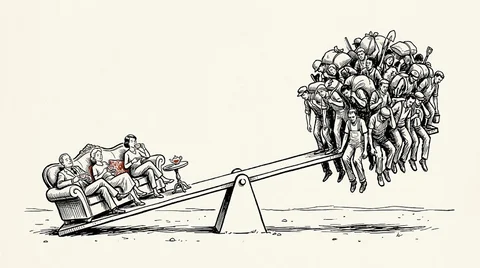
Analyzing the supporters and opponents, we can see an interesting phenomenon. Most of those who support the delayed retirement are beneficiaries of the existing pension system, while the opponents are mostly relatively deprived groups, or even the injured. China implements a dual-track system in pensions. Government and public institutions pay pensions, while enterprises pay their own pension insurance. The pension received from enterprise retirement is often much less than that from government retirement. Officials and experts support the delayed retirement plan because it not only does not touch their vested interests, but also brings them benefits; the majority of the public opposes it because this reform does not touch the dual-track pension system that they most oppose. People do not worry about scarcity but about inequality. Although the empty account problem of pension accounts is serious, they can accept a low pension, but they cannot accept that some people are much higher than themselves. People are not actually against delayed retirement, but more against the government's disregard for public opinion in the reform of the dual-track system. If they cannot touch the officials and experts, they will pick the soft persimmons to pinch.
The public's greatest expectation is the merging of the dual-track pension system, putting every citizen under an equal system, first solving the problem of equality, and then solving the problem of empty accounts. And "delayed retirement" avoids this core issue, which is exactly what the officials and experts who benefit from the dual-track system expect.
Delayed retirement is beneficial to officials and experts. Most officials hope to delay retirement, because what is delayed is not only work, but also power and interests. According to the current retirement age, general officials have to retire at the age of 60. Many people are not used to the loneliness of being powerless after retirement. Delayed retirement extends their political life. The same is true for experts. Universities and research institutes are mostly highly administrative and are a replica of the officialdom. Retired presidents and professors are naturally inferior to those in office. But for ordinary workers, work is a burden. Without power and interests, they have worked hard for a lifetime and finally reached retirement, but they have encountered delayed retirement. Delayed retirement may make these people feel a double sense of loss: the dual-track system has already harmed them, and delayed retirement further harms their interests.
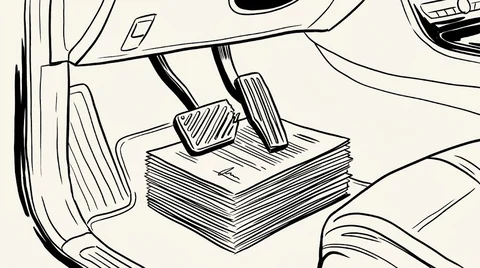
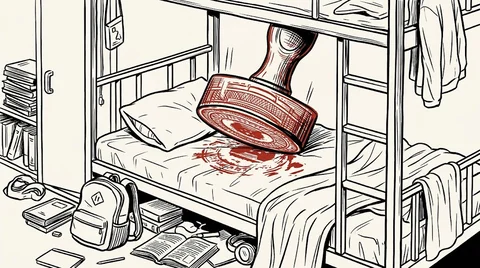
From another perspective, delayed retirement may be a breach of contract for a generation. The system and policy should maintain a certain degree of stability, especially when this policy involves major public interests, a stable expectation should be given to the public. What age to retire, when to receive the pension, is a commitment and agreement of the state to the citizens, and such a contract cannot be easily broken. The excuse of "extending the retirement age is an international practice" cannot be used as an excuse to break the contract. The extension of the retirement age in developed countries is a contract established through proper legal procedures and democratic channels and consultation with the citizens, and it cannot be changed arbitrarily and at will. Even if adjustments are needed due to the empty account problem, it should also go through democratic decision-making, allowing each interest group to participate in the game.
Moreover, when it comes to the pension gap, all responsibility cannot be shifted to society and the public. When raising the issue of delayed retirement, we must first ask whether the government has undertaken the necessary investment in the pension issue and fulfilled its due government guarantee responsibility. After all, the taxes paid by the public are not in vain, and there is an investment in their future pension.
On the pension issue, the order of reform should be: first change the dual-track system, then talk about delayed retirement; first increase government investment, then talk about public responsibility.