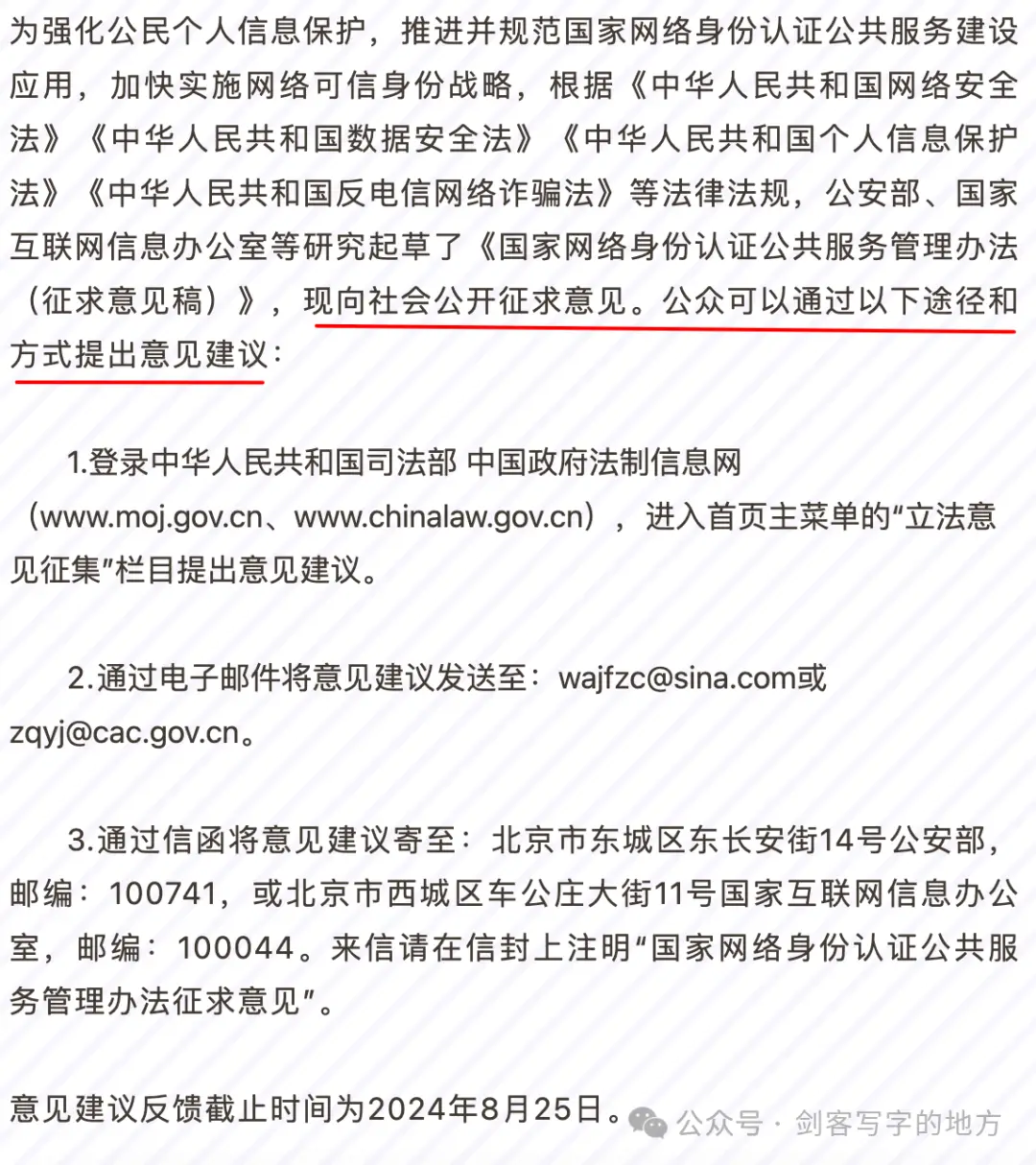


Recently, there's a "major event." The Cyberspace Administration of China and the Ministry of Public Security jointly drafted a "Public Service Management Measures for Network Identity Authentication," which is currently in the "stage of soliciting public opinions."
Hereinafter referred to as the "Measures."
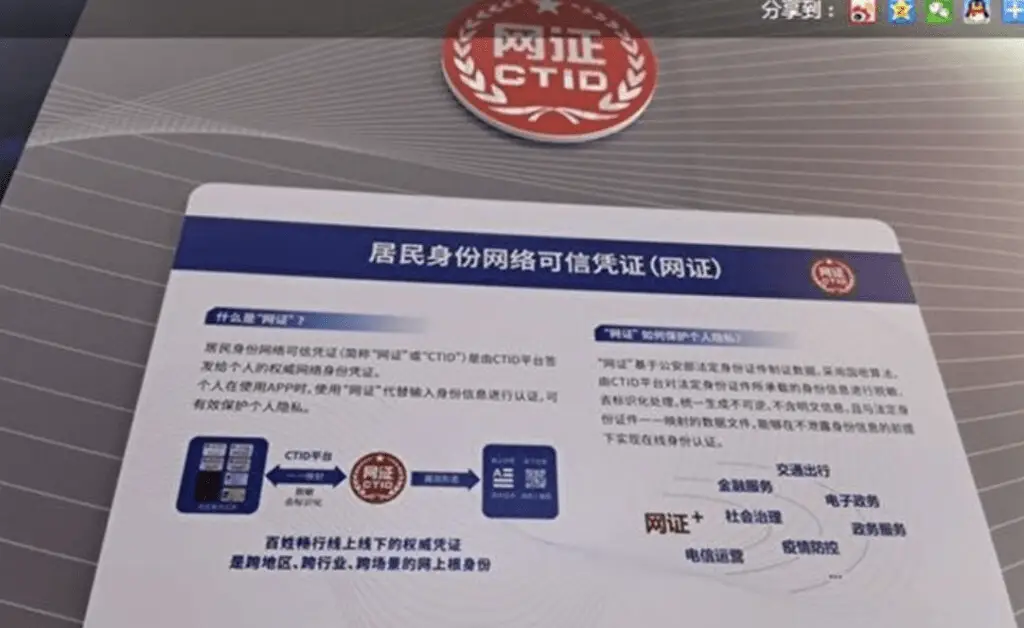
This "Measures" is equivalent to issuing everyone a "network number" and "network certificate." Of course, you need to use your ID card to apply for it. After you've applied, you'll need this to access the internet.

According to the "Measures," this method can reduce the reasons for various platforms to use real-name registration to obtain more information from citizens, thus playing a role in data protection and anti-fraud.
To be honest, I don't think this "reducing platforms' use of real-name registration to obtain public information" makes much sense, because the online real-name registration, launched with the starting point of "protecting citizens' rights and interests," has been implemented for 12 years. The information that should have been collected, those websites have already collected enough. I received no less than 3 sales calls today.
On the contrary, with this network number and network certificate, there will be further control over individuals' online speech. Not to mention the reduction of "reporting" and "exposure" content, it will be easier to silence a person through the network number and network certificate than through platforms.
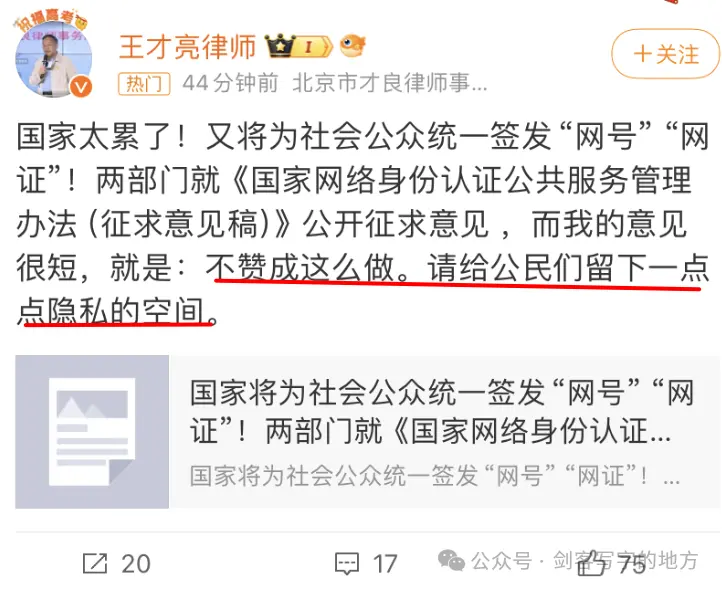
Lao Dongyan, a professor of criminal law at Tsinghua University, commented that this is equivalent to an "upgraded version of the Health Code," installing a surveillance tracker for everyone's internet access, collecting all your browsing history. Almost all the limitations people faced when using the Health Code can be replayed in a similar form on this issue.
And Professor Lao Dongyan believes that this degree of intervention in people's lives should be more appropriate for criminals, as a criminal investigation measure for those who commit crimes. But after the "Measures" are implemented, they do not need any approval and can track their online traces and restrict them at any time without any suspicion of illegal or criminal activity by ordinary individuals.
A simple example is that the police need a certain level or approval procedures to check an individual's hotel records and WeChat records, and they also need to find several companies to retrieve them. But with the network number and network certificate, it will be much more convenient.
In this way, can the "Measures," which is only a departmental regulation, get support from the superior law?
Interestingly, the "Measures" mentions "voluntary," but if you cannot obtain network services without applying for a network number and network certificate, does this voluntary nature have the suspicion of being hollowed out?
Of course, it's voluntary, but if you don't apply, you may not be able to access the internet or report and complain about problems online.

Professor Lao Dongyan said that since it is soliciting public opinions, she also wants to publicly express her opinions. But now, this expression of hers has disappeared.
Another university professor, Shen Kui of Peking University, said in his view: The advantage of the network number and network certificate is to prevent platform websites from collecting more citizen information, but its disadvantages outweigh its advantages. Because the original platform collection may still be "fragmented," and each platform is different. But after the network number and network certificate appear, these fragmented contents will be concentrated in the same box.
People worry that the box will become lifeless, reduce online speech, and also reduce the supervision of public power because they don't want to cause trouble.