
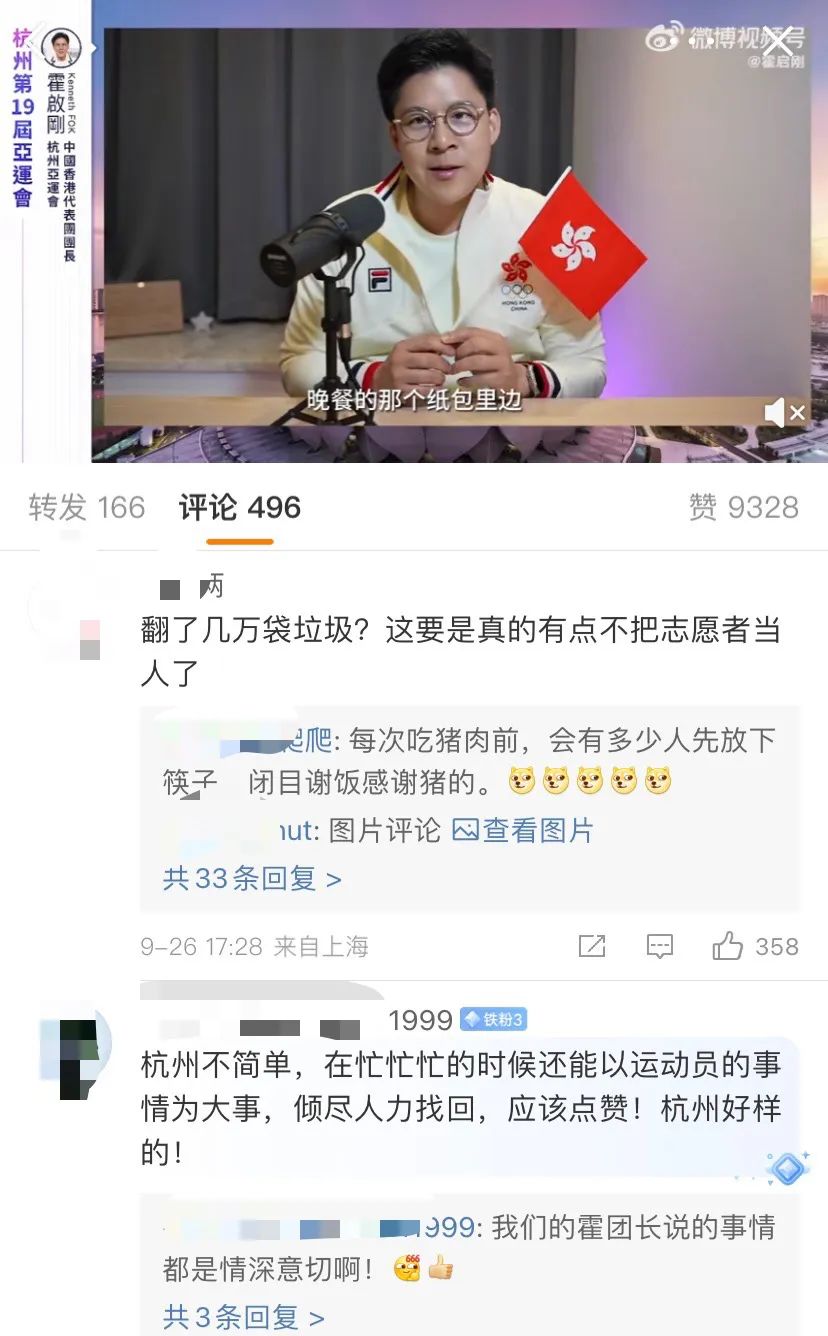
According to media reports, a Hong Kong athlete lost their mobile phone during the Hangzhou Asian Games. After coordination by the organizing committee, multiple “volunteers” searched through tens of thousands of garbage bags overnight and finally found the phone, receiving thanks and praise from the Hong Kong delegation.
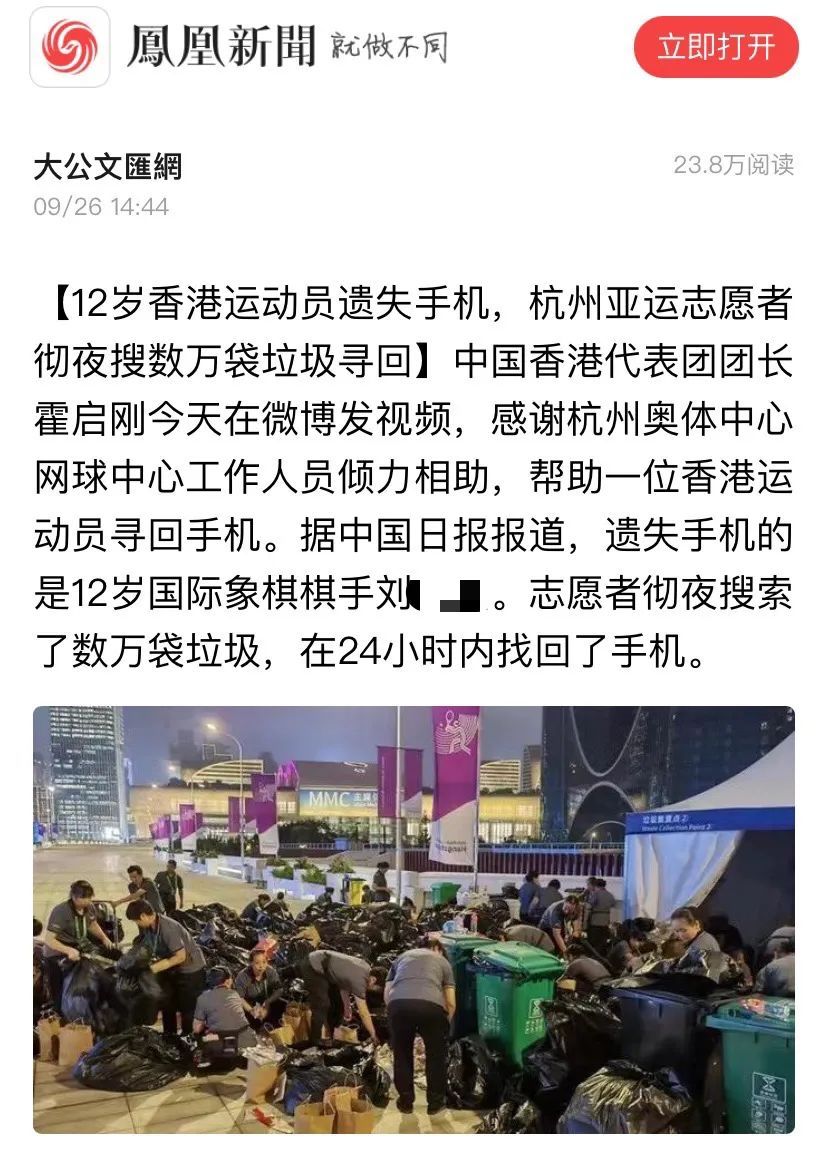
It is obvious that the organizing committee believes that their efforts to help the athletes solve their problems are the “hospitality” of the host country, and the athlete who lost the phone and their delegation truly felt this, with their gratitude and emotion coming from the bottom of their hearts.
It’s just that, as onlookers, we inevitably feel a bit sour…
Almost everyone has experienced losing things and having things stolen, but few people have experienced the treatment of having tens of thousands of garbage bags searched overnight to help find a lost item.
According to our general experience in mainland China, after losing an item in a public place, it is standard practice for the venue to help register the information and check the surveillance. If they can also send a security guard or cleaner to help look for it, that is simply a conscientious property management.
Based on my limited experience of traveling to Hong Kong six times, the process of handling lost items in public places in Hong Kong is basically the same.
Arranging dozens of people to search through tens of thousands of bags of garbage just to find a mobile phone, whether in Hong Kong or mainland China, would definitely be considered super VIP treatment.
So the question is:
Is this kind of unconventional operation due to the “hospitality” of the Asian Games host, or because the identity of the Hong Kong athletes gave them “super-national treatment,” or both?
Clarifying this issue is particularly important in the current public opinion.
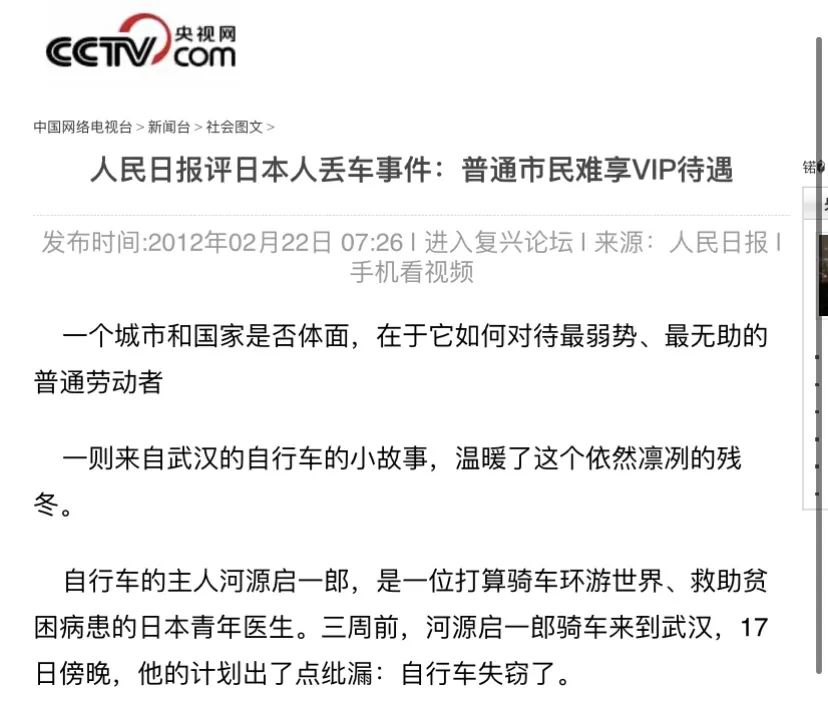
The news of a certain city searching the entire city to help foreign tourists find their lost bicycles has been stored in everyone’s memory for years and is often activated by newly issued cases.
What stings the sensitive nerves of the Chinese people even more is the incident of Shandong University arranging study partners for international students. Although the setting of study partners is not as bad as rumored online, the differential treatment between international students and domestic students is real.
Recently, a bizarre incident occurred at a certain university in Xi’an where a security guard scolded Chinese students for “not understanding the rules” and throwing garbage into “international students’ exclusive trash cans,” once again triggering a strong backlash from public opinion.
Based on the humiliating historical memory of modern times, the issue of foreigners enjoying super-national treatment in China has become a deep thorn in the hearts of the Chinese people, and its existence must not be ignored.
Therefore, the Hangzhou Asian Games, which was originally intended to showcase the host’s “hospitality,” has become a heartbreaking case of “super-national treatment” for international friends in the eyes of many people, including myself. Moreover, because the beneficiaries of this unconventional arrangement are Hong Kong compatriots who are also Chinese, we can put aside the label of “foreigners” to discuss the issue and better help us understand where the boundaries of “hospitality” and “super-national treatment” lie.
I have summarized three identification standards for your reference.
“Super-national treatment” identification standard one:
It is “hospitality” if domestic people can also enjoy quality service, but the standards for guests are higher; if some people have it and others don’t, or if some are better and others are worse, that is “super-national treatment.”
In the traditional Chinese concept, leaving the best dishes to entertain guests is a very common practice, and my parents and grandparents were such people. The reason is also easy to understand, it’s not that they like these guests so much, but that they care about face.
I still have a childhood shadow that hasn’t been resolved. It was during a Mid-Autumn Festival when I was seven or eight years old, when the family was relatively poor, a relative took care of a small business and made a little money, and my parents were very grateful. In return, my parents took the children of the relatives to a provincial capital city amusement park, and took a lot of beautiful photos. My sister and I were left in the countryside and spent a plain Mid-Autumn Festival with our grandmother.
More importantly, I was very sensible at the time and never dared to spend a penny because I knew the family’s financial situation was not good. The tickets to a zoo in our city were 12 yuan, and I endured for more than a year without saying I wanted to go to my parents. But my parents took the children of others to the amusement park, spending ten times or even a hundred times more. I still clearly remember the overwhelming grievance and anger I felt when I saw their photos of playing.
But this is definitely not because my parents didn’t love me. In my parents’ priority ranking, guests come first, their own elders and children come second, and they themselves are last. Through this value ranking of self-sacrifice, they gain self-consistent satisfaction in traditional moral concepts.
At that time, before the Chinese New Year, my parents would consciously hang up the “good things” like cured fish and cured meat first, which we family members were not qualified to eat, and they were to be used to entertain relatives who came to pay New Year’s greetings.
Even now, my mother still has this awareness and prepares the dishes for entertaining guests for the New Year long in advance. It’s just that now the family’s conditions are more comfortable, and chicken, duck, fish, and meat have become everyday food, and there is no essential difference between entertaining guests and what we usually eat ourselves, it’s just that they will make a few more dishes to make the table look good.
It was also at this stage that I recognized the rationality of the previous generation’s “hospitality,” because I can also have those things to eat and play with, and I don’t mind giving guests a little more.
But you can never ask a child who saves money and is reluctant to spend 12 yuan to go to the zoo to watch his parents take other people’s children to the amusement park and still be calm.
Going back to the phone-finding incident, if the organizing committee would also generally send cleaners and security guards to help find the phone after mainland Chinese viewers lost their phones, and they just sent a few more people to help find it faster considering that the Hong Kong athletes were guests, then everyone would definitely understand and praise it.
Going back to the bicycle-finding case, what we have generally experienced is that after a bicycle is stolen, we only get a registration after reporting it to the police, and no formal case is filed, and we can’t expect the police to help find it. But when a foreign friend’s bicycle is stolen, it alarms the whole city, and it is found within 48 hours. The huge contrast creates the impression of “super-national treatment,” and even gives rise to the gray industry of foreigners reporting cases on their behalf.
In fact, it’s not just my parents who have this concept, the “hospitality” of treating guests favorably has a very solid mass base in China.
The core of people’s disgust with “super-national treatment” is not about what preferential treatment foreign friends have received, but whether the public services they enjoy have reached a basic level of satisfaction.
“Super-national treatment” identification standard two:
It is “hospitality” to do your best within the scope of your ability and rules; it is “super-national treatment” to do it at the cost of the interests or dignity of your own people.
In the modern concept of civilization, “hospitality” has several important limitations. First, you must do what you can, entertain guests well within the scope of your financial capacity, don’t put on a show and empty your pockets to treat guests, and you can’t borrow money to treat guests. Second, you must abide by the rules and act in accordance with the law. You can’t break the rules and trample on the rule of law just because they are guests. That is not preferential treatment, it is condoning. Third, while treating guests favorably, you can’t treat your own people unfairly, sacrificing interests is not acceptable, and trampling on dignity is unbearable.
In the case of the international students’ exclusive trash cans in Xi’an, each building has its own trash can, and the cleaning time may be different, which also involves the division of labor of the cleaners. It was originally a reasonable rule not to allow people to throw garbage in other buildings. But the security guard’s scolding of Chinese students for “not understanding the rules” is obviously a damage to the dignity of the Chinese people, which is what everyone dislikes the most.
In the case of finding the phone at the Hangzhou Asian Games, the organizing committee sent more than 10 “volunteers” to search through the garbage bags overnight, which was absolutely full of sincerity to the guests, but it was hard to say for their own people.
From the photos, we can clearly see that these “volunteers” are the cleaning aunts and uncles of the venue. No matter what clothes they wear, they earn their money through labor.
People are worried that after wearing the high hat of “volunteer,” searching the garbage bags for a phone has become an unavoidable task, and whether the extra work has been compensated with corresponding overtime pay? If it is “being volunteered,” it completely deviates from the original intention of the workers working hard to earn money to support their families.
Objectively, it also pushed the originally innocent Hong Kong delegation to the embarrassing situation of being questioned and scrutinized.
While moderately treating guests favorably, paying attention to protecting the legitimate rights and interests of your own people and taking care of the dignity of your own people should not be a very harsh requirement.
“Super-national treatment” identification standard three:
It can be considered “hospitality” to do it generously and let the guests praise you; it is obviously “super-national treatment” to actively promote it as an achievement.
To really delve into it, most things in the world can only be judged “by deeds, not by heart.” Whether it is finding a lost phone or finding a stolen bicycle, it is difficult to fathom the intentions of the decision-makers and executors. They may be simply “caring about face,” or they may really have a kowtowing mentality. It is not advisable to judge people’s hearts. You still have to look at what they have done.
An easily observable indicator is whether the special preferential treatment to guests is spoken by the guests or actively promoted by the host.
If your original intention is to help guests solve problems, then the goal has been achieved when the matter itself is completed, and it is acceptable if the guests thank you and praise you.
If you use unconventional resources to help guests solve an ordinary problem, and also arrange a group of reporters to take photos and videos, and then proudly post them on your official account…
Then I really find it hard to believe that your original intention is “hospitality”
Discover more from 自由档案馆
Subscribe to get the latest posts sent to your email.