Several Issues Regarding the Revision of the ‘Public Security Administration Punishment Law’
Zhao Hong (Professor, China University of Political Science and Law)
Originally published on September 6, 2023. Thanks to the author for authorization to reprint.
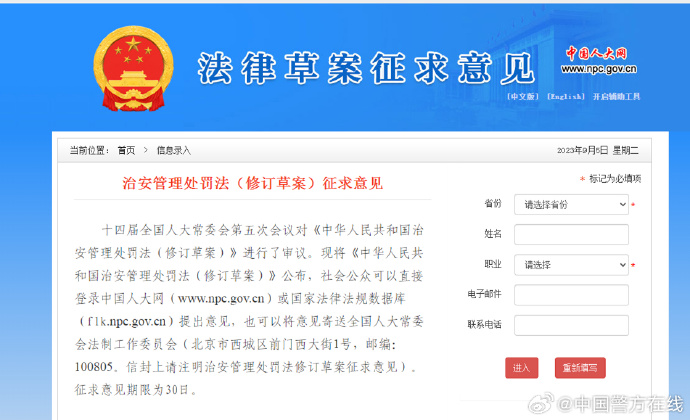
China’s current ‘Public Security Administration Punishment Law’ was enacted in 2005 and is undergoing its first major revision this year. Recently, the relevant draft amendments were initially submitted to the National People’s Congress for deliberation and are currently in the stage of soliciting public opinions.
The predecessor of the ‘Public Security Administration Punishment Law’ was the ‘Regulations on Public Security Administration Punishment’. Behaviors subject to public security administration punishment can basically be classified as minor offenses. Scholars have conducted statistics, and over half of the punishable behaviors in the ‘Public Security Administration Punishment Law’ are consistent with criminal offenses, with the only difference being the severity of the circumstances. The ‘Public Security Administration Punishment Law’ is known as the ‘small criminal law’ for behaviors that are minor and do not constitute a crime. Public security administration punishment, like criminal punishment, is an important mechanism for the state to impose sanctions on individuals. Therefore, the revision of the ‘Public Security Administration Punishment Law’ has attracted widespread public attention.
I. The Focus of the Amendment and the Underlying Issues
From the draft amendments soliciting public opinions, the focus of this revision is to include newly emerging illegal behaviors in recent years, such as cheating in exams, organizing and leading pyramid schemes, snatching steering wheels, illegally selling personal information, high-altitude object throwing, low-altitude unmanned aerial vehicles, and illegal use and provision of special equipment for eavesdropping and photographing, into the scope of public security punishment. This revision, which expands the scope of punishment, responds to the public’s demand for increased efforts to combat emerging illegal behaviors and also reflects changes in the application of administrative penalties in specific areas.
While the above-mentioned direction of the amendment is necessary, it should be noted that many of the newly added illegal behaviors have actually exceeded the scope of public security administration, such as cheating in exams and organizing and leading pyramid schemes, which do not violate the traditional order of public security administration.
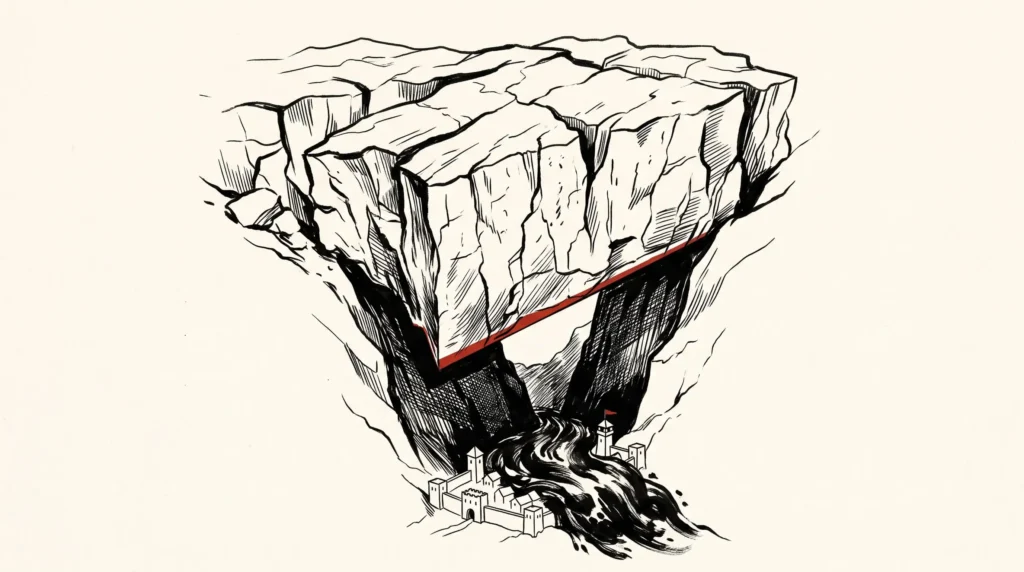
In addition, expanding the scope of punishment also means the expansion of the authority of public security organs. For this expansion of authority, the law must be equipped with corresponding constraint mechanisms; otherwise, the crackdown and suppression of emerging illegal behaviors may easily breed unrestrained and uncontrolled power.
Modern rule of law never advocates the heavy-handed approach of seeking order and unity through severe punishment. On the contrary, it always remains vigilant against the expansion of state power. As the departmental law with the most severe punitive measures in the administrative field, the ‘Public Security Administration Punishment Law’ must be extremely cautious when expanding the scope of punishment, clearly defining the areas where state punishment power needs to intervene, and also avoiding the blurring of the boundaries between law and morality.
II. Should Offending National Sentiment Be Criminalized and Punished?
Take Article 34 in the draft amendments, which has attracted considerable attention, as an example. This article is a new provision aimed at cracking down on illegal behaviors that harm heroes and national sentiment. The punishable items listed include ‘wearing or forcing others to wear or display clothing or symbols in public places that are detrimental to the spirit of the Chinese nation and harm the feelings of the Chinese nation; producing, disseminating, publicizing, or distributing items or words that are detrimental to the feelings of the Chinese nation and harm the feelings of the Chinese nation’. According to this article, such behaviors will be subject to a detention of five to ten days or a fine of 1,000 to 3,000 yuan, the same as ‘engaging in activities in public places that are detrimental to the environment and atmosphere of commemorating heroes and martyrs’; in serious cases, they will also be subject to a detention of ten to fifteen days and a fine of no more than 5,000 yuan.
Whether offending national sentiment should be criminalized and punished has always been a hot topic in public opinion. Modern criminal law generally uses the infringement of legal interests as the benchmark for weighing whether to criminalize and punish, with the aim of providing a basis for the legitimacy of the state’s punishment power through legal interests and screening out behaviors that do not need or should not be punished by law. In other words, if the state prohibits a certain behavior through criminal punishment or administrative punishment, it is not based on the protection of legal interests, then the law’s intervention in personal freedom is not justified.
Generally speaking, mere emotional offense, moral perversion, or even violation of taboos and self-harm are not included in the legal interests protected by criminal law. This is because the generalized moralized legal punishment appeals to abstract concepts such as public sentiment and social values as the basis for punishment, which will not only condone the abuse of public power but also transform criminal punishment and administrative punishment into tools for promoting certain specific moral concepts, thereby harming the rights and freedoms guaranteed by a rule of law state.
The newly added Article 34 cannot help but remind people of the old case of a female student in Suzhou wearing a kimono and being provoked last year. In that case, the person involved was reprimanded by the police for taking photos in a kimono on a Japanese-style street in Suzhou. After the person involved expressed doubts, the police took her to the police station for investigation on the grounds of suspected provocation. Although the person involved was not ultimately punished, the case still caused a relatively bad social impact after it was exposed. Many netizens commented that if taking photos in a kimono can be understood as detrimental to the national spirit and should be subject to public security punishment, then eating Japanese food, watching anime, or even learning Japanese may very likely be considered as offending national sentiment; if public officials can arbitrarily expand the interpretation and application of the law based on their personal preferences and beliefs, then we are not far from ‘adding a crime and there is no lack of excuses’.
It is not to say that offending national sentiment should not be criminalized and punished, but when the legislator stipulates it, it must comprehensively examine and weigh multiple interests, including the seriousness of the offense, whether the audience has become unavoidable to the offense, and the degree of harm the offense causes to individual rights and social values. If the seriousness of the offense is overestimated and the behavior of the offense is over-interpreted, it is easy to cause excessive suppression of personal freedom. As a relatively abstract concept, ‘detrimental to the national spirit and harming national feelings’ is often replaced by the personal cognition of public officials in specific practice, thus evolving into a tool for initiating moral judgment and even launching state punishment against others. We must be vigilant about this.
III. Should Insulting the Police Result in Detention?
In addition to Article 34, Article 59, which aggravates the circumstances of obstructing official duties, has also attracted public attention. This article targets behaviors that obstruct official duties, including ‘refusing to implement decisions and orders issued by the people’s government in an emergency situation; obstructing state organ staff from performing their duties in accordance with the law’. The draft amendment adds ‘refusing to implement the warning letter against domestic violence issued by the public security organ’ – which should undoubtedly be affirmed. However, the last paragraph of this article adds ‘obstructing the people’s police from performing their duties in accordance with the law by insulting, cursing, threatening, blocking, or intercepting, etc., shall be severely punished’, which, like Article 34, is likely to cause legal difficulties.
Obstructing the police from performing their duties in accordance with the law should be regarded as a statutory aggravating circumstance, which is also reflected in the criminal law. The criminal law even listed a separate item ‘assaulting the police’ in the ‘Amendment (XI)’ in 2021 and stipulated that it should be severely punished. The reason for severely punishing the obstruction of police officers from performing their duties in accordance with the law is that the duties of the police are mostly related to public safety, so they will be different from other behaviors in performing their duties in terms of the non-delayability of hazard prevention and the necessity of applying coercive force. Obstructing the police from performing their duties will also be considered to have greater personal danger and subjective malice, and the infringement of legal interests is also higher.
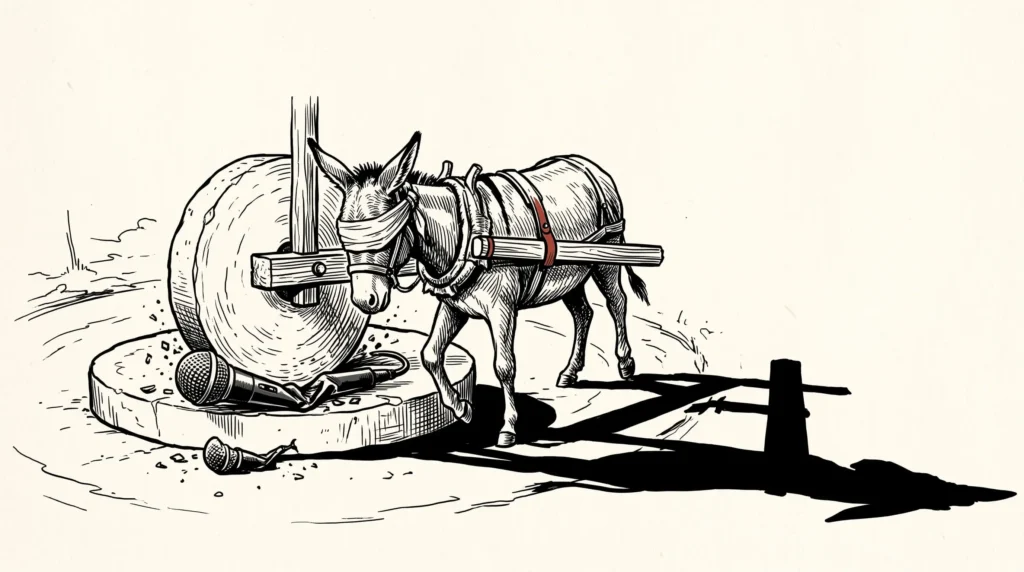
However, it is worth noting that since it is an ‘aggravating circumstance’, it means that ‘obstructing the police from performing their duties’ should have active obstruction behaviors like other behaviors that obstruct official duties, and the result of the smooth execution of official duties cannot be achieved before punishment. However, the draft amendment lists ‘insulting and cursing’ as an obstructing behavior, which has actually potentially expanded the scope of punishment of this article. The possible result of its application is that even if the person involved has no active obstruction behavior and has not caused any obstruction result, they may be administratively detained only because of the insulting behavior. This is obviously contrary to the concept of ‘less detention and cautious punishment’ emphasized by modern rule of law.
Moreover, listing ‘insulting and cursing police officers who are performing their duties’ as a type of obstructing official duties obviously ignores that Article 42, paragraph 1, item (2) of this law already includes the punishment for ‘publicly insulting others or fabricating facts to defame others’. The result is that the insult to the police and the insult to others are treated differently. This differentiated treatment also implies the meaning of special protection due to the different identities of citizens, and therefore also does not conform to the principle of equality of the Constitution.
In addition, ignoring whether the behavior will actually cause obstruction to the execution of official duties, and listing the insult and cursing of public officials as behaviors that should be punished or even detained, will also harm the basic rights of citizens guaranteed by the Constitution to criticize, suggest, report, and accuse the illegal and dereliction of duty of state organs and their staff. Because in specific practice, if only from the personal feelings of the police, the strong criticism or even harmless ridicule may be understood as ‘insult and cursing’.
IV. Rights Protection in Administrative Detention
Another issue corresponding to meeting real needs and expanding the scope of punishment is how to protect the rights of the other party in public security administration punishment. This particularly involves the protection of rights in administrative detention.
As the most severe type of administrative punishment, the existing ‘Administrative Penalty Law’ and ‘Public Security Administration Punishment Law’ are clearly insufficient in the protection of rights in administrative detention. An obvious defect is that neither of these two legal norms explicitly includes administrative detention in the scope of hearings. Therefore, it is not the obligation of the public security organ to inform the person involved that they can apply for a hearing before making a detention decision and hold a hearing for them. After making a detention decision, the public security organ will often directly send the person being punished to the detention center for execution.
For administrative detention, the ‘Public Security Administration Punishment Law’ stipulates that the person involved can apply for a postponement of execution. However, the conditions for postponement of execution are quite strict, and the public security organ has a large discretion in judging whether the postponement of execution will not cause social danger. In most cases, the public security organ tends to detain as much as possible rather than less detention and cautious punishment. Therefore, in practice, the provisions for postponement of execution of administrative detention are almost in a dormant state. Even if the person involved can request the court to confirm that the detention decision is illegal after execution, the protection of rights has lost its effectiveness.
Unlike criminal punishment, administrative detention does not need to go through the layers of review of the inspection and law enforcement organs, but is only decided by the public security organ independently. Therefore, how to improve the protection of rights in administrative detention has always been a key issue in the field of public security administration. Unfortunately, the draft amendment did not respond to this. Although it added ‘taking measures to order business to be suspended for rectification’ as a hearing matter for public security cases, it still did not include administrative detention, which is related to personal freedom, in the scope of hearings.
In addition, in the provisions for the postponement of execution of administrative detention, although the draft amendment humanistically added ‘taking the college entrance examination, the birth of a child, or the critical illness or death of a close relative’ as the premise for applying for a postponement of execution, whether to postpone the execution still reserves a large discretion for the public security organ, which also means that the issue of rights protection in administrative detention has not been substantially advanced.
V. The Issue of Eliminating Illegal Records
The ‘draft amendment’ creatively stipulates the sealing system for the illegal records of minors, clarifying that ‘for those who are under the age of eighteen at the time of violating public security administration, the records of violating public security administration shall be sealed and shall not be provided to the unit and individual’. This is of course necessary for the protection of minors, and to some extent, it also avoids the impact of the illegal label on the individual’s future life.
However, it should also be pointed out that this tentative provision is limited in both the expression of the article and the scope of application. From the perspective of the wording, even if it is explicitly stipulated that the illegal records of minors should be sealed, it still allows ‘supervisory organs and judicial organs to inquire for the needs of handling cases or relevant units according to national regulations’, that is, such records are only sealed and not completely eliminated.
From the perspective of the scope of application, this article is only limited to those who are under the age of eighteen at the time of the violation. In addition, the violators will still bear the illegal label for life, and the resulting employment discrimination and social aversion will even affect their families and relatives. This is contrary to the principle of ‘punishment commensurate with the offense, and the combination of punishment and education’ emphasized by administrative punishment, and it is also not conducive to the violators returning to society and restarting their lives after the punishment.
Human rationality is always limited, and social life is constantly moving forward, which makes legislation inevitably face the problem that the provisions may lag behind or even make mistakes. The amendment is undoubtedly a beneficial supplement to these already discovered loopholes. Therefore, any opportunity for amendment should be cherished and not be wasted at will.
The ‘Public Security Administration Punishment Law’, which has been implemented for 17 years, is related to the boundaries of public security punishment and, more importantly, the boundaries of state power and individual freedom. When amending the law, it is important to expand the scope of punishment in a timely manner, but it may be equally important to be vigilant against the resulting expansion of power – how to strengthen the protection of rights in punishment and minimize the incidental effects of public security punishment is a problem that legislators urgently need to consider.
Discover more from 自由档案馆
Subscribe to get the latest posts sent to your email.