“This is the capital!”
During the most golden evening hours, when compatriots who had worked hard all day were either scrolling through short videos to digest their dinner, or were taking the subway home after working overtime, or had just entered their homes and hadn’t had time to eat a cold meal, a notice without a signature was pushed to their phones.
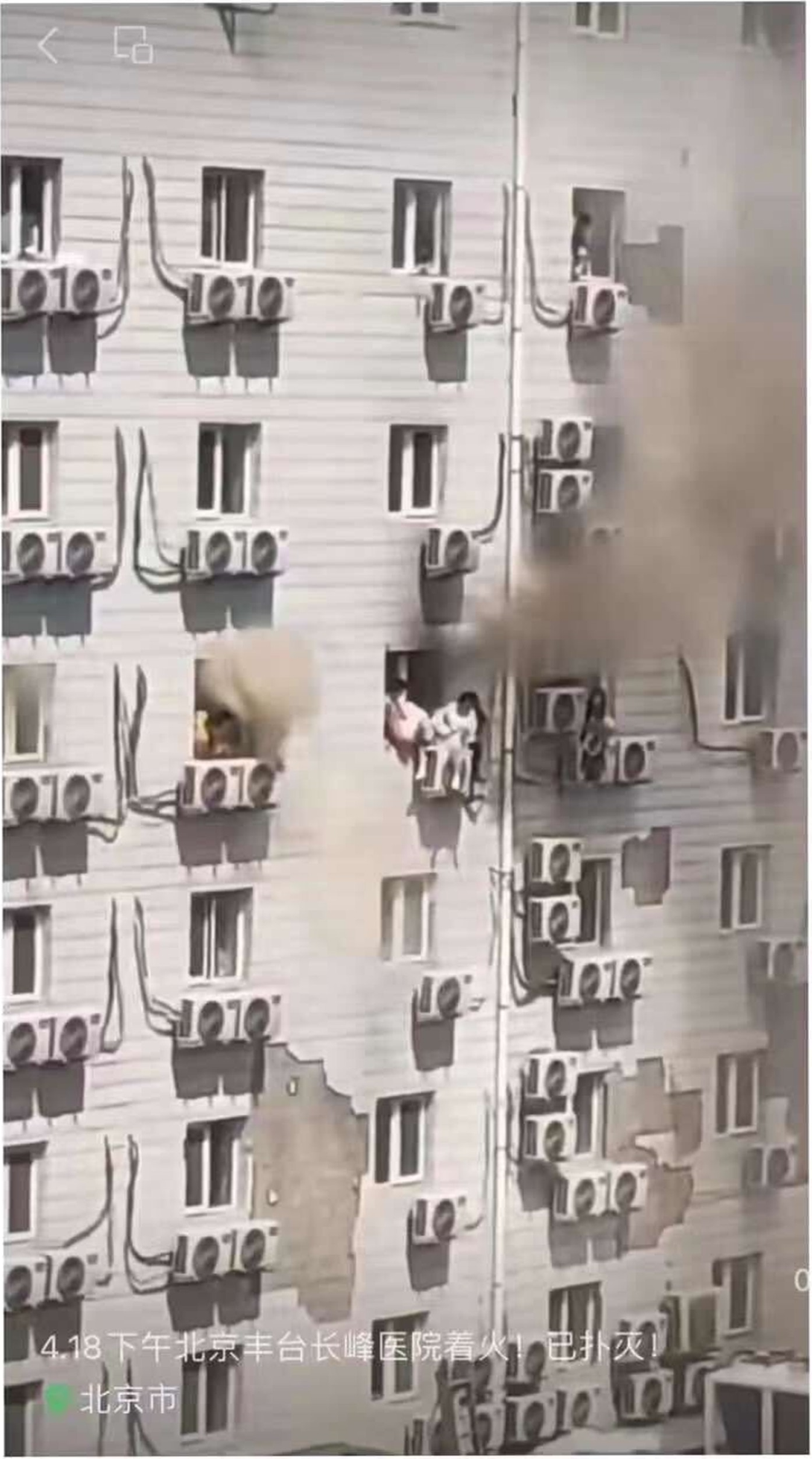
“A fire broke out at Beijing Changfeng Hospital, resulting in the unfortunate deaths of 21 people.” After carefully reading the 132-character notice several times, apart from knowing that at 12:57 noon today, the Beijing Fengtai District Fire Rescue Brigade received a report, and a fire broke out in the east building of the inpatient department of Beijing Changfeng Hospital, located in the capital Beijing. Although the on-site open flames were extinguished in just 36 minutes, and the on-site rescue work was completed in 3 and a half hours, the notice released at more than 8 p.m. told us, “As of 6 p.m., after ineffective treatment, 21 people unfortunately died.” It should be known that the entire rescue only “evacuated and transferred 71 patients.”
To be honest, I recognize every (character) in the notice, but after reading it several times, I still don’t understand how this fire happened and why it caused such a large number of casualties.
Information provided by search engines shows that Changfeng Hospital is a large, modern, and chain-managed hemangioma hospital, with branches all over the country. It has always been patient-centered, with the aim of making patients feel moved, and Changfeng Hospital strictly adheres to “high-quality service attitude, standardized service image, efficient service style, and standardized service charges.”
The encyclopedia states that this hospital, located at No. 291 Dianchang Road, Fengtai District, Beijing, is a secondary comprehensive hospital specializing in neurology, hemangiomas, and vascular malformations, and is a designated hospital for Beijing’s medical insurance.
I am very puzzled that a fire that caused 21 deaths, and occurred in a densely populated big city like Beijing, did not have much information released before the notice. It was only after searching in reverse after seeing the notice that I found that more than an hour before the notice, a video platform had posted a report “Beijing Changfeng Hospital caught fire, people escaped by hiding on the air conditioner.” However, when I went to look again, it was already “404”.
This few media reports said that on April 18, a fire broke out at Beijing Changfeng Hospital, and smoke was coming out of the building. In the video, someone climbed out of the window, grabbed the bed sheet and jumped down to the color steel canopy, and many people, including doctors, were hiding on the air conditioner. Even if it corresponds to the time of the notice, the news report was published after everything was settled, but the report clearly stated, “Changfeng Hospital responded that the inpatient department caught fire, personnel have been evacuated, and the cause of the fire is not yet clear.”
“Air conditioners and windows, like a series of wall-mounted tombs,” this is a line I wrote in my Moments after seeing the video of the Changfeng Hospital fire on the internet, especially after seeing the scene of many patients wearing hospital gowns squatting on the windowsill waiting for rescue.
I believe that when we receive such a vague notice during the golden evening hours, most people will definitely be like me, just like the Wulumuqi Jixiangyuan a few months ago, unable to imagine how “desperate” they were at that time.
Even if it didn’t happen in the capital (Editor’s note: the capital), a fire that killed 21 people, the public should also have the most basic right to know. Who were the 21 dead? Were they patients with mobility difficulties or family members? Did the hospital’s fire protection have problems? Were the annual inspections in place? Did the building’s flame-retardant materials play a protective role? Were the fire exits, equipment, and escape routes clear during the fire? Did the hospital management and security forces conduct fire drills on weekdays? Were there any flaws in the evacuation measures after the fire?
These questions were originally the responsibility of journalists, and their job was to “ask questions.” Unfortunately, it is a pity that “there are only notices, no news, as if no one knew this happened.”
In Moments, a senior media person who has long been “eliminated” by the times wrote, “It only took 8 hours to let us see that the integration of politics and media has now fully entered a new era.”
This is very disheartening, but it is indeed an undeniable fact. After all, news nowadays can no longer “give strength to the powerless and move the pessimistic forward.”
What is slightly strange is that a “404” trace message left by the search engine shows that 5 hours before the notice was released, a news item “Preventing risks, eliminating hidden dangers, and ensuring safety—Beijing Changfeng Hospital strictly implements fire prevention and control measures” appeared on the internet. The incomplete text shows, “All the cadres and staff of Beijing Changfeng Hospital firmly establish the concept of ‘hidden dangers are more dangerous than open flames, prevention is better than disaster relief, and responsibility is more important than Mount Tai,’ and do a good job of grasping, strictly managing, and carefully checking to ensure that all fire safety systems, regulations, and measures are implemented, effectively preventing and resolving fire safety risks, and resolutely…”
If this hospital could do one ten-thousandth of what they brag about, perhaps 21 compatriots would not have died in a fire at the turn of spring and summer.
Faced with the human tragedy of being “burned alive,” there may not be a trending topic, but shouldn’t we be allowed to know what exactly happened at Changfeng Hospital?
Original screenshot:

Discover more from 自由档案馆
Subscribe to get the latest posts sent to your email.