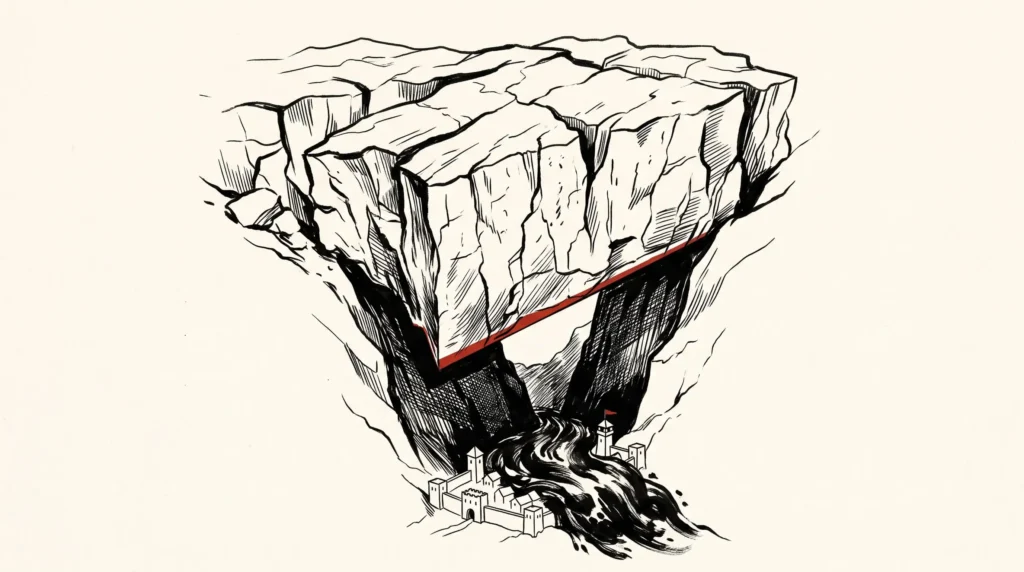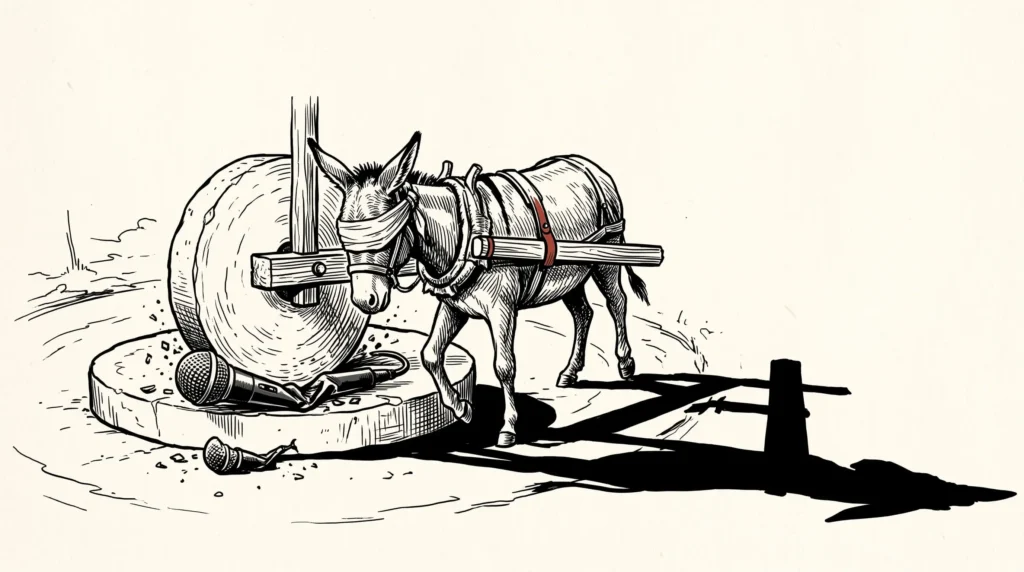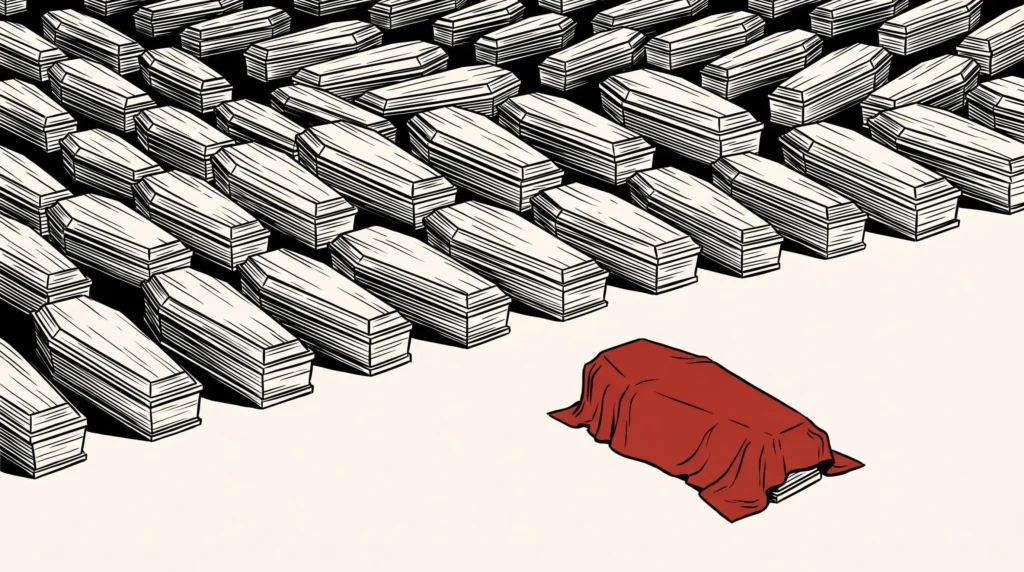
“Enduring hardship” has never been a virtue, but rather a helplessness and being PUA’d.
Regarding the incident of the four people who agreed to jump off Tianmen Mountain, I wrote an article yesterday, “Optimism is a moral responsibility“, offering some emotional advice. Today, I want to write another article to analyze from a rational perspective what this case really means.
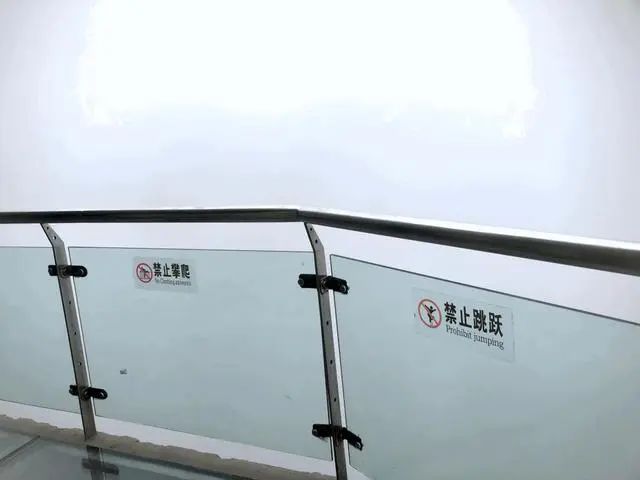
Based on the comprehensive review of current reports, I have learned the identities of the four people who agreed to jump off the cliff as follows:
Mr. Peng, male, from Hebei, with poor family economic conditions. Local villagers say his family is one of the poorest in the village.
Mr. Zhang, male, from Fujian, an only child, 23 years old this year (the youngest of the four cliff jumpers), went to Guangdong to work after graduating from junior high school.
Ms. Chen, female, from Sichuan, with an ordinary family background. Besides her parents, she has a brother, a family of four. She was cheerful before her death, and Ms. Chen’s boyfriend’s sister also confirmed that she remembered Ms. Chen as a very good girl.
Mr. Liu, male, from Henan, 34 years old this year (the oldest of the four cliff jumpers), has a thirteen-year-old child living with his mother. His parents are in poor health and take medication all year round, often providing living expenses for the family.
It can be seen that these four cliff jumpers have different origins, personalities, and experiences, and perhaps the only commonality is that they have all suffered from the same kind of fate: poverty.
Yes, the heavy pressure of life and a future without hope made them feel that poverty would be an endless path of hardship in their lives. They felt that they were walking too tired on this road, so they decided to commit suicide together on the beautiful Tianmen Mountain, ending this endless hardship.
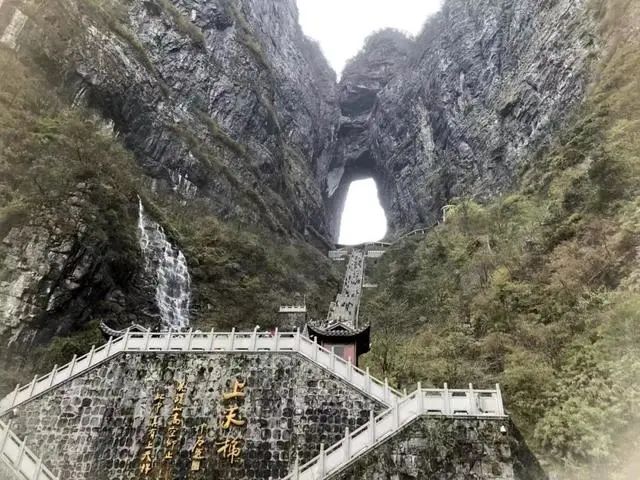
However, just explaining the Tianmen Mountain suicide pact with “can’t stand being poor” also has a doubt—poverty, as a characteristic that Chinese people once universally possessed, did not suddenly descend upon this land.
I also had a reader’s comment at the end of my article yesterday: Xiaoxi, you said that your generation can’t stand poverty and small living spaces, but think about how much harder your parents’ generation actually lived! Didn’t Chinese people live like this for generations?
This question is somewhat close to the “second-generation farmer” issue that sparked heated discussions a few years ago. Many social investigators have found that the migrant worker group, which once provided the largest labor supply for China’s economic development, is falling into exhaustion. Unlike the first generation of migrant workers who endured hardship and hard work, the second and third generations of migrant workers have unanimously shown phenomena such as “lying flat”, working less, not getting married, not having children, and having low desire for making money. News like “Three and a Half Gods” is actually a derivative of this “second-generation farmer” phenomenon.
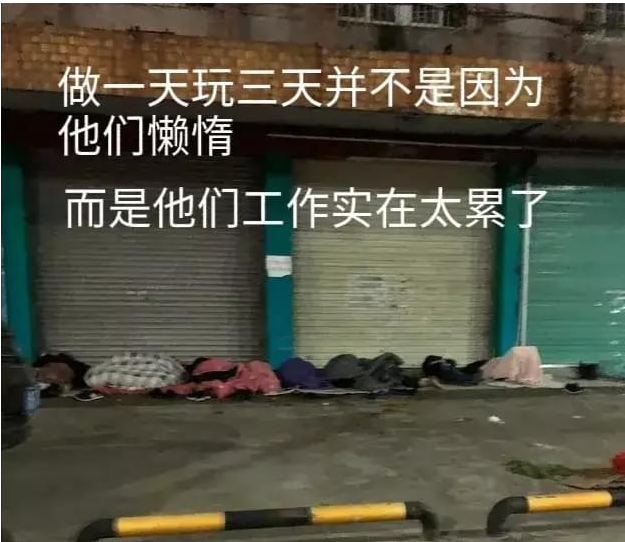
And the incident of the four people who agreed to jump off Tianmen Mountain warns this society that young people who can’t stand the torment of poverty, “second-generation farmers”, and “poor second generation” may not only “lie flat”, but may also commit suicide.
This requires providing an explanation: why did the most distinct “virtue” of the Chinese—enduring hardship—suddenly disappear in this generation?
1
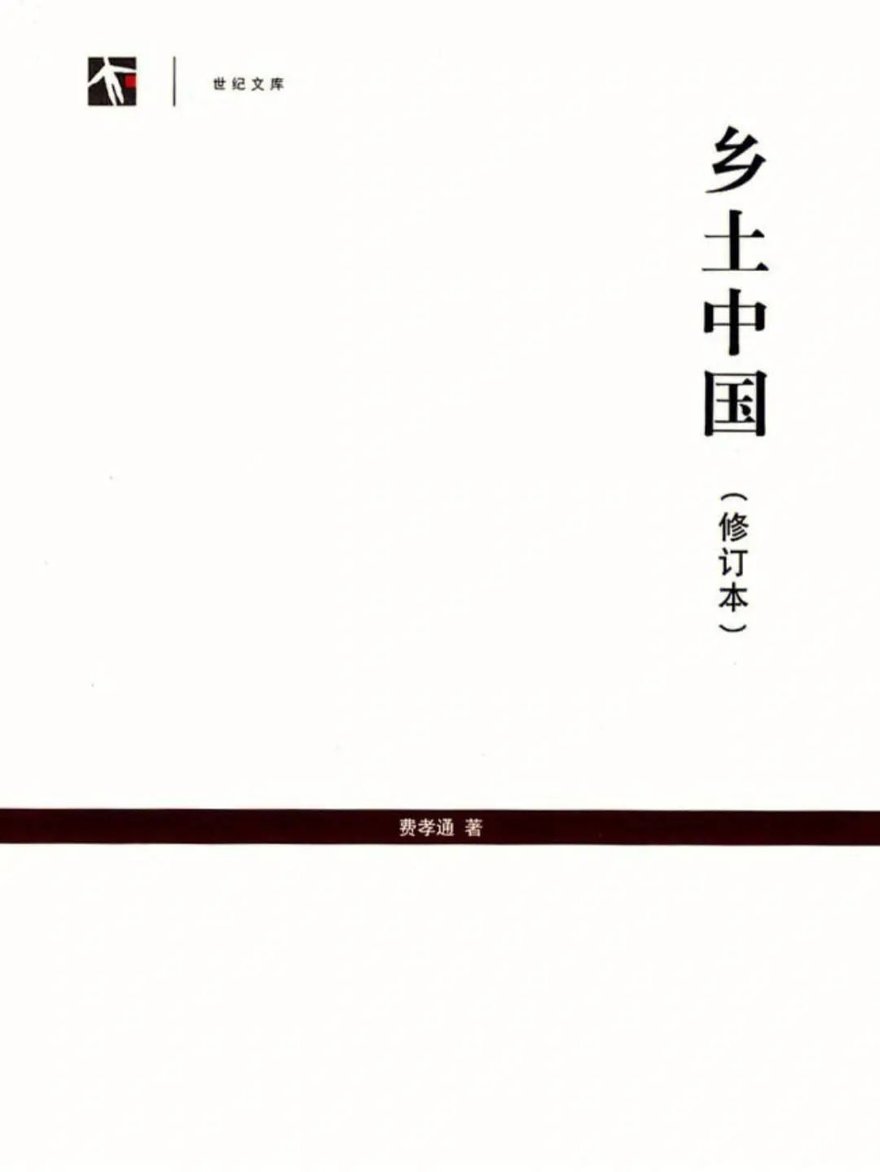
Mr. Fei Xiaotong, who wrote the book “Rural China”, once proposed a term when summarizing the traditional agricultural rural society in China: he said that traditional Chinese rural areas have always been a “scarcity economy“.
This scarcity economy is essentially caused by the irreconcilable contradiction between people and land in the agricultural production model—because there is only so much arable land, and the population is constantly increasing, so China eventually formed a “overcrowded” state with many people and little land in the late Qing Dynasty. Under this “overcrowded” state, farmers were forced to engage in a “zero-sum game”: if you have more land, I will have less land; if you become a landlord, then I have to be a tenant farmer. Then the relationship between us must be life and death.
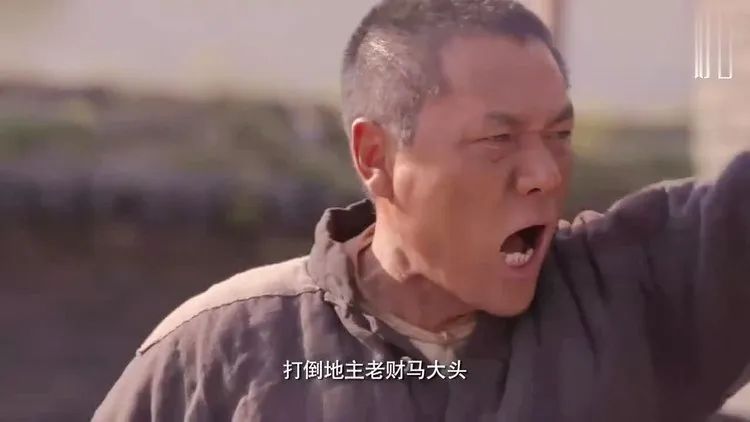
Therefore, the development space for individuals in rural society is quite limited, so there will be widespread “idle people”, “lazy people”, and even “poor people” who feel that they have “a poor life”, have no hope for living, and are ready to die at any time. Most farmers will also appear lazy during the slack season, chatting, playing cards, and sunbathing.
But if you analyze it carefully, you will find that their laziness and despair are “not because they don’t want to, but because they can’t”—there is only so much land, and there is only so much wealth that can be produced from the land, it is so scarce, what can you do?
Poverty in this “scarcity economy” society is a fate that must be endured.
From this perspective, observing the reform and opening up and the influx of migrant workers in China over the past forty years, one will realize how profound and great this change is—it has changed the “scarcity economy” that China’s agricultural society had to follow for thousands of years, and broken this deadlock of survival.
Unlike agriculture, which must rely on land, industry and commerce can create wealth simply by relying on cooperation. So the traditional farmers were surprised to find that their “surplus strength” had a place to be used. As long as they went to work in the city, no matter how hard and tired they were, they could earn a day’s income for a day’s work. This was an unparalleled temptation for the “first generation of farmers” who had to endure a poor life.
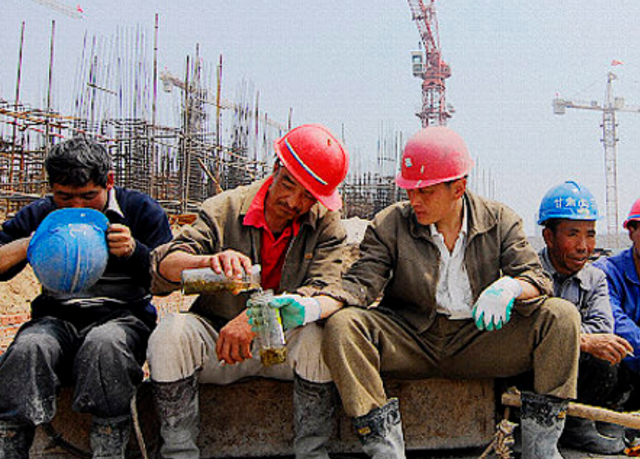
When I was a reporter, I once systematically interviewed some of the first generation of farmers who went to work in the city. I found that the most important reason that supported them to endure hardship and work hard in the city, in the final analysis, was nothing more than one sentence: “I don’t want to be poor anymore.“
I didn’t quite understand at the time: these first-generation farmers also lived a very poor life in the city, so what kind of “poverty” were they afraid of?
Later I understood that it was the “scarcity economy” that Fei Xiaotong said, where there was no place to use their strength and poverty could not be changed.
And these experiences of suffering and pain, allowing family members to survive better, constituted an important driving force for this group of people to work hard.
And by clarifying this point, and then looking back at the current predicament of the “second-generation farmers” and “poor second generation”, one can understand why they are “not as good as their fathers” in enduring hardship—that limited development space, and the inability to change their own poverty even with strength, is once again descending upon their lives.
Look at the report of the Sanlian Life Weekly on these four suicides, and you can feel that they are living in this difficult situation. The other day, I saw a news report that the delivery staff in Guangzhou were surprisingly fully recruited, which is actually a warning, indicating that under the background of no new industrial and commercial models being created, the “arable land” (job positions) in the city has also been almost exhausted. There are also a large number of “Kong Yiji” being asked to take off their long gowns and join the grassroots labor force. Then the question comes—what should those who are already at the grassroots level, the Xiangzi the Camel, the “second-generation farmers”, and the “poor second generation” do?
Chinese people, especially Chinese farmers, “enduring hardship”, this seems to have been a common sense in the past forty years. But we should not forget Fei Xiaotong’s reminder: this “common sense” also depends on the economic environment.
In an “affluent economy” where there is enough space for development and one can earn one’s own money with one’s own strength, the first generation of farmers can exert their nature of enduring hardship, but if society falls back into the cycle of “scarcity economy”, the state of traditional agricultural society may be revisited, and in that society, the “idle people”, “lazy people”, and “rogues” who have no place to use their strength were also the norm for traditional Chinese farmers.
Do not think that the poor people at the bottom of China only have the character of “enduring hardship”, which side of their character they show is determined by the environment.
2
There is another change happening, and it is deeper: the “belief” for which the Chinese at the bottom are enduring hardship is disappearing.
Max Weber has a famous saying in his book “The Protestant Ethic and the Spirit of Capitalism”: “Man is an animal suspended in the web of meaning.”

Weber said this to explain why Protestants are more likely to develop capitalism: Since the modern religious reform, Europe has risen with a group of Protestants who work hard, save money, but also stick to these properties, unwilling to spend money, and live an unusually frugal life, like ascetics. In the end, the vast wealth they accumulated became the “capital” to realize industrialization and mass production.
From the perspective of outsiders, this behavior of Protestants “earning without spending” is a bit incredible. Working and earning money, accumulating wealth is originally for enjoyment. Earning money without spending, what’s the point of living this life?
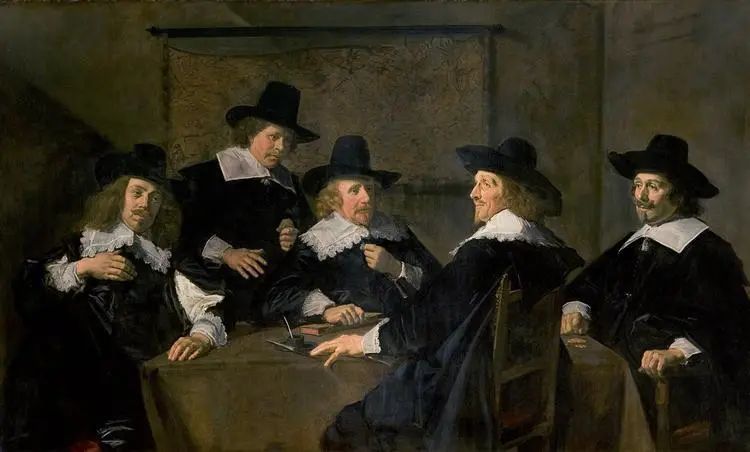
But Weber explained: it makes sense to do so, because “man is an animal suspended in the web of meaning”, the “web of meaning” that Protestants hang on is their faith, their Protestant ethics.
Protestant ethics require these believers to work hard and earn money, and to prove their success by accumulating wealth. At the same time, they need to adhere to a frugal life to prove that they are “God’s chosen people”. Their lives move for this web of meaning, so they feel that they are quite interesting.
From Weber’s point of view to examine traditional Chinese people, you will find that our ancestors were actually “Chinese-style Protestants”. They also endured hardship and worked hard without spending, but the “web of meaning” that hung them was different—it was called “family” (or “home”).
There was a Chinese documentary that caused a big hit in Japan, called “Living with Tears”, which tells the story of a Chinese man who bid farewell to his wife and daughter, went to Japan to work illegally, worked three jobs a day, worked more than ten hours a day, but lived in the most dilapidated house and lived the most frugal life, sending all the wages except for basic daily expenses back home. This man did this in Japan for more than ten years. And his purpose for doing this was actually for his daughter, for his family.
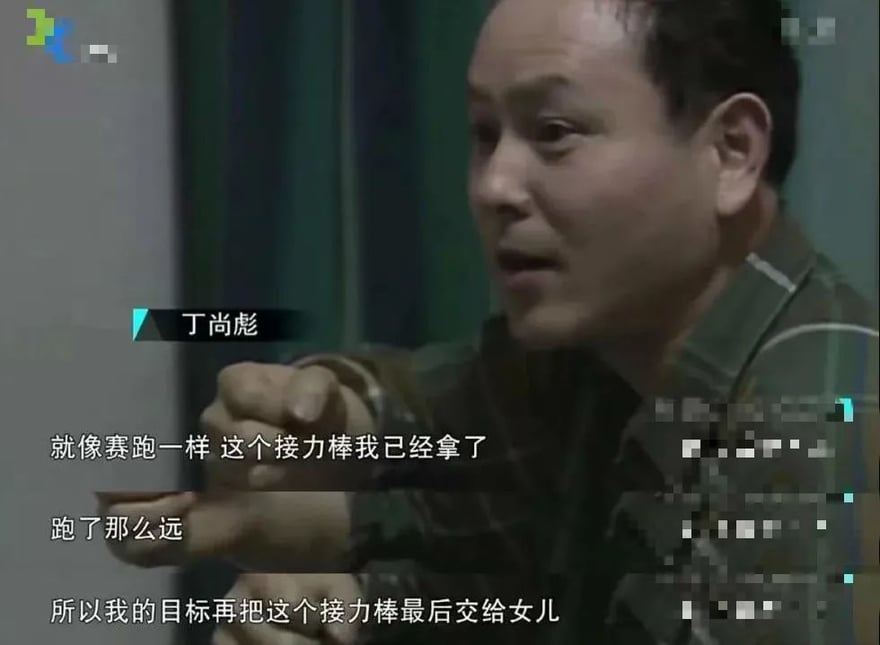
“Ding Shangbiao, who “lived with tears”, is a very typical “Chinese version of Protestant”.
Yes, too many traditional Chinese people are hanging on that web of meaning called “family”. Their social meaning and life meaning are all based on the continuation of the family or clan—in other words, they live for their family, not for themselves.
“For family, live even with tears.” This constitutes the ultimate concern and a quasi-religious belief of traditional Chinese people.
What’s more interesting is that this survival model not only has “inwardness”, but also has “outwardness”—as mentioned earlier, the traditional Chinese rural society is “overcrowded” and “zero-sum”, which leads to the neighbors and relatives being particularly sensitive to the rise and fall of your family, the changes in personnel and property. The annual and festive programs in Chinese rural areas are that all the aunts and uncles come to ask how you are doing at work, how much money you earn, and whether you have married and found a husband, which is a representative of this sensitivity.
A traditional migrant worker, no matter how much hardship he suffers outside, as long as he can show his “dazzling” side in front of his fellow villagers when he goes home for the New Year, showing that he has status and position. The traditional village society can give them dignity in return to compensate for his hard work.
So Chinese people particularly advocate going home for the New Year.
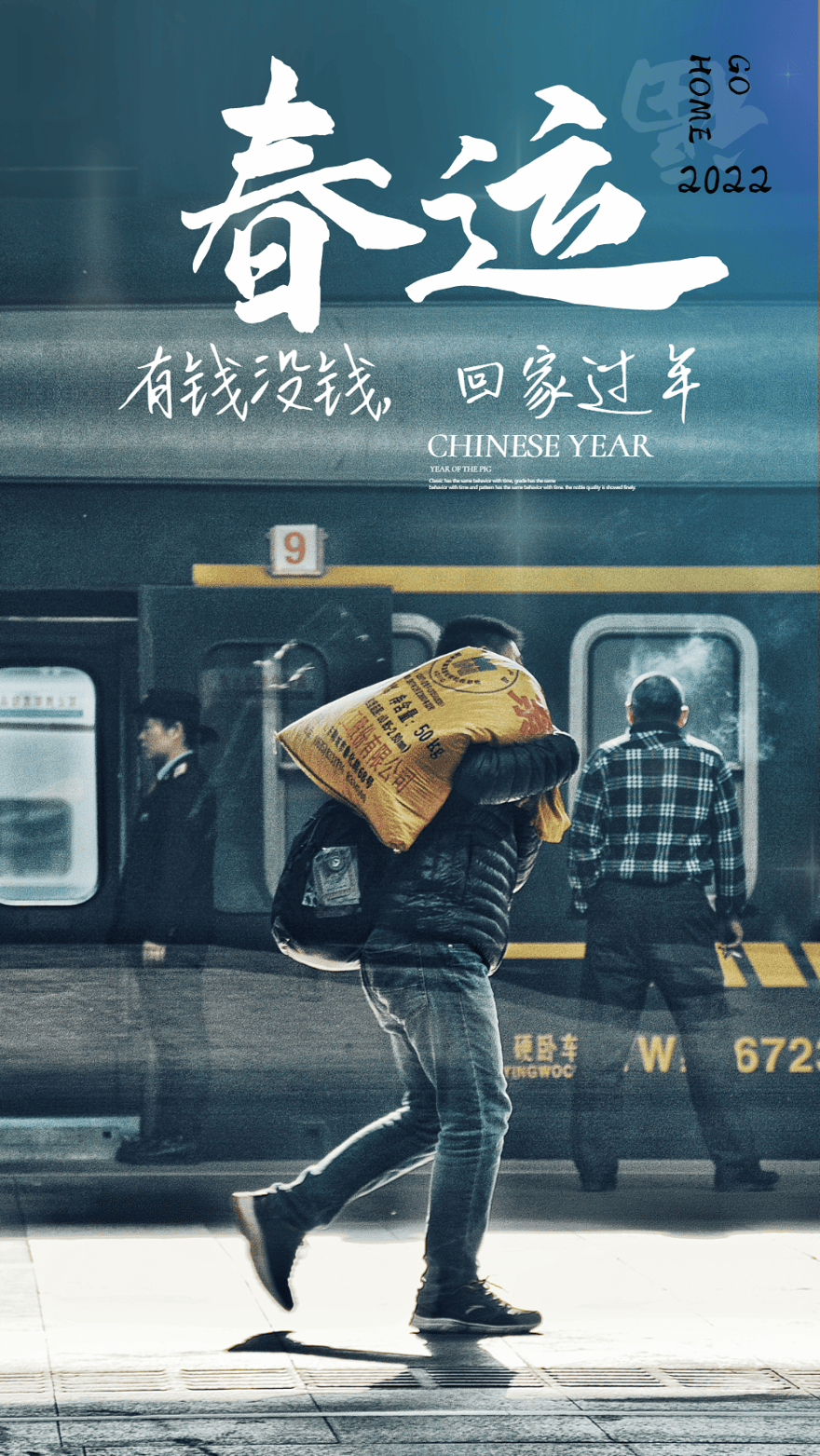
This web of meaning called family, clan, and lineage gives the previous generation of “enduring hardship” Chinese people inexhaustible fighting energy, and even we can say that the miraculous prosperity of the whole of China hangs on it.
But the problem is that, these migrant workers who endure hardship, these “Chinese-style Protestants”, **are both the energy performers of this web of meaning, but also its gravediggers.****
With a large number of migrant workers leaving the villages and coming to the cities, the web of meaning of rural families has actually disintegrated the most in the past few years, and even the relationships between relatives and neighbors in many villages have become “empty nests” due to the migration of workers, and their disintegration is even more serious than that of the cities.
So the “second-generation farmers” neither have such strong family ties, nor do they take the interests of these family ties as their highest action guidelines. So they have become the “drifters” who have fallen off the web of meaning. They no longer belong to that traditional family, clan, and no longer live for the family, clan. Living for themselves is too hard, and they can’t find the meaning of “living with tears”. They can’t find the “web of meaning” to hang themselves on. So “lying flat”, and even suicide, has become the choice of many people.
I know young people who came out of the countryside like this. They didn’t lie flat, worked hard, and were also very kind, but they were even more avant-garde “unmarried and childless”. I once asked a girl like this, why do you want to do this? She told me about her childhood experience of hardship: because her family was poor, she couldn’t afford her own bed in the school boarding house, so she had to “share a bed” with her classmates. She didn’t dare to complain even if she was squeezed off the bed in the middle of the night, and could only endure the night on the ground. Because her family was poor, she didn’t eat the food she brought to school once, and it had already gone bad when she got home, but her parents forced her to eat the bad food because they felt sorry for the food…
After she told these stories, I understood her idea of not getting married and not having children—a person who has endured so much poverty and hardship has a natural fear of living, and doesn’t want to be burdened by the next generation, and let the next generation also suffer this kind of hardship, and hang themselves on that “web of meaning” called family, which is understandable.
And speaking of this, when we look back at the four people who jumped off the cliff, we will find that they also have a common characteristic: they are all unmarried or divorced.
And such “poor second generation” are becoming more and more. For example, the suicide of the teenager Liu Xuezhou, which caused a sensation last year, has this kind of temperament—he is a person who has fallen off the web of meaning of the family.
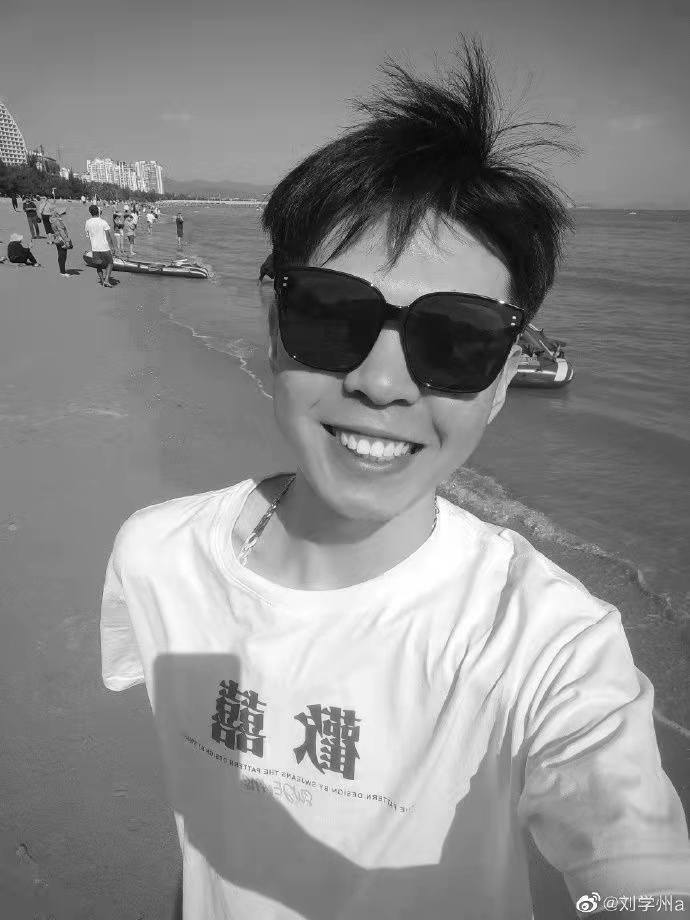
Yes, more and more young people (especially rural youth and poor youth) are falling off the web of meaning of the traditional family. So they are no longer as “tough” as their fathers, and no longer willing to “live with tears” for the clan and family. They want to live for themselves.
And if poverty and pain make them really unbearable, they would rather die.
3
In summary, based on the above two points, we can basically make the assertion—“enduring hardship”, as a national character, is likely to withdraw from China in the foreseeable future. The next generation of Chinese youth will no longer be as hardworking and complaining, and only endure hardship without seeking enjoyment, as the previous generation. They will be more sensitive to labor, rewards, and development space.
And this change in national character is likely to be permanent, because the wave of migrant workers entering the cities in China in the past few decades has completely changed our countryside.
The significance of this matter is very important.
As we all know, abundant labor resources and the ability to endure hardship have always been a major advantage for China to maintain rapid economic development. Some people even jokingly call it “human resources”. If this metaphor is appropriate, then Chinese people are no longer so “enduring hardship”, and coupled with the decrease in the birth rate, rounding up, it is almost equivalent to the “human resources” being exhausted. We are losing the greatest development advantage that we have relied on.
You can imagine what it would be like if Saudi Arabia lost its oil, Russia lost its oil, the United States lost its cutting-edge technology advantage, Nauru lost its bird droppings, and the Pampas grasslands in Argentina didn’t grow grass… This is an unprecedented development predicament.
But based on this, should we call on the new generation of Chinese youth, especially the grassroots “poor second generation”, to learn from their fathers and continue to “endure hardship”?
No!
There is a sentence I have been holding back in my heart, and I have never had the opportunity to say it. That is, I always suspect that enduring hardship cannot be regarded as a traditional virtue at all.
Just as Fei Xiaotong pointed out, being able to endure poverty and hardship is a reality that Chinese people had to endure under the “scarcity economy”. It is only because those who did not accept this reality died that it gave the illusion that everyone accepted this reality, and even that life should be like this.
But this misfortune should have ended with the rise of modern industrial and commercial civilization.
In the four freedoms that President Franklin D. Roosevelt proposed that people should enjoy, the reason why there is “freedom from poverty” is because in this incremental world, no one should be unable to change their poverty with labor if they are willing to.
So poverty is not worth praising, and suffering is not worth praising. If a person can endure hardship, he should not suffer from poverty. The previous generation of Chinese people used the “enduring hardship” left over from the “scarcity economy” era to work in the “affluent era” and created the miracle of China’s economy. But we should not think that this “enduring hardship” is a matter of course. This “virtue” of the old era will definitely collapse with the development of the economy.
And what our society needs to find is a new “web of meaning” that can allow young people who have broken away from the traditional family “web of meaning” to hang on again, and let them live for it (even if it is not “living with tears”).
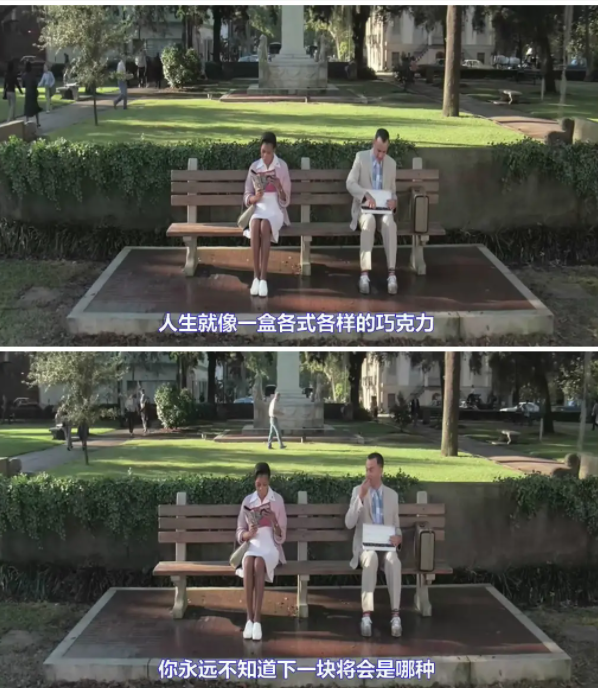
From this perspective, we should also look at the world with more open eyes, because this kind of “meaninglessness” experienced by this generation of Chinese young people is exactly what many developed countries have experienced. Their answers to this problem (even the often-criticized “individual liberalism”) are not perfect, but they are at least a modern “web of meaning” that can be used by young people to hang their lives on.
For example, you can take a look at “Forrest Gump”, the driving motivation of this story,
is that the protagonist, who is drifting like a feather, is looking for the meaning to hang his life on.
At the same time, we must let those young people who are struggling in poverty see the hope of changing their lives. In this regard, I think there is no more perfect answer than an active and prosperous free market, an open and infinitely possible flowing society.

Please make it happen.
In short, the character of “enduring hardship” may soon be removed from our national list.
It has brought us great development advantages, but please don’t miss it.
Suffering and labor are never worth beautifying, they will only bring people heartache.
So “enduring hardship” is not beautiful, and even less a matter of course—no one should be willing to be poor, but only work and not complain. This is not fair.
For the new generation of young people, give them the right to cry out, give them the freedom to lie flat, give them a reason, let them live with a smile and hope, instead of living with tears like their fathers—live on.
Discover more from 自由档案馆
Subscribe to get the latest posts sent to your email.