The medical insurance centralized procurement negotiation broke the precedent and announced the negotiation results of the most concerned new crown drug: Pfizer’s Paxlovid failed to negotiate due to price issues, and Azvudine and Qingfei Paidu Granules were negotiated.
1. Why pay attention to the centralized procurement of Paxlovid?
Which of the three has the most gold content, and what kind of goods the other two are, everyone knows. At the peak of severe cases, the entire medical insurance centralized procurement really focuses on Paxlovid. It can even be said that all the drugs that go to negotiate centralized procurement have absolute public support and hope to be negotiated, that is, Paxlovid.
Many financial and pharmaceutical reporters are squatting for centralized procurement. It is a pity that it seems that no one is thinking of doing a public opinion survey to ask the representatives of many pharmaceutical companies who participated in the negotiation what they expect from the Paxlvodi negotiation. If this survey is done, I believe that most of them will hope that this drug can be negotiated. The rest, including several PD-1 antibodies, and several competitors, are probably eager to succeed in their own negotiations and fail in others’ negotiations. The common people are even estimated to not know who is who, and they don’t care who succeeds or fails.
Why do people hope that Paxlovid can be negotiated? Because it has a clear effect on the new crown, and we have significant needs under the epidemic. Many people may misunderstand the medical insurance centralized procurement. The drugs that are not negotiated do not mean that they cannot enter the country and cannot be used. However, in the face of the overwhelming new crown infection, the supply of Paxlovid in China has been in an extremely tense or even chaotic state. The hope that Paxlovid will enter medical insurance is not only, or not, thinking that this drug can be reduced in price, but that after entering medical insurance, the supply of this drug can be guaranteed, and those who are infected and meet the conditions – those with a high risk of severe illness can use it in time.
Yes, the common people want to have medicine available. The medical insurance centralized procurement should also know this very well, so when Paxlovid was not negotiated, it also said that Azvudine and Qingfei Paidu Granules were negotiated. It is probably also aware of the quality of the latter two, and further said that there are more than 600 drugs related to the new crown in the medical insurance catalog.
But this is stealing the concept. Through double-blind trials and real-world tests, the only drugs that can really target the new crown and reduce the risk of severe illness are Paxlovid. Adding more than 600 drugs means including all kinds of antipyretics and cough suppressants. Is this meaningful? Is it the same as saying to the exhausted medical staff in the hospital: Don’t panic, although there is no Paxlovid to reduce the risk of severe illness for the infected people (so more people will be hospitalized), but the antipyretics will be reimbursed by medical insurance?
2. Facing the public health crisis, it is a mistake for medical insurance to negotiate
Therefore, when the centralized procurement threw out “the price was not negotiated”, and the media speculated how much the bottom line of the centralized procurement was, and how much Pfizer was willing to reduce the price, we had already deviated from the key issue of Paxlovid not entering the medical insurance centralized procurement: how to ensure that the Chinese people can use a drug that is clearly effective and has a real need.
From this perspective, the medical insurance centralized procurement of Paxlovid itself is inappropriate. After the centralized procurement failed, many people began to notice that the foreign procurement price of Paxlovid was much higher than the previous medical insurance procurement price in China. The medical insurance price was 2,300 yuan per course of treatment, and recently, according to media reports, it has dropped to 1,890 yuan. The US government signed a contract for 530 US dollars per course of treatment. The procurement prices in Europe, Japan, and Australia are not too far from the US price. In fact, the US government procurement contract includes a price guarantee clause for developed countries. If the procurement price of Japan, Germany, and other 6 developed countries is lower than that of the United States, the US contract will be automatically updated to this lower price.
These data are public, and obviously Pfizer does not want to charge China more. In fact, the global pricing of multinational pharmaceutical companies is linked to local economic development and per capita income. As long as it is a drug officially listed in China, it will inevitably be cheaper than in developed countries within such a pricing system.
But the more critical issue is that the procurement prices of other countries are not the negotiated prices of medical insurance, but the government’s procurement of key materials for the public health crisis in the context of the pandemic. This is more critical than price comparison, and it is also why I said that it is not appropriate for medical insurance to negotiate Paxlovid.
Public health crises are urgent, while medical insurance, as a kind of medical insurance, covers drugs that need to consider long-term supply and demand. At present, China is in the peak period of the epidemic. The procurement of Paxlovid obviously needs to focus on the public health crisis. At this time, it is strange to negotiate according to medical insurance.
Perhaps also in order to meet the urgent state of the current new crown epidemic, the medical insurance centralized procurement announced at the same time that it would continue to pay until March 31. But this still avoids the real key issue: how to ensure the supply of Paxlovid, a key material that reduces severe illness and death after the outbreak of the epidemic.
The question is not when the medical insurance is willing to continue to pay, and how much it is willing to pay, but how much medicine is actually in hand, how much medicine is planned to be bought, how many people can finally use the medicine, and who can use the medicine. Should these questions be managed by medical insurance or medical insurance centralized procurement?
Even in developed countries where the epidemic has entered a stable period, the operation of Paxlovid to commercial insurance has not yet begun. Is it a dislocation to do medical insurance centralized procurement now?
3. The basis for the global recognition of Paxlovid’s value
In the first three quarters of 2022 alone, the global sales of Paxlovid reached 17 billion US dollars. Obviously, this drug has gained value recognition globally, that is to say, many countries around the world believe that it is worth paying so much money to buy it.
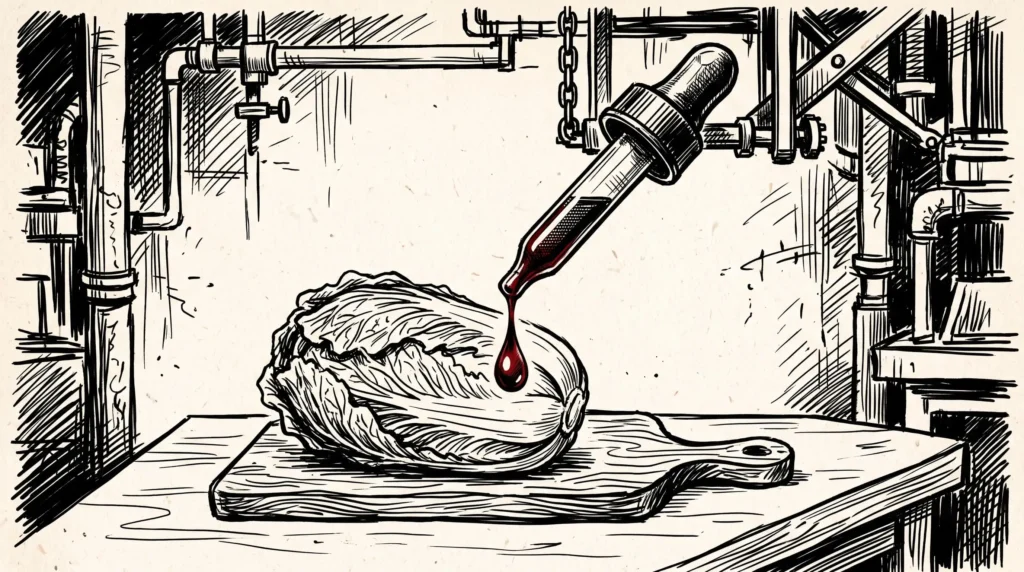
As mentioned earlier, the public procurement prices of various countries are higher than the medical insurance procurement prices. When discussing whether Paxlovid is expensive or cheap, you can’t just look at the price tag, but at the value. Otherwise, you are questioning people all day long how a catty of meat is more expensive than a catty of cabbage, isn’t it a mental illness?
A very realistic point: Paxlovid is currently the best overall choice in terms of effectiveness and safety among all new crown antiviral drugs, and it is the most convenient to use.
From the perspective of effectiveness, Paxlovid can reduce the risk of hospitalization and death by 89% (Phase III clinical trial) in high-risk people who have not been vaccinated, and reduce the risk of hospitalization by 68% (Israel real-world study) in high-risk people who have been vaccinated. This is much higher than Merck’s oral drug that has just entered China. Some analyses say that Merck’s oral drug has come in, and there is competition, and medical insurance does not need to rush to buy Paxlovid. People who do this kind of analysis don’t even understand the difference in drug effectiveness.
From the perspective of safety, Paxlovid not only recruited more than 2,000 people in the Phase III clinical trial, but also has about tens of millions of people who have used it globally after it was launched. This is a large amount of safety data accumulation. Some people say how this or that drug under research is, and they don’t say when the research will be completed, and it’s hard to say what it will look like when it is researched. Even if the drug is approved, how much safety data is behind it? In adverse drug reactions, the definition of uncommon is an incidence of 1% to 0.1%, and rare is 0.1% to 0.01%. According to this standard, how many new crown antiviral drugs under research in China can clearly identify rare adverse reactions, and it may not be possible to find all the uncommon ones? In the head-to-head trial done by VV116, less than 400 people used VV116. Can this amount of data say that VV116 is safer?
The advantages of oral drugs in terms of convenience are even more unnecessary to mention. In summary, Paxlovid is currently the drug with the most safety data accumulation, and it is also the most reliable choice for reducing the risk of severe illness after infection for high-risk people. This is also the basis for the global value recognition of this drug, and it is also the reason why so many countries spend a lot of money to buy this drug, without thinking that other drugs may be cheaper, and it is better to use other drugs.
4. Ask how much the medicine is worth, think about how much a person is worth
However, since medical insurance has already tried to include Paxlovid in the centralized procurement, the price is naturally a topic that cannot be avoided. But instead of guessing how much the medical insurance bottom line is, and how much Pfizer’s quotation is, we should think about such a question: how much is a drug that effectively reduces the risk of severe illness from the new crown worth?
And now, under the peak of severe illness, it is better to ask how much a life is worth than to discuss how much Paxlovid should be worth.
Don’t think this is an exaggeration. The price of drugs should be considered from this point of view: what is the value of the health benefits that can be obtained by using the drug? Elderly people who have not been vaccinated – there are still many in China. According to the data from Hong Kong, the mortality rate of people over 80 years old after infection reaches 14%. Using Paxlovid, it is estimated to be conservative, reducing the risk of death by 80%. 100 elderly people over 80 years old who have not been vaccinated are infected. If they don’t use Paxlovid, 14 people will die. If they use it, about 3 people will die. The 11 lives saved are the value that can be used as a reference when pricing these 100 courses of Paxlovid.
Similarly, even if people have been vaccinated, high-risk people still have the risk of hospitalization after infection. Inactivated vaccines are less effective, and the risk may be higher. If Paxlovid is used to reduce the risk of hospitalization for infected people by 60% to 70%, the money saved from hospitalization, including the extra labor of medical staff, should also be considered when discussing the value of Paxlovid.
There are also professionals doing research in this area. For example, there is an independent ICER in the United States, which specializes in the medical value of drugs listed in the United States – health benefits converted into money. In March 2022, ICER estimated that the reasonable price ceiling for Paxlovid was 3,600-5,800 US dollars per course of treatment, which is cost-effective from a medical economics perspective, based on the mortality rate and severe illness rate at the time. In December, as the risk of severe illness in the United States decreased, ICER updated the data and believed that the reasonable price ceiling should be reduced to 563-906 US dollars per course of treatment.
Of course, the economic development level of each country and region is different, and the results of health benefit conversion are also different. For example, some people may think that the lives of people over 80 years old are not worth much, or the labor of medical staff in some countries is not worth much.
It is a pity that the target price of medical insurance centralized procurement is not disclosed. It is said that only when the enterprise’s quotation is within 115% of the target price will it be further guided towards the target price. However, this centralized procurement is willing to break the precedent and announce that it has not been negotiated. It is better to also announce the psychological price, so that everyone can also see the value of health in the eyes of medical insurance when Paxlovid is being hyped to tens of thousands of yuan per box in the black market during the most severe period of the epidemic, and many people are seeking to purchase “generic drugs” of unknown origin.
As mentioned earlier, in the public health crisis, it is a dislocation for medical insurance, which is responsible for long-term medical expenses, to centrally procure Paxlovid. To say one more thing, Western countries should gradually commercialize new crown vaccines and drugs this year. At that time, local medical insurance will negotiate pricing with Pfizer and other companies, and these prices will inevitably be several times higher than the government procurement price. In other words, the gap between the current purchase price of medical insurance and the foreign order price may be even greater in the future.
In the summer BA.5 peak period, about 1,000 people per 100,000 people over the age of 65 were using Paxlovid. According to these estimates, more than one-third of the people infected with the new crown in the United States now use Paxlovid. Even so, the United States still believes that the promotion of this drug is not enough. For example, some ethnic minorities use it less:
Paxlovid has become the first choice for new crown antiviral drugs for scientific reasons, based on overall effectiveness and safety. After the medical insurance centralized procurement negotiation failed, some people thought of replacing it with Merck’s oral drug, or drugs under research and generic drugs that are not yet available. Are these ideas based on science?
Discover more from 自由档案馆
Subscribe to get the latest posts sent to your email.