

In late August 2024, Gao Qi, the elder brother of the renowned Chinese contemporary artist Gao Brothers, who resides in the United States, was taken away and criminally detained by the police in Yanjiao, Sanhe City, while preparing to return to the United States after visiting his family in China. According to the notification received by his family, Gao Qi is suspected of "infringing on the reputation and honor of heroes and martyrs." This case has sparked widespread concern in the art and legal communities, with the core controversy being: most of Gao Qi's alleged artworks were created more than a decade ago, while the crime he is suspected of violating is a law that only officially came into effect in 2021. This marks a new stage of "retroactive" political censorship of artistic creation.
1. Event Overview: Sudden Arrest During Return Trip
According to Gao Qiang (the younger brother of the Gao Brothers) and related sources, Gao Qi, 68, who has become a U.S. citizen, recently returned to China to visit his family with his wife and children. On August 26, his studio in Yanjiao, Sanhe City, Hebei Province, was searched by about thirty police officers. On August 27, Gao Qi was intercepted before boarding a flight back to the United States. Currently, he is being held in the Sanhe City Detention Center.
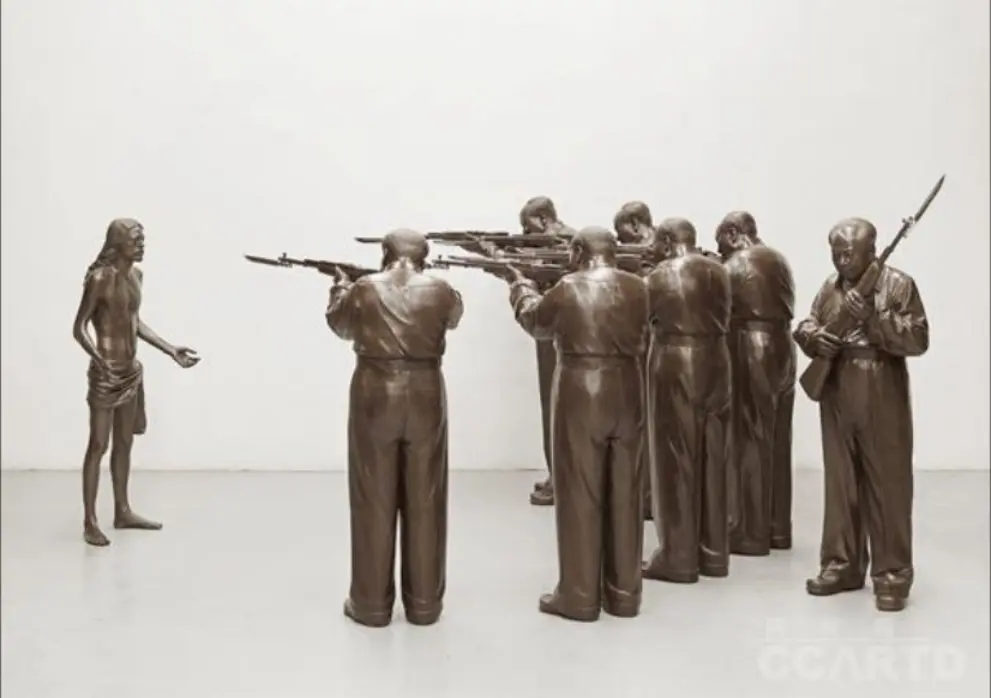
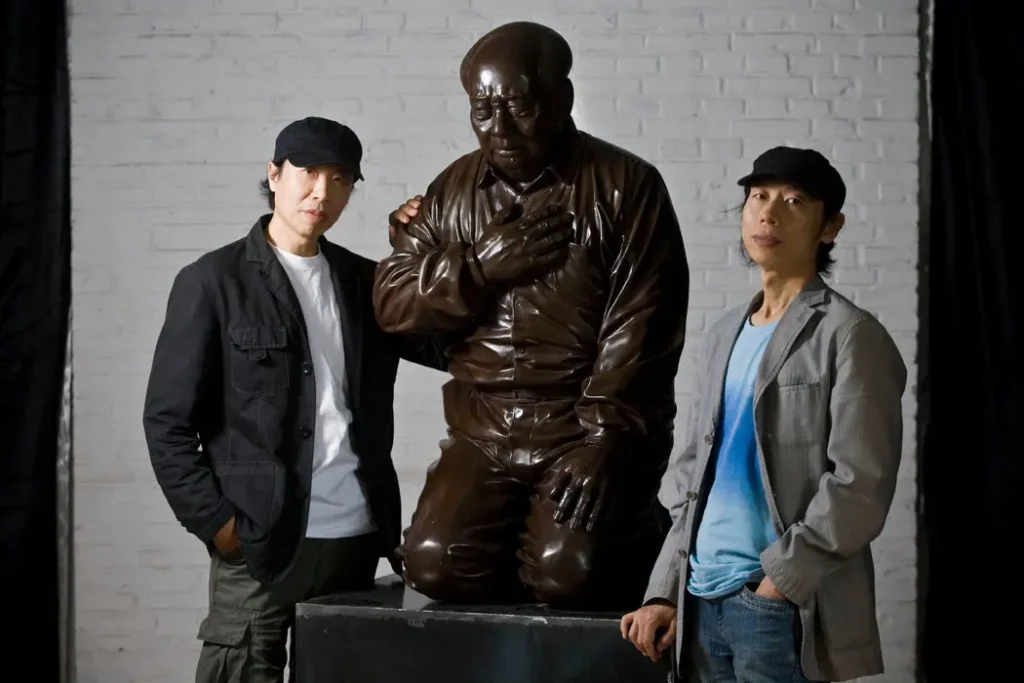
The police's focus on evidence collection was directed at a series of sculptures created by the Gao Brothers in the early 2000s, including "Miss Mao Wants to Sleep" and "Christ Executed," which involved critical expressions of historical figures.
2. Background Depth: The Gao Brothers and the Boundaries of Taboo
The Gao Brothers have been collaborating since the mid-1980s and are a highly provocative group in Chinese contemporary art. Their works have long focused on:
- Historical Reflection: Excavation of the collective memory of the "Cultural Revolution" and deconstruction of the leader myth.
- Human Rights and Society: Attention to the living conditions of the bottom class and social injustice.
- Religion and Philosophy: Introducing a divine perspective into the judgment of secular power.
Due to the fact that their works directly touch upon the most sensitive symbols in Chinese politics, their exhibitions have been closed down many times, and their works have long been banned on social media and in public publications.
3. Legal Focus: Retroactivity of Law and Artistic Expression
The most concerning aspect of this case for the legal community is the application of the "Amendment to the Criminal Law (XI)."
- Crime of Infringing on the Reputation and Honor of Heroes and Martyrs: This crime came into effect on March 1, 2021. However, most of the Gao Brothers' relevant sculptures were created 20 years ago and have been circulating in the international art world for many years.
- Retroactivity Issue: Legal principles usually follow "from the old and from the light." Applying the 2021 law to trace back to artistic creations from the 2000s is highly controversial in legal theory.
- Artistic Space: If the artistic treatment, deconstruction, or even satire of historical figures is included in criminal charges, it means that the function of "critical reflection" in contemporary art will be completely lost within China.
4. The Tension Between Official Narrative and Reality
In recent years, the authorities have strengthened the unified management of historical narratives through legislation, and any non-officially recognized evaluation or expression may be regarded as "historical nihilism." Under this narrative, Gao Qi's works are no longer a subject of artistic discussion but are instead classified as criminal offenses. However, for the art community, this is seen as a form of "post-event settlement," aimed at clearing out the critical cultural archives that were produced during a relatively loose era.
Gao Qi's arrest is not only a disruption to the Gao Brothers' artistic career but also a turning point in the contemporary art environment in China. It sends a clear signal to the outside world: the past "artistic immunity" no longer exists. The right to interpret history has been tightly locked, and the law is being used as a tool to clear historical memory. The Free Archives will continue to follow the progress of this case and record this historical moment when artistic expression is convicted.