The market is a transactional relationship, not a power relationship. Policies cannot only look at benefits, but also at costs. Should the so-called right to know of consumers override the autonomy of businesses?
Phoenix.com original The market is a transactional relationship, not a power relationship. Policies cannot only look at benefits, but also at costs. Should the so-called right to know of consumers override the autonomy of businesses?
Author丨Liu Yuanju
Senior Media Commentator
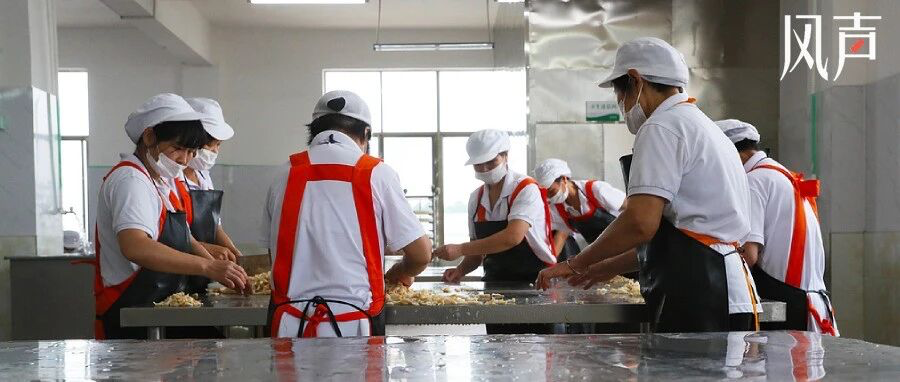
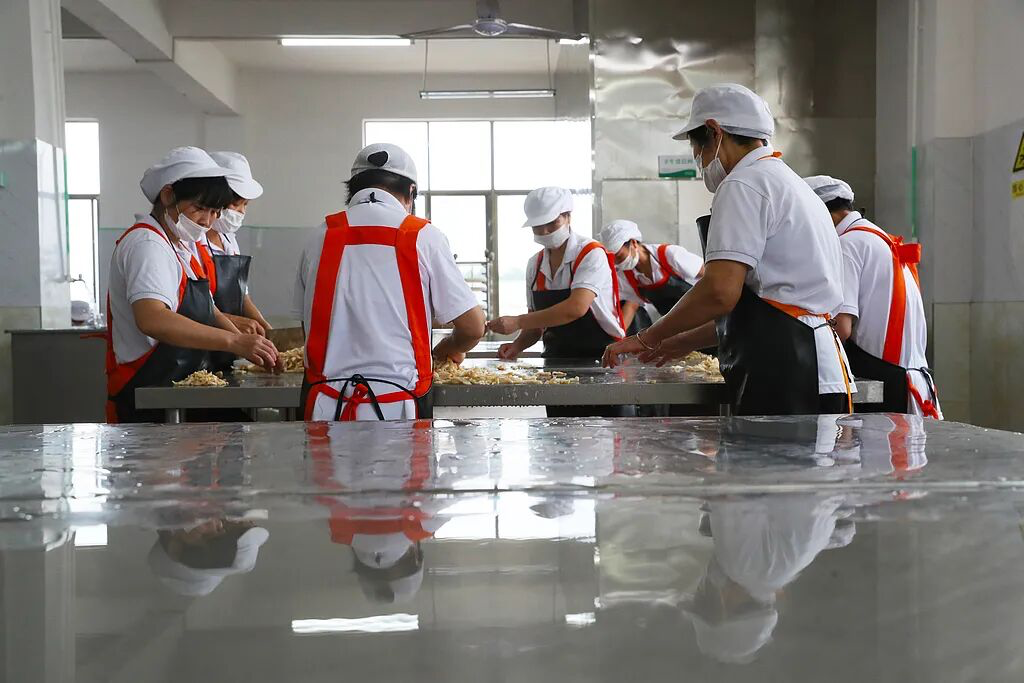
Recently, news about pre-made dishes has once again sparked heated discussions in public opinion due to the mutual exchanges between Jia Guolong and Luo Yonghao, and even official media have published three comment articles in a row. As the comment of the People’s Daily said, Xibe itself has many problems in this public opinion dispute. However, there are also many fallacies in the public opinion field regarding the issues related to pre-made dishes.
In this regard, according to a report on January 22, in order to effectively protect the legitimate rights and interests of consumers and promote the high-quality development of the industry, the Food Safety Office of the State Council organized the National Health Commission, the State Administration for Market Regulation and other departments to draft the “National Food Safety Standard for Pre-made Dishes” and “Terminology and Classification of Pre-made Dishes” draft; together with the State Administration for Market Regulation, the Ministry of Commerce and other departments, drafted an announcement on promoting the autonomous and explicit display of dish processing and production methods in the catering sector, which will be open to the public for comments in the near future. In the next step, relevant departments will further revise and improve the draft based on fully absorbing the opinions and suggestions of all parties, and release it according to procedures.
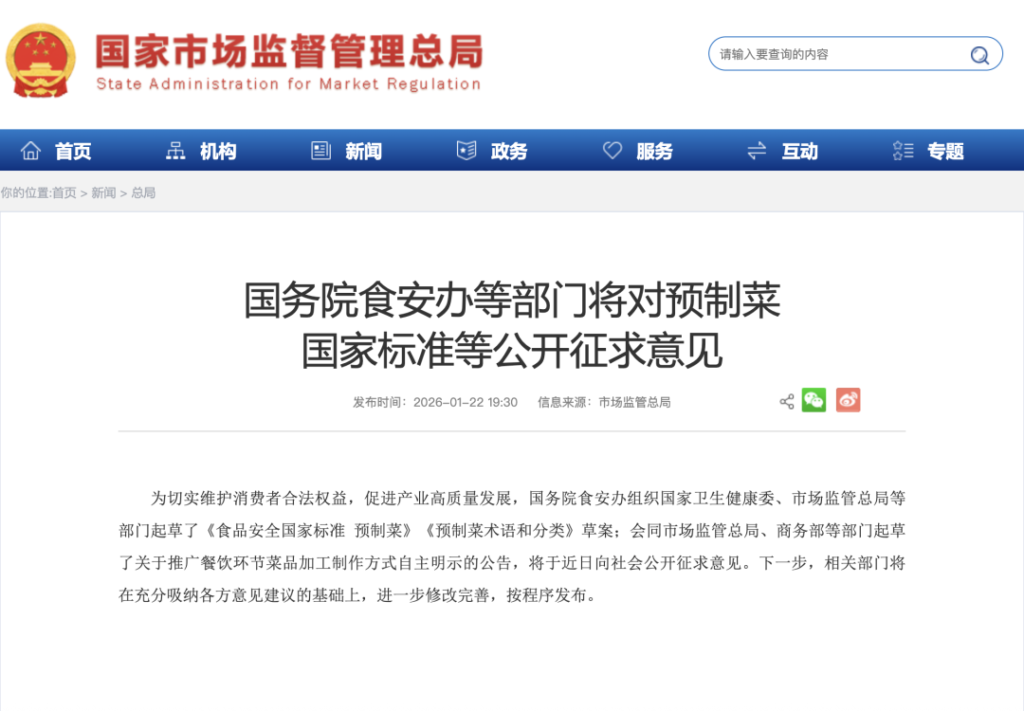
It can be seen that, for the issue of explicit display of dish processing and production methods in the catering sector, the current attitude of relevant departments is still mainly in the promotion and autonomy aspects. So, with the imminent release of the national standard draft for pre-made dishes, how should we view the public opinion controversy of pre-made dishes? For example, this heated public opinion dispute often discusses such a controversial issue: should pre-made dishes be labeled? On this issue, the public opinion’s call for mandatory labeling is very strong and full of emotionality, but many concepts and goals are vague and lack refined analysis.
Is the public opinion demand the actual market demand?
What is the purpose of labeling? Many consumers envision that when mandatory labeling is implemented, many restaurants will not use pre-made dishes, and they can eat freshly made dishes for the same amount of money; or, when restaurants label pre-made dishes, the prices of pre-made dishes will fall.
However, neither of these two goals can be achieved.
First of all, the catering industry is a fiercely competitive industry, and any cost reduction brought about by new technologies will quickly feed back to consumers in the industry. China’s new energy vehicles, due to the continuous expansion of scale effects, the cost has been declining, but new energy manufacturers have not gained higher profits because of the cost reduction, but have entered a price war, feeding back the reduced costs to consumers.
Many people feel that the restaurants that use pre-made dishes are not cheap, so they should not have pre-made dishes. The actual situation is that the catering industry’s use of pre-made dishes to reduce costs has already lowered prices in the competition. The prices seen by consumers are already the prices after the widespread use of pre-made dishes. Now the catering industry is difficult, the profits are not high, and many catering businesses have closed down. The catering industry has not gained excess profits because of pre-made dishes.
To some extent, the emergence of pre-made dishes and central kitchens has greatly offset the rise in the price of Chinese labor, enabling the Chinese catering industry to maintain a relatively low price to adapt to consumers’ budget tightening, and thus maintain market scale.
Mandatory labeling will not promote the large-scale emergence of catering brands that eliminate pre-made dishes.
Consumers have been calling, and public opinion is so strong, which seems to imply a huge demand behind it. According to the laws of supply and demand in the market, whoever meets this demand of consumers will definitely have a good business. However, why has the industry and the market never responded? That is because public opinion and real market behavior are different. Experienced catering operators know that this demand is a false demand. Although public opinion is strong, it is only a public opinion demand, not an actual market demand.
Overall, consumers do not have enough willingness to pay to support such a brand – they just feel that they have the willingness to pay.
Therefore, no brand promises “the kind of non-pre-made dish model in the minds of consumers”.
A restaurant, if it follows the consumer’s standards to eliminate pre-made dishes, needs a larger kitchen and more manpower. A non-pre-made chicken soup, taking into account the area and labor costs, may be the same as the cost of a pre-made seafood. Then, with the same per capita consumption of 300 yuan, one is claimed to eliminate pre-made dishes, but the environment and dishes are a little worse, while the other uses pre-made dishes and a central kitchen, but the environment is more upscale and the dishes are better. Which of these two types of restaurants will win, and which will close down? The answer is self-evident.
More directly, when young people go on dates, do they choose a candlelight dinner or non-pre-made dishes; for business entertainment, do they serve a bottle of Maotai or choose non-pre-made dishes? Consumers are not sensitive to things they cannot see. Just as consumers compare the prices of pre-made dishes from large chain stores with freshly cooked dishes from street-side shops – because they are not sensitive to the safety risks of street-side shops.
Therefore, the catering industry knows that no one will pay for the higher prices given by eliminating pre-made dishes. Whoever does it will become the next “Zhong Xuegao”. Public opinion is strong, only because public opinion is free. Price public opinion, most of which is untrue; only transaction behavior is true. The consumer expectations reflected in public opinion are often false demands.
Therefore, mandatory labeling cannot promote the price reduction of pre-made dish restaurants, and consumers will not change their preference for choices, and cannot promote the large-scale emergence of restaurants that do not use pre-made dishes.
Can mandatory labeling protect consumers?
Pre-made dishes must be cheaper than freshly cooked dishes in small shops, which is itself a misunderstanding. Good pre-made dishes may cost more than poorly made dishes, and naturally, they are more expensive.
A street-side couple’s shop buys the worst meat, makes a pot of Mao Xue Wang, and adds some color, which looks very good. Another large chain brand uses pre-made dishes to make a pot of Mao Xue Wang. Comparing the two, the latter will be of higher quality and safer. Since there is no situation where “spending the money for freshly cooked dishes and eating pre-made dishes is definitely a loss and being deceived”, then there is no so-called “I spent the money for freshly cooked dishes and ate pre-made dishes” is a loss. Therefore, the logical basis for using mandatory labeling to protect consumers from being at a disadvantage is gone.
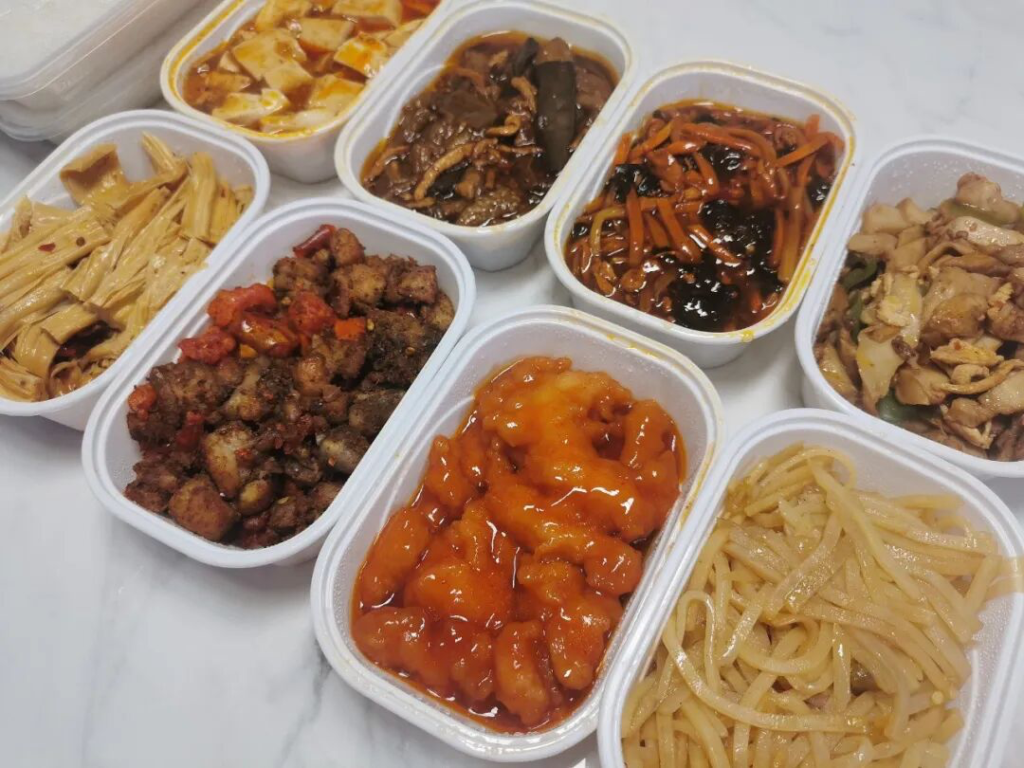
The scope of pre-made dishes is very complex, and labeling cannot clearly distinguish grades and categories. European ham worth thousands of yuan is a pre-made dish; braised pork worth ten yuan is also a pre-made dish. The same pre-made grilled fish has a brand of 200 yuan and a miscellaneous brand of 40 yuan. Some pre-made dishes are for cost savings, while others are because of the process and origin that require them to be made into pre-made dishes. Mandatory labeling of pre-made dishes is not enough to reflect these differentiated characteristics.
Mandatory labeling will flatten the differences in the industry. At the moment of entering the restaurant door, in front of the four words “This restaurant sells pre-made dishes”, the pre-made dishes of 2,000 yuan and the pre-made dishes of 20 yuan have no difference, but are more likely to be labeled as inferior. This is unfair to the industry and restaurants. When imported Norwegian salmon pre-made dishes and miscellaneous brand pre-made dishes are all labeled as pre-made dishes, it will inevitably lead to the bad money driving out the good.
Mandatory labeling of pre-made dishes for restaurants is actually an unnecessary secondary labeling. The formula is mandatory labeled on the packaging bag of pre-made dishes; the safety and compliance of pre-made dishes have been completed in the production stage of pre-made dishes. In the restaurant use stage, as long as the pre-made dishes are qualified, there is no safety problem. Then, the use stage of pre-made dishes – the restaurant, does not need to be mandatorily labeled again.
The packaging of paint needs to be labeled with ingredients and toxicity, but will a car or a mobile phone be labeled with paint ingredients? The secondary labeling in the restaurant stage, to give another example, is like a car that is produced according to national standards, and then labeled as “unsafe”; for example, electric bicycles have two seats, but some places do not allow people to ride. These regulatory logics are all wrong.
Positive identification can already meet the right to know. Many people will say that I don’t care so much, I just want a right to know. However, the market is a transactional relationship, not a power relationship. Policies cannot only look at benefits, but also at costs. Furthermore, we must look up at the stars and think about those abstract obligations and rights.
Therefore, it is necessary to discuss the necessity of implementing a mandatory measure from the perspective of rights and obligations: Should the so-called right to know of consumers override the autonomy of businesses?
Information transmission has costs. From this perspective, information is a service provided by businesses. Businesses provide this service, and consumers can obtain information; if businesses do not provide this service, consumers can refuse to buy, but they have no right to require businesses to provide it. This is like buying a Tesla and not being able to request FSD.
When a restaurant raises prices, consumers cannot say that I have the right to know, so the restaurant must disclose the cost structure, purchase invoices, and meeting records. In a completely competitive industry, the right to know is only the price on the menu, and does not include the above information.
The power of consumers is: vote with their feet and change to another one.
This can be extended to many industries. For example, do consumers have the right to know whether a death incident has occurred in a hotel room? Should the hotel provide a complete set of procedures to provide information and ensure the reliability of the information? For another example, do readers have the right to know the internal processes of the editorial department? If the manufacturer uses aluminum instead of copper, and the performance remains unchanged, does the manufacturer have to guarantee the consumer’s right to know?
The expansion of the right to know is endless, and only by returning to the concept that information is a service rather than a right can a reasonable boundary be framed.
Unless safety is involved, consumers do not naturally have the right to know for other categories of information.
In fact, the right to know that consumers want is also provided by the market, which is often presented in the form of positive identification. The so-called positive identification is that those businesses that meet the requirements of consumers are willing to provide information to consumers to show their advantages. For example, organic vegetable identification. In contrast, if it is mandatory to label “used fertilizers and pesticides”, it is a negative identification. Under the current cognitive background of the public, pre-made dishes are also a negative identification.
When most restaurants have more or less pre-made dishes, considering the social cost, it should also be to identify a few non-pre-made dish restaurants. This involves fewer restaurants, and restaurants naturally have the motivation to identify their own advantages. This is a market behavior and does not require supervision.
Positive identification and negative identification are equivalent. Positive identification has already been able to complete the task of the right to know, why must negative identification be used? Negative identification cannot provide information increment, but can only make people feel uncomfortable.
The high-end version of the car has already been clearly identified, is it still necessary to write a big low-end identification for the low-end version, negatively identifying “this car is not as good as the high-end version”? In a class, some children wear famous brands and use high-end stationery, and everyone can naturally see the gap between the rich and the poor. Is it still necessary to require the poor children to stick a label? Or, require your mother to tell you when she brings the dishes to the table: this dish has been sprayed with pesticides?
Quality and safety are bought, not managed
From the current situation of the catering market, almost all pre-made dishes are used. Mandatory negative identification will only hit the catering industry.
With the same budget, going to a restaurant without pre-made dishes, the environment and dishes will definitely be worse, the romantic candlelight is gone, the lobster is gone, the Maotai is gone, all replaced by chicken soup boiled for 5 hours, beef stewed for 3 hours, and broad beans peeled by hand for 2 hours, everyone is actually not happy. But if you go to a restaurant with pre-made dishes, the big words at the door “This restaurant uses pre-made dishes”, everyone is also uncomfortable.
The negative identification of the restaurant threshold seems to imply that the restaurant’s grade is not high, and at the same time, it labels the entire industry, implying an impression to the public: pre-made dishes are low-grade and unsafe. This is a stigmatization of the entire industry and category. The public will say, look, the state requires mandatory labeling, it must be bad to eat, it is better to freshly cook.
If the industry is stigmatized, capital will not dare to invest, the industry development will slow down, it cannot reach a larger scale, it cannot be concentrated to the leading enterprises, and the quality of pre-made dishes will be even more unsafe. In fact, the development of the genetically modified industry in China is restricted by public opinion.
The catering industry is an industry with “many mothers-in-law but no home”. There is no department responsible for the consumption data of the catering industry, but there are many departments responsible for supervision. This means that public opinion is more likely to lead to unnecessary supervision.
Mandatory labeling, hitting the catering industry, hitting the pre-made dish industry. In the end, this is not good news for consumers either. Paying all this price, getting a situation where everyone loses, just for a vague, overestimating their own willingness to pay in public opinion, the so-called consumer right to know? This does not conform to the principle of administrative proportionality.
The role of consumer is to pay money. Only when trading, are they consumers.
The formulation of policies cannot be led by public opinion. The labeling of pre-made dishes should still be left to the market to decide, consumers vote with their feet, and the market will naturally eliminate the inferior. In the final analysis, quality and safety are bought, not managed.
In the final analysis, pre-made dishes are using the way of modern industrial division of labor to provide consumers with good quality and inexpensive food. However, as soon as consumers hear it, industrial? Chemical? Definitely toxic! At this time, someone shouts again “using pre-made dishes, it’s cheaper than freshly cooked dishes in small shops”, and the whole industry falls into a crisis public relations moment.
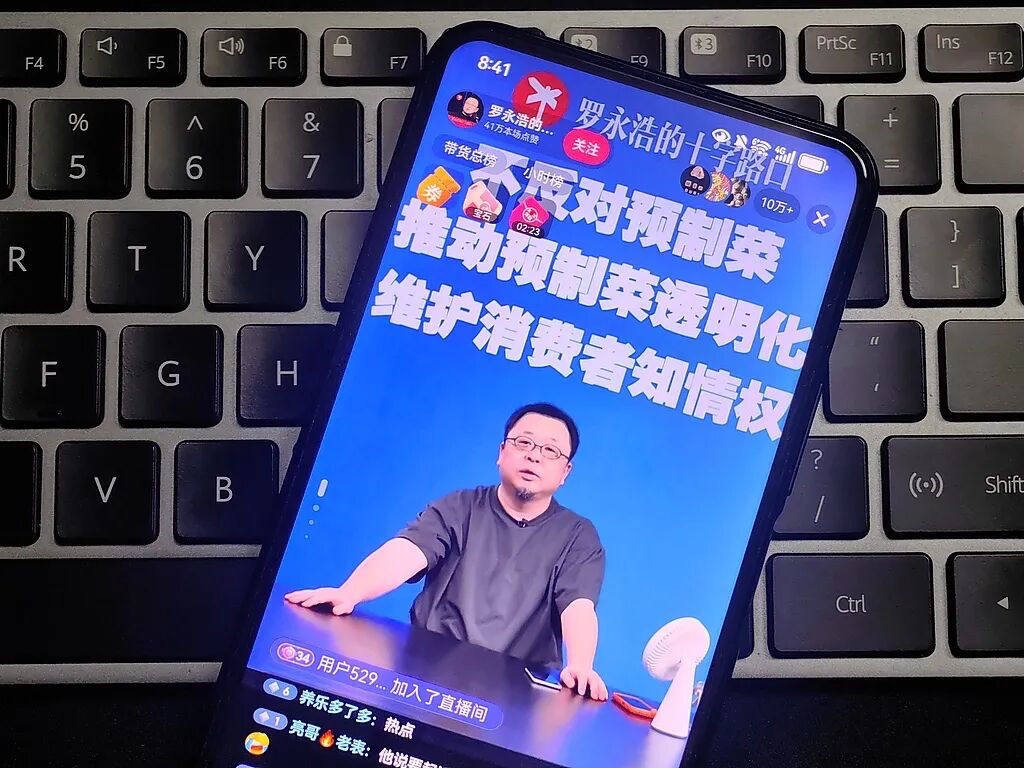
Nor do you need to say that Xibe’s public relations are not good. On the one hand, Xibe does have problems; on the other hand, public opinion has also overestimated the willingness of Chinese consumers to pay for quality and safety, misunderstood industrialization, and misunderstood pre-made dishes. At the same time, it reconstructs the romanticized memory of the past – only remembering that there were no fertilizers and pesticides on the dishes, not remembering the roundworms drilling the gallbladder.
No brand, no industry, can hard-core with this kind of cognition of hundreds of millions of people. These social problems that should have become common sense should be made clear to consumers and establish reasonable expectations.
This is a bigger public relations issue. Marketing focuses on saying its own advantages, while public relations focuses on communication and misunderstanding. A lot of work needs to be done in advance and done for a long time. Changing social cognition is a very expensive thing, and a brand cannot have this power.
But conversely, the leading brands fall into the storm, and the entire industry will be affected. The pre-made dish industry and the catering industry are both like this. Therefore, industry associations, media, and competent authorities should coordinate and work together to do this well.
This article is a special original manuscript of the Phoenix.com Comment Department and only represents the author’s position.
Editor-in-chief|Xiao Yi
Discover more from 自由档案馆
Subscribe to get the latest posts sent to your email.