

The following article is from Ni Ren's Talk on Economics, by Ni Ren

The Central Economic Work Conference is the most important barometer of China's economy.
The content released after the conference, the first of the eight tasks for 2026, is to boost domestic demand. I don't know if you all remember, the "insufficient effective demand" proposed in the previous two years was also first mentioned at the Central Economic Work Conference.
"Insufficient effective demand has become a key bottleneck restricting the economic cycle." This is also one of the official statements.
Many people may think that the problem of domestic demand has only emerged in recent years after the economic slowdown, but this is not the case. The issue of domestic demand has been around for a long time and is related to China's development model after the reform and opening up.
After the reform and opening up, economic development did not always follow the same path, but went through many explorations and attempts. In the early 1990s, the entire economic atmosphere was very sluggish. It wasn't until "a circle was drawn on the South China Sea" that, on the one hand, the special economic zones did play a role in driving development—for example, many people could go south to Shenzhen to work. On the other hand, confidence was also boosted, and more people dared to venture into the sea and engage in the private economy.
The above is the situation of private capital, and we also need to look at state-owned capital. The reform of state-owned enterprises in 1998 was a change in state-owned capital. Until the early 2000s, the pace of private capital became faster and faster, with the addition of the WTO, and it seemed that private capital was leading the trend.
But soon, this situation was reversed. In the early 2000s, state-owned capital's re-domination of lifeline industries and key industries became a new strategy. Private capital in many industries (such as energy) withdrew, and state-owned capital re-emerged. At this time, another very critical thing happened: land finance.
At this time, the "twenty-year miracle" we saw initially established a structure: local governments as "investors" and "bosses", state-owned capital and private capital as "middle-level cadres and employees", driving rapid economic growth together.
This model is roughly: local governments become super rich through land finance, so they "build the stage", allowing state-owned capital and private capital to "perform" in competition. Basically, infrastructure construction mainly relies on state-owned capital, and the targets for attracting investment are mainly private enterprises.
But pay attention, what is the core? It is the investment of local governments. Without this investment, it is difficult to "build the stage", and the play cannot be performed.
The advantage is that this model allowed China's economy to achieve a double concerto at the fastest speed: large-scale infrastructure construction, railways, highways, bridges blooming everywhere, and large-scale renovation of cities, making Taiwanese, Hong Kong, and European and American capital willing to enter China, and domestic private enterprises also developed rapidly.
But the disadvantage is path dependence.
At first, everyone thought that government investment was only to pave the way for a prosperous, diversified economy, but later it was discovered that local government investment did not withdraw for a long time, and even continued to expand, becoming the dominant driver of the economy. In this way, problems kept emerging.
Because local governments were originally only responsible for tax collection and transfer payments, but now they have to be both referees and the main drivers of economic behavior, they are naturally tied to too many interests and resources, leading to the shrinking of private capital and the erosion of dividends.
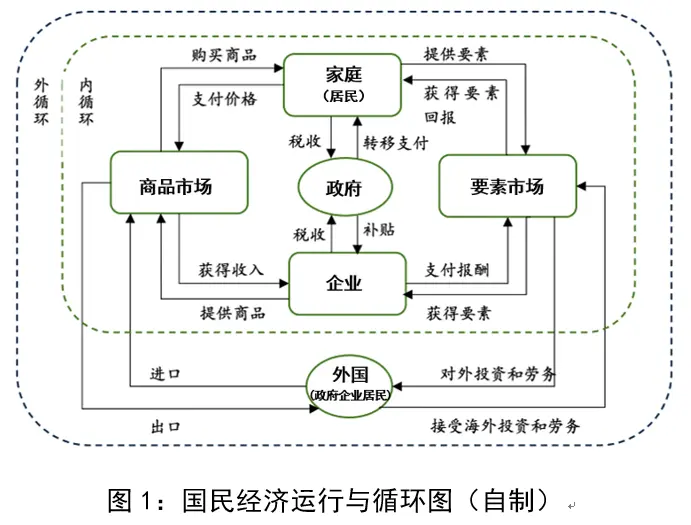
This is because after private capital grows, it usually carries out reinvestment—this is the root of capital driving economic development. But the income obtained from government investment is difficult to reinvest, and then circulate to the links of capital, consumption, and production, but will be deposited.
At this time, local governments can only be "forced to spend money" because they have too much money in their hands. As a result, excessive infrastructure, face-saving projects, repeated construction, and financial waste all came.
This is the structural secret of insufficient domestic demand.
Because the wealth created by society has not been converted into "live money", but has been largely converted into "dead money".
There are also problems with banks in this. Banks are the beneficiaries in every link, so a large amount of "dead money" is deposited in the hands of banks. What we are facing now is this problem: the whole society is not short of money, but the problem is that the money cannot be turned around.
The fundamental solution to insufficient domestic demand is not to simply let the people take a sum of money to consume, but to allow the dead money that has been deposited to re-circulate into the cycle of capital—investment—production—consumption.
This is why the economic development model dominated by government investment will have problems. The essence of the economy is circulation, but local governments are naturally unable to be a link in the circulation.
Of course, the economic miracle of the twenty years after 2000, government investment played the role of an accelerator.
But the problems are also very big, the problem of insufficient domestic demand has been continuing, and even worsening—because the model driven by government investment has never changed.
Then, land finance ended, and local governments also ran out of money.
Where is the money at this time? In infrastructure, in banks, but it cannot be converted into liquidity in the economic cycle.
Therefore, the essence of the current problem of domestic demand lies in the slowdown of economic liquidity. But liquidity is not something you can have if you want it. It requires: a scientific income distribution mechanism (to ensure that money can circulate to the people), clear behavioral boundaries for local governments (they cannot become rent-seekers themselves), the confidence of private enterprises (they dare to reinvest their profits), and state-owned capital is only a participant in the economy (fair competition).
By now, everyone understands: the problem of domestic demand is a comprehensive structural problem, which comes from twenty years of path dependence—government investment-driven and the dominant position of state-owned capital and banks, leading to capital stagnation and lack of liquidity.
Then, the solution can only be found by treating the symptoms. If it only relies on government subsidies for home appliances and the like, I'm afraid it will be difficult.
·END·