
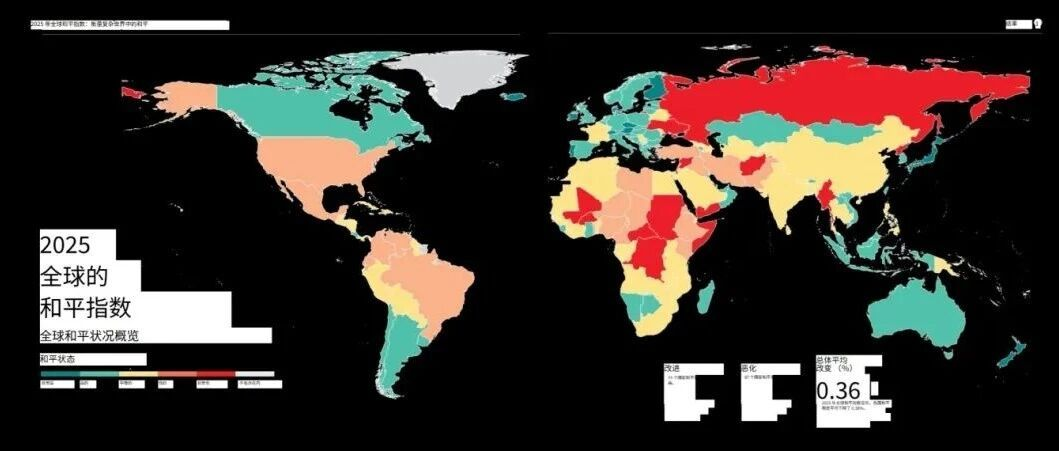
After China, citing “unrest in Japanese society,” solemnly reminded its citizens to avoid traveling to Japan, “which country is the safest in the world” once again became one of the focuses of debate.
If it’s just a war of words and a verbal sparring match, then the basis for it is naturally irrelevant. After all, this topic has been enduring on the internet for years, and it’s almost been debated to death.
But if we want to seriously discuss it, we can’t use personal feelings as the standard, such as “dare to go out for a late-night snack,” which is easily influenced by value positions, media propaganda, and survivor bias.
It just so happens that it’s the end of the year, and several institutions have released academic reports related to this, quantitatively analyzing the safety levels of various countries and regions, and obtaining relatively objective evaluations. We might as well refer to these reports to see which country is the safest in the world.
1.
First, let’s look at the most authoritative Global Peace Index, or GPI. Although the index aims to measure the level of peace in a country or region, it also highly reflects the degree of public order and social stability, and is currently the most comprehensive and widely cited basis for the “safest country ranking.”
This year’s GPI report is a total of 114 pages, covering 163 countries and regions. The evaluation dimensions are mainly composed of three core standards: ongoing domestic and international conflicts, social safety and security, and militarization.
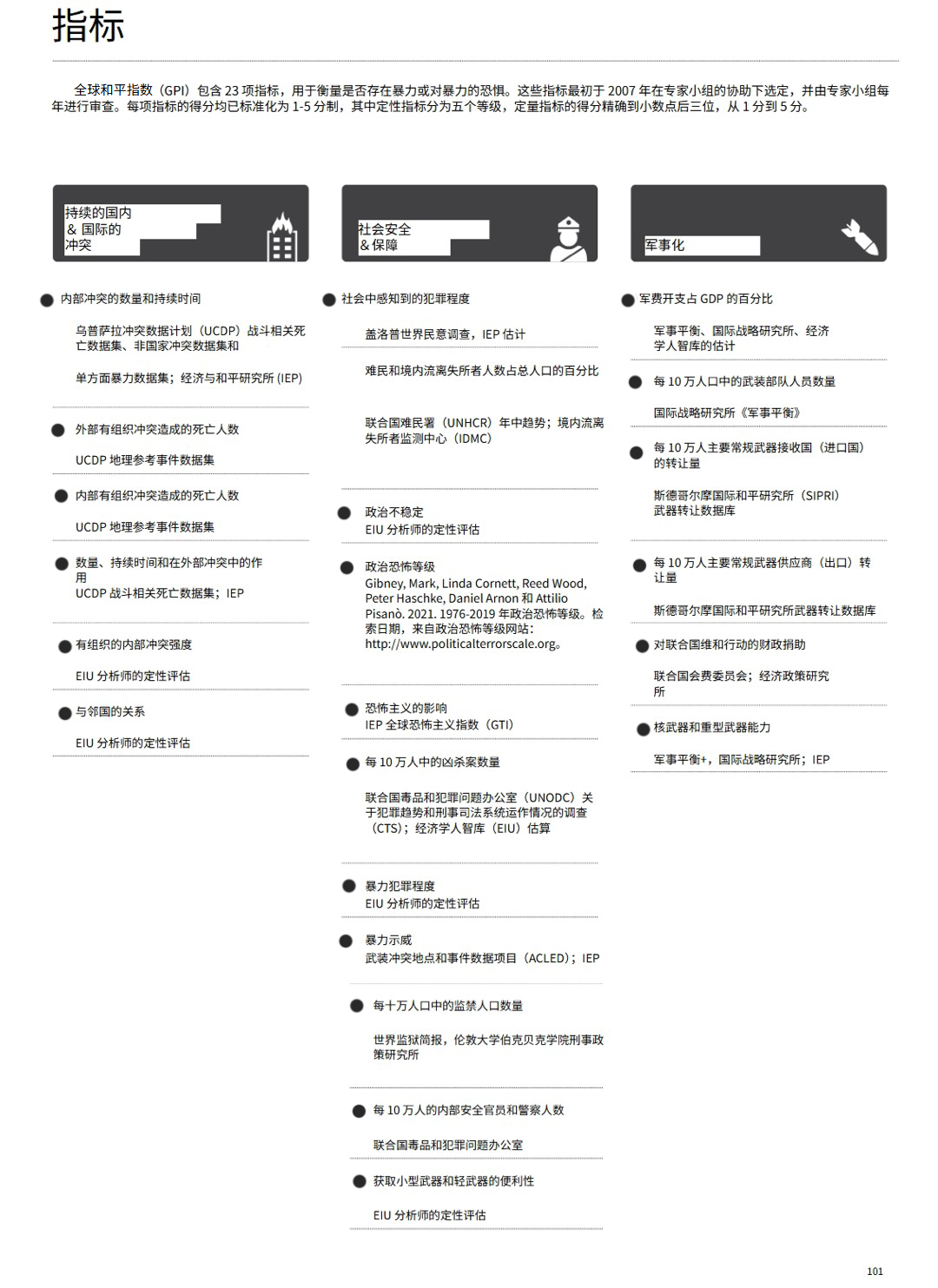
GPI’s evaluation indicators and data sources
Here, let’s focus on militarization. In the eyes of many people, the higher the degree of militarization, the safer the country often is, but the GPI’s analysis approach is not like this, because the GPI evaluates the peace index, not a single defense capability.
Although strong defense capabilities can indeed resist foreign enemies and bring a sense of security, at the same time, it will also intensify geopolitical pressure, making conflicts more likely to occur; excessive militarization will also squeeze civilian resources, weakening the internal safety level of society; in addition, in highly militarized countries, the military interfering in politics and becoming a tool of authoritarianism to suppress the people is also a common unsafe factor.
Here are a few examples:
Russia’s military capabilities are not much different from NATO, but the degree of peace is vastly different, especially after the outbreak of the Russia-Ukraine war, it fell to the bottom.
North Korea’s GDP ranks outside the top 100, but its military spending is consistently among the top five in the world, accounting for a staggering 34% of its GDP, twice that of second-place Ukraine, and its peace level ranks only 149th.
The United States’ military power is the world’s first, but due to its high military spending (almost the sum of the last three) and frequent overseas conflicts, its peace level is also relatively low, ranking 128th.
In contrast, Iceland, Portugal, and Slovenia, which are militarily weak countries, are often in the top ten in terms of peace due to the absence of conflicts and high social stability.
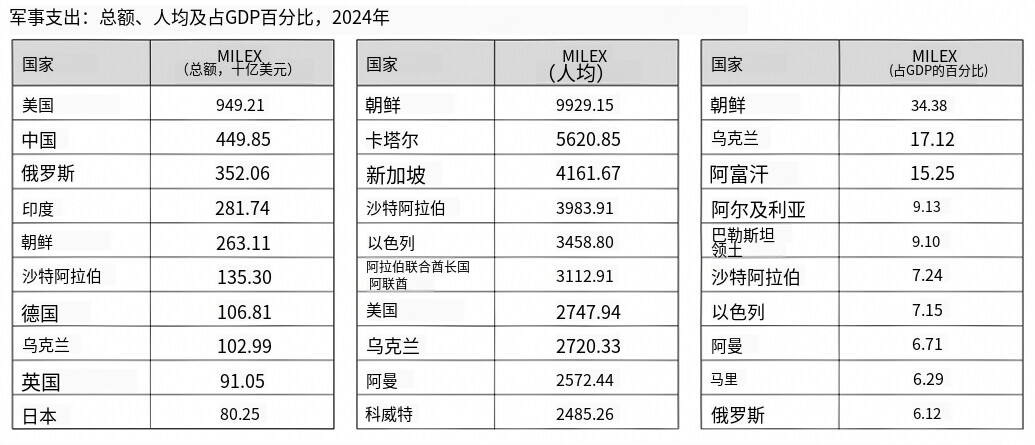
Total military expenditure, per capita, and as a percentage of GDP
Of course, this does not mean that the lower the degree of militarization, the safer it is. In the GPI’s evaluation system, there is not a completely positive or negative correlation between the two, but it is only one of the structural characteristics of peace and security.
In other words, the safest country does not refer to a country with strong military power that will not be attacked, but rather to a country where people feel the least conflict, violence, and threat of force.
Through the three core standards mentioned above, as well as the total of 23 sub-items and a large amount of international data included in them, and then through scientific weighted calculations, the GPI has come up with this year’s ranking of the most peaceful countries.
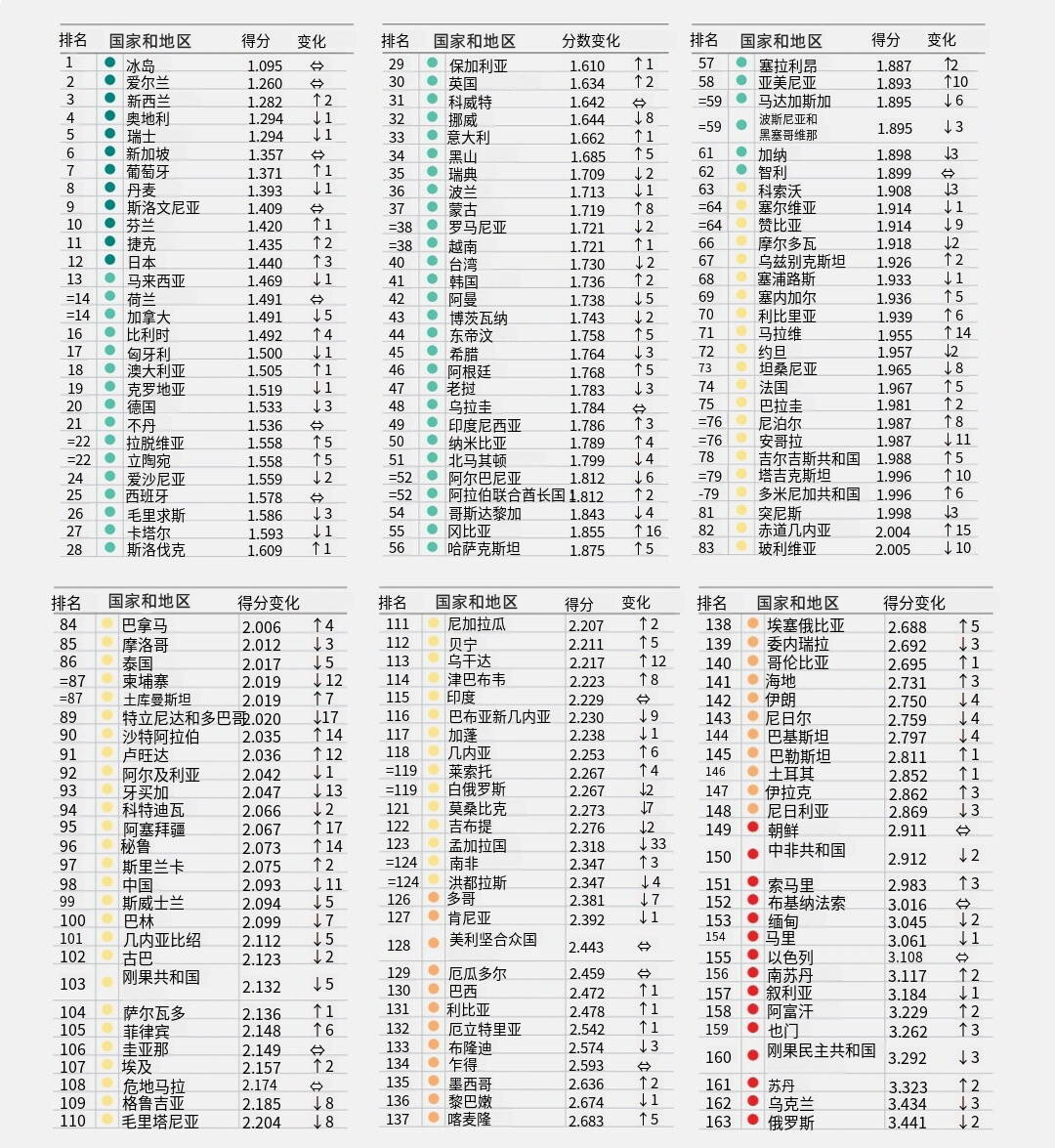
Peace Index and Ranking of 163 Countries or Regions
The top ten are: Iceland, Ireland, New Zealand, Austria, Switzerland, Singapore, Portugal, Denmark, Slovenia, and Finland.
The bottom ten are: Mali, Israel, South Sudan, Syria, Afghanistan, Yemen, Democratic Republic of Congo, Sudan, Ukraine, and Russia.
Japan ranks 12th, up 3 places from last year, at the end of the first echelon, that is, the last one in “very high peace,” and is also one of the only two Asian countries selected. It is ahead of the Czech Republic and behind Malaysia.
South Korea is 41st, up 2 places from last year; Thailand is 86th, down 5 places from last year; China is 98th, down 11 places from last year; India is 115th, the same as in previous years; Myanmar is 153rd, down 2 places from last year.
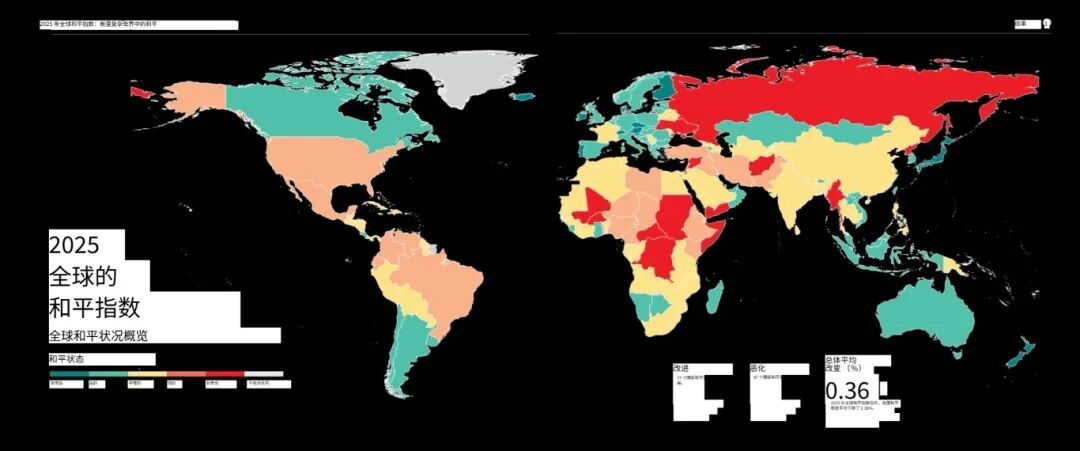
Global Peace Index Map
In the Asia-Pacific region, New Zealand is 1st, Japan is 3rd, Australia is 5th, South Korea is 9th, Thailand is 13th, China is 15th, North Korea is 18th, and Myanmar is 19th.
In Eastern Europe and Central Asia, the top three are Bulgaria, Romania, and Kazakhstan, and the bottom three are Turkey, Ukraine, and Russia.
In Western Europe and Central Europe, the top three are Iceland, Ireland, and Austria, and the bottom three are Serbia, Cyprus, and France.
In the Middle East and North Africa, the top three are Qatar, Kuwait, and Oman, and the bottom three are Syria, Yemen, and Sudan.
In Central America and North America, the top three are Canada, Costa Rica, and the Dominican Republic, and the bottom three are the United States, Mexico, and Haiti.
In South America, the top three are Argentina, Uruguay, and Chile, and the bottom three are Brazil, Venezuela, and Colombia.
In sub-Saharan Africa, the top three are Mauritius, Botswana, and Namibia, and the bottom three are Mali, South Sudan, and the Democratic Republic of Congo.
There are a total of seven countries in South Asia, with Bhutan in first place and Afghanistan in last place.
2.
Another report worth referring to is the “2025 Travel Risk Map” released by International SOS, the world’s largest international medical and security service organization. The evaluation dimensions of this report are different from the GPI, mainly focusing on medical and security risks, and are often used by corporate travel departments and related international organizations.
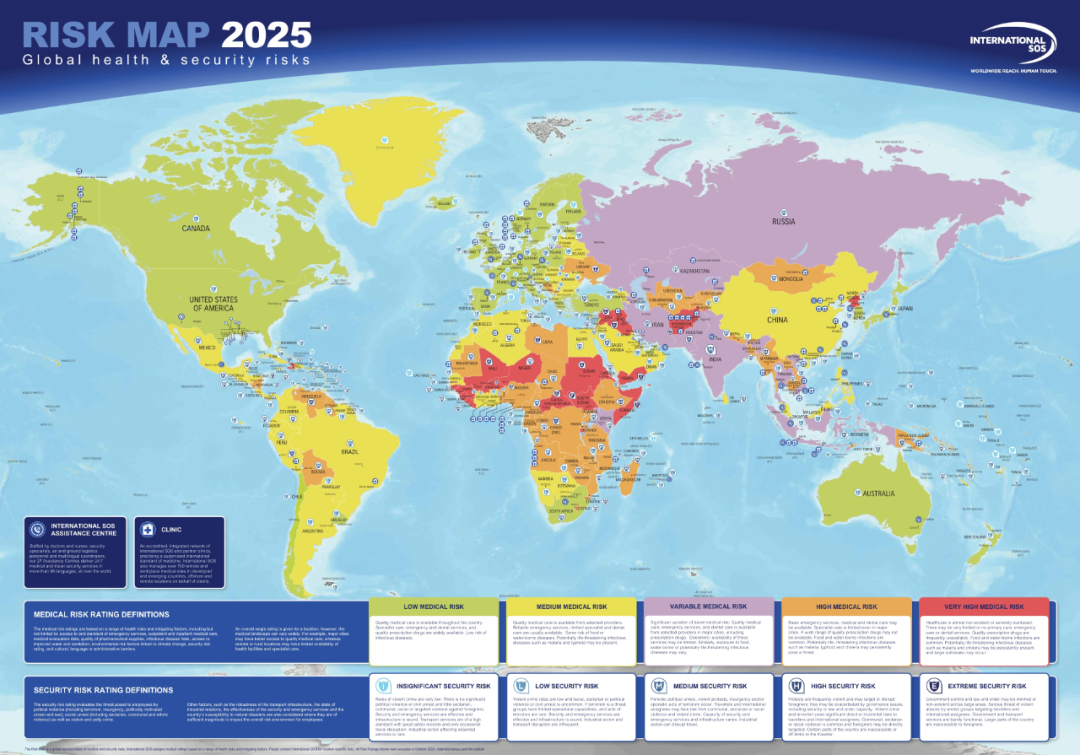
2025 Travel Risk Map
Medical risk indicators include but are not limited to:
Accessibility and level of emergency services, outpatient and inpatient medical services, medical evacuation (transfer) data, quality of drug supply, risk of infectious diseases, availability of improved drinking water and sanitation facilities, environmental risk factors related to climate change, security risk levels, and cultural, linguistic, or administrative barriers.
Medical risks are divided into five levels: low, medium, unstable, high, and very high.
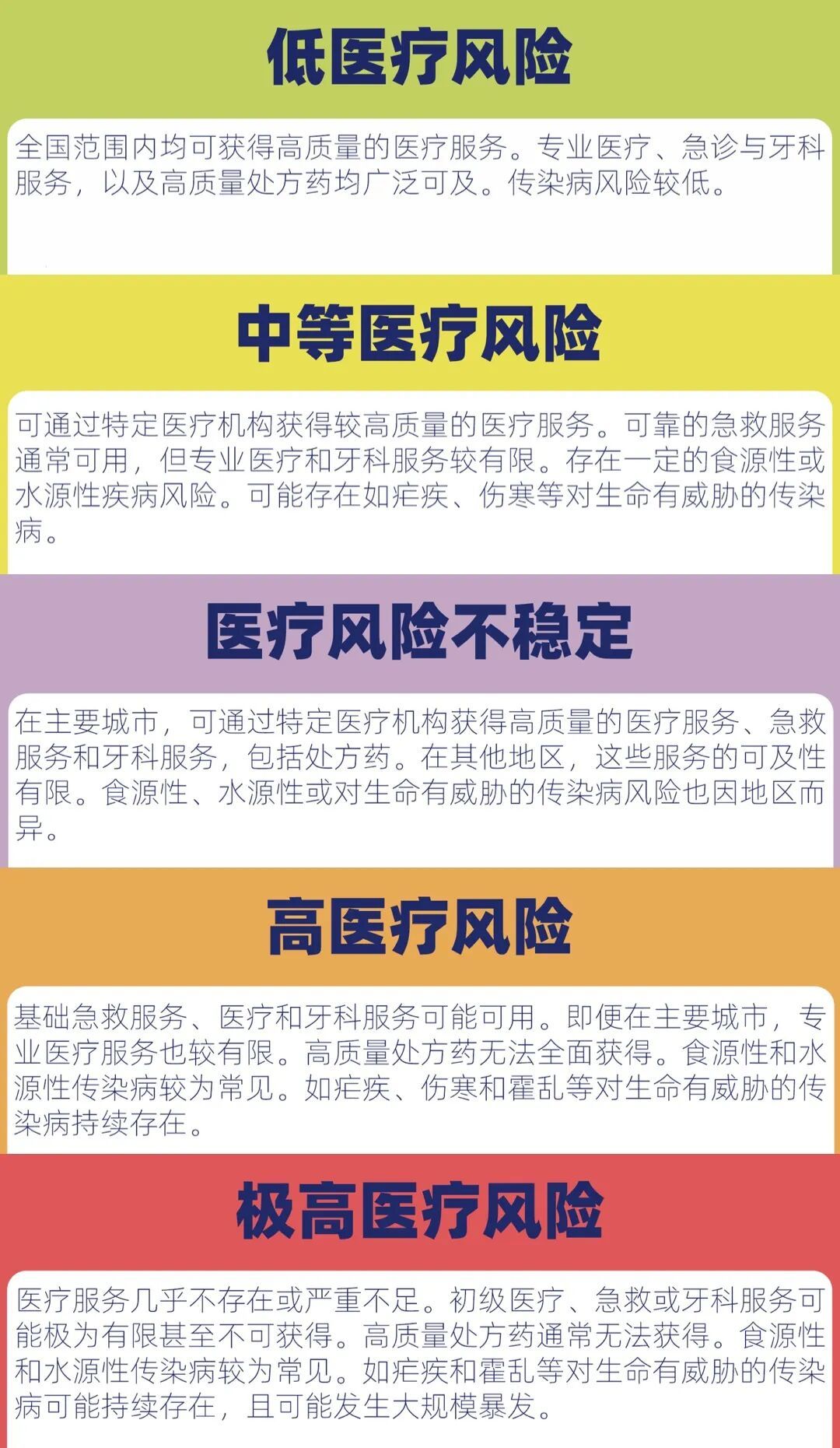
Medical Risk Levels and Basic Judgment Standards
Security risk indicators include but are not limited to:
Political violence (such as terrorism, rebellion, politically motivated unrest, and war), social unrest (including sectarian, community, and ethnic violence), and serious and minor crimes. In addition, the robustness of transportation infrastructure, labor relations, the effectiveness of security and emergency services, and the country’s susceptibility to natural disasters may also be included in the assessment.
Security risks are also divided into five levels: negligible, low, medium, high, and extreme.
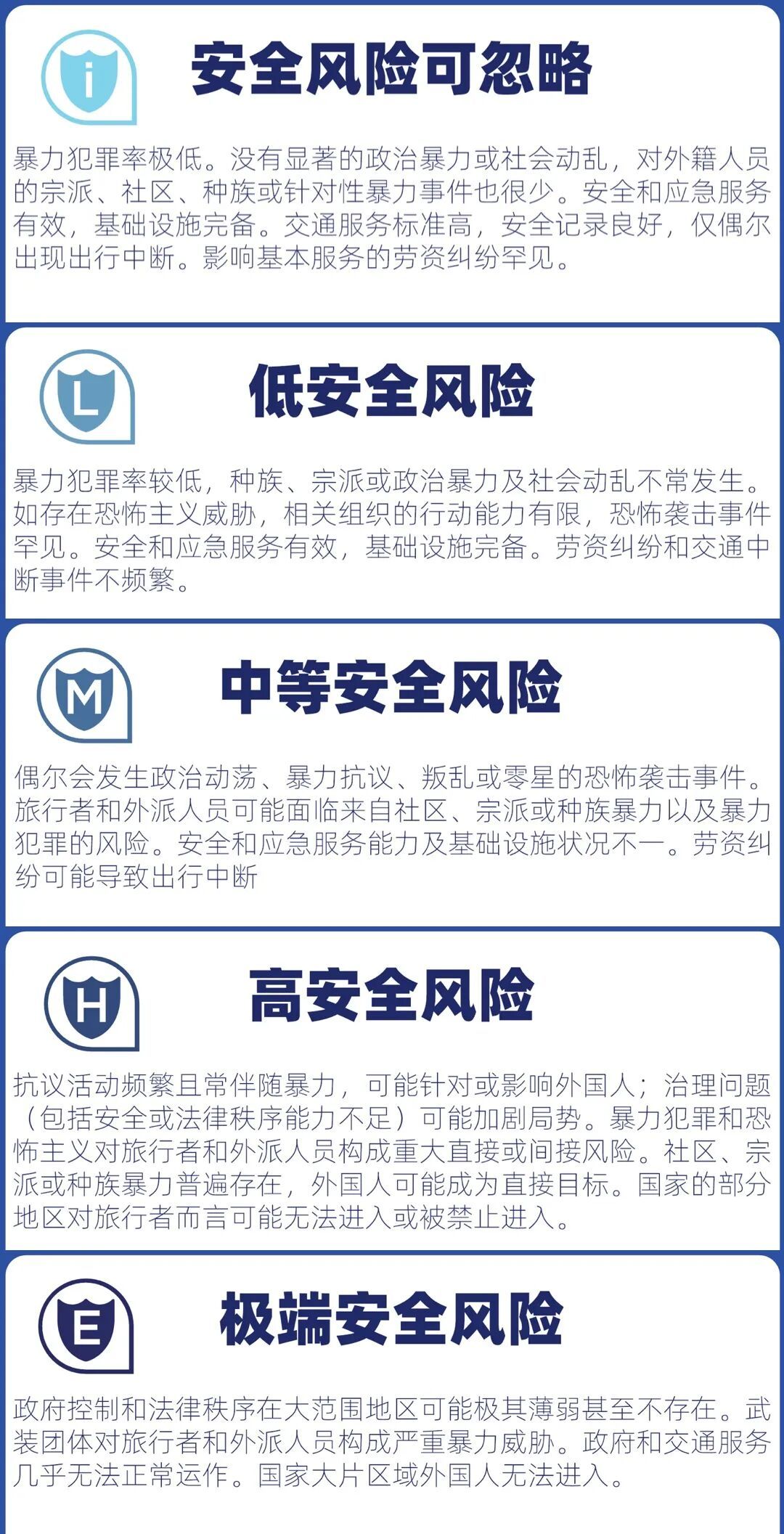
Security Risk Levels and Basic Judgment Standards
According to the travel risk map, in Europe, with the exception of a few countries, the vast majority have low medical risk. The security risk in Central and Western Europe is mostly negligible, while others are mostly low risk.
The more special cases are Russia, Ukraine, and Bosnia and Herzegovina. Russia’s medical risk is unstable, and its security risk is medium; Ukraine’s medical risk is high, and its security risk is extreme; Bosnia and Herzegovina’s medical risk is high, and its security risk is low.
In the Asia-Pacific region, excluding the islands that are not peaceful, there are four countries and one region with low medical risk, namely South Korea, Japan, New Zealand, and Taiwan;
There are five countries with medium risk, namely China, Malaysia, Singapore, the Philippines, and Sri Lanka;
There are five unstable countries, namely Vietnam, Thailand, Bhutan, India, Pakistan, and Indonesia.
The country with the highest medical risk is North Korea.
As for security risks, the Asia-Pacific region has no negligible or extreme countries and regions, and most, including China, have low risk. There are three with high risk, namely Myanmar, Pakistan, and Papua New Guinea.
In the Middle East and the entire African region, only South Africa, Qatar, Israel, and the United Arab Emirates have low medical risk, and most regions have high and very high risks. Security risks are mostly medium, high, and extreme. In addition, Turkey has low medical risk and medium security risk.
Finally, there is the Americas region. Canada, the United States, Chile, and Uruguay have low medical and security risks, while Haiti has the highest in both. There are also extreme security risks in Honduras, Venezuela, and southern Peru.
3.
The last report that can be referenced comes from the World Risk Index released by the United Nations University in conjunction with several research institutions, which mainly assesses the natural disaster situation in various countries. It is also divided into five levels: very low, low, medium, high, and very high.
The index is calculated based on two aspects. The first is exposure, which is the degree and scope to which local residents may be affected when facing disasters such as earthquakes, tsunamis, floods, storms, droughts, and rising sea levels.
The second is vulnerability, which is divided into three aspects:
First is susceptibility. It refers to the overall possibility that a society, due to its structural characteristics, increases the likelihood of its population being harmed and falling into a state of disaster when encountering extreme natural events;
Second is coping capacity. It refers to what actions a society can take with existing resources to mitigate the impact when facing natural disasters or climate change impacts, and to minimize losses as soon as possible after a disaster occurs;
Finally, it is adaptability. It refers to whether a society can make long-term and advance arrangements and plans in terms of systems, infrastructure, and lifestyles to reduce future potential disaster impacts, making future risks smaller, damage less, and even proactively avoiding adverse impacts.
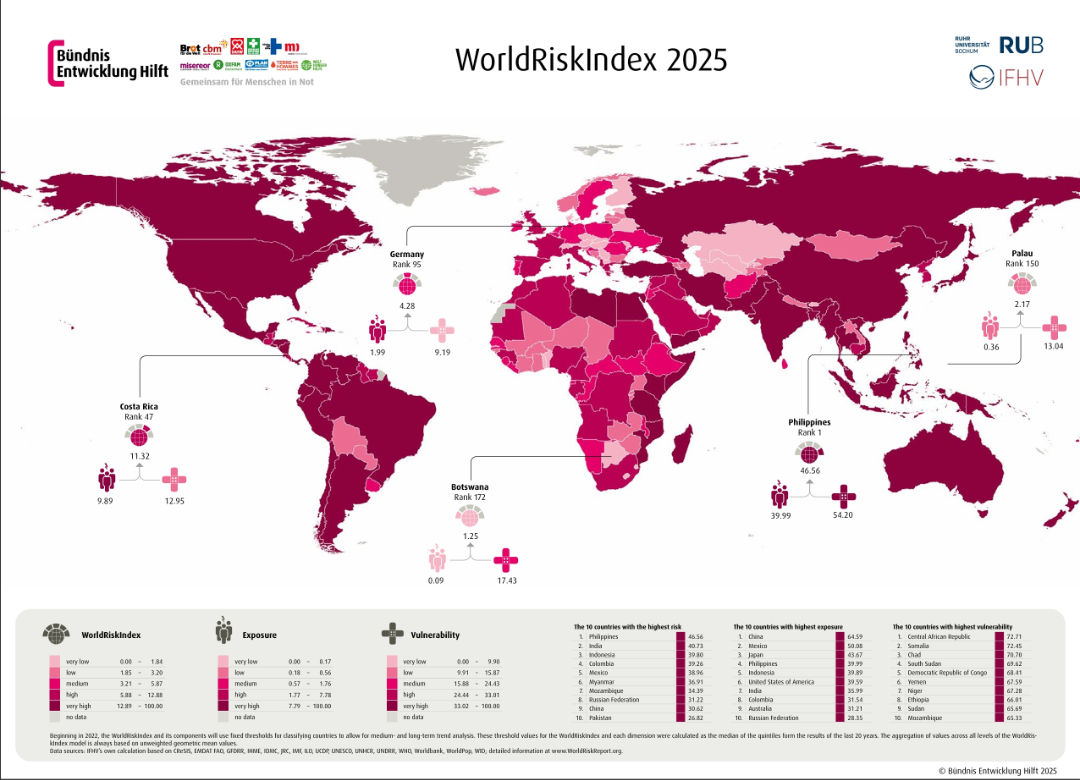
2025 World Risk Index Map
In terms of exposure, the top ten are: China, Mexico, Japan, the Philippines, Indonesia, the United States, India, Colombia, Australia, and Russia.
In terms of vulnerability, the top ten are: Central African Republic, Somalia, Chad, South Sudan, Democratic Republic of Congo, Yemen, Niger, Ethiopia, Sudan, and Mozambique.
Based on data from 193 countries, this report ultimately ranked the top ten in terms of risk index as follows: Philippines, India, Indonesia, Colombia, Mexico, Myanmar, Mozambique, Russia, China, and Pakistan.
The above is a brief overview of these three reports, which can be said to almost encompass all the indicators needed to evaluate the “safest country,” with the Global Peace Index having the highest weight, followed by the Travel Risk Map and the World Risk Index.
Although I am not able to perform specific weighted calculations on these data and provide a comprehensive ranking, after reading these, you should be able to make a basic judgment on the safety situation of each country.
In addition, there is also the Numbeo Global Crime Index, which is often cited by the media but not highly regarded by the academic community. Due to its subjectivity and limitations, it is not used as a core reference.
Discover more from 自由档案馆
Subscribe to get the latest posts sent to your email.