

Recently, the National Medical Products Administration (NMPA) issued an announcement, and in accordance with the relevant provisions of the "Regulations for the Implementation of the Pharmaceutical Administration Law of the People's Republic of China" and the "Measures for the Administration of Drug Registration", officially decided to revoke the drug registration certificates of 80 drugs, including loratadine tablets.
01 Overview of Revoked Drugs
The 80 drug registration certificates revoked this time cover multiple therapeutic areas and dosage forms. Among them, 41 revoked drugs are imported drugs, accounting for more than half. Domestic pharmaceutical companies mainly revoke old drugs and generic drugs.
From an enterprise perspective, many multinational pharmaceutical companies have products withdrawn. For example, Merck & Co. (Merck Sharp\&Dohme LLC) revoked 4 specifications of inactivated hepatitis A vaccine; Johnson \& Johnson's Janssen (Janssen-Cilag NV) revoked 6 specifications of fentanyl transdermal patches; Boehringer Ingelheim revoked 6 specifications of metformin empagliflozin tablets. In addition, Pfizer's doxorubicin hydrochloride for injection (anti-tumor chemotherapy drug), estramustine phosphate capsules, Novartis's glycopyrronium bromide inhalation powder (respiratory system drugs), and Bayer's rivaroxaban dry suspension (anticoagulant) are also on the revocation list.
In terms of domestic pharmaceutical companies, Jiangsu Hengrui, Hainan Shuangcheng, Teyi Pharmaceutical, Jinling Pharmaceutical and other companies also have drugs revoked, and the varieties are mostly old drugs and generic drugs that have been on the market for many years. For example, Taicang Pharmaceutical Factory revoked 11 varieties at once, including isoniazid tablets, compound reserpine tablets and other basic drugs; Hainan Shuangcheng Pharmaceutical concentratedly revoked 7 injections, covering multiple specifications of clindamycin hydrochloride for injection and inosine for injection; Hengrui Medicine revoked vinorelbine tartrate soft capsules.
From the perspective of therapeutic areas, the revoked drugs cover a wide range, among which anti-infective, anti-tumor and cardiovascular and metabolic diseases drugs account for a relatively high proportion. Anti-infective drugs include isoniazid tablets, clindamycin hydrochloride for injection and other old drugs; anti-tumor drugs include vinorelbine tartrate soft capsules, doxorubicin hydrochloride for injection and other commonly used chemotherapy drugs; cardiovascular and metabolic drugs include indapamide tablets (antihypertensive), metformin empagliflozin tablets (hypoglycemic compound preparations), rivaroxaban dry suspension (anticoagulant), etc. Among them, metformin empagliflozin tablets involve 6 specifications, all of which were applied for revocation by Boehringer Ingelheim.
From the perspective of dosage forms, the combined proportion of tablets and injections exceeds 60%, which is the main category in the revoked varieties. There are 25 tablets, including loratadine tablets, isoniazid tablets (Taicang Pharmaceutical Factory revoked two specifications of 100mg and 300mg), etc.; there are 30 injections, covering doxorubicin hydrochloride for injection (anti-tumor), levofloxacin hydrochloride sodium chloride injection (anti-infective), and liraglutide injection (hypoglycemic), etc.
In addition, topical medications such as eye drops, creams, suppositories (such as mesalazine suppositories), patches (such as fentanyl transdermal patches), and biological products such as inactivated hepatitis A vaccine and recombinant human type II tumor necrosis factor receptor-antibody fusion protein for injection (treatment of rheumatoid arthritis) are also on the revocation list.
02 Revocation by application is the only reason
According to the announcement of the National Medical Products Administration and the catalog of revoked drugs, all 80 drugs are "revoked by application", that is, the drug marketing authorization holders actively apply to the regulatory authorities, rather than being forced to withdraw from the market due to safety issues.
The competitiveness of the pharmaceutical industry comes from innovation. When new drugs form advantages in efficacy, safety, and convenience, old drugs naturally lack competitiveness.
Taking the revoked varieties this time as an example, although clindamycin hydrochloride for injection in the field of anti-infection is a commonly used antibiotic, in recent years, new β-lactam antibiotics (such as ceftazidime avibactam) have more advantages in antibacterial spectrum and drug resistance, and the clinical use ratio has continued to increase, leading to a decline in the market demand for old drugs. Liraglutide injection in the field of hypoglycemia (once-daily administration), is squeezed out of the market space due to the popularity of semaglutide, tirzepatide and other long-acting GLP-1 drugs (once-weekly administration, with weight loss effect), and Sanofi's application to revoke its 6 specifications is a direct reflection of product iteration. This logic of "new replacing old" is an inevitable result of the continuous progress of the pharmaceutical industry.
As special commodities, the production and sales of drugs are always affected by cost, profit and market demand. Against the background of increasingly fierce competition in the pharmaceutical market, enterprises tend to concentrate limited resources on core products, so they will actively revoke products with low sales, low profits or not in line with the strategic direction. In the revocation list this time, many varieties belong to generic drugs and generic drugs with extremely fierce market competition, such as inosine tablets, vitamin B2 tablets, etc. Due to the meager profits of such products, the large number of manufacturers, and the fierce price war, for enterprises, revoking such varieties will help to transfer resources to high-value drugs or advantageous specialty drugs, which is a rational choice to cope with market competition.
In the final analysis, whether it is product iteration, resource optimization or strategic adjustment, the fundamental reason for the revocation of these drugs is that they are not profitable.
03 Behind the withdrawal of foreign companies
On July 1, the National Medical Products Administration issued an announcement announcing the revocation of the registration certificates of 56 drugs. It is worth noting that in the revocation list, the products of foreign companies account for more than 30, accounting for more than half, involving Pfizer, Novartis, GlaxoSmithKline, Boehringer Ingelheim and other well-known pharmaceutical companies. Most of these withdrawn products are mature varieties whose patents have expired or are facing fierce competition from generic drugs. For example, Pfizer's linezolid glucose injection, Novartis's everolimus tablets, etc., have all chosen to withdraw because the winning prices in the national centralized procurement have dropped significantly (some drops exceeded 80%), making it difficult to maintain the original profit margin.
In August, the market once again reported that Sanofi China is adjusting its market strategy and product pipeline in the cardiovascular field, and its key lipid-lowering drug Praluent (alirocumab) will stop promoting in the Chinese market and gradually withdraw. There are two main reasons for the withdrawal: first, the 2025 version of the "China National Medical Insurance Drug Catalog" includes more domestic PCSK9 inhibitors, making the treatment options for cholesterol management more diverse; second, it is affected by the tight global supply of raw materials, and the supply of the drug in the Chinese market is also facing challenges.
For foreign companies, the global product strategy adjustment is an important reason for applying for the revocation of drugs or withdrawing from the market. Some products are no longer a strategic focus in the global market, or new alternatives have been launched, and companies will choose to withdraw from certain regional markets to concentrate resources on cultivating core areas.
This revocation involves 41 imported drugs, which reflects three realistic factors behind the withdrawal of imported drugs or original research drugs from the Chinese market by foreign companies:
First, the impact of the centralized procurement policy. The centralized procurement policy compresses drug profits through the "volume-for-price" model, and the market layout of some products that have not participated or have not been selected is facing adjustment, which also promotes foreign companies to evaluate and adjust their existing product portfolio.
Second, the low-price competition of pharmaceutical companies. In the field of patent-expired drugs such as loratadine, domestic generic drug companies occupy the market with price advantages, and foreign companies are unable to participate in the price war due to high operating costs and have to withdraw from the fiercely competitive "red sea".
Third, the strategic shift of enterprises. Faced with fierce generic drug competition, more and more foreign companies choose to shift resources to the field of innovative drugs and actively withdraw from the low-profit, high-competition general drug market.
04 Conclusion
The National Medical Products Administration's batch revocation of 80 drug registration certificates is mainly to eliminate those products with weak market competitiveness, and then optimize the drug use structure in clinical practice. For pharmaceutical companies, focusing on innovative research and development, meeting the unmet needs of clinical practice, etc., are the keys to achieving sustainable development in fierce competition.
Appendix: Catalog of Revoked Drug Registration Certificates
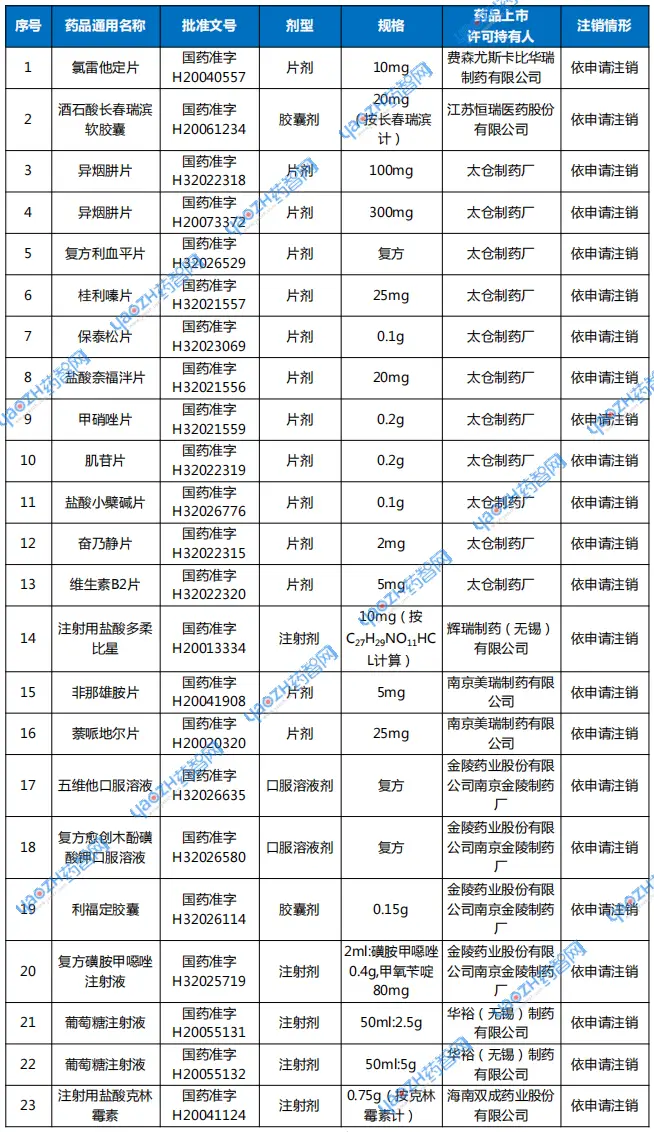
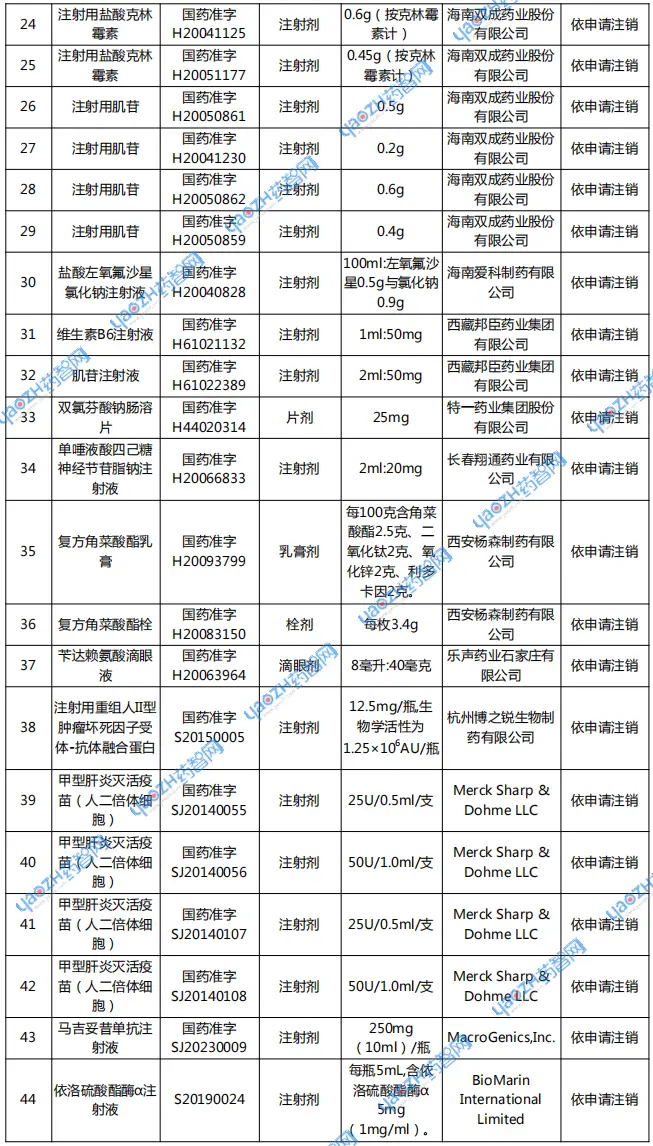
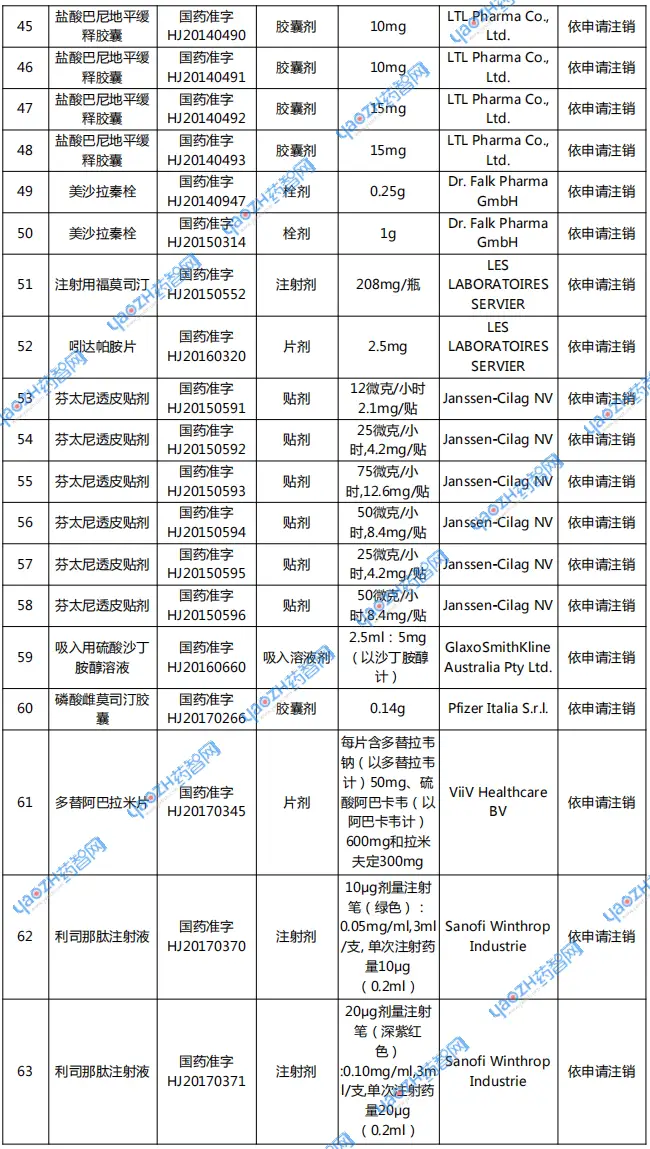
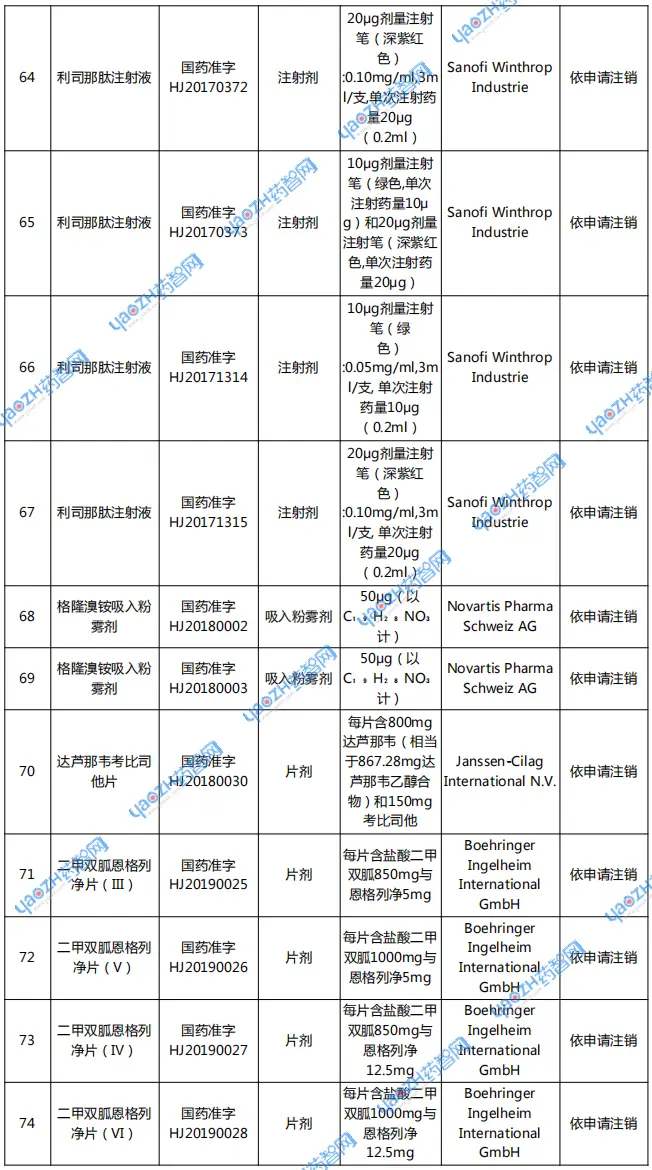
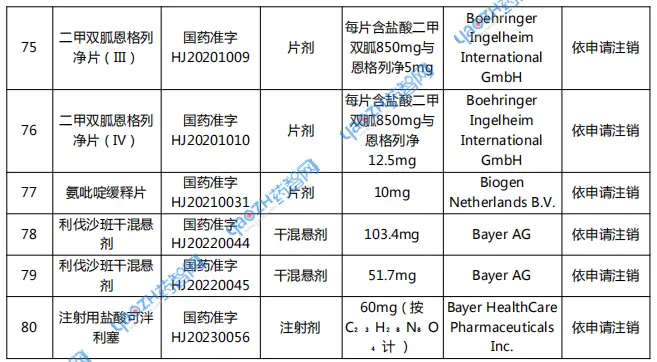
Source: National Medical Products Administration
Disclaimer: This content is only used for the dissemination of information in the pharmaceutical industry, and is the author's independent point of view, and does not represent the position of Yaozhi.com. If you need to reprint, please be sure to indicate the author and source of the article. If you have any objections or complaints about this article, please contact maxuelian@yaozh.com.
Responsible Editor | Steven
Cooperation, Submission, Reprinting White List | Teacher Ma 18323856316 (same as WeChat)