

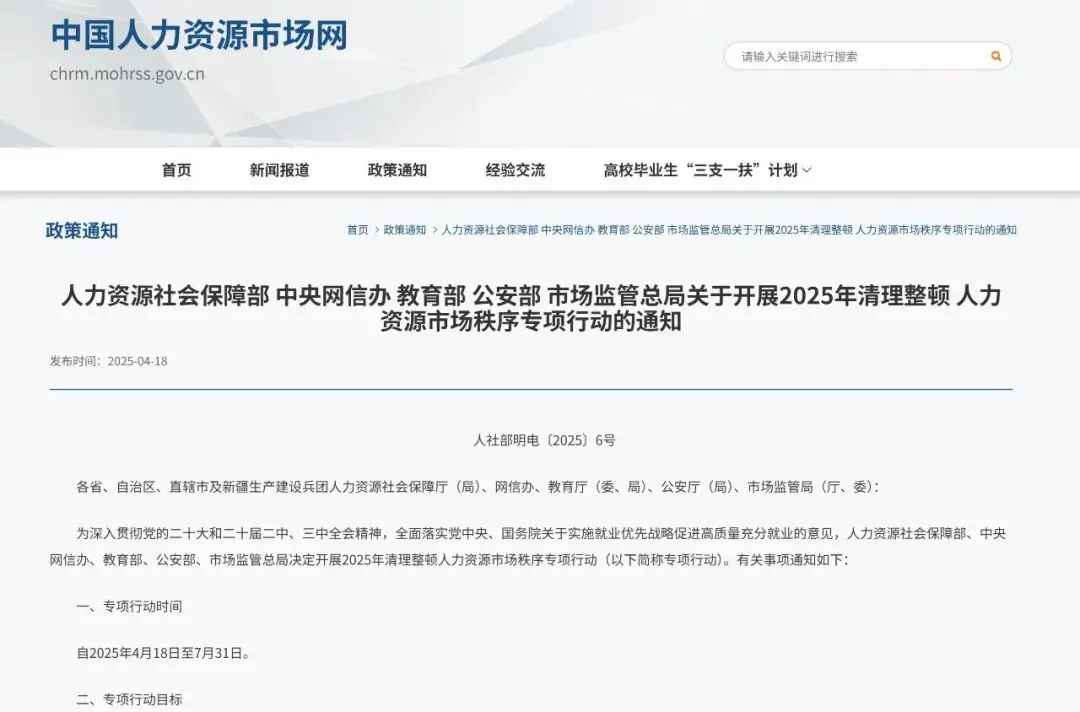
Many self-media bloggers are talking about it, and labor dispatch companies will face a major cleanup.
Dispatch companies will not only not face a major cleanup, but will become normalized in the future and will account for half of the employment market.
Let's first look at the origin and development of labor dispatch.
Labor dispatch first appeared in the United States in the 1920s, with the purpose of solving the temporary employment needs of enterprises, and later spread to the world.
In the early days of reform and opening up, in order to meet the restrictions on the employment of foreign enterprise representative offices in China, the Beijing Foreign Enterprise Service Corporation was approved to be established, which is considered to be the ancestor of our labor dispatch.
In the 1990s, a large number of state-owned enterprise workers were laid off, and labor dispatch did help many laid-off employees to re-employment.
In 2001, after entering the WTO, in order to reduce costs and avoid employment risks, a large number of enterprises applied dispatched personnel to all walks of life.
From then on, labor dispatch began to be fully popularized.
In 2008, the "Labor Contract Law" was introduced, with the original intention of strengthening the protection of regular employees. Unexpectedly, in order to avoid responsibility, enterprises transferred a large number of positions to the dispatch system.
The number of dispatched workers increased from 27 million in 2008 to 47.59 million in 2023.
In 2013, the "Interim Provisions on Labor Dispatch" were implemented, clarifying that dispatched positions are limited to "temporary, auxiliary, and substitutive" positions.
The regulations stipulate that the proportion of enterprises using dispatched workers cannot exceed 10% of the total employment.
There are policies above, and there are countermeasures below, and labor dispatch will only become more and more intense.
From the three perspectives of enterprises, institutions, and policies, labor dispatch is really too fragrant.
For example, enterprises.
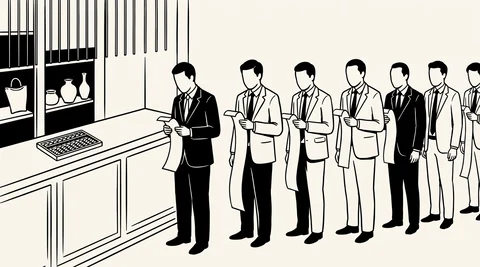
If the cost of a regular employee is 100,000, the cost of a dispatched worker is basically 60,000 or less, a compression of 40%, or even lower. Enterprises do not have to bear long-term expenses such as social security and welfare.
Once there are work-related injuries and labor disputes, the contradictions and responsibilities are directly transferred to the labor company.
The form of employment is very flexible, quickly supplementing labor in peak seasons and directly reducing the scale in off-seasons.
Not to mention labor agencies.
They charge the employing unit 10%-25% of the dispatched worker's salary as a service fee, and the profit is a direct deduction from the salary, which is also a skimming.
Public service departments also like it.
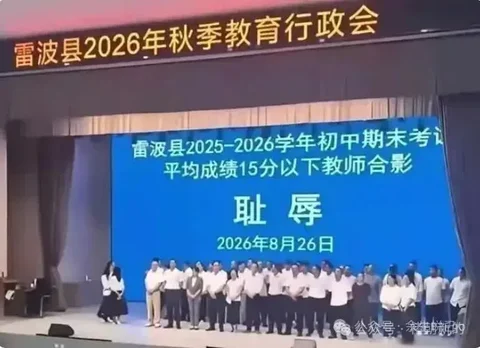
For example, education and medical care, because of the restrictions on staffing, rely on dispatching teachers and medical staff to solve the shortage problem.
The proportion of dispatched teachers in some primary and secondary schools reaches 20%-30%, and the proportion in some newly built schools and remote areas exceeds 50%.
Not to mention, if you are a dispatched teacher, then you will definitely be restricted in all aspects in terms of treatment, stability, and career development.
If you are in school, you will hardly have any progress in terms of professional titles, education, further studies, and evaluation.
Many enterprises are engaged in "fake outsourcing and real dispatch", and Internet giants have long been widely implementing the outsourcing model, and the outsourcing ratio of many well-known giants exceeds 50%.
There is no way, the dispatch system can effectively reduce labor costs.
In the short term, labor dispatch can indeed alleviate financial and staffing pressure, reduce the operating costs of enterprises, and achieve dynamic matching of resources.
But in the long run, taking schools as an example, the core of education quality is stability. The dispatch system exacerbates class differentiation and artificially creates "second-class citizens among teachers".
The mobility of teachers undermines the continuity of teaching, and unequal treatment will also exacerbate the loss of talent.
However, at present, how to solve the problems of flexibility and security, and how to balance efficiency and fairness challenges, there is no effective improvement at all.
Then, this expedient measure of labor dispatch will continue to be normalized.