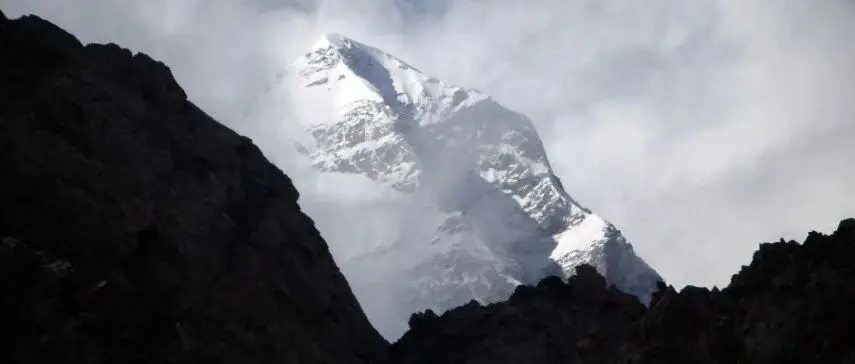
In 2025, Chating Village, Tanwei Town, Lingshan County, Guangxi. A group of villagers knelt on the mountain road that had been crushed by excavators, holding up complaint materials to the relevant department personnel present. In front of them, the excavators of the Liulu Mountain Wind Farm project were roaring, and the exposed yellow soil of the mountain was as glaring as a wound. The drinking water source of the villagers at the foot of the mountain was already muddy like slurry.
1. Who has the final say on the environmental impact of the 1.938 billion wind power empire?
The Liulu Mountain Wind Farm is known as the “flagship project” of Guangxi’s new energy – with a total investment of 1.938 billion yuan (the actual investment reached 2.898 billion yuan according to the document of the Guangxi Development and Reform Commission), an installed capacity of 400 megawatts, which is equivalent to one-third of the annual electricity consumption of Lingshan County. The project claims to “reduce carbon dioxide emissions by 790,000 tons per year” and is listed as the largest single-scale wind power project in Guangxi. The construction unit, Guotou Guangxi Wind Power Co., Ltd., is a wholly-owned subsidiary of the central enterprise Guotou Electric Power, with a prominent background.
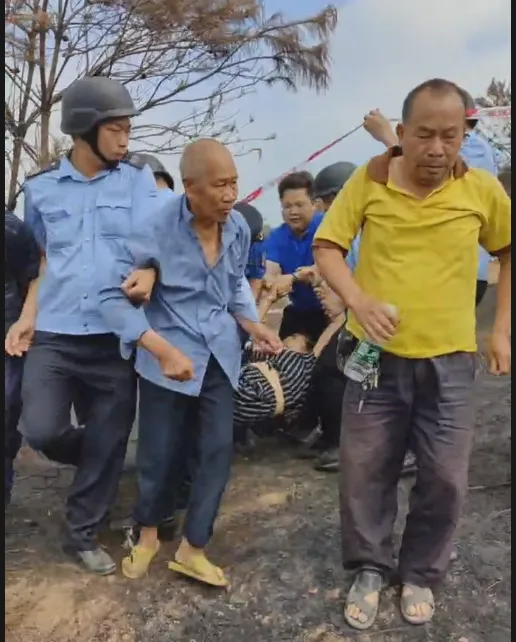
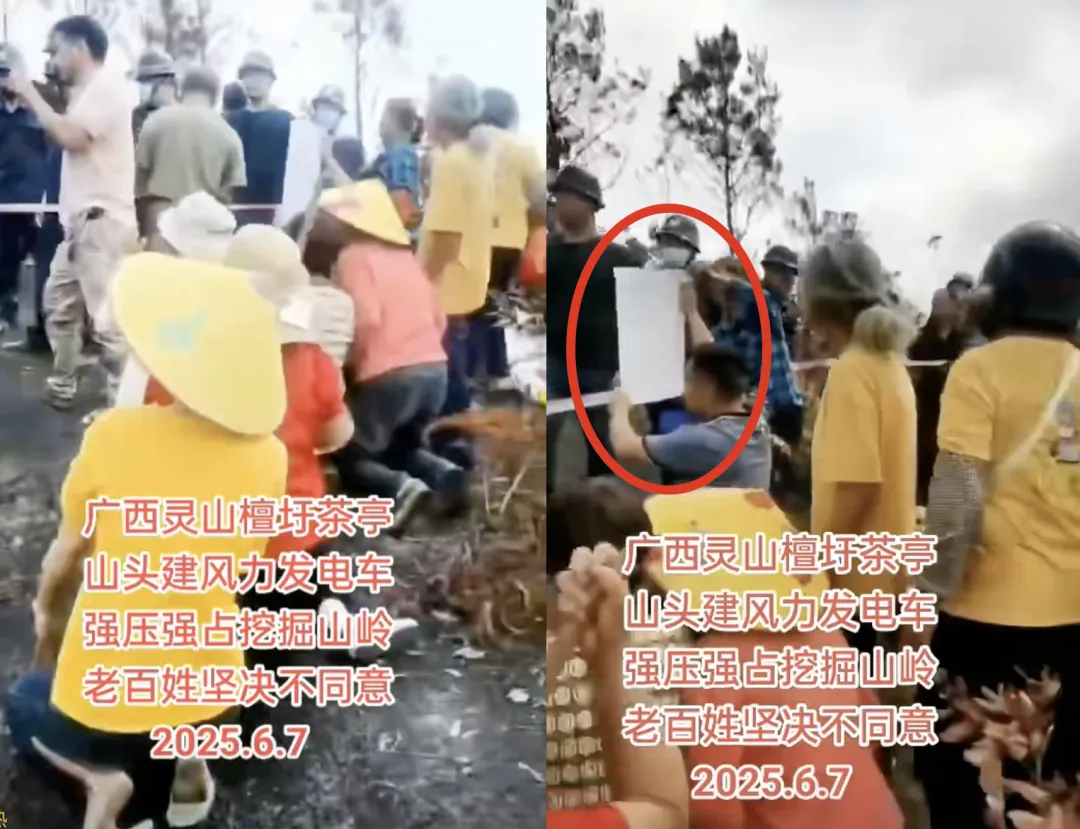
A group of villagers kneeling in front of the bulldozer
However, under the halo, there are many doubts:
Qualification Paradox: The environmental impact assessment report was prepared by Guangxi Nanning Shiyuan Environmental Protection Technology Co., Ltd., which only holds a Grade B qualification certificate for “Ecological Construction and Environmental Engineering” (No.: B252024010147). However, the national “Compilation Regulations for Feasibility Study Reports of Wind Farm Engineering” clearly stipulates that projects with an installed capacity of ≥50MW must be undertaken by Grade A qualification institutions. A super project of 400MW is actually operated by a Grade B institution, which is like a “community clinic performing heart surgery”.
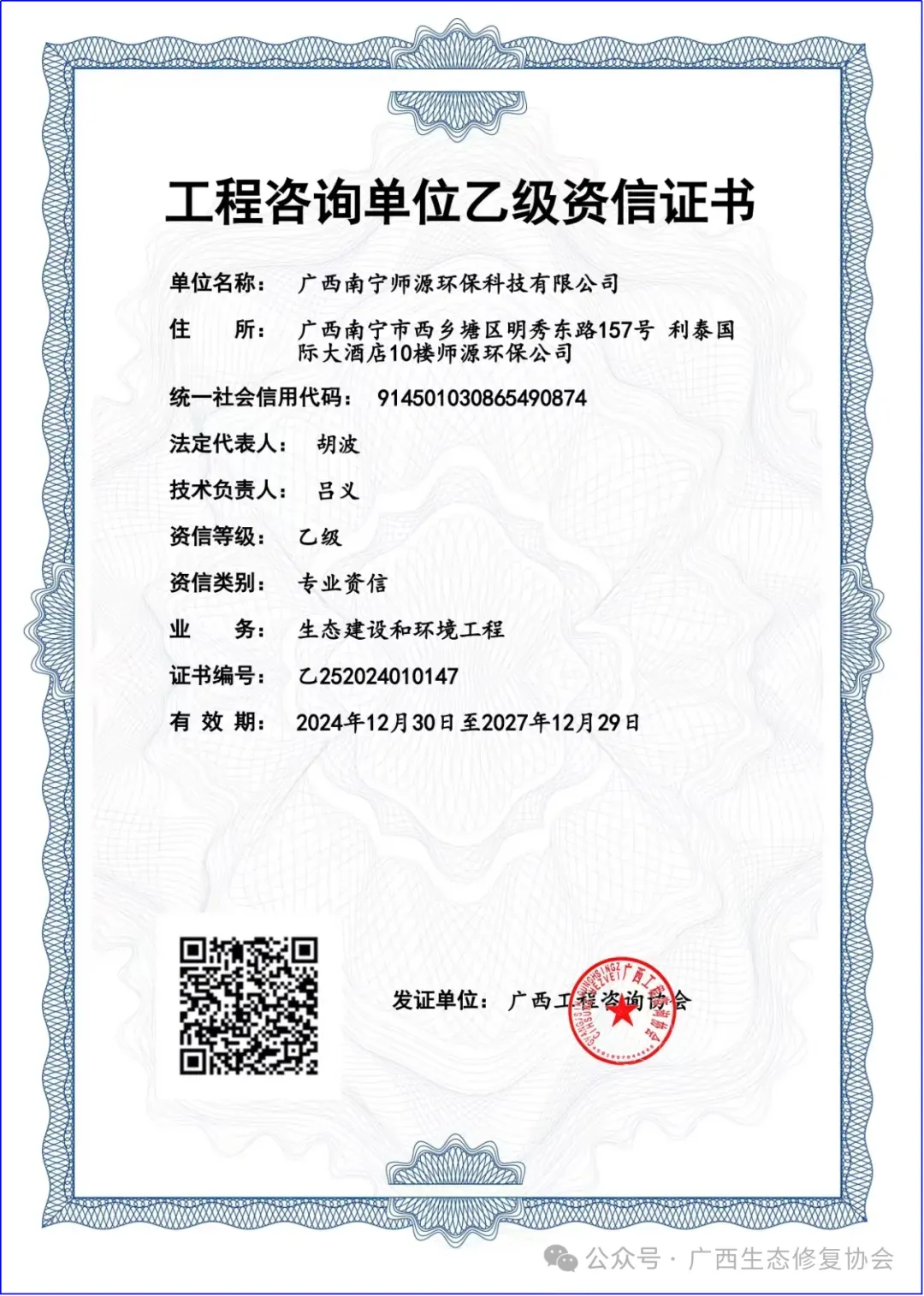
Technical Team Gap: Grade A qualifications require at least 15 registered environmental impact assessment engineers. Shiyuan Environmental Protection disclosed in 2025 that it only had 6 engineers, which is less than half of the standard. The Qinzhou Municipal Bureau of Ecology and Environment did not raise any questions about this when accepting the environmental impact assessment report.
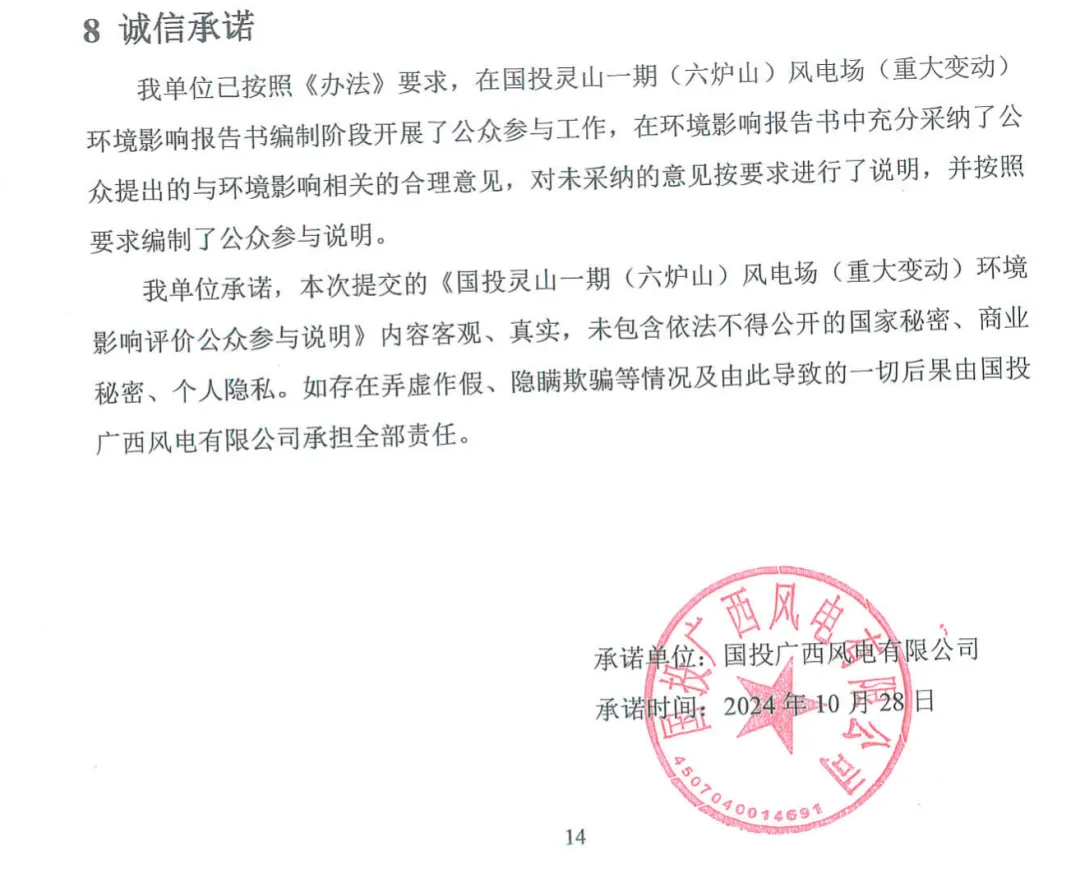
2. The villagers all disagree, but the environmental impact assessment claims “no public opinions received”
Article 21 of the “Environmental Impact Assessment Law” stipulates:
Before submitting the environmental impact assessment report for approval, public opinions should be solicited through seminars, hearings, or public announcements, and for projects directly involving public interests, the report should include an explanation of whether the opinions are adopted.
However, the report claims:
“No public opinions and feedback were received during this public participation process.”
The villagers’ statements are completely opposite:
“They went door to door to ask at the end of last year, and we all disagreed.” – Chating Village villager, June 8, 2025
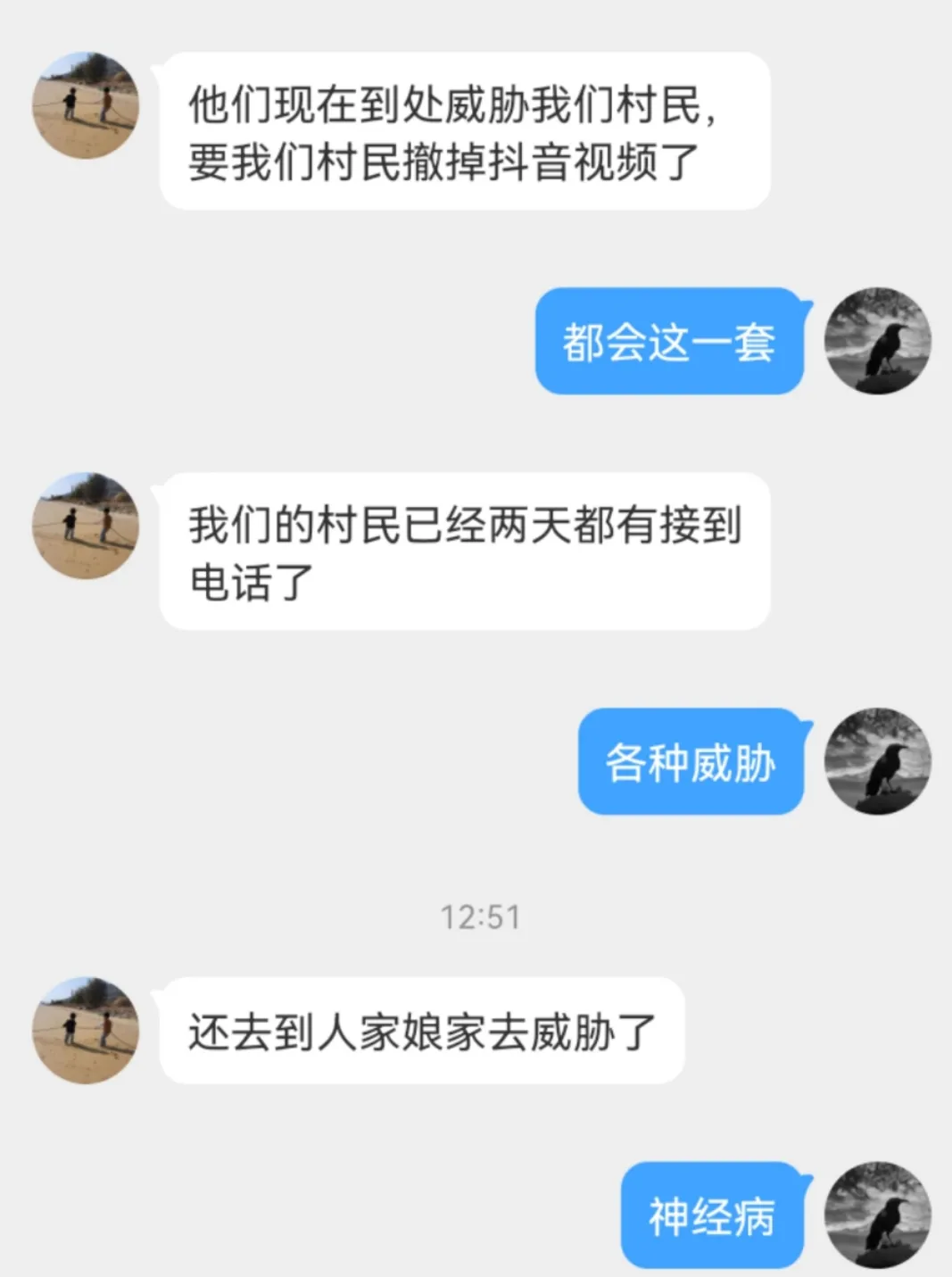
Furthermore, the eighth group of the village committee issued an open letter on May 29, 2025, stating that the government used unidentified personnel to “forcibly requisition, occupy, and dig” the village collective’s self-retained mountains on March 13 and April 21, resulting in the destruction of forests and the pollution of drinking water sources, but could not provide any legal documents or environmental impact assessment approvals. The contradiction is so great that it can be called a play within a play that is “heard but not seen”. Such “unattended” public announcements and the public opinion of “everyone opposing” indicate that the public’s right to participate has been substantially deprived.
3. “Sensitive Area” or “Sacrifice Area”? Who will guarantee water source safety?
The core of the environmental impact assessment controversy lies in the systemic negligence of environmentally sensitive areas:
5-meter danger: 10 wind turbines will stand in the water collection area of Tianding Mountain Reservoir, with the closest distance to the water source being only 5 meters – less than one-tenth of the length of a wind turbine blade (about 80 meters). The “Catalog of Environmental Impact Assessment and Management of Construction Projects” clearly lists water source protection areas as sensitive areas and requires key argumentation of pollution risks.
Increased risk of landslides: The environmental impact assessment report downplays “soil and water loss is controllable”, but in the rainy season of 2025, there have been multiple serious soil and water losses around the wind turbine bases. The villagers’ open letter cries out: “On the morning of May 9, it rained for three hours, and the soil and stones on our mountains were washed away by the rain, and the villagers’ drinking water sources, farmland, slopes, and rivers were also polluted. Our farmland, rivers, slopes, and mountains were piled with thick mud, which seriously pollutes our environment and seriously affects our lives. The stones that may fall from the mountains at any time threaten our lives!”
4. Lack of supervision: Who will pay for the “watering”?
In the project approval and daily supervision, the Qinzhou Municipal Bureau of Ecology and Environment should play the role of “gatekeeper”. The Qinzhou Bureau of Ecology and Environment accepted the national-level project environmental impact assessment prepared by Shiyuan, exposing the local supervision’s “flexible law enforcement” of central enterprise projects. This forms a satirical contrast with the fact that 47 environmental impact assessment units in Guangxi were penalized in 2024 due to the quality of their preparation – those who violate the rules are punished, and those who exceed the level are allowed to pass. From qualification review and hearing organization to sensitive area argumentation, the bureau not only failed to stop the obvious procedural violations but also became a co-conspirator in “watering”.
Inadequate qualification review: Grade B institutions undertake Grade A projects, and the review process is a mere formality.
Lack of information disclosure: Villagers have repeatedly applied to consult the environmental impact assessment approval and land acquisition documents, but to no avail.
Hearing in name only: The formal public announcement did not notify the villagers, and the hearing became a mere formality.

Discover more from 自由档案馆
Subscribe to get the latest posts sent to your email.