The words “layoffs” and “redundancy” are already tiresome.
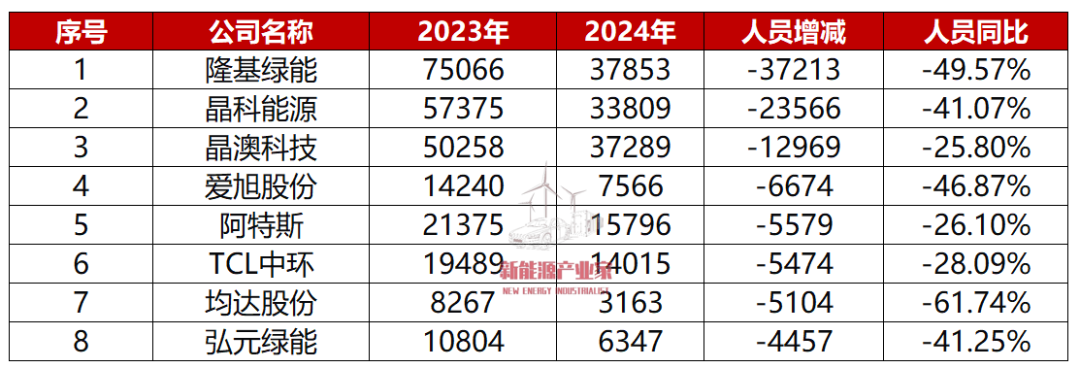
Last year, according to statistics from listed companies alone, nearly 140,000 people in the photovoltaic industry were “optimized”.
The industry’s winter is more biting than expected. Over the past year, the photovoltaic industry has staged a tragic “cutting off an arm to survive”:
140,000 practitioners were forced to leave their jobs, with the highest layoff ratio among leading companies reaching 49%, and even the chairman’s annual salary was reduced by 90%.
Under the triple threat of overcapacity, technological iteration, and price wars, from production line workers to top university graduates, from HR to technical backbones, no one dares to be sure that “the access card can still open that door tomorrow”.
This storm has swept away too many “taken-for-granted” things:
The 250,000 annual salary on the fresh graduate’s offer became waste paper after only half a year of employment; the HR holding the layoff list trembled more than when they were interviewed; messages in the rights protection group jumped 24 hours a day, some people went to court with the company for N+1 compensation, and more people didn’t even wait for their resignation certificate.
In the photovoltaic industrial belt, anxiety is like a haze.
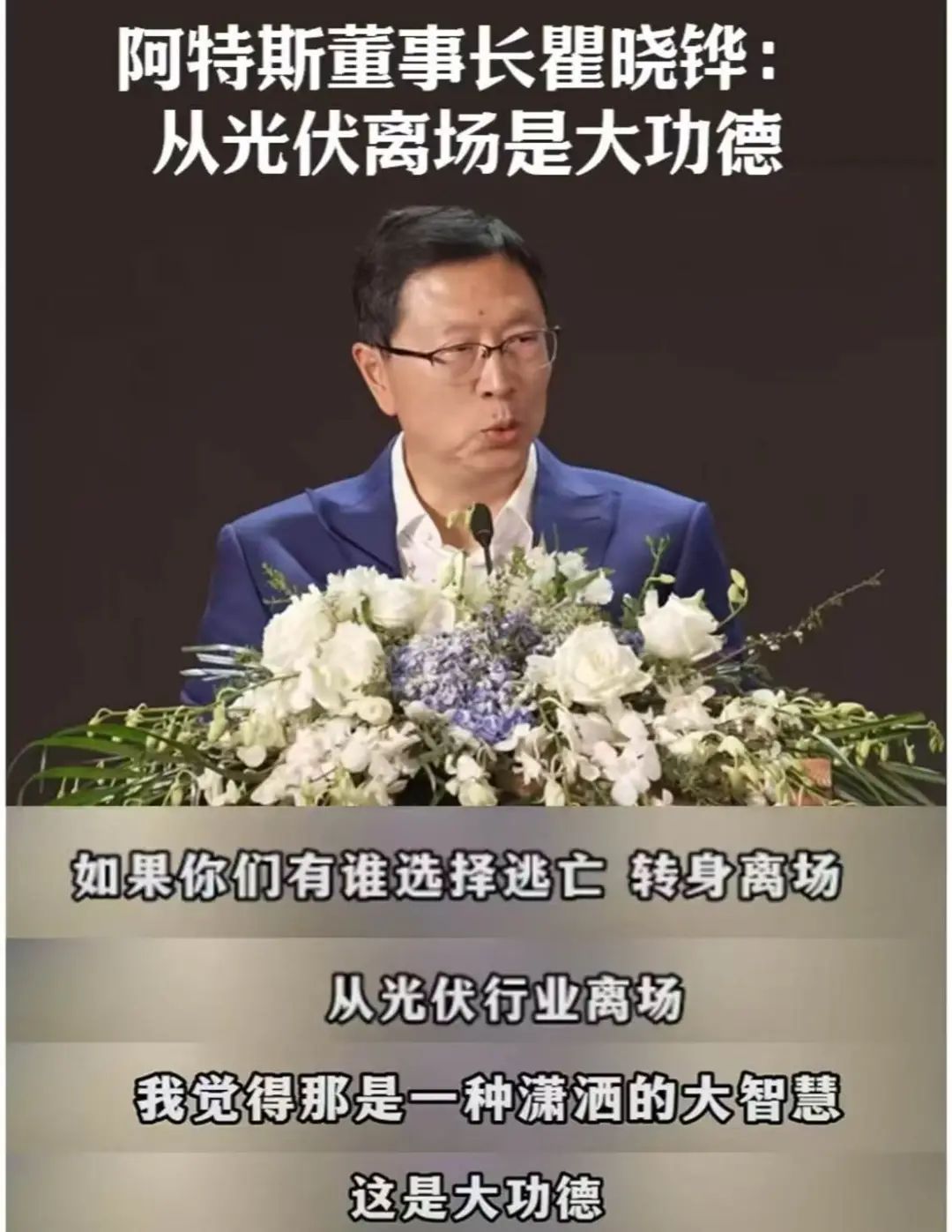
Not to mention the workers, even the chairman is earnestly advising: leaving the photovoltaic industry is a great merit and wisdom.
On social media platforms, under the label of “photovoltaic refugees”, three ordinary people crushed by the wheels of the times are performing a more realistic industry picture than the financial data…
01 Layoffs, Layoffs, Numb to Layoffs
In a conference room of a second-tier photovoltaic manufacturer, there is a “death seat” that is talked about—it is reserved for employees who are laid off.
It is rumored that anyone who is called into this conference room and sits in this position will be laid off, without exception. The rest is just a matter of the length of the handover time and compensation.
Lin Wei (pseudonym) has been an HR in this company for three years. As an HR supervisor who has been in charge of salary and performance for three years, Lin Wei’s computer has a constantly expanding folder, named from the “Talent Reserve Plan” in 2022 to the “N+1 Compensation Standard Quick Reference Table” in 2024.
In the company’s address book, gray avatars are growing at a rate of 3% per month, and in April this year, he has already received four layoff notices in one month.
At eight o’clock every morning, Lin Wei will browse the news of the industry and his own company: “A photovoltaic company reduced its staff by 37% in half a year to achieve a turnaround”.
“How many colleagues we send away, will our company turn a profit and no longer lay off?” Whenever Lin Wei sees such news, he always thinks this way.
Compared to the pressure of layoffs, Lin Wei is more worried about herself, after all, she doesn’t know when she will sit in that “death seat”.
Even more absurdly, yesterday, after laying off a member of the business department, she received a letter from the chairman to all employees, “A Letter to All Fighters”, and the last sentence “We need to work together in difficult times” turned into acid water in her stomach.
Whenever a new layoff target is issued, Lin Wei will nervously check her fingerprint clock-in record. “The access control of the negative pressure workshop could still be opened last week, but it suddenly failed today.” This sentence she overheard in the tea room has become the latest nightmare material.
The layoff rhetoric has long evolved to a cyber version. She stared blankly at the “Employee Optimization Comfort Guide” generated by ChatGPT, and AI suggested using “organizational structure upgrade” instead of “layoff”, and using “restart career journey” to package “unemployment”.
But what really hurts is the psychological game with the laid-off employees during the last layoff.
Even if she has rehearsed it with AI in advance, the reality is always unsatisfactory.
The company’s wish is painless optimization, but employees cannot leave empty-handed, and the HR who acts as a lubricant is often caught in the middle. Lin Wei not only has to worry about her own safety, but also has to bear the emotions of the employees, which makes her breathless.
“Notice—mediation—tear up”, Lin Wei is now very familiar with this set of procedures.
The HR director’s PUA rhetoric is failing.
When the post-00s intern put the “Labor Law” on the table and demanded 2N compensation, she found that her biggest bargaining chip in the negotiation was secretly calculating extra annual leave compensation for the laid-off employees.
In order to keep a backhand for herself, Lin Wei also sneaked into the laid-off groups, and there are several such groups.
The most ironic salvation also comes from the laid-off group. Former colleagues in the group send each other job links, with the message “This position is suitable for you”; the optimized financial director pulled her into the “Layoff HR Mutual Aid Group”, and the group shared the survival guide “How to Block the Knife for the Leader”.
After many layoffs, it becomes numb, and Lin Wei is now very calm: it doesn’t matter, just take the compensation after being laid off, and then find the next job, there is no need to be unhappy at work.
02 The Rashomon on the Resignation Certificate
There is a kind of “technical optimization” that is spreading in the photovoltaic circle.
In a layoff mutual aid group, there are many more absurd cases:
A company requires equipment maintenance workers to transfer to overseas power station operation and maintenance, and obtain a Portuguese B2 certificate within three months; another silicon wafer factory collectively transferred quality inspectors to “comprehensive service positions”, and their actual work is to do odd jobs. And his assessment indicators are changing from monthly yield to non-existent indicators.
Zhao Mingyang (pseudonym) is one of them.
One day, three copies of the “Energy Storage System Integration Technology Manual” suddenly appeared on Zhao Mingyang’s workstation—this was the supervisor’s final ultimatum to him. As a process engineer in a component factory of a small factory, he still remembers what his superior said to him at the time:
“During the transformation period, all employees must have the ability to cross technical tracks!”
Everyone knows that this is a slow death, but the final outcome is only compromise.
“But I’m not stupid enough to leave immediately when they tell me to, compensation is the only right we can fight for.” Zhao Mingyang said very helplessly.
Recalling the period when he was forced to leave his job, he was very anxious every day.
At eleven o’clock in the evening, Zhao Mingyang sent the 27th voice message in the “Photovoltaic Rights Protection Alliance” group: “They have closed my OA permissions!”
In this group, which has gathered nearly 300 laid-off employees, every message prompt is like an alarm:
Some people just found out that their social security and housing fund payments were cut off, some people received a “Waiting for Work Notice” requiring them to check in at an empty factory every day, and more people, like him, suddenly became “non-existent people” in the digital system.
The shoe will eventually fall, and Zhao Mingyang breathed a sigh of relief when he received the “Notice of Termination of Labor Contract”.
On the computer screen, two completely different “Notices of Termination of Labor Contract” are in a tug-of-war.
The HR department insists on “negotiated termination” and insists that the N+1 base is calculated based on the basic salary; the new letter from the legal department claims “serious violation of training discipline”.
On the day of the mediation, Zhao Mingyang ran into a former colleague in the corridor of the arbitration committee—the other party was exchanging a “confidentiality agreement” for priority payment of compensation.
This reminded him of the conversation he secretly recorded last week: colleagues from the legal department were drinking coffee and teaching HR how to create a legitimate reason for dismissal using “three five-minute late arrivals”, “Remember, the surveillance video retention period is 30 days”.
Most people who encounter this situation will face three emotions: anxiety, indignation, and numbness.
“Rather than saying numbness, it’s more like calmness. From the beginning of the ‘spy war’ in the tea room to the rights protection war, I finally felt that it was more of a sense of unwillingness.”
After returning to calm, Zhao Mingyang has now made up his mind to mediate again next week.
“In any case, I still hope to resolve it as soon as possible, and I don’t want to spend all my energy on this. If I have to spend time dealing with this matter in the next few months, it will be a headache.”
On the other hand, Zhao Mingyang seems to think it’s no big deal.
“Regardless of the outcome, I’m relieved, anyway, it’s come to this, let’s sleep first”.
03 The Failure of a 985 Master’s Degree Applicant
At three o’clock in the morning, in a rented house in a certain urban village, Zhang Lei revised his resume for the 10th time.
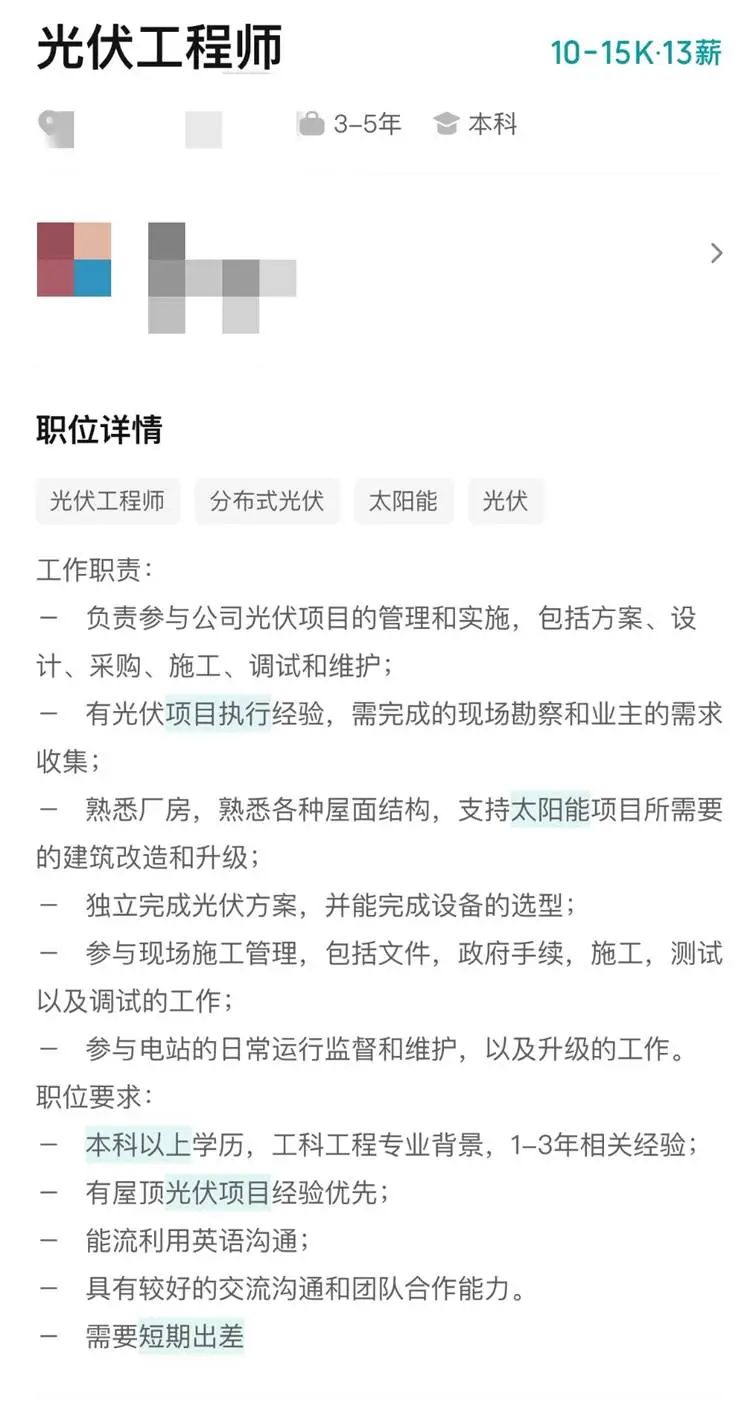
The cold light of the computer screen hit the “Education Background” column—a master’s degree in materials science from a 985 university in the Northwest, a photovoltaic system design company, Zhang Lei, who thought he could easily earn a six-figure annual salary just by relying on this degree, felt very frustrated.
This once golden signboard is now like a red-hot iron.
Since graduating, it has become a habit for Zhang Lei not to sleep at this point. Before and after graduation, the only three things Zhang Lei did most were: submitting resumes, interviewing, and revising resumes.
Three months after graduation, Zhang Lei, who graduated with a master’s degree from a 985 university, felt powerless because he had not yet found a satisfactory job.
Three months ago, when he adjusted his expected salary from 250,000 to 180,000, he never thought that the photovoltaic gold rush that everyone was touting at the time would now become a job that was hard to find.
Today’s photovoltaic industry is a more cruel industry formula than academic papers: in 2024, the domestic photovoltaic module production capacity will exceed 1100GW, but the capacity utilization rate is less than 50%.
“There is no value in the era of overcapacity, only price.” Zhang Lei took out the industry express he had collected on his phone: a certain leading company’s P-type battery production line shutdown rate reached 70%, and the core data of his master’s thesis was based on these “outdated capacity” that were about to be replaced by N-type technology.
The red dots on the job search map spread like cancer cells. Wandering around various photovoltaic manufacturers and job fairs, he crossed three provinces, but repeatedly heard the same sentence in the final interview stage:
“We are temporarily freezing HC (staffing).”
The black humor of fate reached its climax again. When he was rejected again, a screenshot popped up in the class group:
A photovoltaic company offered a monthly salary of 8,000 yuan for a device debugging position for technical school students, and the highest offer that a 985 master’s degree could get was only 10,000 yuan.
“Studying for three years, the value of photovoltaic has been reduced by 30%.”
In the WeChat voice message late at night, he calculated the accounts for his senior brother:
In 2020, the average annual salary of the industry increased by 18%, in 2021, the campus recruitment saw the crazy phenomenon of “three-no undergraduates getting SP offers (special treatment)”, in 2022, headhunters were willing to pay 6 months’ salary to grab a process engineer… These “golden rules” that he had read thoroughly when he entered school all failed in 2025.
The lengthening of the job search line is eroding dignity. Zhang Lei, who is concerned about leading manufacturers, has set his sights on second- and third-tier manufacturers, but who knows that third-tier manufacturers are not easy either.
In the final interview at a third-tier component factory, a technical director shook his head at his research results: “We need practical talents”. In short, you are too expensive.
A turning point appeared when he entered the Shanghai talent market for the seventh time. In front of the recruitment desk of a certain energy storage company, the HR showed interest in his photovoltaic background, but after hearing “expecting to deeply cultivate the photovoltaic industry”, he took back the resume:
“Now smart people know to change tracks.”
This sentence tore open the last decency of photovoltaic people—BOSS Direct Recruitment data shows that in Q1 2024, the industry turnover rate of photovoltaic practitioners increased by 230% year-on-year, and the most popular destinations are new energy vehicles and energy storage.
04 Epilogue
When companies cut half of their employees to exchange for profit growth, the five words “human resource cost optimization” in the financial report, which are lightly written, are the breaking of mortgage payments, the sinking of resumes, and the chaos of changing careers late at night for ordinary people.
This is not some “physical law of industrial leapfrogging”, but the most realistic survival paradox—the tolerance space of workers is also becoming thinner and thinner.
Just like the battery equipment eliminated on the assembly line, which was still roaring yesterday, it became scrap iron sold by the kilogram today.
But this storm also tore open a crack: some people turned around and became photovoltaic science popularization bloggers with compensation, some people became level 10 scholars of “Labor Law” in the rights protection group, and more people suddenly understood a truth—
When the industry uses “technological iteration” as a sickle, what can protect you is not seniority, but the “wild skill package” that can switch tracks at any time.
A grain of sand of the times, falling on the shoulders is a mountain, as ordinary people, we seem to be unable to do anything.
Since we can’t change the direction of the tide, let’s learn to accept it calmly.
Discover more from 自由档案馆
Subscribe to get the latest posts sent to your email.