Famine is a natural disaster; corruption is a man-made disaster.
But in ancient times, there was a special kind of talent who could combine the two, evolving a unique skill called “profiting from disaster relief”.
Whenever a natural disaster struck a certain area, the local officials would be overjoyed. They would write in their memorials, “Requesting aid for the natural disaster,” while thinking, “A rare opportunity.” “Big disasters lead to big corruption, small disasters to small corruption” became the unspoken rule of the officialdom during the Ming and Qing dynasties.
During the Wanli era of the Ming Dynasty, Shandong, Henan, and Shaanxi suffered consecutive years of famine. Locusts swarmed, the land was barren, and the starving were everywhere.
Floods were also frequent. For example, in the twenty-first year of Wanli (1593), Henan Province experienced a massive flood rarely seen before, with varying degrees of damage in the twelve prefectures and eight states under its jurisdiction. Kaifeng, Nanyang, Luyi, Ruzhou, and other places became flooded areas. Ruzhou was “overflowing with water, with thousands of acres of clear waves, and the people were fish and turtles.” Shangcai had “continuous rain in spring and summer, and in autumn… fields and houses collapsed, and countless people drowned.”
The court saw that this was not acceptable and could not allow too many people to starve to death, otherwise, there would be no one to pay taxes the following year—as can be seen from one incident, the court still used the price of “five qian per shi” to collect taxes on the flooded fields in the disaster-stricken areas of Henan.
After a certain disaster, the court quickly issued an edict to provide relief: allocating one million taels of silver and one hundred thousand shi of grain, with officials having a deadline to provide relief. Officials in the capital were deeply moved and swore with tears, “We will certainly live up to the emperor’s great grace and do a good job of disaster relief.”
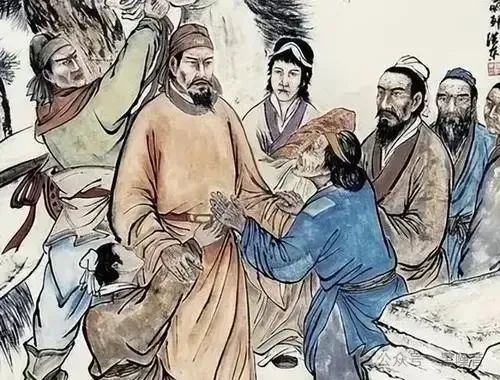
However, what followed was the beginning of their fortune.
The first step of corruption was: long roads and long waterways, wasted in transportation costs.
A prefect with the surname Li, after receiving the order for relief grain, immediately memorialized: “The roads are rugged, the river channels are dry, and transportation is difficult. Three thousand laborers and five hundred donkeys and horses are needed. The transportation fee needs an additional two thousand taels.”
The court approved it, and Prefect Li breathed a sigh of relief. However, only one hundred laborers were recruited, and fifty donkeys and horses were gathered, with the rest being falsely reported. As for the grain, when it was transported halfway, what “lost on the road”, “sunken in the river”, “stolen by rats”, “looted by villagers”, wasn’t it easy to make up a reason?
In short, only half of it reached the hands of the disaster victims.
Of course, part of this half was moldy grain, insect-infested grain, and old grain. He would very “sympathetically” announce to the people: “Although the grain has insects, it can still be eaten after being cooked, and frugality is a virtue.”
The people were grateful and tearful, and Prefect Li counted the silver until his hands were soft.
The Qing Dynasty also had such an unspoken rule of “private distribution of disaster relief silver”: the governor-general received three-tenths, the financial commissioner received two-tenths, and the state and county officials divided the remaining five-tenths.
Before the distribution of relief, they had to set up a “Longmen array”.
At the distribution stage, it should theoretically be “registering disaster victims—distributing grain by household—issuing it monthly”. But in actual operation, it was another set: for example, they would give “priority to the gentry”, with the reason being that they “could appease the people’s emotions”.
So the people found that the first to receive grain in the disaster relief were often the local landlords, wealthy households, clan leaders, baojia chiefs, clerks, and runners. They could receive several shi, dozens, or hundreds of shi of grain for their families and then resell it at a high price to the real disaster victims.
Although both the Ming and Qing dynasties had a “congee factory” system to provide congee to the disaster victims, it often became a formality and did not play a real role in disaster relief.
The people often had to rely on buying back the relief grain to survive, but they heard that the grain was originally supposed to be directly distributed to them. Despite this, they still had to give thanks.
There was also an innovation called “relief without distribution”.
Some officials were clever; they would directly “seal the granaries” with the relief grain, with the reasons being “afraid of looting, afraid of fire hazards, afraid of mold damage”, in short, “responsible for the grain”.
Then, they began to make a big deal out of it.
For example, on the books, this grain had already been “distributed”, and each shi had a “recipient’s signature and fingerprint”. But these people, some had fled to escape the disaster, some had already starved to death, and some were not disaster victims at all, but relatives of a certain runner in the yamen.
Some people questioned their falsification, and they would say: “We are doing things according to the rules, with signatures and black and white. Do you doubt, are you doubting the court’s goodwill in disaster relief?”
From then on, people no longer asked more questions.
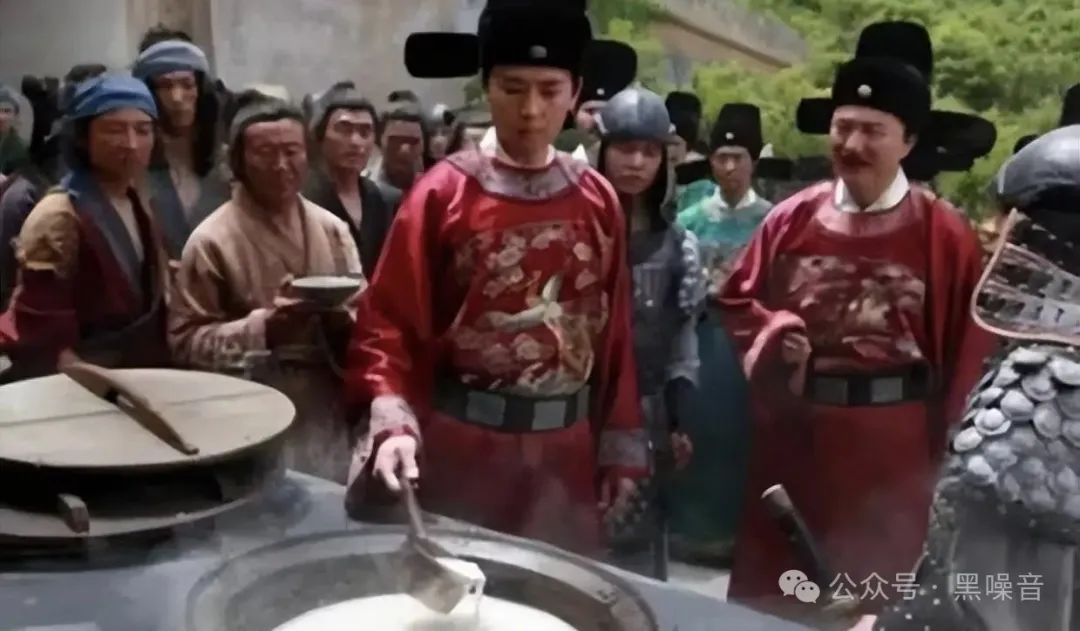
Some people may say, doesn’t the court know and care?
In fact, the court was not unaware, but it was inconvenient to know.
During the Ming and Qing dynasties, local officials faced a common “unspoken rule” during disasters, which was “deceiving the superiors and concealing the subordinates”. Whenever local officials encountered a disaster, they would first conceal the report, and if they couldn’t conceal it, they would start to falsely report. If the people asked for disaster relief, they would let it go and let them disperse—after the starving people fled, the local officials were happy because they could directly put the allocated disaster relief silver into the “local small treasury”.
What the local officials finally reported to the court was often just a few words: “The Holy Lord has already seen clearly”, “The common people are grateful and offer their blessings”, and so on.
During each disaster year, the local authorities would report the “number of people who starved to death”, but reporting too few would seem too obviously fabricated, and reporting too many would show poor performance, so it was often “half true, half artistic processing”.
In a certain year of drought in Henan, an official memorialized: “Sixty thousand starved to death, and there are still one hundred thousand mouths remaining. Please add three thousand shi of relief grain.”
Later, the people spread the word: “In fact, one hundred thousand starved to death, but only sixty thousand were reported.”
After the imperial censor arrived, he wrote: “Corrupt officials used disaster relief to collect wealth, and the people had no grain to eat.”
Then, the disaster relief official memorialized in defense: “The censor is ignorant, ruining the minister’s integrity. The minister is indeed working with a sincere heart, how unjust!”
The emperor saw that both sides had a point, so he issued an edict: “All should be cautious, and discuss again and again.”
And then… there was no then. Why? If this time the disaster relief funds were strictly investigated, wouldn’t that mean that every time it had to be strictly investigated? If one official was investigated, wouldn’t that mean that all officials had to be investigated?
Could you investigate them all? Or: if you investigated the state officials, would you also have to investigate all the county clerks?
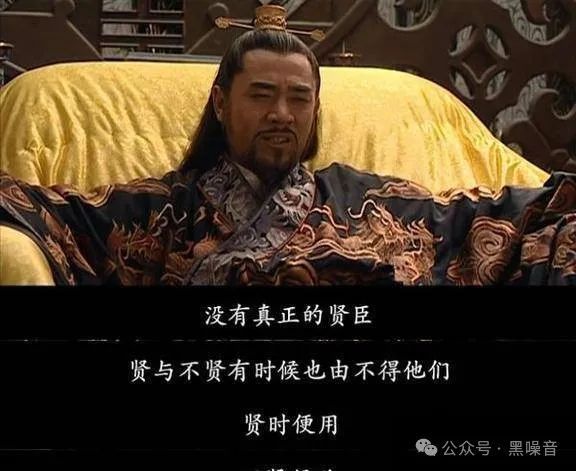
Speaking of the “wisdom” of that time, there was actually another trick: in the name of relief, to enclose land for private use.
Among them, the most ingenious operation was “disaster relief land enclosure”.
Officials memorialized: “After the disaster, the people have no land to cultivate, so it is appropriate to reclaim wasteland and use labor to provide relief.”
The court liked this the most—helping the country reclaim wasteland and expand territory, without having to open the granaries for disaster relief, so they were overjoyed and immediately allocated funds, people, and grain to support it.
Local officials also liked it—taking advantage of the labor-for-relief project, embezzling grain and money, and falsely reporting budgets, all of which were good opportunities to make a fortune.
Those lands newly opened with labor-for-relief became the “new fields” of the local gentry and officials’ relatives. The so-called “labor-for-relief” was actually “the people plant the land for free, and the grain belongs to me to sell for money”.
After the people planted a season, they got a bowl of congee, and the officials got ten shi of grain, which could also be resold to the national treasury to obtain repurchase silver.
Did the people have any complaints about these things? Seeing that the local officials’ families added new houses after each major disaster, and their outings became even more ostentatious, the people could only pretend to be ignorant.
The historical records wrote: In the twenty-second year of Wanli in the Ming Dynasty, Henan suffered a great famine, and people ate each other.
But an old man at the village entrance, roasting wild grass roots, said: “We didn’t starve to death, we were saved to death by disaster relief.”
The historian was silent about this, but instead only wrote down the image of the disaster relief officials who were “diligent and conscientious, and worked tirelessly” and “loyal officials and good ministers”.
Later, someone passed the imperial examination and wrote articles praising the Ming Dynasty officials for their “benevolent governance and love for the people, and providing relief in a proper manner”.
Even more scholars said: “The prosperous era of the Ming Dynasty, the people’s suffering is the will of heaven, not the fault of the officials.”
We, the people of today, can only remain silent when we read this.
·END·
Welcome to join my discussion group. There are now 900 readers in it who are having one-on-one Q&A with me (I will seriously answer all topic questions), sharing exclusive column articles, discussing economic and political affairs, recommending good books, sharing previously banned articles, exchanging investment knowledge, and so on. The fee is 88/year. Welcome to scan the code to join:
The reader WeChat group also has nearly 500 people participating. Scan the code to add my WeChat to join the group. Because I have to take on management responsibilities and risks, I have set a 58 yuan entry fee as a threshold, please understand. Please add the account owner’s personal WeChat to join the group:

The writing subject matter is sensitive and has the risk of being banned. To prevent loss of contact, you can follow my backup account:

Discover more from 自由档案馆
Subscribe to get the latest posts sent to your email.